Top 20 Nocturnal Animals
Introduction
Top 20 Nocturnal Animals is a guide to the creatures that wake up when the rest of the world goes to sleep. When the sun sets, a whole second world comes alive. Owls leave their roosts, bats pour out of caves, raccoons open bins, hedgehogs snuffle through gardens, and fireflies light up the grass. About half of all mammal species are active mainly at night, and many birds, reptiles, amphibians, and insects are too. Night is cooler, quieter, and safer from daytime predators, and it is full of food for animals that know how to find it in the dark.
Being nocturnal is not just about staying up late. It is a whole way of life, and it needs special equipment. Nocturnal animals have large eyes that gather more light, ears that can hear a mouse under snow, noses that can smell food from far away, and whiskers that feel the world in the dark. Some can see in light so dim that a human would see nothing at all. Some can hear sounds that humans cannot hear. Some can find their way by smell alone. This list brings together twenty of the most interesting nocturnal animals, and it explains how each one makes the night its own.
What Makes These Animals Special
What makes nocturnal animals special is that they have solved a problem most animals never face, which is how to live in the dark. A daytime animal can use its eyes to find food, avoid danger, and find a mate. A nocturnal animal must do all of that with very little light, so it uses other senses instead. The barn owl can catch a mouse in total darkness by hearing alone, and it can strike its target with an error of less than one degree. The vampire bat can find a blood vessel under the skin of a sleeping animal by sensing its body heat. The aye-aye can find a grub inside a tree by tapping on the wood and listening for the hollow sound.
Night life also has its own advantages. The desert cools down after sunset, so a nocturnal animal loses less water. The forest is quieter at night, so a hunter can hear its prey from further away. Many daytime predators are asleep, so the night is safer for small animals. And there is less competition, because the animals that hunt by day have gone to bed. The animals in this list come from every continent except Antarctica, and they include mammals, birds, reptiles, amphibians, and insects. Some are famous, like the barn owl and the bat. Some are strange, like the aye-aye and the slow loris. All of them are worth knowing, because they show how much life happens while we are asleep.
1. Barn Owl
The barn owl is the most famous nocturnal hunter in the world, and it is also one of the most skilled. It has a heart-shaped face that works like a satellite dish, collecting sound and sending it to its ears. Its ears are set at slightly different heights on its head, and that small difference lets its brain work out exactly where a sound is coming from, both left and right and up and down. In tests in a completely dark room, barn owls have struck a hidden loudspeaker playing rustling sounds with an error of less than one degree, using hearing alone. That is the best hearing of any animal that has ever been tested.
Barn owls hunt over open fields at night, flying low and listening for mice, voles, and shrews. They swallow their prey whole, and later they cough up pellets of bone and fur, which is a good way to find where a barn owl lives. Their eyes are about one hundred times more sensitive in the dark than human eyes, and their wings are fringed with soft feathers that let them fly in silence, so their prey never hears them coming. They can turn their heads more than 270 degrees, which helps them look around without moving their bodies. Barn owls live on every continent except Antarctica, and they often nest in barns, church towers, and nest boxes. Farmers love them, because a single barn owl family can catch thousands of rodents in a year. You can read more in the HawkWatch International barn owl fact sheet.
2. Aye-Aye
The aye-aye is a lemur from Madagascar, and it is one of the strangest animals in the world. It has large eyes, big ears, and a very long thin middle finger that it uses like a tool. At night, the aye-aye taps on dead wood with that finger and listens for the hollow sound that means a grub is hiding inside. Then it bites a hole in the wood and uses the same finger to fish the grub out. That technique is called percussive foraging, and no other primate does it. The aye-aye is the only animal that finds its food by knocking on trees.
Local people in Madagascar once feared the aye-aye and believed it brought bad luck, and that fear led to many aye-ayes being killed. Today it is protected, and it is listed as Endangered, because its forest home is being cut down. Aye-ayes are nocturnal and solitary, and they sleep during the day in nests made of leaves and branches high in the trees. They eat grubs, fruit, nuts, and nectar, and they are important for the forest because they spread seeds and control insects. The aye-aye is proof that evolution can produce an animal that looks like nothing else on Earth, and that such an animal deserves protection even if people do not understand it at first.
3. Common Vampire Bat
The common vampire bat lives in Central and South America, and it is the only bat that feeds on blood. It comes out at night to find sleeping mammals and birds, and it uses heat sensors on its nose to find a blood vessel close to the skin. Then it makes a small bite with its sharp teeth and laps up the blood. Its saliva contains a chemical that stops the blood from clotting, so it can feed for about thirty minutes without the animal waking up. A vampire bat needs to feed every night, because it cannot survive for more than two days without blood.
Vampire bats are social animals, and they share food with each other. A bat that has fed well will regurgitate blood to feed a hungry roost mate, and that kindness is remembered. Bats that share food are more likely to be fed in return when they fail to find a meal. That system of sharing is rare among animals, and it is one of the reasons vampire bats are studied by scientists who study cooperation. Vampire bats rarely bite people, and they prefer cattle, horses, and birds. They are not the monsters of films. They are small careful animals that have found a food source no other mammal uses.
4. Raccoon
The raccoon is a nocturnal mammal from North America, and it is famous for the black mask across its eyes and for its clever hands. Raccoons are active at night, and they use their sensitive front paws to feel for food in water, in mud, and in the dark. Their paws have many nerve endings, and they can tell what an object is by touch alone. That is why raccoons seem to wash their food. They are not really washing it. They are feeling it, and wetting their paws makes the sense of touch even sharper.
Raccoons eat almost anything, including fruit, nuts, insects, fish, frogs, eggs, and food from bins. That flexible diet has made them very successful in cities, where they have learned to open bins, doors, and latches. They can remember how to solve a puzzle for years, and they can climb trees and swim. A raccoon family sleeps during the day in a hollow tree or a quiet corner of a building, and comes out at dusk to search for food. They are not pests by nature. They are survivors, and they have adapted to the world that people built better than almost any other wild animal.
5. European Hedgehog
The European hedgehog is a small nocturnal mammal that lives in gardens, parks, and woodland across Europe. It comes out at night to hunt for slugs, snails, beetles, worms, and other small animals, and it uses its excellent sense of smell and hearing to find food in the dark. Its eyesight is poor, but it does not need good eyes when its nose can smell a worm under a leaf. A hedgehog can travel more than a kilometre in a single night in search of food.
A hedgehog has about five thousand spines on its back, and when it is frightened it rolls into a tight ball so that nothing can reach its soft belly. That defence works against most predators, but it does not work against cars, which are the main danger hedgehogs face today. Hedgehogs hibernate in winter, sleeping in a nest of leaves for months at a time. They are popular with gardeners, because they eat slugs and other pests, and many people leave food and water out for them. If you want to help hedgehogs, leave a gap in your fence so they can travel between gardens, and never give them milk, which they cannot digest.
6. Red Fox
The red fox is active mainly at night and at dawn and dusk, and it is the most widespread wild dog in the world. It lives across North America, Europe, Asia, and Australia, and it has adapted to forests, deserts, mountains, and cities. Its large ears can hear a mouse moving under snow from more than a hundred metres away, and its sense of smell is so good that it can find food buried underground. Red foxes hunt alone, and they use a famous pouncing technique, leaping high into the air and landing on their prey with their front paws.
Red foxes eat rodents, rabbits, birds, insects, fruit, and food left by people. They are clever and adaptable, and they have learned to live in cities, where they hunt rats and eat food from bins. A red fox family lives in a den, which is often an old burrow made by another animal. The parents raise their cubs together, and the cubs learn to hunt by playing. Red foxes are most active at night, but they can be seen during the day in quiet places, especially in spring when they are feeding hungry cubs.
7. Ocelot
The ocelot is a small wild cat from Central and South America, and it is one of the most beautiful nocturnal hunters in the world. Its coat is covered in spots and stripes that break up its shape in the dappled light of the forest, and it is so well camouflaged that it can disappear into the shadows. Ocelots hunt at night, and they eat rodents, birds, lizards, and fish. They are excellent climbers and swimmers, and they can catch fish in shallow water.
Ocelots are solitary animals, and each one has a territory that it marks with scent. They are most active at night and at dawn and dusk, and they sleep during the day in thick vegetation or in a hollow tree. Ocelots were once hunted heavily for their fur, and their numbers fell sharply. Today they are protected, but they are still threatened by the loss of their forest home. The ocelot is a reminder that the night belongs to cats as well as owls, and that a spotted coat is as useful in the dark as a silent wing.
8. Slow Loris
The slow loris is a small primate from the forests of Southeast Asia, and it is one of the only venomous primates in the world. It moves slowly through the trees at night, using its strong hands to grip branches and its large eyes to see in the dark. When it is threatened, it raises its arms and licks a gland on its elbow, mixing the fluid with its saliva to make a venom that it can deliver with a bite. That venom is strong enough to kill a small animal, and it can cause a serious allergic reaction in people.
Slow lorises eat insects, fruit, tree gum, and nectar, and they are important for the forest because they pollinate flowers and spread seeds. They are solitary and shy, and they sleep during the day curled up in a ball in a tree hole. Sadly, slow lorises are in great danger. They are caught for the illegal pet trade, and many have their teeth cut out so they cannot bite their owners, which means they can never return to the wild. The slow loris is listed as Endangered, and buying one as a pet is illegal and cruel. The best place for a slow loris is in the forest at night, moving slowly through the trees.
9. Kiwi
The kiwi is a flightless bird from New Zealand, and it is one of the most unusual birds in the world. It is about the size of a chicken, and it has a long beak with nostrils at the tip, which is unique among birds. That beak lets it smell food underground, and it uses it to probe the soil for worms, insects, and berries at night. A kiwi can smell a worm through the soil, and its sense of smell is better than that of most birds.
Kiwis are nocturnal, and they come out at night to feed in the forest. They cannot fly, but they have strong legs and they can run fast when they need to. Their feathers look like fur, and their wings are so small that they are almost invisible. Kiwis are the national bird of New Zealand, and the people of New Zealand are called Kiwis after them. There are five species of kiwi, and all of them are threatened by predators such as stoats, dogs, and cats. Conservation groups protect kiwis by trapping predators and by raising young birds in safe places until they are big enough to survive.
10. Firefly
The firefly is not a fly at all. It is a beetle, and it is famous for the light it makes at night. Fireflies produce light in their abdomens through a chemical reaction that is almost perfectly efficient, which means it produces almost no heat. That is why firefly light is called cold light. Each species of firefly has its own flashing pattern, and males and females use those patterns to find each other in the dark. A male flashes a pattern, and a female answers with a flash of her own.
Fireflies live in warm damp places, and their larvae, which are called glow-worms, also make light. The larvae eat snails and slugs, and they use their light to warn predators that they taste bad. Adult fireflies live for only a few weeks, and their main job is to find a mate. Firefly numbers are falling in many places, because their habitat is being lost and because artificial light at night confuses their flashing signals. A summer night with fireflies is one of the most beautiful sights in nature, and it is worth protecting by keeping some dark quiet corners in our gardens and parks.
11. Death’s-Head Hawkmoth
The death’s-head hawkmoth is a large moth that is active at night, and it is famous for the skull-shaped pattern on its back. It is one of the largest moths in the world, with a wingspan of up to 13 centimetres. At night it visits flowers to drink nectar, and it can hover in the air like a hummingbird while it feeds. It is also famous for its ability to steal honey from beehives. It makes a squeaking sound that is thought to calm the bees, and its thick skin protects it from stings.
Death’s-head hawkmoths are strong fliers, and they can travel long distances. The caterpillars are large and colourful, and they eat plants such as potato leaves. The moth appears in stories and films, including the famous film about a serial killer, because the skull on its back looks frightening. In reality it is harmless, and it is a pollinator that helps night-flowering plants. Moths are often forgotten when people think about pollination, but many plants flower at night and depend on moths to carry their pollen.
12. Tarantula
The tarantula is a large hairy spider that is active mainly at night, and it is one of the most misunderstood animals in the world. Tarantulas do not build webs to catch prey. They hunt on the ground, using their sensitive leg hairs to feel vibrations and their eyes to see movement in the dark. They eat insects, small lizards, and sometimes small mammals, and they kill their prey with venom. Tarantula venom is not dangerous to people, and a bite is usually no worse than a bee sting.
Tarantulas live in burrows, and they come out at night to hunt. They are long-lived for spiders, and a female can live for more than twenty years. They are also careful mothers, and they guard their egg sacs until the young hatch. When a tarantula is threatened, it can flick tiny irritating hairs from its abdomen at its attacker, which is a defence that works well against animals that try to eat it. Tarantulas are popular as pets, but they are wild animals that need a proper home and careful handling. In the wild, they are shy and would much rather hide than bite.
13. Leopard
The leopard is a large cat that is active mainly at night, and it is one of the most successful hunters in the world. It lives across Africa and Asia, and it can live in forests, mountains, deserts, and even near cities. Its spotted coat is perfect camouflage in the dappled light of the forest, and its eyes are adapted to see in very low light. Leopards hunt alone, and they stalk their prey silently before launching a short fast attack. They eat antelope, deer, monkeys, birds, and even fish.
Leopards are famous for carrying their prey up into trees, where they can eat it safely away from lions and hyenas. A leopard can drag an animal heavier than itself up a tree, which is a feat of strength that few animals can match. They are also excellent swimmers and climbers. Leopards are listed as Vulnerable, because their numbers have fallen as their habitat is lost and as they are killed by farmers who lose livestock. Protecting leopards means protecting the wild places they need, and finding ways for people and leopards to live side by side.
14. Grey Wolf
The grey wolf is a social animal that is active mainly at night and at dawn and dusk, and it is the largest wild dog in the world. Wolves live in packs, and they hunt together, using teamwork to bring down animals much larger than themselves, such as deer and elk. A wolf pack has a strict social order, and the members communicate with howls, body language, and scent. A wolf howl can be heard for many kilometres, and it helps the pack stay together and warn other packs to stay away.
Wolves have excellent hearing and smell, and they can hear prey from far away and smell it from more than a kilometre. They can travel more than fifty kilometres in a single night in search of food. Wolves were once common across North America, Europe, and Asia, but they were hunted almost to extinction in many places. Today they are returning to some areas, and they are protected in many countries. Wolves are important for the ecosystem, because they control the numbers of deer and other animals, and that helps forests and grasslands stay healthy.
15. European Badger
The European badger is a nocturnal mammal that lives in woodland across Europe. It comes out at night to search for food, and it eats earthworms, insects, small mammals, fruit, and nuts. Earthworms are its favourite food, and a badger can eat hundreds of worms in a single night. It finds them by smell, and it digs them out of the soil with its strong claws. Badgers live in large burrows called setts, which can have many entrances and chambers, and which can be used by the same family for generations.
Badgers are social animals, and they live in family groups. They are clean animals, and they keep their setts tidy by changing their bedding and by digging latrines away from their sleeping chambers. They are most active at night, but they can be seen at dusk in summer. Badgers have a distinctive black and white striped face, which is easy to recognise. In some countries badgers are culled because they can carry disease, but that is a controversial policy, and many people believe badgers should be protected. A badger sett is a sign of a healthy woodland, and it is worth looking after.
16. Deer Mouse
The deer mouse is a small rodent from North America, and it is active mainly at night. It is named for its colour, which is brown on top and white underneath, like a deer. Deer mice eat seeds, fruit, insects, and fungi, and they are important for the forest because they spread seeds and spores. They store food in their nests, and they can remember where they have hidden it. They are also excellent climbers, and they can climb trees to find food and to escape predators.
Deer mice are prey for many nocturnal hunters, including owls, foxes, and snakes, and they survive by being quick, quiet, and careful. They have large eyes and ears that help them detect danger in the dark, and they can freeze in place when they sense a predator. They live in nests in trees, in burrows, or in buildings, and they are active all year round, even in winter. Deer mice are a reminder that the night is not only about large hunters. Small animals are the foundation of the night ecosystem, and without them the owls and foxes would have nothing to eat.
17. Red-Eyed Tree Frog
The red-eyed tree frog lives in the rainforests of Central America, and it is one of the most colourful nocturnal animals in the world. During the day it sleeps on the underside of a leaf, with its bright red eyes closed, its orange feet tucked away, and its green body blending into the leaf. At night it wakes up and becomes a hunter, using its long sticky tongue to catch insects. Its bright colours are a warning to predators, because its skin contains chemicals that taste bad.
Red-eyed tree frogs are active at night, and they call to each other with a series of chuckles and clicks. The males call from the leaves above ponds, and the females lay their eggs on leaves overhanging the water. When the eggs hatch, the tadpoles drop into the pond below. The frog can change the colour of its skin slightly to match its surroundings, and it can jump long distances to escape danger. Its red eyes are thought to startle predators, giving the frog a moment to escape. The red-eyed tree frog is a symbol of the rainforest, and it depends on clean water and healthy forest to survive.
18. Tokay Gecko
The tokay gecko is a large lizard from Southeast Asia, and it is active at night. It is named for the loud call it makes, which sounds like “to-kay, to-kay”. Tokay geckos are strong climbers, and they can walk up walls and across ceilings thanks to the tiny hairs on their toes that grip smooth surfaces. They eat insects, small lizards, and even small mammals, and they are fierce defenders of their territory. A tokay gecko will bite if it is handled, and it can hold on for a long time.
Tokay geckos live in trees, in rock crevices, and in buildings, and they are common in houses across Southeast Asia, where they eat insects and are welcomed as pest controllers. They are nocturnal, and they come out at night to hunt. Their skin is covered in bright spots of blue, orange, and grey, which help them blend into the bark of trees. Tokay geckos are caught for the pet trade and for traditional medicine, and their numbers are falling in some areas. Like many nocturnal animals, they need dark quiet places to live, and they suffer when forests are cut down.
19. African Civet
The African civet is a nocturnal mammal from Africa, and it is famous for the scent it produces. Civets have glands that make a strong-smelling substance called civet, which they use to mark their territory. That scent has been used in perfumes for centuries, and civets were once kept in captivity for that purpose. Today, most perfumes use a synthetic version, and wild civets are left alone.
African civets are solitary animals, and they come out at night to hunt for small mammals, birds, reptiles, insects, and fruit. They are excellent climbers, and they can catch prey in trees as well as on the ground. Their spotted coat helps them hide in the shadows of the forest, and their large ears and eyes help them hunt in the dark. Civets are important for the forest because they eat fruit and spread seeds in their droppings. They are listed as Least Concern, but they are hunted for meat in some areas, and they need forest to survive.
20. Sugar Glider
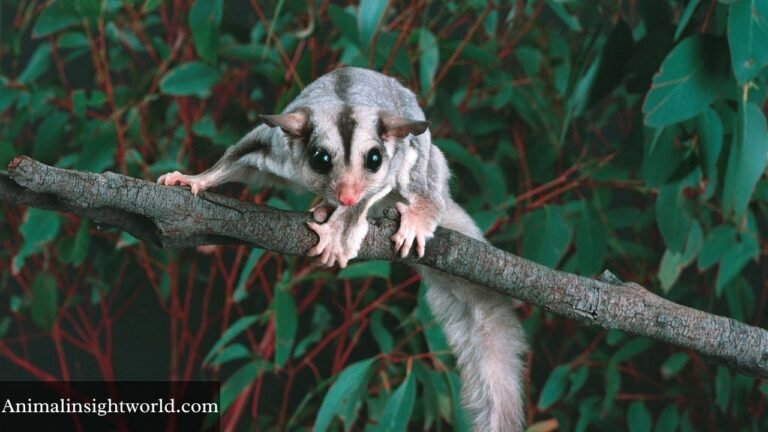
The sugar glider is a small marsupial from Australia and New Guinea, and it is one of the most charming nocturnal animals in the world. It has a membrane of skin between its front and back legs, and when it leaps from a tree it spreads that membrane and glides through the air, sometimes for more than fifty metres. It can steer by moving its legs and tail, and it lands softly on the next tree. Sugar gliders are active at night, and they eat nectar, fruit, insects, and tree sap. They love sweet food, which is how they got their name.
Sugar gliders are social animals, and they live in family groups in hollow trees. They communicate with a range of calls, including barking and chattering, and they groom each other to keep their group together. They sleep during the day curled up together in a nest of leaves. Sugar gliders are popular as pets, but they are wild animals that need a lot of space, companionship, and a proper diet, and they do not make good pets for most people. In the wild, they are a sign of a healthy forest, and they need old trees with hollows to live in.
Surprising Facts
The animals in this list have some of the most surprising abilities in nature, and a few facts are worth remembering. The barn owl can catch a mouse in total darkness by hearing alone, with an error of less than one degree, which is the best hearing of any animal ever tested. The vampire bat shares blood with hungry roost mates, and that sharing is remembered and repaid, which is one of the clearest examples of cooperation in the animal kingdom. The aye-aye finds grubs by tapping on wood and listening for a hollow sound, which is a technique no other primate uses.
Other surprises are just as strange. The firefly makes light with almost no heat, which is why its glow is called cold light, and each species has its own flashing code. The slow loris is one of the only venomous primates in the world, and it makes its venom by licking a gland on its elbow. The kiwi has nostrils at the tip of its beak, which is unique among birds, and it can smell a worm through the soil. The death’s-head hawkmoth can steal honey from a beehive by making a sound that calms the bees. The sugar glider can glide for more than fifty metres between trees, which is further than most animals can jump.
There is a pattern in these surprises. Night animals do not rely on one sense. They combine hearing, smell, touch, and taste in ways that daytime animals rarely need to. The owl uses hearing, the kiwi uses smell, the raccoon uses touch, and the vampire bat uses heat. That is why the night is so full of life. It is not a poorer version of the day. It is a different world, with its own rules, its own hunters, and its own wonders.
Frequently Asked Questions
What is the most famous nocturnal animal?
The barn owl is one of the most famous nocturnal animals in the world, because it hunts by hearing alone and can catch a mouse in total darkness. Bats are also famous, because they are the only mammals that can fly, and most bats are active at night.
Why do nocturnal animals have large eyes?
Large eyes gather more light, which helps an animal see in the dark. Owls, aye-ayes, slow lorises, and tarsiers all have very large eyes for their body size, and their eyes have many more rod cells than human eyes, which makes them much more sensitive in low light.
Are raccoons dangerous?
Raccoons are not usually dangerous to people, but they are wild animals and they can bite if they are cornered. They can also carry disease, so it is best to watch them from a distance and to keep bins closed so they do not come into gardens and houses.
Do all bats sleep upside down?
Most bats roost upside down, hanging by their feet, but not all of them do. Hanging upside down lets a bat take off quickly by dropping into the air, and it keeps the bat safe from predators on the ground.
Conclusion
Top 20 Nocturnal Animals shows that the night is not empty. It is full of hunters, singers, gliders, and climbers, each with its own way of finding food and staying safe in the dark. The barn owl hears what we cannot hear, the kiwi smells what we cannot smell, the raccoon feels what we cannot feel, and the firefly makes light that we can only admire. Night animals have been living alongside us for millions of years, and they are still there, in our gardens, in our forests, and in the fields beyond our windows.
The best way to meet them is to go outside at night and listen. You may hear an owl, or see a hedgehog, or watch a bat flicker across the sky. Leave a dark corner in your garden, keep a light off when you do not need it, and give the night its quiet back. The animals in this list need darkness to hunt, to find a mate, and to raise their young. Share this list with someone who thinks nothing happens at night, and invite them to stay up late with you. The night will do the rest.
Sources and Further Reading
General species facts were checked against National Geographic, Britannica, the IUCN Red List, and the San Diego Zoo wildlife profiles.