
Top 10 Animals That Look Like Beavers (With Images)
In the world of wildlife, there are several fascinating animals that look like beavers but offer unique traits and behaviors. This article delves into these amusing similarities and highlights why understanding these animals is crucial for appreciating biodiversity. Join us as we explore various species that mirror the beaver’s iconic appearance and learn what sets them apart!
List of Animals That Look Like Beavers
Below is the list of animals that are like Beavers:
| Number of Animals | Names of Animals Like Beavers |
| 1 | Capybaras |
| 2 | Muskrats |
| 3 | Marmots |
| 4 | Water Vole |
| 5 | River Otters |
| 6 | Nutrias |
| 7 | Quokkas |
| 8 | Bamboo Rat |
| 9 | American Mink |
| 10 | Groundhogs |
Capybaras
Scientific Name: Hydrochoerus hydrochaeris
Why Capybaras are similar to Beavers: Like beavers, capybaras are semi-aquatic rodents that thrive near water. They enjoy socializing in groups and primarily feed on grasses and aquatic plants, showcasing a similar herbivorous diet.
Capybaras, often dubbed the world’s largest rodents, share a remarkable resemblance to beavers, though their aesthetics tell a broader story. Standing at about two feet tall and weighing up to 150 pounds, these gentle giants sport a robust body and a rounded snout, which can easily remind one of the iconic beaver silhouette. However, the capybara’s fur is notably smooth and short, varying from a sandy brown to a more muted gray. This streamlined coat not only enhances their swimming abilities but also sets them visibly apart from beavers, who flaunt their thicker, water-repellent fur.
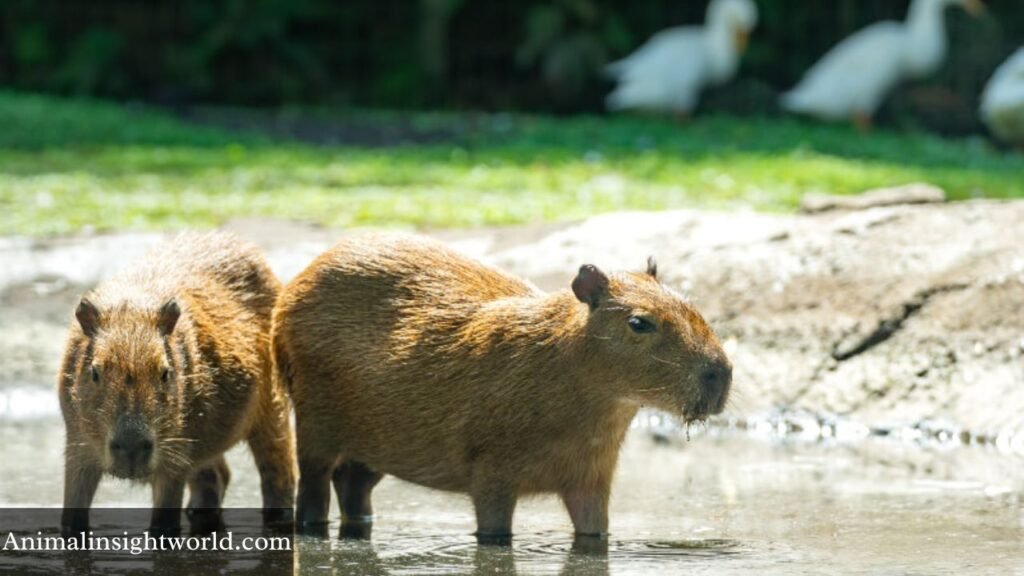
Social creatures by nature, capybaras thrive in groups, often seen lounging together by water sources. These rodents engage in playful behavior, forming strong bonds that resemble family units. This communal lifestyle isn’t just charming; it plays a crucial role in their survival, as they rely on collective vigilance to ward off predators. Remarkably, capybaras have also become known for their unique friendships with various species — from birds nesting on their backs to playful monkeys sharing their habitat — offering a captivating glimpse into the interconnectedness of wildlife.
Muskrats
Scientific Name: Ondatra zibethicus
Why Muskrats are similar to Beavers: Muskrats are also semi-aquatic and build their lodges using vegetation, resembling beaver dams. They have webbed feet, allowing them to navigate their watery environments efficiently.
Muskrats, often overshadowed by their larger beaver cousins, exhibit a remarkable adaptability that’s worth exploring. These semi-aquatic mammals not only construct intricate burrow systems but also create unique “push-ups” — mounds made of vegetation and mud. These structures serve as both feeding platforms and breeding grounds, illustrating their clever use of available resources. What’s fascinating is how muskrats contribute to their ecosystems; their activities help maintain wetland health, promoting biodiversity by creating habitats for various aquatic species.
Social creatures, muskrats often live in family groups, demonstrating a level of cooperation that enhances their survival. They communicate through a variety of sounds and scents, showcasing a rich social life beneath the surface. Their diet is predominantly herbivorous, consuming water plants, which not only shapes their own habitat but allows other wildlife to thrive as well. Observing muskrats in their natural environment offers a unique glimpse into the balance of aquatic life, revealing how even the smallest builders can have a profound impact on their ecosystem.
Marmots
Scientific Name: Marmota
Why Marmots are similar to Beavers: Although predominantly terrestrial, marmots share a social structure seen in beavers and are known for their burrowing habits. Both species exhibit strong family ties and communal living.
Marmots, often overshadowed by their more popular rodent cousins like beavers, possess a fascinating array of social behaviors and ecological roles. These charming creatures, found primarily in mountainous regions of North America and Eurasia, are well-known for their communicative abilities. They produce a variety of vocalizations, from whistles to barks, which serve not just to alert fellow marmots of potential threats but also to reinforce social bonds within their colonies. This vocal complexity highlights their intelligence and adaptability, allowing them to thrive in challenging environments.

In addition to their social structures, marmots play a vital role in their ecosystems. Their burrowing activities aerate the soil, creating a more conducive environment for plant growth, while also providing homes for various smaller species. Interestingly, their foraging habits contribute to the cyclical transfer of nutrients, significantly impacting the vegetation composition of their habitats. As climate change alters their mountainous homes, understanding marmots’ resilience and adaptability becomes essential, shedding light on broader environmental changes that may affect numerous species reliant on similar ecosystems.
Water Vole
Scientific Name: Arvicola amphibius
Why Water Vole are similar to Beavers: These voles have a lifestyle that involves digging burrows near water sources, akin to beaver habitats. They also share a herbivorous diet, feeding on aquatic and marsh plants.
Water voles, often overshadowed by their more industrious beaver cousins, play a crucial role in maintaining the health of wetland ecosystems. These small, semi-aquatic rodents are master architects of their own, crafting extensive burrow systems along riverbanks that not only provide them shelter but also create habitats for other species. Their presence helps to stabilize the banks, preventing erosion and allowing for a rich tapestry of plant life to flourish alongside waterways.
Interestingly, water voles are primarily herbivorous, feeding on a diet of grasses, sedges, and the occasional aquatic plant. This diet not only supports their health but also underpins the food web within their ecosystems. As they munch on vegetation, they inadvertently promote biodiversity, encouraging a variety of plant species to thrive and offering sustenance to insects and other wildlife. Furthermore, as one of nature’s quieter engineers, their burrowing activity aerates the soil, enhancing water retention and enriching the habitat for countless organisms.
One poignant aspect of their existence is the stark threat they face due to habitat loss and predation by invasive species. Conservation efforts aimed at preserving water voles do more than just protect a single species; they aim to restore the delicate balance of wetland ecosystems. By ensuring these charming creatures continue to thrive, we also safeguard the myriad of life forms that depend on healthy waterways. In this interconnected web of life, the water vole stands as a testament to the beauty and necessity of even the smallest players in our natural world.
River Otters
Scientific Name: Lontra canadensis
Why River Otters are similar to Beavers: While otters are carnivorous, they share the same aquatic ecosystems as beavers. Both animals are proficient swimmers and rely on water bodies for food and shelter.
River otters, often overshadowed by their larger beaver counterparts, exhibit a remarkable blend of playfulness and adaptability in freshwater ecosystems. Known for their agile swimming abilities and striking whiskered faces, these sociable mammals are master engineers of their environment, much like beavers. While beavers are celebrated for their dam-building prowess, river otters contribute to ecosystem balance in subtler yet equally crucial ways. Their voracious appetite for fish and crustaceans aids in managing populations, fostering biodiversity in riverine habitats.

One of the most captivating aspects of river otters is their playful nature, which isn’t merely for enjoyment. This social behavior serves practical purposes, enhancing their hunting skills and strengthening group bonds. Observing a pod of otters frolicking, sliding on mud banks, and playing tag reveals a complexity of interaction that hints at a rich social structure akin to packs in wolves.
Nutrias
Scientific Name: Myocastor coypus
Why Nutrias are similar to Beavers: Nutrias are closely related to beavers in terms of habitat and diet, as they both consume aquatic vegetation and can be found in similar wetlands.
Nutrias, often overshadowed by their more famous cousins the beavers, share a fascinating ecological role that deserves attention. These semi-aquatic rodents, also known as coypus, are distinguished by their dense, water-repellent fur and long, rounded tails. Originating from South America, nutrias have made their way into various ecosystems, particularly in North America, where they can adapt to wetlands and marshy areas with remarkable efficiency. Their omnivorous diet primarily consists of aquatic plants, which they help maintain through grazing — contributing to the health of their environments in ways that are often underappreciated.
Quokkas
Scientific Name: Setonix brachyurus
Why Quokkas are similar to Beavers: Quokkas are land-dwelling marsupials with a herbivorous diet like beavers. Both species demonstrate sociable behavior and a preference for grassy regions.
Quokkas, often dubbed the “world’s happiest animals,” charm with their perpetual smiles and friendly demeanor, reminiscent of beavers in their own unique societal behaviors. While beavers are renowned for their engineering prowess in constructing dams and creating habitats, quokkas exhibit a different kind of community spirit. These small marsupials thrive in groups, embracing social playfulness that solidifies bonds within their populations. Living primarily on Australia’s Rottnest Island, quokkas have developed a lifestyle that balances curiosity and cautiousness, much like beavers who meticulously safeguard their lodges.

Beyond their sunny dispositions, quokkas possess fascinating survival strategies that echo the resourcefulness of their aquatic counterparts. Just as beavers rely on a diet of bark and leafy vegetation, quokkas primarily feast on grasses and leafy plants, showing adaptability to their environment. They are nocturnal foragers, often seen in the twilight hours, echoing the rituals of beavers as they venture out to gather materials under the veil of night. Moreover, both species play pivotal roles in their ecosystems, with beavers engineering wetland habitats and quokkas aiding in seed dispersal, fostering a diverse flora that supports various wildlife.
Bamboo Rat
Scientific Name: Rhizomys
Why Bamboo Rat are similar to Beavers: These rodents live in burrows and consume vegetation, paralleling beavers’ burrowing and herbivorous nature.
Found predominantly in Southeast Asia, these rodents have a remarkable ability to thrive in diverse habitats, from moist bamboo forests to rugged mountainous terrains. Unlike beavers, who are celebrated for their dam-building prowess, bamboo rats are adept diggers, creating extensive burrows that not only serve as their homes but also play a critical role in their ecosystems by aerating the soil.
These creatures are not just ecological engineers; they also have a vital relationship with their environment through their diet. Primarily herbivorous, bamboo rats feast on bamboo shoots, tubers, and roots, contributing to seed dispersal and plant regeneration. Their foraging behaviors highlight a symbiotic relationship with their habitat, ensuring the health and sustainability of local flora.
American Mink
Scientific Name: Neovison vison
Why American Minks are similar to Beavers: Though carnivorous and mostly terrestrial, minks share the same ecosystems as beavers. Both are agile swimmers and are found near rivers and lakes, utilizing similar habitats for hunting or foraging.
These semi-aquatic mammals are agile hunters, adept at navigating both water and land. With their sleek bodies and luxurious fur, minks not only serve as skilled predators but also act as important indicators of environmental health. Their presence in a habitat can signal a thriving aquatic ecosystem, as they thrive on a diet rich in fish, amphibians, and small mammals.

When examining their social behavior, minks defy the stereotype of solitary creatures typically associated with mustelids. Although they are primarily solitary, they exhibit remarkable adaptability in various environments, forming loose social structures during breeding season or when young are raised. This flexibility allows them to thrive in diverse habitats, from coastal marshes to forested riverbanks, showcasing their resilience and versatility. Observing an American mink in its natural habitat prompts a deeper appreciation for the intricate balance of ecosystems and the role each species plays within it.
Groundhogs
Scientific Name: Marmota monax
Why Groundhogs are similar to Beavers: Groundhogs are terrestrial diggers that create burrows, a behavior reminiscent of beaver lodge-building. Both exhibit strong social structures and herbivorous diets.
Groundhogs, often overlooked in the animal kingdom, share a fascinating array of traits with their more famous cousin, the beaver. Both species are renowned for their impressive engineering skills, albeit in different ways. While beavers construct intricate dams that shape ecosystems, groundhogs, or woodchucks, dig expansive burrow systems that serve as their homes and protection from predators. These subterranean cities not only provide safety but also support complex social structures — quite a feat for these seemingly solitary creatures.
Interestingly, groundhogs are also an essential part of their ecosystems, much like beavers. Their burrowing activity aerates the soil, promoting healthier plant growth and helping to maintain biodiversity in their habitats. This natural engineering promotes a rich tapestry of life above and below ground, demonstrating how interconnected these species are within their environments. Groundhogs might not have the same notoriety as beavers, but their ecological contributions offer a fresh perspective on the role of lesser-known animals in shaping our world.
Moreover, the groundhog’s unique hibernation cycle stands out in the animal kingdom. As winter approaches, these critters enter a state of deep sleep that can last for months, helping them survive harsh conditions. This adaptation not only highlights the resilience of groundhogs but also draws interesting parallels to the adaptability found in many rodent species.
Readmore: Explore Top 12 Animals like Sugar Glider.
Final Thoughts
The animal kingdom is full of fascinating creatures that bear a striking resemblance to beavers, showcasing the incredible diversity of nature. From the semi-aquatic capybara to the roguishly charming nutria, these animals all share certain traits that echo the beaver’s iconic appearance and ecological role. Understanding their similarities not only deepens our appreciation for these unique species but also highlights the interconnectedness of ecosystems where they play critical roles. As we continue to explore the wild, let’s keep our eyes open for these beaver look-alikes and the important contributions they make to their habitats. Together, we can foster a greater respect and awareness for wildlife, encouraging conservation efforts to protect these remarkable animals.
FAQs
What animal looks just like a beaver?
The animal that most closely resembles a beaver is the nutrias, also known as coypu. These semi-aquatic rodents have a similar body shape, flat tail, and webbed feet, making them easily mistaken for beavers at first glance. Nutrias are slightly smaller, though, typically weighing around 15-20 pounds, while beavers can weigh up to 60 pounds.
What animals are similar to beavers?
Beavers share similarities with a few other animals, notably capybaras and muskrats. Capybaras, the largest rodents in the world, live in social groups near water, just like beavers. They are semi-aquatic and have adaptations for swimming, alongside a herbivorous diet. Muskrats are closer relatives to beavers in the rodent family. They’re smaller and also thrive in wetland environments. Muskrats build lodges and burrows, although their construction isn’t as elaborate as beaver dams.