Nepal Cleaner Jobs with Visa Sponsorship 2026
Cleaning work abroad is one of the most common first jobs for workers from Nepal, and for good reason. Every office, hotel, hospital, school, shopping centre, airport, and apartment building needs cleaners every single day. The work is practical, the entry requirements are usually modest, and the demand is steady all year round. For a Nepali worker who wants a reliable income, a clear daily routine, and a chance to gain experience overseas, a cleaner job can be a sensible starting point.
This guide explains cleaner jobs with visa sponsorship for Nepali workers in 2026. It covers what cleaners actually do, what employers look for, how to apply, and what sponsorship really means. It does not promise a job or a visa. No employer or agent can guarantee those things, because the final visa decision always rests with the immigration authorities of the destination country. What this guide offers is honest, practical information so you can prepare well and avoid the mistakes that cause so many applications to fail.
Cleaning is honest work, but it is also physical work. It involves standing, walking, bending, lifting, and repeating tasks carefully for a full shift. If you are willing to work hard, follow hygiene rules, and take pride in a job done properly, you can do well in this role and build a record that helps you move into supervisory or facilities work later.
Why Cleaner Jobs Appeal to Workers from Nepal
Many Nepali workers choose cleaning because the path into the job is clear. You do not usually need a degree or a long period of specialist training. You need to be fit, reliable, honest, and willing to learn the cleaning methods used at each site. That makes the role accessible to workers from Kathmandu, Pokhara, Biratnagar, Nepalgunj, and rural districts alike, including workers who have not had the chance to study for many years.
Employers abroad also value the qualities that many Nepali workers bring to this kind of work. Punctuality, respect for supervisors, care with other people’s property, and a willingness to complete a task properly are noticed quickly. A cleaner who arrives on time, finishes the assigned area, reports a problem instead of hiding it, and treats residents, guests, and colleagues politely will usually be remembered when contracts are renewed or better shifts become available.
Cleaning work is also steady. Unlike some seasonal jobs, buildings need cleaning in every season. Hotels need rooms turned around daily, offices need cleaning before staff arrive, hospitals need cleaning around the clock, and public buildings need regular attention. That steady demand means contracts often run for a year or more, with the possibility of renewal if your work is good and the employer still needs staff. Renewal is never guaranteed, but the underlying demand is real.
For some workers, cleaning is also a first step. After time as a cleaner, you may learn how a large facility is managed, how cleaning chemicals and machines are used safely, how teams are organised, and how supervisors plan a shift. Those skills can lead to work as a team leader, a housekeeping supervisor, or a facilities assistant. Starting at the bottom does not mean staying there, provided you keep learning and keep a good record.
What a Cleaner Does Day to Day
The exact duties of a cleaner depend on the workplace. A cleaner in a hotel has a different day from a cleaner in an office, a hospital, or a shopping centre, but the core work is similar: make a space clean, safe, and pleasant for the people who use it.
In hotels and guest houses, cleaners usually clean rooms after guests leave and refresh rooms for guests who are staying. That includes making beds, changing linen, cleaning bathrooms, dusting furniture, vacuuming or mopping floors, emptying bins, and replacing towels and toiletries. You need to work quickly but carefully, and you need to check your work before you leave a room. Attention to detail matters, because guests notice a missed spot, a dusty shelf, or a bathroom that does not smell fresh.
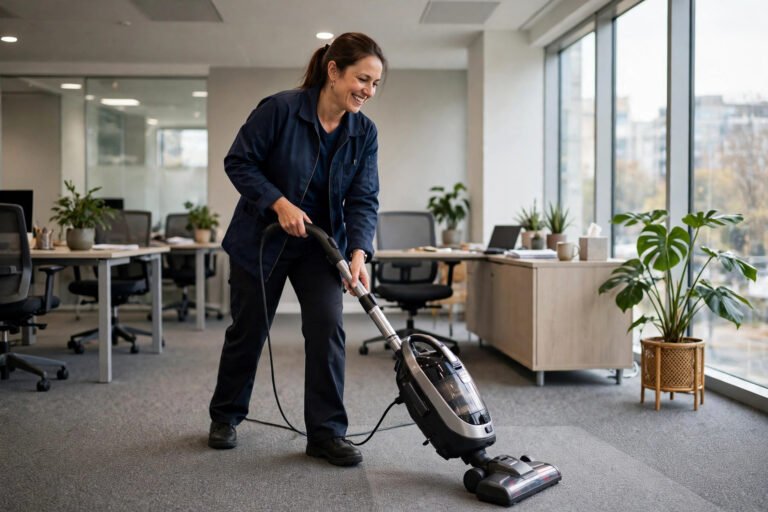
In offices, cleaners usually work early in the morning or in the evening, when staff are not present. Duties include vacuuming, mopping, dusting desks and shelves, cleaning meeting rooms, emptying bins, cleaning kitchens and toilets, and restocking supplies such as soap, paper towels, and toilet paper. You need to respect people’s desks and personal items, and you should never move documents or open drawers without permission.
In hospitals and clinics, cleaning is more sensitive. Hygiene rules are strict, because patients may be ill and infection control matters. You may clean wards, waiting areas, toilets, and corridors, using specific chemicals and methods. You will normally receive training on which product to use, how to dilute it, and how to protect yourself with gloves and sometimes a mask. Following those instructions exactly is essential, not optional.
In shopping centres, airports, and public buildings, cleaners work in busy areas. You may sweep and mop large floors, clean glass doors and lifts, empty large bins, clean food courts, and respond to spills or messes during the day. You need to be alert to safety, for example by putting out a wet floor sign after mopping, and you need to be polite when working around members of the public.
Across all settings, a cleaner is expected to use equipment and chemicals safely, to report damage or hazards, to keep cleaning stores tidy, and to keep a simple record of work completed when asked. You may use vacuum cleaners, floor polishers, mops, buckets, cloths, and spray bottles. Learning to use each tool correctly, and to look after it, is part of the job.
Where Cleaners Work in
Cleaner roles in Nepal cover offices, hotels, hospitals, schools and private homes, and each setting has its own pace and rules. Hospital cleaning, for example, follows strict hygiene routines, while office cleaning is usually done early in the morning or after working hours. Say which settings you have worked in when you apply, because employers match people to the setting they know.
What It Takes to Get Hired as a Cleaner in Nepal
Most employers ask for basic requirements rather than formal qualifications. Physical fitness is important, because you will be on your feet for most of the shift, bending, reaching, lifting bags of linen or boxes of supplies, and pushing cleaning equipment. You do not need to be an athlete, but you should be able to work steadily for a full shift without frequent breaks beyond the scheduled ones.
A clean background is usually required, especially for work in hotels, hospitals, schools, and residential buildings, where you will be around guests, patients, children, or residents’ belongings. Employers may ask for a police clearance certificate from Nepal. Be honest if you are asked about your background. Hiding information is far more likely to cause trouble later than declaring it early.
Basic education is normally enough. Many employers ask for the ability to read and write at a basic level, and to understand simple instructions in English. You do not need fluent English for most cleaning roles, but you do need enough to understand a supervisor, to read a label on a cleaning product, to ask a question, and to report a problem. If your English is limited, improving it before you apply will help you at work and in daily life abroad.
Experience is helpful but not always required. Previous cleaning, housekeeping, hotel, or domestic work is a clear advantage, and employers often prefer workers who already know how to clean a room properly or how to use cleaning machines. If you have no experience, you can still apply. Be ready to explain that you are willing to learn, that you understand the physical nature of the work, and that you will follow hygiene and safety rules carefully. Short training in housekeeping or hygiene, where available in Nepal, can strengthen your application.
Personal qualities matter as much as any certificate. Employers look for honesty, punctuality, attention to detail, and respect for other people’s property. A cleaner who does not steal, who does not cut corners, who arrives on time, and who leaves each area properly finished is a cleaner an employer wants to keep. You should also be comfortable working as part of a team, taking instructions from a supervisor, and working at times that may include early mornings, evenings, weekends, and public holidays.
Health is also relevant. You will normally need a medical check as part of the visa process. That check looks at general fitness and at any condition that would make cleaning work unsafe for you or for others. Keep your health records in order and answer medical questions honestly.
Documents Employers Will Ask For
Prepare your documents early, because delays at this stage are common. You will need a valid passport with enough validity remaining to cover the visa and travel period. Check the expiry date now. If it is close to expiring, renew it before you apply, because a passport with short validity can delay or block a visa.
You will also need recent passport-size photographs, your citizenship certificate, and any educational certificates the employer asks for. Keep originals safe and keep clear photocopies or scans as well. A police clearance certificate is commonly requested for cleaning roles in hotels, hospitals, and residential buildings, so apply for it early.
Your CV should be simple, honest, and easy to read. List your personal details, education, work history, skills, and languages. Do not invent jobs or exaggerate experience. Employers and agencies check references, and a false claim can end your application immediately. If you have housekeeping training, a first aid certificate, or experience with cleaning machines, include it.
Medical reports, visa forms, and the employment contract normally come later, once an employer has shown interest. Read every document before you sign it. If you do not understand a clause, ask for an explanation in Nepali or simple English. Never sign a blank form, and never hand over your original passport or citizenship document to an agent without a proper receipt and a clear reason.
What Life Abroad Is Really Like
Life as a cleaner abroad is not only about work. You will be living in a new country, often sharing accommodation, following different rules, and adjusting to a different climate. The first few weeks are often the hardest. You may feel homesick and tired from shift work. That is normal, and it usually eases with time.
Cleaning shifts can start very early or finish late. Try to keep a regular sleep routine, eat properly, and drink enough water, especially if you work in hot weather or in rooms with strong cleaning chemicals. If you feel unwell, tell your supervisor. Working while ill can lead to mistakes and can affect others, especially in hospitals and hotels.
Housing is not the same in every cleaning job. Some employers give you a shared room near the buildings you clean, some give you a monthly allowance to find your own room, and some leave housing entirely to you. Ask what is included, how many people share a room, whether there is a kitchen and laundry, and how far the housing is from the work site. Respect the shared rooms and be thoughtful toward colleagues who are sleeping after a night shift.
Respect local laws and customs. Learn the basic rules about public behaviour, dress, and interaction with others, especially in countries with strict social rules. When in doubt, ask a supervisor or a colleague who has been there longer. Stay in touch with your family, build a support network where you are, keep your documents safe, and know where your embassy or consulate is and how to reach it if you need help.
Applying the Right Way: A Step-by-Step Guide
Start by deciding where you want to work and what kind of cleaning you prefer. Hotel housekeeping, office cleaning, hospital cleaning, and residential cleaning are all different, with different hours and different demands. Research the country, its visa rules, its working conditions, and its climate. Talk to people who have worked there if you can, and listen to both the good and the difficult parts of their experience.
Next, prepare your CV and documents. Make sure your passport is valid, your police clearance is ready or in progress, and your CV is honest and up to date. Keep digital copies of everything in a safe place, so you can send them quickly when an employer asks.
Then look for genuine vacancies through licensed recruitment agencies in Nepal, through official foreign employment channels, through employer websites, and through trusted job portals. Be careful with social media posts that promise high pay with no interview and no documents. A genuine employer will want to interview you, check your background, and follow a proper process. If an offer sounds too easy, check it carefully. If cleaner jobs in Nepal are not the right fit, hotel worker jobs in Nepal follow a similar sponsorship route.
When you find a role that fits, apply with your CV and a short message about why you want the job and what experience you have. If you are shortlisted, you will normally be invited for an interview in person, by phone, or by video call. Prepare for it. Be ready to talk about your experience, your fitness, your willingness to work shifts, and your understanding of hygiene and safety. Dress neatly, speak clearly, and answer honestly. Short, direct, truthful answers are better than long, memorised speeches. If cleaner jobs in Nepal are not the right fit, security guard jobs in Nepal follow a similar sponsorship route.
If you pass the interview, the employer or agency will ask for your documents, a medical check, and a police clearance. They may ask you to sign an employment contract. Read it carefully. It should state your job title, duties, working hours, leave, accommodation arrangements, and what happens if the contract ends early. If anything is missing or unclear, ask before you sign. Keep a copy for yourself.
After the contract, the visa process begins. The employer or agency will normally guide you, but you should still understand each step. You may need to visit an embassy, provide biometrics, or attend a medical centre. Follow the instructions exactly and keep copies of every submission. Once the visa is issued, check your flight details, your arrival arrangements, and who will meet you on arrival. Carry your documents in your hand luggage and keep the contact details of your employer and agency with you.
Visa Sponsorship for Cleaners in Nepal
When a cleaning company abroad offers you a job with visa sponsorship, it generally means the company is prepared to back your visa application for that cleaning role, by giving you an offer letter, a contract, and the papers the immigration office asks for. It never means the company can promise the visa will be granted. The immigration officers of the destination country make that call themselves, weighing their own rules, any limits on numbers, and the checks they run on the employer and on you.
Sponsorship does not automatically mean the cleaning company pays every cost. Some employers pay the visa fee and the airfare, and a few also cover the medical examination. In other cases the costs are split, or the worker pays for the medical and the police clearance. Cleaning uniforms and basic equipment are often supplied by the employer, but that is not a rule. The exact split should be written into the contract or offer letter. If it is missing, ask for it in writing before you sign or pay anything. Never hand over a large sum in cash without a receipt, and stay away from anyone who wants money before you have a genuine offer in your hands.
Different countries have different visa routes for cleaning work. Some have a specific work visa for sponsored workers. Others require a labour approval, a work permit, or a quota allocation before a visa can be issued. Some roles are only open when the employer can show that local workers are not available. These rules change, and they are not the same everywhere. That is why a job open in one country may not be open in another, and why a vacancy that existed last year may not exist this year.
A sponsored visa is normally tied to a specific employer and a specific job. If you leave that employer, or if the contract ends, your right to stay and work may change. Some countries allow you to transfer to another employer, others do not, and some require you to leave and apply again. Ask about this before you travel, so you know your options if the job does not work out. Be careful about agents who promise a visa for a fee without a real job offer. Genuine sponsorship starts with a genuine employer and a genuine vacancy.
Pitfalls That Trip Up Cleaner Applicants
A mistake many Nepali cleaners make is paying a large fee before anything has been checked. First confirm the agency is licensed with the Department of Foreign Employment, confirm the cleaning company is real, and confirm the offer itself. Ask for the company name, the city and site where you will clean, the written contract, and the visa route, all in writing. If the agent will not give those details, or keeps saying trust me and pay now, walk away and find a licensed agency.
Another mistake is signing a contract you have not read. The contract should state your duties, hours, leave, and accommodation. If you sign without reading it, you may agree to terms you did not expect. Ask for a copy in a language you understand and take time to read it.
A third mistake is exaggerating your CV. If you claim housekeeping experience you do not have, it will become clear on the job. Be honest about what you can do and what you are willing to learn.
A fourth mistake is ignoring hygiene and safety rules. In hospitals and hotels especially, those rules protect you, your colleagues, and the public. Learn which chemical to use, how to dilute it, and how to protect your hands and eyes. Do not mix chemicals unless you have been trained to do so.
A fifth mistake is throwing paperwork away. Keep a copy of your passport, your contract, your visa, your medical reports, your payment receipts, and every message from your agent or employer, including chat messages about pay and shifts. Photograph each page and keep the copies in a folder on your phone as well as on paper. If a dispute comes up about wages, hours, or accommodation, those copies are the proof you will need.
Answers to the Questions Every Applicant Asks
Do I need experience to apply for a cleaner job abroad?
Not always. Some employers prefer experienced cleaners, especially for hotels and hospitals, but many are willing to train new workers who are fit, honest, and willing to learn. Previous cleaning, housekeeping, or hotel work helps, and short training in hygiene or housekeeping also helps. If you have no experience, be honest and show that you understand the work.
Do I need to speak English fluently?
No, not usually. You need enough English to understand instructions, read simple labels, ask questions, and report problems. Some employers test basic English during the interview. Improving your English before you apply will make the job easier and increase your chances.
Is visa sponsorship guaranteed if I get a job offer?
No. A job offer and sponsorship support your application, but the final decision is made by the immigration authorities. They consider the employer’s documents, your background, your medical results, and their own rules. No employer or agent can guarantee a visa, and anyone who promises one should be treated with caution.
What should I check before paying an agent?
Check that the agency holds a valid licence from the Department of Foreign Employment, ask for the cleaning company name and the job details in writing, read the contract before you sign it, and take a receipt for any payment you make. Stay away from very large upfront fees, offers that promise a visa with no interview, and anyone who rushes you to pay. Where you can, check the offer through official foreign employment channels before you hand over money.
Can I change employers after I arrive?
It depends on the country and the type of visa you hold. In some places you can transfer with permission, in others you cannot, and in some you would need to leave and apply again. Ask about this before you travel and do not assume you can change jobs freely. Your contract and visa conditions explain the rules that apply to you.
What happens if my contract is not renewed?
Contracts are normally for a fixed period. If yours is not renewed, your employer should explain the reason and the process for return or for a new application. Keep copies of your contract and performance records, and plan early if renewal is uncertain. Do not overstay your visa. If you are unsure, seek advice from your employer, agency, or embassy.
A Final Word for Cleaner Applicants
Cleaner jobs with visa sponsorship can be a practical path for Nepali workers in 2026, provided you approach them with clear eyes. The work is steady, the entry requirements are achievable, and the experience you gain can lead to better roles in housekeeping and facilities work. At the same time, the work is physical, the hours can be unsocial, and the visa process demands care and realistic expectations.
Get your passport, police clearance, and CV ready early. Use a licensed agency, read every line of your contract, and do not pay large fees without written proof of a real offer from a real cleaning employer. Remember that sponsorship supports your application but never guarantees a visa, and that your right to work rests on the destination country’s rules. If you do those things, you give yourself the best chance of a safe and steady start abroad. Move step by step, keep your papers in order, and pick a cleaning role you truly understand. A slow, careful start beats a rushed one.