Netherlands Cleaner Jobs with Visa Sponsorship 2026
Cleaning work rarely makes headlines, but it keeps the Netherlands running. Offices, hotels, hospitals, schools, airports and homes all need to be cleaned every day, and the people who do this work are essential. For international workers looking for a way into Europe, cleaning jobs in the Netherlands offer a practical starting point: the work is in steady demand, the entry requirements are modest, and some employers are willing to sponsor work permits for overseas workers.
This guide explains what cleaner jobs in the Netherlands involve, why employers are hiring, what you need to qualify, and how to apply in 2026. It is written in plain language, with honest information about sponsorship. Sponsorship is never guaranteed, and no employer or agent can promise you a visa. What this article offers is a clear picture of the work, the requirements and the process, so you can decide whether this path suits you and pursue it properly.
Cleaning work is honest, physical work. The tasks are clear, the hours are often flexible, and the standards are high. Dutch workplaces expect thorough, careful cleaning, and a worker who takes pride in doing the job well is valued. For a reliable worker who is willing to learn, a cleaning job can be the first step towards a stable life in the Netherlands.
What the Job Involves Day to Day
Cleaner jobs in the Netherlands cover a wide range of settings, and the daily tasks depend on where you work. An office cleaner, a hotel housekeeper, a hospital cleaner and a domestic cleaner all do different work, but they share a common purpose: keeping spaces clean, hygienic and pleasant for the people who use them.
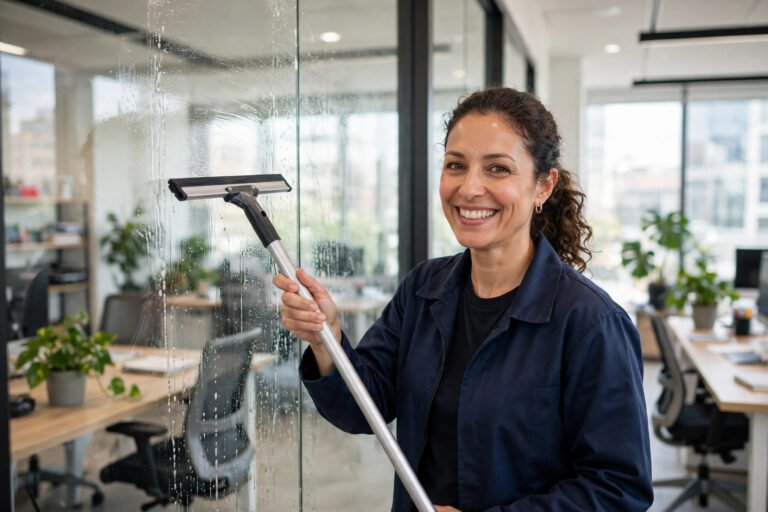
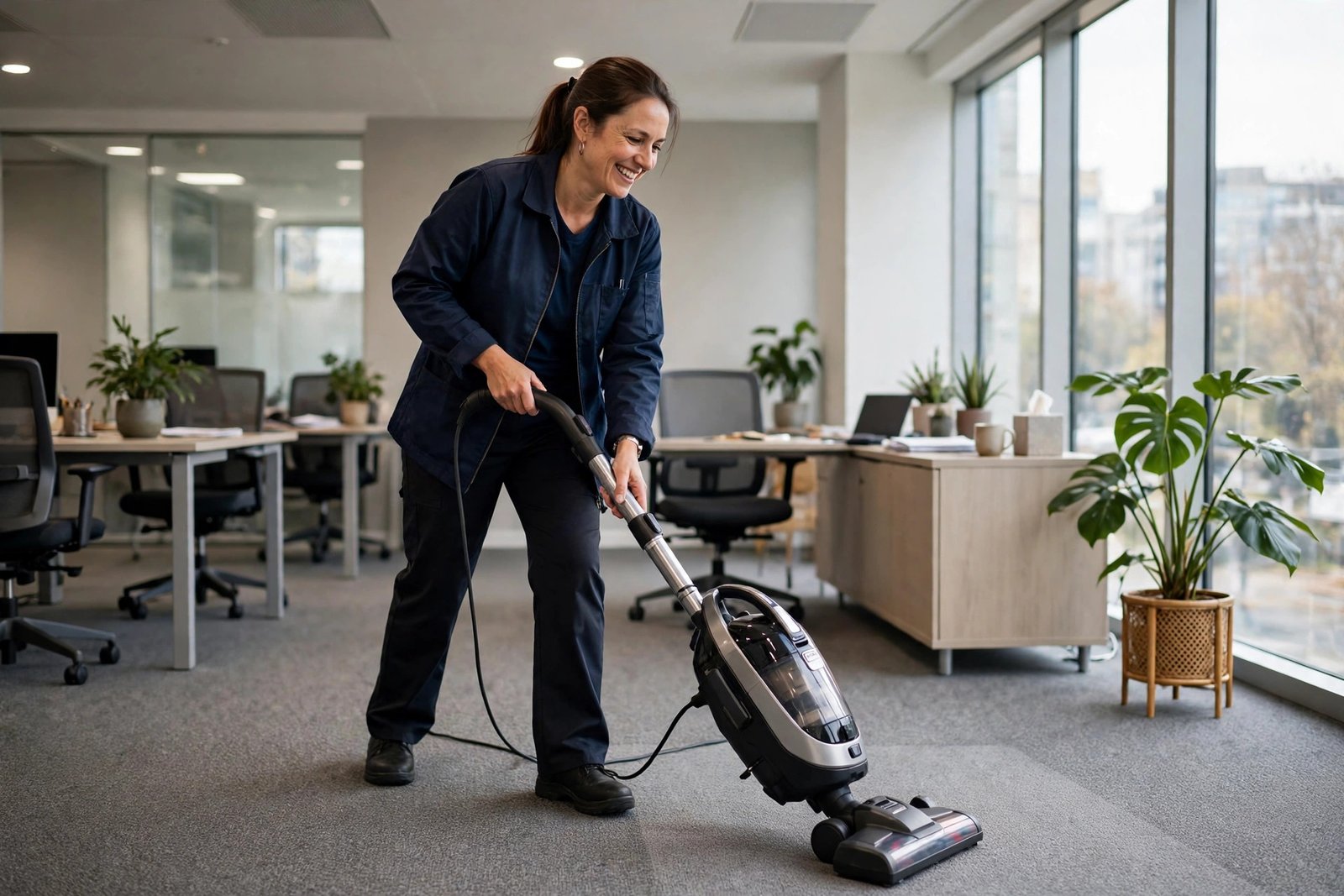
In the Netherlands, office cleaning usually happens before the working day starts or after it ends, when the desks are empty. A cleaner in an Amsterdam or Utrecht office block vacuums the carpet tiles, dusts the desks and shelves, empties the bins, wipes down the kitchen and the toilets, and cleans the meeting rooms ready for the morning. The work follows a set round, room by room, and a careful cleaner keeps to the same order every shift so nothing is skipped.
Hotel housekeeping is one of the largest areas of cleaning work. Housekeepers clean guest rooms between stays, changing bed linen, cleaning bathrooms, dusting furniture, vacuuming carpets and restocking supplies such as towels and toiletries. The work is fast-paced, especially in larger hotels, because rooms must be ready for the next guest by a set time. Attention to detail matters, because guests notice a room that has been cleaned properly and one that has not.
Cleaning in a Dutch hospital or care home is a more specialist job. Staff follow strict hygiene routines to stop infections spreading, with different products and cloths for wards, bathrooms and treatment rooms, and colour-coded equipment so nothing is mixed up. The hospital provides the training, but the work still demands steady concentration, because the standards are far higher than in an office or a shop.
Schools, council buildings and shopping centres in the Netherlands mean big spaces: long corridors, wide halls, rows of toilets and busy entrance areas. The cleaning is usually done early in the morning or late in the afternoon, and it relies on machines as much as mops, ride-on scrubbers for the floors, wide vacuum cleaners for the halls, and trolleys that carry everything the cleaner needs.
Home cleaning means working in private Dutch houses, usually through a cleaning company or an agency that sets the schedule. The cleaner visits the same homes each week, cleaning the kitchen and bathroom, dusting the living room, changing beds and vacuuming throughout. It suits someone who likes working on their own, managing their own day, and building a friendly routine with regular households.
Whichever setting a Dutch cleaner works in, the shape of the day is much the same. You arrive, collect your trolley, cloths and products, and work through the rooms in a planned order, following the label on each product and wearing gloves where the job needs them. Chemicals are handled with care, ladders are used properly, and electrical equipment is checked before use. Before you leave, the equipment goes back in its store, any damage or broken fitting you spotted is reported, and the work is signed off.
What makes a cleaner stand out in the Netherlands is a mix of thoroughness, reliability and discretion. The best cleaners spot the dusty shelf or the mark on the glass that everyone else walks past, they respect the privacy of the homes and offices they enter, and they take pride in leaving a place genuinely clean. Employers and clients notice that, and it is how a cleaner builds a good name.
Where Cleaners Work in
Cleaner roles in the Netherlands cover offices, hotels, hospitals, schools and private homes, and each setting has its own pace and rules. Hospital cleaning, for example, follows strict hygiene routines, while office cleaning is usually done early in the morning or after working hours. Say which settings you have worked in when you apply, because employers match people to the setting they know.
Why Cleaners Are in Demand in the Netherlands
The demand for cleaners in the Netherlands is steady and broad, and it comes from the way Dutch society and the Dutch economy are organised.
The Netherlands has a large number of offices, hotels, hospitals, schools and public buildings, and all of them need regular cleaning. As the economy grows and more buildings are used, the demand for cleaning services grows with it. Tourism is also a major factor: the Netherlands attracts millions of visitors each year, and hotels, holiday parks and restaurants need cleaners to prepare rooms and facilities for guests.
The Dutch labour market is tight, with low unemployment and many sectors competing for workers. Cleaning work is physically demanding, and it often involves early mornings, evenings or weekends, so it can be harder to fill than other roles. Employers therefore look beyond the local workforce, including to workers from other European countries and, for some roles, from outside Europe.
Cleaning companies in the Netherlands are often large, professional organisations that hold contracts with offices, hospitals and hotels. These companies need a reliable workforce to meet their contracts, and they recruit continuously. Some of them work with international workers and are familiar with the process of supporting work permit applications.
Another factor is the growth of the hospitality sector. Amsterdam, Rotterdam, Utrecht and other cities have seen new hotels and holiday accommodation open in recent years, and each one needs housekeeping staff. The demand is year-round, with peaks during the tourist season and around holidays.
Because of these pressures, some Dutch cleaning employers and the recruitment agencies that work with them are open to hiring international workers and supporting work permit applications. Sponsorship is not offered for every cleaning job, and it is more common for full-time, longer-term positions with larger employers than for casual or very short-term work, but for workers who are reliable and willing to commit, the opportunity is real.
Cleaning jobs cluster where the buildings are: Amsterdam, Rotterdam, Utrecht and The Hague, plus the tourist towns and the area around Schiphol airport, where hotels and offices never stop needing cleaners. A worker who is open about where they live and which shifts they take, early mornings, evenings or weekends, will find far more openings than someone fixed on one city and one shift.
Checks, Documents and Registration
No degree or trade certificate is needed for cleaning work in the Netherlands, yet employers still have clear expectations, and meeting them is the first step of any application.
Reliability is the first thing a Dutch cleaning employer looks for. The whole job rests on trust: a client hands you the keys to their home or office and trusts you to arrive on time, clean thoroughly and respect the place. A steady record of turning up and a willing attitude count for far more than any certificate.
Fitness is the second requirement. A cleaning shift means standing, walking, bending, lifting buckets and repeating the same movements for hours, often while moving between floors. You need to be fit enough to keep that pace safely for a full shift. If a health problem limits physical work, be honest about it and think carefully about whether the role fits you.
Experience as a cleaner helps, but Dutch employers often train newcomers themselves, showing them how to use the products, the machines and the hygiene routines. If you have already worked as a cleaner or a housekeeper, in a hotel, a hospital or a private home, make sure it is prominent on your CV, because it proves you already understand the work.
Language requirements are modest. English is widely used in the Netherlands, and most employers expect you to understand basic instructions in English. You do not need fluent Dutch to start, and many cleaning teams work in English, but learning some Dutch will help you in daily life and will improve your prospects. If you already speak some Dutch, mention it.
Your passport must be valid for the whole application and the stay you are planning in the Netherlands. Look at the expiry date today: if it is running out soon, renew it at home before you apply, because a passport that expires during the process can delay the permit.
For a work permit application, the Dutch authorities will ask for evidence that the job is genuine and that you meet the conditions. Your employer will guide you through this, but you should have your documents ready: your passport, your employment history, and any references that support your application. Honesty is essential. False documents or false information can lead to refusal and to serious problems with future applications.
Depending on your nationality, the residence process may include a health check, which is routine for many people moving to the Netherlands. The cleaning company or the authorities will explain which check applies to you and what to do, so there is no need to guess.
Keep your papers tidy and in one place. Scan your passport, your CV, your references and any training certificates, and save them together so you can send them to a Dutch employer or agency at short notice.
Living and Working in the Netherlands
A move to the Netherlands is about more than the cleaning job, and knowing what daily life looks like will help you settle in and enjoy the country beyond the workplace.
The Netherlands is a welcoming, well-organised country with a high standard of living. English is widely spoken, especially in the larger cities, and most official information is available in English. This makes everyday life easier, from opening a bank account to visiting a doctor.
Housing is the biggest hurdle for a newcomer to the Netherlands. Rental demand is very high in Amsterdam, Rotterdam and Utrecht, and an affordable room can take a long time to secure. Some cleaning companies and agencies provide shared housing near the work, which is a practical answer for the first months. If housing is offered, check the rent, the location, the facilities and the house rules before you accept, and if you are searching yourself, start early and expect stiff competition.
Dutch living costs are moderate for Western Europe. Food and everyday services are reasonably priced, supermarkets give good value, and many cleaners cook at home and cycle to work, which is cheap and very Dutch. The cycle lanes are safe and run almost everywhere, so a bicycle is a practical way to reach early shifts.
Getting around is easy in the Netherlands. Trains link the major cities, buses and trams serve the local areas, and a public transport card covers the fares. Many cleaners use it to reach offices and hotels that are too far to cycle to.
The Dutch work culture is practical and direct. People value punctuality, clear communication and doing what you say you will do. In cleaning work, this means turning up on time, doing the job thoroughly, and telling your supervisor if there is a problem rather than hiding it. Managers expect workers to speak up, and a worker who raises a concern is respected.
Working hours are regulated, and overtime rules are set out in your contract and in Dutch labour law. Cleaning work often involves early mornings, evenings or weekends, and work at unsocial hours usually attracts additional pay under the collective agreement or company rules. Check your contract to understand how this works for your role.
Outside working hours, the Netherlands has a lot to offer. The cities are lively, the countryside is flat and green, and sport, music and community life are easy to join. Many overseas cleaners join a local club, a language class or a community group, and those contacts make settling in easier. A little Dutch, even at a basic level, opens doors both socially and at work.
Healthcare is good in the Netherlands, and residents must take out health insurance. As an employed cleaner you will need a policy, and your employer or agency can usually explain how to arrange it. Sort it out soon after arrival so you are covered.
Applying the Right Way: A Step-by-Step Guide
Applying for a cleaner job in the Netherlands from overseas follows a clear sequence, and working through it in order gives you the best chance.
Start with research. Learn about the Dutch cleaning sector and the main employers and agencies that recruit cleaners. Look at job advertisements on reputable Dutch job boards and on the websites of large cleaning companies. Note what employers ask for, where the jobs are, and whether they mention work permit support. This will help you target roles you can realistically get.
Then put together a clear, honest CV of one or two pages. Contact details at the top, a short summary of your experience, then your jobs with dates and employer names and a brief line about your duties, stressing any cleaning, housekeeping or hotel work. Finish with your languages and any training you have done.
Apply directly to employers and to reputable recruitment agencies. Many cleaning jobs in the Netherlands are filled through agencies that specialise in cleaning and hospitality, and some of these agencies work with international workers. A legitimate agency will explain the job, the hours, the pay and the accommodation arrangements clearly, and will not ask you to pay large fees upfront. Be very cautious about anyone who charges a large sum before you have an offer, or who promises a guaranteed visa.
If an employer or agency is interested, a video interview usually follows. They will ask about your cleaning experience, when you can start, whether you can manage physical work and early or late shifts, and why you want to work in the Netherlands. Answer plainly and truthfully: Dutch cleaning companies want dependable people who will stay and do the job well.
When you are offered the job, you will get a written offer or contract. Read it carefully first: the job title, the cleaning locations, the hours and shift pattern, how pay is arranged, and any housing details. Where a room is offered, ask what it costs and what is included, and if something is unclear, ask the employer to explain it. A genuine employer answers plainly. If cleaner jobs in Netherlands are not the right fit, warehouse worker jobs in Netherlands follow a similar sponsorship route.
After you accept, the permit process begins. For most non-EU workers the employer applies for a combined work and residence permit, the GVVA, and you provide your documents and cooperate at each stage. The process takes time and you cannot start cleaning until the permit is granted, so keep in touch with the employer and reply quickly when more information is requested. If cleaner jobs in Netherlands are not the right fit, factory worker jobs in Netherlands follow a similar sponsorship route.
Once the permit is approved, arrange your travel and your first place to stay. Confirm your start date and arrival details and find out who will meet you. Ask what to wear on day one, what to bring with you, and how to reach the first cleaning location. Arriving prepared makes the first week much easier.
How the Visa Process Works for Cleaners
The word sponsorship is used loosely, and it helps to understand exactly what it means for cleaning work in the Netherlands.
In the Netherlands, sponsorship means a cleaning employer is willing to take you on and to support your application for a work and residence permit. The employer offers a genuine cleaning job, gives the authorities the information they need, and often acts as your recognised sponsor. Without an employer ready to do this, a worker from outside the EU generally cannot obtain permission to work in the Netherlands, so the employer’s support is the key to the whole process.
Sponsorship does not mean a guaranteed visa. The Dutch Immigration and Naturalisation Service decides, not the cleaning company. It checks the job is genuine, the employer is eligible to sponsor, the terms meet the rules, and your papers are in order. If anything falls short, the application can be refused, and no employer, agency or website can promise otherwise. Anyone who does is not telling you the truth.
Nor does sponsorship mean the employer pays for everything. Some cleaning companies help with the flight or the first weeks of housing, others charge for the room or deduct housing costs from pay, and the arrangements differ widely. They should be written clearly in your contract before you accept, so read the deductions section and ask about anything unclear.
It also leaves your own responsibilities in place. You must give genuine documents and true information. A false document can mean refusal, loss of the permit, and problems with future applications.
Permits carry conditions. A work permit is usually tied to one employer at first, and changing employer involves rules and paperwork. The permit also has a time limit, and renewing it depends on staying employed. Understanding this from the start helps you plan ahead.
The honest picture is that sponsorship for cleaning work in the Netherlands is real but selective. It is most likely for full-time, longer-term roles with larger employers, and it works best for workers who are reliable, fit and prepared to commit. Treat any promise of a fast or guaranteed result with caution, and rely on the official process and on genuine employers.
Pitfalls That Trip Up Cleaner Applicants
Many international workers make the same avoidable mistakes when applying for cleaning jobs in the Netherlands.
The first mistake is paying a large fee to an agent who promises a guaranteed cleaning job and visa. Genuine Dutch employers and legitimate agencies do not ask workers for large payments up front. If someone wants a big sum before you have an offer, or guarantees a visa, pause and check who they are before paying anything.
The second mistake is taking a job without reading the contract. Some cleaners arrive to find the hours, the pay deductions or the housing are not what they were told. Read the contract word for word, ask about any deduction for housing or travel, and get the important points confirmed in writing before you go.
The third mistake is arriving with too little money saved. Even with a job and a room arranged, the first weeks cost money: a deposit, food, transport, a phone, and a bank account. A small financial cushion makes the move far less stressful.
The fourth mistake is neglecting health and fitness. Cleaning is physical work, and beginning a demanding job while unfit or unwell makes the first weeks much harder. Get yourself fit before you travel, and take the safety training seriously from day one.
The fifth is ignoring the language. You can start cleaning work with basic English, but workers who make an effort to learn Dutch, even a little, settle in faster, understand more, and have better prospects.
The sixth mistake is dishonesty in the application. Employers check references and documents, and a false claim, once discovered, damages your application far more than an honest note about limited experience would.
The seventh mistake is having no housing plan. Do not assume a room will just appear. Confirm your housing before you travel, know the address and the cost and who to contact when you arrive, and keep a backup plan ready in case the first option falls through.
Questions Cleaner Applicants Ask Most
Do I need experience to get a cleaner job in the Netherlands?
Cleaning experience helps, but many Dutch employers train new cleaners from scratch. Reliability, fitness and a willingness to learn often matter more than experience, and hotel housekeeping or hospital cleaning on your CV is a clear advantage.
Can a Dutch employer sponsor my work permit?
Some employers can and do sponsor work permits for overseas cleaners, particularly for full-time, longer-term roles with larger employers. Sponsorship means the employer supports your permit application. It does not guarantee that the permit will be granted, because the final decision is made by the Dutch authorities.
Do I need to speak Dutch?
You do not need fluent Dutch to start, and many cleaning teams work in English. You do need enough English to understand instructions and safety information. Learning Dutch will help you in daily life and improve your prospects over time.
Will accommodation be provided?
Some cleaning employers and agencies offer shared housing for overseas workers near the workplace, while others do not. Ask before you accept an offer, and check the cost and the conditions.
How long does the application process take?
The timeline depends on the employer, the permit type and the workload of the authorities. From application to arrival can take several months, so keep your plans realistic and be cautious of anyone promising a far quicker result.
Can I change employer once I am in the Netherlands?
Changing employer is possible, but rules and procedures apply, and a permit is normally linked to one employer at first. Understand the rules before you move, and get advice if you are unsure.
Is cleaning work in the Netherlands physically hard?
Yes, cleaning is physical work. You are on your feet for most of the shift, bending, lifting and moving around. Good fitness, proper technique and following the safety rules are essential.
What to Do Next
Cleaner jobs in the Netherlands offer a realistic route into Europe for international workers who are reliable, fit and willing to work hard. The demand for cleaners is steady and broad, covering hotels, offices, hospitals, schools and homes, and some employers are prepared to sponsor work permits for the right candidates. For a worker who prepares properly, applies through genuine employers and understands the process, the Netherlands in 2026 is a genuine opportunity.
Cleaning work in the Netherlands is a real opportunity with honest conditions. Sponsorship is support, not a guarantee, the process takes time, the work is physical, and housing needs to be planned. Avoid agents who promise guaranteed results, read every contract carefully, and base your application on truthful documents and real experience.
If you research employers, prepare a clear application, understand the permit process and arrive with realistic expectations and enough savings, you will give yourself the best possible chance of building a stable working life in the Netherlands. The work is essential, the demand is real, and a reliable cleaner who shows up and does the job well has every reason to succeed.