Ireland Cleaner Jobs with Visa Sponsorship 2026
Dublin’s glass office towers along the Grand Canal, the busy hotels of Temple Bar, the wards of large public hospitals and the classrooms of schools in Cork, Galway and Limerick all have one thing in common: they only work because someone cleans them properly, every single day. Ireland runs on tidy, hygienic workplaces, and behind that sits a workforce of cleaners who start before sunrise, finish after the offices empty, and keep hotels, hospitals and factories running to a standard guests and patients can feel the moment they walk in.
For a worker coming from overseas, a cleaning job in Ireland can be a realistic way into the country. It does not need a university degree, and it does not need years of specialist training before you arrive. What it does need is reliability, stamina, an eye for detail and a willingness to work the hours when cleaning actually happens, which are often early mornings, evenings and weekends. This guide explains the work as it really is in Ireland in 2026, including where the jobs are, what employers expect, how sponsorship works, and what life looks like once you are here.
Nothing in this guide promises you a job or a visa. Sponsorship depends on the employer, on the permit rules in force at the time, and on the decision of the Irish authorities. Every application is judged on its own facts. What you will get here is a straight picture: the kinds of cleaning work that exist, the places where demand is strongest, the documents you will need, the mistakes that catch people out, and the practical questions every applicant asks before deciding.
If you are the kind of person who notices a smear on a mirror, a bin that needs emptying before anyone asks, or a floor that is still damp where someone could slip, you already have the instinct this work rewards. The sections below take you through the job in detail, from the first shift to the first pay packet.
What Cleaner Work Involves
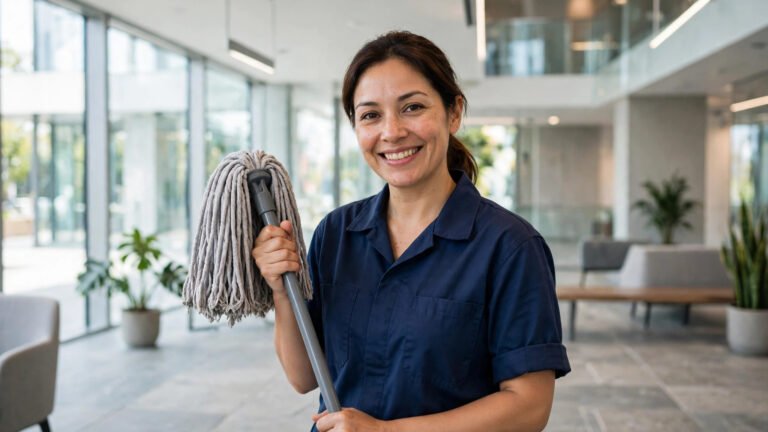
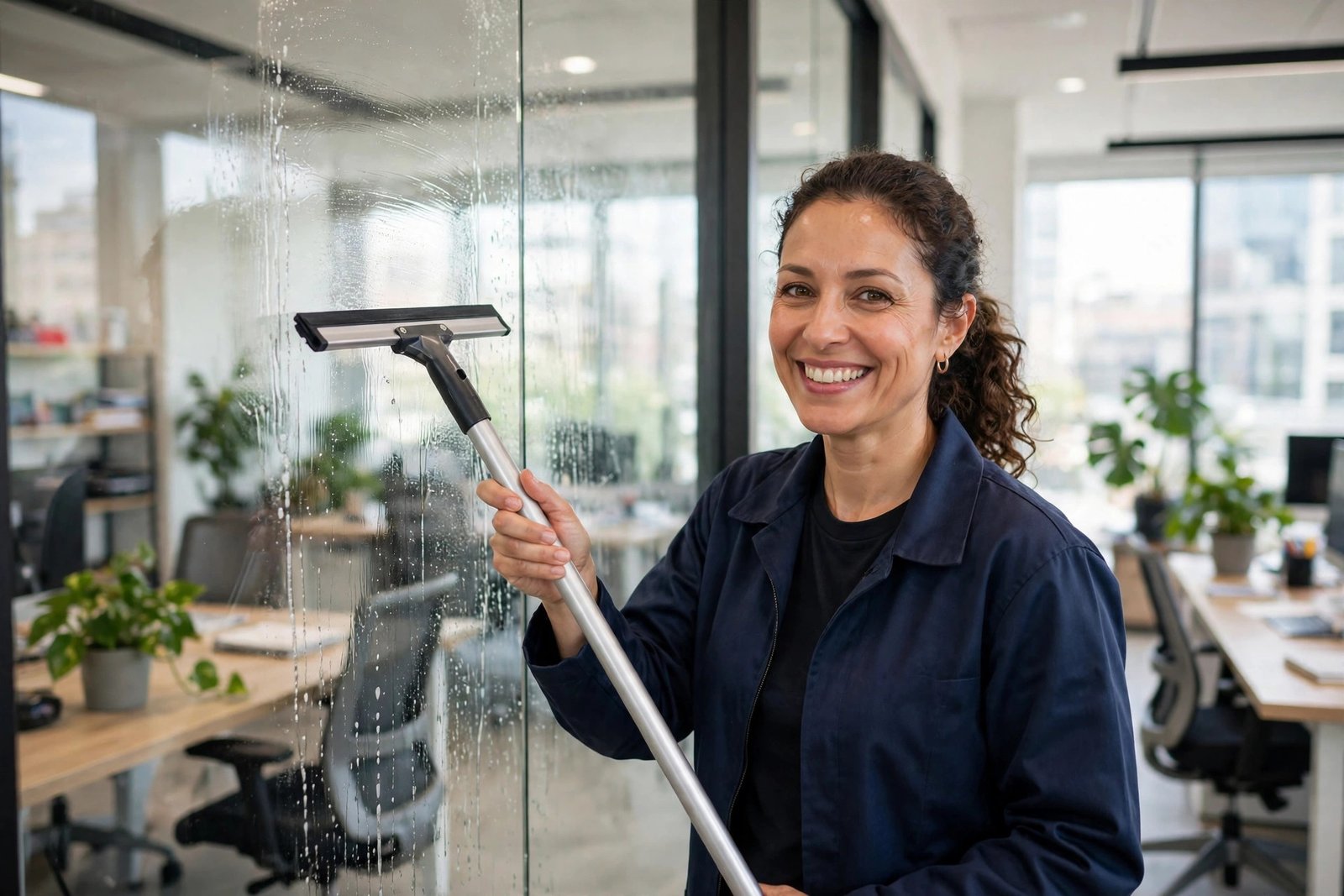
Office cleaning in Ireland is concentrated in Dublin, where the docklands, the IFSC and the business parks around Sandyford and Citywest hold thousands of desks. An office cleaner there usually works a split pattern: an early shift before staff arrive, or an evening shift after they leave. The routine covers vacuuming open-plan floors, wiping desks and meeting-room tables, cleaning kitchenettes and toilets, emptying bins and recycling, restocking paper and soap, and polishing glass partitions. Some contracts include carpet spotting and the weekly deep clean of a boardroom or a staff canteen, and the work is checked against a schedule rather than left to guesswork.
Hotel cleaning looks very different, and it is busiest in Dublin city centre, in Galway, in Killarney and along the Wild Atlantic Way. A room attendant in a Dublin hotel might be given a set of rooms to turn over between checkout and the next check-in, changing linen, scrubbing bathrooms, vacuuming, dusting, replacing towels and toiletries, and reporting anything broken, from a faulty lamp to a leaking tap. In a busy summer week in Killarney, when coach tours arrive and leave on the same day, the pace is relentless and the standard is unforgiving, because a guest who finds a stained sheet or a hair in the shower will say so in a review the same evening.
Hospital and healthcare cleaning in Ireland is the most tightly controlled kind of cleaning there is. Cleaners in public hospitals and private clinics work to infection-control routines, using colour-coded cloths and mops so that equipment used in a toilet never touches a ward kitchen, and following set methods for cleaning patient rooms, corridors, waiting areas and treatment rooms. Protective gloves, aprons and sometimes masks are part of the uniform, and the work is supervised and audited. It is demanding and it carries real responsibility, because a ward that is not cleaned to standard puts patients at risk.
Industrial cleaning takes place in the pharmaceutical plants around Cork and the manufacturing sites in Shannon, Limerick and Athlone. There, cleaners work around production lines, in warehouses and in staff facilities, often with ride-on scrubber dryers, industrial vacuums and pressure washers. Safety rules are strict, because the sites hold chemicals, forklifts and moving machinery, and a cleaner needs to know where they may and may not go. School cleaning usually happens after the last bell, covering classrooms, corridors, toilets, gyms and canteens, and it suits people who prefer a steady afternoon or evening routine. Dublin Airport and the regional airports at Cork and Shannon employ cleaners around the clock, wiping down terminals, cleaning aircraft cabins between flights and keeping washrooms usable through the busiest hours.
Domestic cleaning in Ireland means working inside private homes, usually in the suburbs of Dublin, Cork and Galway, in places like Dundrum, Lucan, Ballincollig or Salthill. The tasks are familiar: living rooms, kitchens, bathrooms and bedrooms, laundry and ironing, and sometimes a weekly deep clean of an oven or a fridge. It is the most personal form of cleaning, because you are in someone’s home, and it rests entirely on trust, discretion and respect for the family’s privacy. Some domestic cleaners are employed by cleaning companies that send them to several homes a day; others are hired directly by the household and build a long relationship with one family.
Equipment, Chemicals and Safe Practice
Irish cleaning companies expect their staff to treat chemicals and machines with respect, and most of that is learned on the job in the first weeks. A new cleaner is shown how to read the safety information on a product label, how to dilute a concentrate to the right strength, and why two cleaning chemicals should never be mixed. Colour coding is used widely: a red cloth for toilets, a blue cloth for general surfaces, a yellow one for washbasins, so that germs are not carried from one area to another. The system only works if everyone on the team follows it every time.
Machines are a bigger part of the job than many newcomers expect. A cleaner in a large Dublin office might use a backpack vacuum, a scrubber dryer for hard floors and a carpet extractor for stains. Hotel staff learn to run a linen trolley efficiently and to spot-check rooms with a torch. Hospital cleaners use steam cleaners and disinfectant systems that need careful handling. Employers provide training on all of this, and a worker who asks questions, follows the label and reports a faulty machine instead of forcing it will earn a supervisor’s trust quickly. Keep chemicals locked away from children and food areas, store them upright, and never pour a leftover chemical down a sink without checking the instructions.
A Working Day: Duties and Hours
A cleaning day in Ireland rarely follows office hours, and that is the first thing to understand. An office cleaner in Dublin might start at five or six in the morning, finishing before the first meetings begin, or arrive at six in the evening and work until nine or ten. Hotel cleaners usually begin mid-morning as guests check out, and the busiest hours are late morning, when a whole floor of rooms needs turning over before the next arrivals. Hospital cleaners work in rotation, days, evenings and nights, because a hospital never closes. Industrial cleaners often work while a production line is stopped, or after the factory shift ends, and school cleaners typically start in the late afternoon.
The work itself is physical and repetitive, but it is never careless repetition. A cleaner might vacuum a large open-plan floor in the docklands, mop a corridor, scrub a row of toilets, wipe down a kitchenette and empty forty bins, all following a schedule that says which areas matter most and in what order. A hotel cleaner follows a room checklist: beds made, bathroom descaled, mirrors polished, floor vacuumed, amenities replaced, and the room inspected before the door is closed. A hospital cleaner disinfects touch points like door handles and bed rails, changes linen, cleans bathrooms and disposes of waste in the correct bags. A school cleaner sweeps classrooms, wipes tables, cleans toilets and sets rooms ready for the next morning.
Most of the shift is spent on your feet, walking between rooms, bending to clean low surfaces, lifting a vacuum up a flight of stairs or pushing a loaded trolley along a corridor. You learn quickly which product suits which surface, because the wrong one can stain a wooden floor or dull a stainless steel sink, and which cloth to reach for without thinking. Training matters here, and employers in Ireland generally give it on site during the first week, pairing a new cleaner with an experienced colleague until the routine is familiar.
Communication is part of the job too. Cleaners report a broken tap, a light that has stopped working, a stain that will not lift, or a cupboard running low on supplies. They follow the supervisor’s priorities, finish the urgent areas first, and leave a note or a message when something needs a tradesperson. The best cleaners are observant: they spot a leak under a sink before it becomes a flood, a loose tile before someone trips on it, and a door that will not lock before it becomes a security problem.
Why Cleaners Are in Demand in Ireland
Tourism is the most visible reason. Dublin alone draws millions of visitors a year, and hotels, guesthouses, hostels and short-stay apartments across the city need room attendants and public-area cleaners all year, with a sharp rise from late spring through the autumn. Killarney, Galway and the towns along the Wild Atlantic Way see the same pattern, and many hotels there struggle to keep a full cleaning team through the summer season, when several coach parties can check out on a single morning.
Offices are the second driver. The docklands and the business parks around Dublin hold the Irish bases of many international companies, and each of those buildings is cleaned daily under a facilities contract. As new office blocks open and older ones are refurbished, the cleaning contracts grow with them. Pharmaceutical and medical-device plants around Cork, and food-production sites in the midlands, add industrial cleaning work that runs through the year rather than by season.
There is also a simple staffing problem. Many people already living in Ireland prefer daytime office work, so cleaning companies find it hardest to fill early-morning, evening, night and weekend shifts, which happen to be exactly when most cleaning is done. Cleaning is physically hard, and some workers leave for less physical roles after a year or two, so employers are constantly replacing staff. Reliable workers who turn up, keep standards high and stay in the job are genuinely valued, and a supervisor will fight to keep them.
Population change adds to the pressure. As older cleaners retire, their places need filling, and in smaller towns and rural counties the local workforce is thin while the hotels, schools and care homes still need daily cleaning. International workers who are happy with flexible hours can fill those gaps, particularly in Dublin, Cork, Galway and the tourist towns of Kerry and Clare.
Honesty matters here. Demand does not mean every cleaning company can sponsor a visa, and it does not mean sponsorship is easy. Many cleaning jobs are filled locally, and sponsorship is only possible in certain circumstances. It depends on the employer, the role, the location and the rules in force at the time, and it costs the employer money, paperwork and responsibility. Companies usually sponsor when they have a genuine need they cannot fill locally and when the candidate is reliable and suitable, so aim at realistic openings rather than at every advert you see.
Requirements, Documents and Checks
Most Irish cleaning employers ask for the same foundations: you should be at least eighteen, physically fit, reliable, punctual and able to work without constant supervision. Previous cleaning experience helps, especially for hotel and hospital roles, but many entry-level jobs accept people without it and train them on site. What matters more than a long work history is the attitude you show in the first weeks: turning up on time, following the schedule, and asking when you are unsure instead of guessing.
Fitness is not a formality. A shift means standing, walking, bending, lifting and pushing a trolley for hours, carrying buckets, moving furniture to clean underneath it, and hauling boxes of supplies up stairs in buildings where the lift is out of order. Workers who arrive unfit often struggle in the first fortnight, so building up your stamina before you travel and easing into the pace during the first weeks will make a real difference. If you have a back or knee problem, be honest about it, because some roles are more physical than others and a supervisor can place you where you will cope.
English is the working language, and the level you need depends on the setting. In a quiet office contract, basic English is often enough to start, because the work is practical and instructions are simple. In a hotel, where you may meet guests, or in a hospital, where you must read safety notices and hygiene instructions exactly, stronger English matters a great deal. Working on your English before you apply will help in interviews, in training and in everyday life, and it is one of the cheapest ways to improve your chances.
Employers will usually ask for a CV, references from past employers, proof of identity and evidence of your previous work. Hospital and care-home cleaning may call for health checks or proof of vaccinations, and school cleaning may require Garda vetting, the Irish police background check for people working with children. Industrial cleaning may ask for safety training or experience with machinery. Some employers also ask for a police clearance from your home country, so gather these papers early rather than scrambling when an offer arrives.
For visa purposes you will generally need a valid passport and supporting documents. The Irish authorities may ask for health checks, proof of a job offer from the cleaning company, evidence of qualifications or other papers depending on the permit type. Requirements change, so always check the current official guidance rather than trusting information from a year ago. Keep your documents organised, translated where needed, and ready to share when asked, because a slow reply can cost you an offer.
How the Visa Process Works for Cleaners
Sponsorship is widely misunderstood, so here it is in plain terms. When an Irish employer sponsors you, it means the employer supports your employment permit or visa application. It does not mean the permit is granted automatically, and it does not mean the employer decides the outcome. The Irish Government decides, based on the rules in force, whether the employer is eligible, whether the role fits, and whether your own circumstances meet the requirements.
Not every cleaning company can sponsor workers. The employer must meet certain conditions, and the role must fit the permit rules that apply at the time. In Ireland, employment permits are generally tied to specific roles, and some roles are more or less likely to qualify. The right permit depends on the role, the location, the employer’s status and your background, and because the rules change, information that was correct last year may not be correct now. Always check the current official information before you act on anything.
Sponsorship creates duties on both sides. The employer may need to show the role is genuine, that you will be paid fairly and that the workplace meets Irish standards. You will need to meet health, character and other requirements, and to follow the conditions of any permit that is granted. A permit can limit the type of work you do, the employer you work for, the location or the length of your stay, and breaking those conditions can cause serious problems, so read them carefully before you travel.
Money is another point where honesty matters. In an Irish cleaning job, some costs may be paid by the employer and others may be yours, and the split depends on the permit type, the company’s policy and the agreement you reach. Never assume everything is covered, and never pay a large sum to a middleman who promises a guaranteed visa. If you are asked to pay fees, ask for a written breakdown, a receipt and a clear explanation of what each fee is for. If you are unsure, seek independent advice from a registered adviser.
Sponsorship also does not guarantee permanent residence. Many permits for cleaners are temporary, and any route to a longer stay may depend on later applications, further years of work, changing rules and government decisions. Do not plan your whole future on the idea that a temporary permit will become permanent by itself. Focus first on doing the job well, following your permit conditions and keeping your records in order.
Your Application, Step by Step
The first step is to decide which kind of cleaning suits you in Ireland. Think about your experience, your fitness, whether you can cope with very early starts or night work, and whether you would rather clean offices, hotels, hospitals, schools or industrial sites. Someone who likes quiet, independent work may prefer an office contract in the docklands. Someone who likes a fast pace may prefer hotel housekeeping in Dublin or Killarney. Someone drawn to healthcare may prefer hospital cleaning, as long as they are comfortable with strict hygiene rules and protective clothing.
The second step is to prepare a clear CV. List your work history, including any cleaning, housekeeping, hotel, warehouse or maintenance jobs. Name the specific tasks you have done, such as cleaning offices, hotels or homes, using vacuum cleaners and floor machines, or following hygiene routines. Add your contact details, education, language skills and referees. Keep the CV honest and short. Do not stretch your experience, because an Irish employer will notice quickly once you start work.
The third step is to look for genuine openings. Search for cleaning companies, hotels, hospitals and facility management employers in Ireland that are known and easy to verify. Check the employer’s own careers page, trusted job boards and official employment services. Read each advert carefully. A genuine listing names the employer, describes the role, gives the location and explains how to apply. Be wary of listings that ask for large payments in advance, promise a guaranteed visa, or refuse to share basic facts about the employer.
Then apply for the roles that suit you. Tailor every application to the job in question instead of firing off the same message to every cleaning company in Ireland. Highlight the experience that fits, mention your language skills and your availability, and send the documents the listing requests. Stick to the instructions exactly, from the application method to the closing date, because a careless application is often the first thing a recruiter discards.
The fifth step is to prepare for interviews. Many overseas interviews are held by video call. Test your internet connection, camera and microphone beforehand. Choose a quiet place with good lighting. Dress neatly. Be ready to talk about your experience, your reasons for wanting to work in Ireland, your availability and your understanding of cleaning work. Employers may ask how you would handle a busy shift, a difficult stain or a safety hazard. Answer honestly, with examples where possible, and do not be afraid to say you would ask a supervisor when you are unsure. If cleaner jobs in Ireland are not the right fit, warehouse worker jobs in Ireland follow a similar sponsorship route.
The sixth step, if you are offered a cleaning role, is to talk through sponsorship carefully. Ask the employer to explain the visa or permit process, the timeline, who pays which costs and what your responsibilities will be. Get the important details in writing. Do not leave a current job, pay large fees or book travel until you understand the offer and the permit requirements. If anything is unclear, seek advice from a registered adviser or the official Irish Government website. If cleaner jobs in Ireland are not the right fit, truck driver jobs in Ireland follow a similar sponsorship route.
Living and Working in Ireland
Life in Ireland can be enjoyable and welcoming, but it is different from life in many other countries. Cities such as Dublin, Cork, Galway and Limerick are modern and multicultural, with shops, restaurants, parks and diverse communities. Smaller towns are often quieter, with a strong sense of community and a slower pace. The climate is mild, with cool summers and mild winters, although rain is frequent and the weather can change quickly, so pack for rain, wind and cool temperatures, and buy a proper waterproof jacket in your first week.
Irish workplace culture is generally friendly, informal and respectful. Supervisors are often addressed by their first names, and teamwork is valued. Punctuality is important. Arriving on time, informing your supervisor early if you are unwell, and following safety procedures are basic expectations. Workplaces have strict rules about hygiene, food safety and guest privacy where relevant, and staff are expected to follow them carefully, not just when someone is watching.
Accommodation is a practical issue for overseas workers, especially in Dublin, where rental costs can be high and housing can be difficult to find. Some employers help workers find accommodation, while others expect workers to find their own housing. Before you accept a job, ask whether accommodation is provided or assisted, what it costs and how far it is from the workplace. Do not assume housing is included unless it is stated clearly in writing. Sharing a house with colleagues is common, and towns outside Dublin, such as Athlone, Letterkenny or Ennis, are usually cheaper.
Transport in Ireland varies by city. Dublin has buses, trams and trains, and a Leap card makes fares cheaper, while other cities have buses and regional trains run by Bus Eireann and Irish Rail. Many workers use public transport, share rides with colleagues or buy a car after they settle in. If you will work early or late shifts, check how you will travel to and from work safely, because buses run less often at night and some routes stop altogether.
Food, healthcare and daily life also take some getting used to. Ireland has supermarkets, markets and restaurants selling food from many cultures, so most cleaners can find familiar ingredients, and the large supermarkets stock spices, rice and halal meat in most cities. Healthcare is of a high standard, but overseas workers should understand their health cover before they travel. Some visas call for health insurance, and the employer or the worker may be the one to arrange it. Ask about this early, and keep copies of any insurance documents.
Social life in Ireland is often centred on music, sport, pubs, community events and shared meals, and the GAA, football and rugby give you something to talk about with colleagues from the first week. Many cleaning workers make friends with colleagues from different countries, which can make the experience richer. At the same time, homesickness is normal, especially in the first months. Staying in touch with family, joining community groups and building a routine can help a great deal.
Mistakes to Avoid When You Apply
One common mistake is applying for every cleaning job without checking whether the employer sponsors visas or permits. This wastes time and leads to disappointment. Focus on employers and roles where sponsorship is genuinely possible, and read each listing carefully before you apply, looking for the employer’s name, the location and a clear description of the role.
Another error is overstating your experience or your English on a CV. Irish employers notice fast when a new cleaner cannot do the tasks they claimed to know. Being honest about your level and showing you are keen to learn will take you further than starting a job under false expectations that collapse in the first week.
A third error is paying large fees to middlemen who promise guaranteed cleaning jobs or visas in Ireland. No one can guarantee a visa or permit decision. Be careful of anyone who asks for money before you have a written job offer, who will not give receipts, or who pushes you to decide in a hurry. Take the time to verify the employer and seek independent advice before you hand over anything.
A fourth error is ignoring your visa or permit conditions. Some cleaners take a sponsored job in Ireland and then change employers, take extra jobs or move to another city without checking whether their permit allows it. That can put the permit at risk. Always read your conditions carefully and ask for advice before making a change.
A fifth error is landing in Ireland without any money set aside. Dublin in particular can be costly, and a cleaner who arrives with empty pockets may find the first weeks hard going until the first wages come through. Plan a budget, find out when you will be paid and keep an emergency fund if you possibly can, because even a small cushion makes the first month far easier.
A sixth error is neglecting health and safety. Cleaning work in Ireland involves chemicals, lifting, wet floors and long hours on your feet. Follow the safety training, wear the protective equipment where it is required, use chemicals the right way and report hazards to your supervisor. Looking after your health is part of doing the job properly, not an extra.
Questions Applicants Ask
Do Irish cleaning companies sponsor overseas cleaners?
Some do, but not all. Sponsorship depends on the company, the role, the location and the rules at the time. Companies usually sponsor when they have a genuine need and when the candidate meets the requirements. Always check the specific employer’s policy rather than assuming sponsorship is available.
Do I need previous cleaning experience to apply?
Previous experience helps, but entry level cleaning roles in Ireland may accept workers without it. Employers often train new staff in cleaning methods, products and safety. Being reliable, fit and willing to learn often matters just as much as a long work history.
How good does my English need to be?
You need enough English to understand instructions, follow safety procedures and talk with supervisors and colleagues in Ireland. Basic English is often enough to start in many cleaning roles, but better English helps with training, moving up and everyday life. Working on your English before you apply will help you.
Can I bring my family with me?
Family arrangements for Irish cleaners depend on the visa or permit type and your circumstances. Some permits allow family members to join the worker, while others have different rules. Check the official information for the specific permit that applies to your situation.
How long does the sponsorship process take?
The time it takes varies widely for Irish cleaning roles. It depends on the employer, the permit type, whether your documents are complete and government processing times. No employer or agent can give an exact timeline, and delays are possible. Plan patiently and keep in regular contact with the employer.
Will I be paid fairly in Ireland?
Ireland has workplace laws that set minimum pay and conditions for cleaners. Employers must follow those laws, and workers have rights. Make sure you understand your pay, hours, overtime rules and entitlements before you start work. If you are unsure, check official workplace information.
What if my visa or permit application is refused?
A refusal does not necessarily mean you can never apply again, but it does mean that this particular cleaning application did not meet the requirements at the time. The reasons should be set out in the decision letter. Get advice before reapplying, and do not pay for a new application without first understanding what went wrong.
Final Word
Ireland cleaner jobs with visa sponsorship in 2026 offer a practical opportunity for international workers who are reliable, physically fit and willing to work flexible hours. Cleaning companies, hotels, hospitals, offices and schools across the country need workers who can maintain high standards of hygiene and cleanliness, and overseas workers can play an important role in meeting that need. The work is practical, physical and detail focused, and it rewards workers who take pride in doing a thorough job, from a spotless office floor in the docklands to a hygienic hospital ward in Cork.
Success in this pathway does not come from shortcuts or promises. It comes from choosing the right type of cleaning work, preparing a clear and honest application, improving your English, understanding the visa or permit process and treating every employer and client with respect. It also comes from understanding that sponsorship is never guaranteed, that the Irish Government makes the final decision, and that your own conduct, documents and preparation matter.
If you take the time to research, prepare and apply carefully, you will give yourself the best possible chance. Start with a clear CV, focus on genuine employers, prepare for interviews, and ask questions when something is unclear. Cleaning work in Ireland can be the start of a valuable professional experience and a meaningful chapter in your working life, provided you approach it with realistic expectations and a willingness to work hard.