Sri Lanka Caregiver Jobs with Visa Sponsorship 2026
Caregiving is work that asks for patience, kindness, and steady reliability, and it is work that many people from Sri Lanka do with great care. Across the world, populations are ageing, families need help looking after elderly relatives, and hospitals, care homes, and private households need workers who can support people with daily life. That demand is why caregiver jobs appear so often in overseas recruitment, and why they are worth understanding properly before you apply.
This guide is for Sri Lankan workers considering caregiver jobs with visa sponsorship in 2026. It explains what caregivers do, what employers usually look for, how to apply step by step, and what sponsorship actually means. It does not promise a job or a visa. Sponsorship depends on the employer, the destination country, and the visa rules in force when you apply, and the final visa decision always rests with the immigration authorities. What this guide can do is help you prepare well, set realistic expectations, and avoid the mistakes that waste time and money.
Caregiving is not easy work. It can be emotional, physical, and demanding, especially when you are caring for someone who is ill, confused, or in pain. It also brings a kind of satisfaction that few other jobs offer, because you can see, day by day, that your help makes someone’s life easier and safer. If you are a caring person who can stay calm, listen well, and follow instructions carefully, this role may suit you.
Why Caregiver Jobs Appeal to Workers from Sri Lanka
Sri Lanka has a strong tradition of family care. Many Sri Lankans grow up looking after grandparents, younger siblings, and relatives who are unwell, and that experience builds skills that employers abroad value: patience, respect for older people, gentleness, and the ability to notice when someone needs help. Employers who have worked with Sri Lankan carers often mention those qualities, along with reliability and a willingness to work hard.
Caregiving also has a relatively clear entry path. You do not usually need a university degree, although training in caregiving, nursing assistance, or first aid is a real advantage. What matters most is your character, your health, your ability to communicate, and your willingness to learn the routines of the person you care for. For workers from Colombo, Kandy, Galle, Jaffna, Kurunegala, and smaller towns across the island, that makes the role accessible.
The work is also steady. Care is needed every day of the year, in homes, care homes, and hospitals. Many contracts run for a year or more and can be renewed if your work is good. Renewal is never guaranteed, but the underlying need for carers is long term in many countries, because ageing populations are not a short-term trend. Experience as a caregiver also counts for the future. It can lead to work as a senior carer, a home care supervisor, or further training in nursing and health care, if you choose that path later.
What a Caregiver Does Day to Day
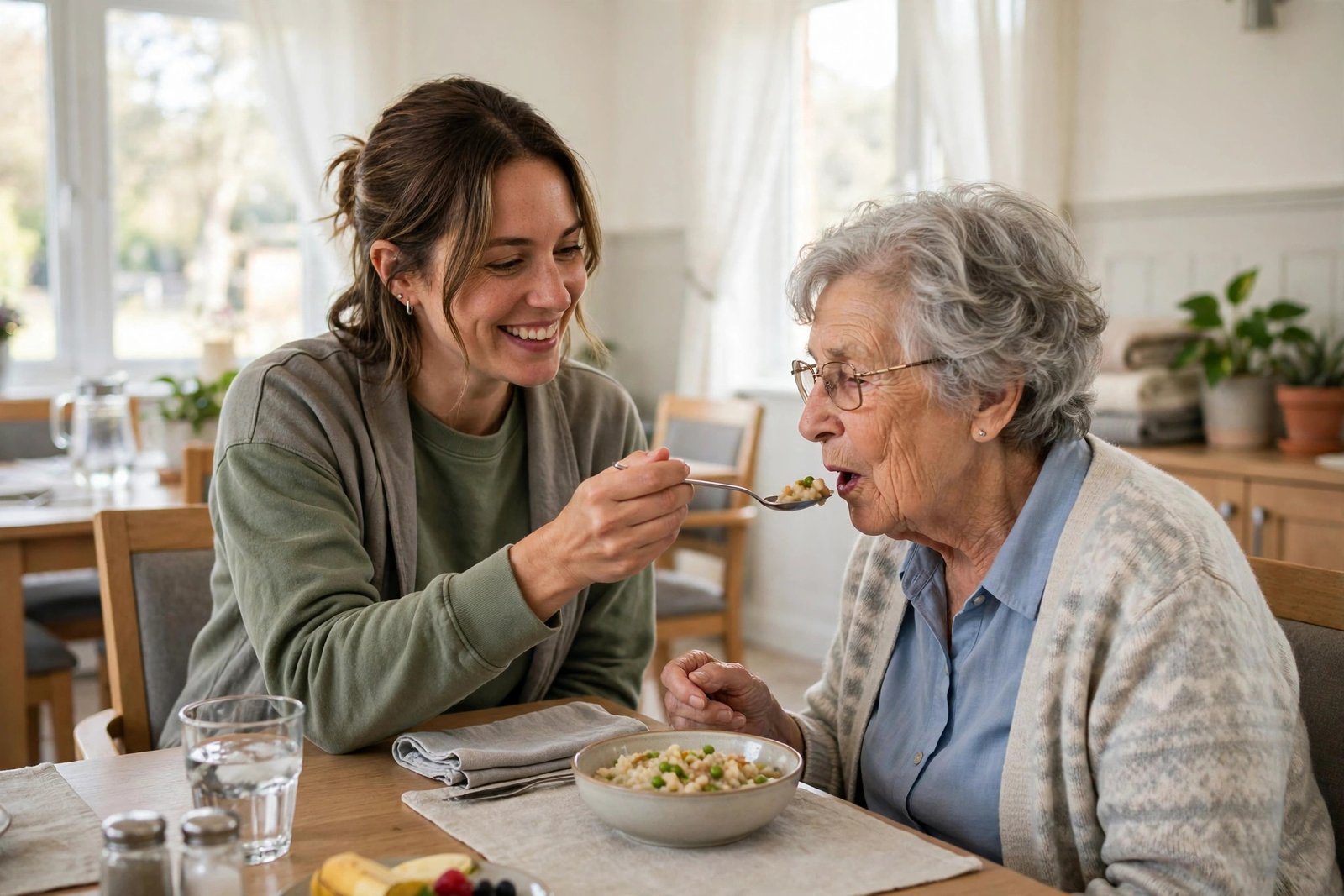
A caregiver’s day depends on who they care for and where they work. In a private home, you may look after one elderly person, helping them get out of bed, wash, dress, eat, and move around the house safely. You may prepare simple meals, remind them to take medicine, help them with exercises a doctor or nurse has recommended, and keep them company. Companionship matters. Many elderly people live alone, and a carer who talks with them, listens, and treats them with dignity makes a real difference to their day.
In a care home or residential home, you may care for several residents during a shift. Duties include helping with washing and dressing, serving meals, helping residents move from bed to chair, changing bedding, keeping rooms tidy, and watching for changes in health or mood. You will work as part of a team, following a care plan written for each resident. That plan is important. It tells you what each person needs, what they can do for themselves, and what you should watch for. Follow it, and report anything that changes.
In a hospital or clinic, a caregiver or care assistant may support nurses by helping patients with basic needs, keeping wards tidy, serving meals and drinks, and helping patients move safely. You are not a nurse, and you should not try to do a nurse’s work. Your role is to support the nursing team and to care for patients with kindness and attention to hygiene.
Across all settings, a caregiver is expected to keep simple records, such as what a person ate, how much they drank, whether they took medicine, and any change in their condition. Clear, honest notes help the next carer and the nurse or doctor who is responsible for that person. You must also protect privacy. Do not share personal details about the people you care for with friends, family, or on social media. Confidentiality is a core part of the job.
Care Settings: Homes, Hospitals and Clinics
Care work in Sri Lanka happens in several settings, and each one feels different. Home care means visiting clients in their own houses, often alone, while residential homes and hospitals mean working as part of a team on fixed shifts. Think about which setting suits you before you apply, because employers ask and the answer shapes the roles you are offered.
What Employers Look For in Caregivers
Employers look for a mix of personal qualities, basic education, and, where possible, training. Compassion and patience come first. You will work with people who may be slow, forgetful, anxious, or in pain. You need to stay calm, speak gently, and never rush or scold the person you care for. Reliability matters just as much. The person you care for depends on you arriving on time and doing what you promised.
Physical fitness is important. Caregiving involves helping people stand, walk, and move, making beds, lifting laundry, and being on your feet for long periods. You need to learn safe ways to help someone move, so you do not injure yourself or them. Training in moving and handling, where available, is very useful.
A clean background is usually essential. Employers will normally ask for a police clearance certificate from Sri Lanka, because you will be working with vulnerable people in their homes or in care settings. Be honest if you are asked about your background. Hiding information is far more likely to cause a problem than declaring it early.
Education requirements are usually modest. Many employers ask for at least a basic school education and the ability to read and write in English at a basic level. You need enough English to understand a care plan, follow instructions, write simple notes, and communicate with the person you care for, their family, and your colleagues. Some employers test English during the interview, and better English usually improves your chances. Training helps a great deal. A caregiving certificate, a nursing assistant course, first aid training, or experience caring for a family member all strengthen an application. If you have no formal training, be ready to explain your personal experience and your willingness to complete training after you are hired.
Health is also relevant. You will normally need a medical check as part of the visa process. That check looks at general fitness and at any condition that would make care work unsafe. Keep your health records in order and answer medical questions honestly.
Documents You Will Need
Start on your documents well before you apply, because a caregiver application moves slowly if the paperwork is not ready. Your passport must have enough validity left to cover the visa and the journey, so look at the expiry date today. If it runs out soon, renew it first through the Department of Immigration and Emigration, since a passport with short validity can hold up or even block a visa. A caregiver also needs care-related papers, so gather any caregiving certificate, first aid certificate, and reference letters from families or care homes you have worked for.
You will also need recent passport-size photographs, your national identity card, and educational and training certificates if the employer asks for them. Keep originals safe and keep clear copies or scans. A police clearance certificate is commonly requested for care roles, so apply for it early, as it can take time to issue.
Your CV should be simple, honest, and easy to read. List your personal details, education, work history, skills, languages, and any caregiving experience, including care you provided for family members. Do not invent jobs or exaggerate experience. Employers check references, and a false claim can end your application at once. If you have a caregiving certificate, first aid certificate, or nursing assistant training, include it.
Medical reports, visa forms, and the employment contract usually arrive later, once a care home or family employer has shown real interest. Read every page before you sign anything. If a clause is unclear, ask for an explanation in Sinhala, Tamil, or plain English, and do not be shy about asking twice. Never sign a blank form, and never hand your original passport or national identity card to an agent without a written receipt that states the reason and the date it will be returned. A care employer who is genuine will accept copies until the visa stage.
How to Apply for Caregiver Jobs in Sri Lanka, Step by Step
Start by deciding where you want to work and what kind of care you prefer. Home care, care home work, and hospital support work are different, with different hours and different demands. Research the country, its visa rules, its working conditions, and its culture. Talk to people who have worked there if you can, and listen to both the good and the difficult parts.
Then get your CV and documents in order. Check that your passport is valid, that your police clearance is ready or already applied for, and that your CV honestly lists your care experience, any training, and the families or homes you have worked with. Keep digital copies of everything in a safe folder on your phone, so you can send them quickly when an employer asks. If you cared for a relative at home, say so plainly, with the kind of care you gave and for how long.
Then look for genuine vacancies through licensed recruitment agencies in Sri Lanka, through the Sri Lanka Bureau of Foreign Employment, through care home and agency websites, and through trusted job portals. Be careful with social media posts that promise high pay with no interview and no documents. A genuine care employer will want to interview you, check your background, and follow a proper process, because they are trusting you with a vulnerable person. If an offer sounds too easy, treat it as a warning and check it carefully.
When you find a role that fits, apply with your CV and a short message about why you want the job and what experience you have. If you are shortlisted, you will normally be invited for an interview in person, by phone, or by video call. Prepare for it. Be ready to talk about your experience, your patience, your willingness to work shifts, and your understanding of care work. Dress neatly, speak clearly, and answer honestly. Short, direct, truthful answers are better than long, memorised speeches.
If you pass the interview, the care home or agency will ask for your documents, a medical check, and a police clearance. They may ask you to sign an employment contract. Read it with care. It should spell out your job title, your care duties, your working hours and days off, your leave, whether you live in or live out, and what happens if the contract ends early. If anything is missing or unclear, ask before you sign and keep a signed copy for yourself.
Once the contract is signed, the visa process starts. The care home or agency will usually guide you, but you should still know each step yourself. You may need to visit an embassy, give fingerprints, or attend a medical centre. Follow the instructions exactly and keep a copy of every form you submit. When the visa is issued, check your flight, your arrival arrangements, and who will meet you at the airport. Carry your documents in your hand luggage and keep your employer’s phone number with you at all times.
How Sponsorship Works for Caregiver Jobs in Sri Lanka
When a care home or family abroad offers visa sponsorship, it normally means they are willing to support your visa application for that caregiving job, by providing an offer letter, a contract, and the documents the immigration authorities need. It does not mean they can guarantee the visa. The final decision always rests with the immigration authorities of the destination country, who apply their own rules, limits, and checks to the employer and to you.
Sponsorship does not mean the care employer pays every cost. In some cases the employer covers the visa fee and the flight, and in others the costs are shared, or the worker pays the medical check and the police clearance. Caregiver training certificates are usually the worker’s own cost, so ask about that too. The full arrangement should be written in the contract or offer letter. If it is not written down, ask for it in writing before you pay anything or sign anything. Never pay a large fee in cash without a receipt, and be cautious of anyone who asks for money before you have seen a genuine offer from a real care employer. If caregiver jobs in Sri Lanka are not the right fit, hotel worker jobs in Sri Lanka follow a similar sponsorship route.
Different countries have different visa routes for care work. Some have a specific work visa for sponsored carers. Others require a labour approval, a work permit, or a quota allocation before a visa can be issued. Some roles are only open when the employer can show that local workers are not available, or when the worker meets a language or training requirement. These rules change, and they are not the same everywhere. A job open in one country may not be open in another. If caregiver jobs in Sri Lanka are not the right fit, factory worker jobs in Sri Lanka follow a similar sponsorship route.
A sponsored care visa is usually tied to one employer and one job. If you leave that care home or family, or if the contract ends, your right to stay and work may change. Some countries let you move to another care employer with permission, others do not, and some require you to leave and apply again. Ask about this before you travel, and be careful of agents who promise a visa for a fee without a real care job behind it. Real sponsorship always starts with a real employer and a real vacancy.
Mistakes That Cost Caregiver Applicants the Job
One common mistake is paying a large fee too early. Before you pay anything, check the agency, check the care home, and check the offer itself. Get the employer’s name, the care home or family location, the contract, and the visa route in writing. If an agent refuses to give those details, walk away, because a genuine care employer has nothing to hide.
Another mistake is signing a contract you have not read. For a caregiver it should state your care duties, your hours, your days off, your leave, and whether you live in the employer’s home or in your own accommodation. If you sign without reading it, you may agree to hours or duties you did not expect. Ask for a copy in Sinhala, Tamil, or simple English and take the time to read it properly.
A third mistake is exaggerating your CV. If you claim caregiving training or experience you do not have, it will become clear on the job, and it can put the person you care for at risk. Be honest about what you can do and what you are willing to learn.
A fourth mistake is ignoring the care plan. Each person you care for has individual needs. Follow the plan, do not improvise with medicine or treatment, and report any change in health at once. Never give medicine that has not been prescribed for that person, and never share a person’s private information.
A fifth mistake is failing to keep copies of your papers. Keep a copy of your passport, contract, visa, medical reports, payment receipts, your caregiving certificates, and every message from your agent or employer. Photograph each document and store the copies where you can reach them, even if you lose the paper versions. If a dispute arises about pay, hours, or duties, those copies are your evidence.
Life Abroad: What to Expect
Life as a caregiver abroad is not only about work. You will be living in a new country, often sharing accommodation, following different rules, and adjusting to a different climate and culture. The first few weeks are often the hardest. You may feel homesick, tired from shift work, and unsure about local customs. That is normal, and it usually eases with time.
Care shifts can include early mornings, evenings, nights, weekends, and public holidays. Try to keep a regular sleep routine, eat properly, and drink enough water. If you feel unwell or emotionally drained, tell your supervisor. Caring for others while you are exhausted is not sustainable, and good employers understand that carers need rest too.
Accommodation varies. Some employers provide shared housing or live-in accommodation, some provide an allowance, and some expect you to arrange your own place. Ask what is included, how many people share a room, and what facilities are available. Respect shared spaces and be considerate of colleagues sleeping after a night shift.
Respect local laws and customs, and learn the basic rules about public behaviour, dress, and interaction with others. Stay in touch with your family, build a support network where you are, keep your documents safe, and know where your embassy or high commission is and how to reach it if you need help. Colleagues and Sri Lankan community groups abroad can help with practical advice and with homesickness.
Before You Apply: Questions Answered
Do I need experience to apply for a caregiver job abroad?
Not always. Some employers prefer experienced carers, but many are willing to train new workers who are patient, honest, and willing to learn. Experience caring for a family member, a caregiving certificate, or first aid training all help. If you have no formal experience, be honest and show that you understand the work.
Do I need to speak English fluently?
You do not usually need perfect English, but you need enough to understand a care plan, follow instructions, write simple notes, and communicate with the person you care for and your colleagues. Some employers test English during the interview. Improving your English before you apply will increase your chances.
Is visa sponsorship guaranteed if I get a job offer?
No. A job offer and sponsorship from a care home or family support your application, but the final decision is made by the immigration authorities. They look at the employer’s documents, your background, your medical results, and their own rules. No care employer or agent can guarantee a visa.
What should I check before paying an agent?
Make sure the agency is licensed with the Sri Lanka Bureau of Foreign Employment. Ask for the care employer name and the job details in writing, read the contract before you sign, and take a receipt for any payment. Stay away from very large upfront fees, promises of a visa with no interview, and anyone who rushes you to pay. Where you can, check the offer through the Bureau’s official channels.
Can I change employers after I arrive?
It depends on the country and the type of care visa you hold. In some places you can move to another care home with permission, in others you cannot, and in some you would need to leave and apply again. Ask about this before you travel and do not assume you can change care jobs freely.
What happens if my contract is not renewed?
Care contracts are normally for a fixed period. If yours is not renewed, your care employer should explain the reason and the process for returning home or applying for a new placement. Keep copies of your contract and your care references, plan early if renewal looks uncertain, and do not overstay your visa.
Where to Go From Here
Caregiver jobs with visa sponsorship can be a meaningful path for Sri Lankan workers in 2026, provided you approach them with clear eyes. The work is steady, the entry requirements are achievable, and the experience you gain can lead to further training and better roles in health and social care. At the same time, the work is emotional and physical, the hours can be unsocial, and the visa process demands care and realistic expectations.
Prepare your passport, police clearance, and CV early, and complete caregiving or first aid training if you can. Choose a licensed agency, read your contract, and do not pay large fees without written proof of a genuine offer. Understand that sponsorship supports your application but does not guarantee a visa, and that your right to work depends on the rules of the destination country. If you do those things, you give yourself the best chance of a safe and successful experience abroad, doing work that genuinely helps other people.