Pakistan Factory Worker Jobs with Visa Sponsorship 2026
For many workers in Pakistan, a factory job abroad is a practical path to a steadier income and a more secure future. Factories in the Gulf, Europe, East Asia, and other regions regularly need production workers, machine operators, packers, and quality checkers, and Pakistani workers are among those employers turn to. The idea of visa sponsorship sits at the centre of that search, because it decides whether the move is possible at all.
Visa sponsorship means an employer abroad supports your work visa application, usually by providing a genuine job offer, a contract, and documents for immigration authorities. It does not mean the visa is guaranteed. The final decision rests with the government of the destination country, based on its rules, quotas, and your documents. Anyone who promises a guaranteed visa in exchange for a large upfront payment should be treated with caution.
This article explains Pakistan factory worker jobs with visa sponsorship in 2026 in a practical, honest way. It covers what factory work involves, why Pakistani workers are in demand, which skills and documents employers usually ask for, how the application process normally works, what life on a factory floor abroad looks like, and the mistakes that cost good applicants their chance. It does not promise a job, a salary figure, or a visa. It gives you clear information you can use to apply wisely.
Why Pakistani Factory Workers Are in Demand Abroad
Pakistani workers have built a strong reputation in manufacturing and industry abroad, especially in the Gulf, where large Pakistani communities have worked in factories, construction, and services for decades. That history matters, because employers and recruitment agencies remember which nationalities produced reliable workers.
Experience is a key strength. Pakistan has a large manufacturing base covering textiles, garments, food processing, leather, sports goods, surgical instruments, pharmaceuticals, and engineering. A worker from Faisalabad with textile experience, from Sialkot with sports goods or surgical experience, or from Karachi with food processing or packaging experience already understands production lines, quality checks, and shift discipline. Employers value that because it shortens training time.
Adaptability is another strength. Factory work abroad often means long shifts, night rotations, shared accommodation, unfamiliar food, and a different climate. Pakistani workers who adjust without constant complaint, turn up on time, and stay for the full contract are the ones employers ask for again. Recruitment agencies regularly report repeat hiring from factories that had a good experience with Pakistani staff.
English and Urdu also help. Many Pakistani workers can communicate in basic English, which is enough for most factory roles: understanding safety instructions, reading simple labels, and following a supervisor’s directions. In the Gulf, Urdu is widely understood on worksites and in daily life, which makes settling in easier for workers from Pakistan.
Technical training is another factor. Technical institutes and vocational programmes in Pakistan produce fitters, welders, electricians, and machine operators. Even workers without formal certificates often have practical skills learned on the job. For employers, that mix of training and hands-on experience is attractive.
Finally, scale matters. When a factory abroad needs dozens of workers quickly for a new production line, Pakistan is one of the countries that can supply them. That is why recruitment drives for factory workers so often include Pakistani cities and towns.
What Factory Work Abroad Actually Involves
Factory worker covers many different jobs, and the daily work depends on the type of factory. A food processing plant is very different from a textile mill or an electronics assembly unit. Understanding the range helps you apply for the right role.
In general manufacturing and assembly, workers operate machines, assemble parts, check products for defects, pack finished goods, and label boxes for dispatch. The work is repetitive and needs attention to detail. A small mistake repeated hundreds of times becomes a large problem, so employers look for workers who can stay focused through a full shift.
Inside a food processing plant overseas, Pakistani factory workers are often placed on lines that receive raw ingredients, wash and trim them, feed them through cooking or freezing tunnels, and then weigh, label and box the finished goods. Because the food will be sold to the public, hygiene rules are strict and constant: hair nets, gloves and aprons are worn for the whole shift and hands are washed at set points during the day. Workers assigned to cold storage feel the strain most, since standing for hours in a chilled room is hard on the body, so employers in this sector generally hand out thermal clothing for those posts.
In textile and garment factories, workers operate sewing, cutting, dyeing, and finishing machines. Experience with industrial sewing machines is a strong advantage, and Pakistan’s textile industry means many workers already have it. Others are trained for checking, folding, ironing, and packing.
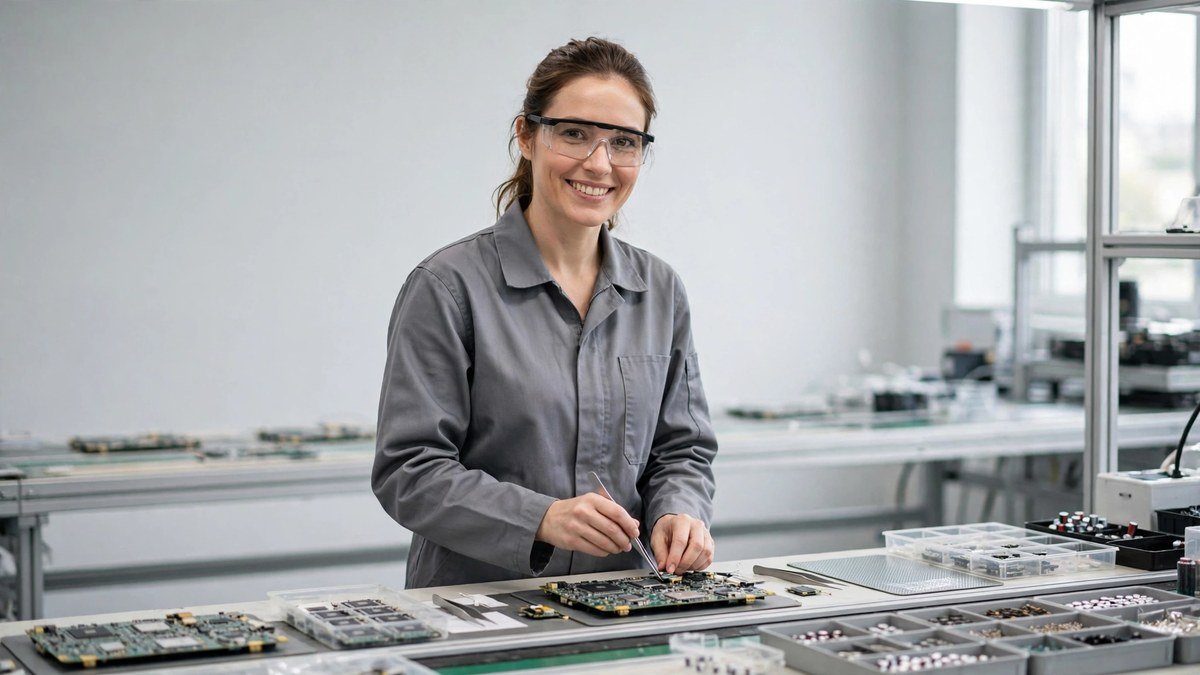
In electronics factories, workers assemble small components, test devices, and pack finished products. This needs steady hands, good eyesight, and patience. Some electronics and pharmaceutical factories use clean rooms, where workers wear special clothing and follow strict contamination rules.
In automobile and engineering factories, workers may operate presses, welding equipment, or assembly lines. These roles usually need more technical skill and sometimes a trade certificate. They also carry higher safety risks, so training and protective equipment are essential.
Across all settings, common duties apply. Workers arrive on time, follow the production schedule, meet daily output targets, keep workstations clean, report faults and safety hazards immediately, wear personal protective equipment, and follow supervisors’ instructions. Overtime is common during peak production, and it is usually paid according to the labour law of the destination country and the contract.
Shift patterns vary. Some factories run two shifts, others three, including nights. Weekend work is common in continuous production. Before accepting an offer, read the contract to understand working hours, rest days, overtime rules, and leave entitlement.
Machines, Products and What You Handle
A Factory Worker in Pakistan usually works with specific machines and products, and employers train new starters on their own equipment. Experience with similar machines shortens that training, whether the setting is a packing line, a warehouse aisle, a cold store or a field operation. In your application, name the machines or products you have actually handled rather than describing the work in general terms.
What You Need to Qualify
Employers do not all ask for the same things, but most share a common set of requirements.
Age and physical fitness come first. Factory work is physically demanding: standing for long hours, lifting boxes, moving materials, and working in warm or noisy environments. Most employers prefer applicants in good health who can pass a medical examination. Some destination countries require a medical test as part of the visa process, and a failed medical can stop an application even after a job offer. Keep yourself fit and attend to health problems before applying.
Education requirements are usually modest. Many factory jobs ask for at least basic schooling, often completion of secondary school. Some skilled roles ask for a technical certificate or diploma. For general production work, experience often matters more than formal education.
Work experience is a major advantage. Employers want to know what machines you have operated, what products you have worked with, and how long you stayed in each job. A clear, honest work history with employer names, job titles, and dates helps a recruiter trust your application. Exaggerating experience is risky: if you claim to operate a machine you have never touched, the truth will come out during a trade test or in the first week, with serious consequences.
Language ability matters more than many applicants expect. Basic English is often required: understanding simple instructions, reading safety signs, and answering basic questions in an interview. Some employers and countries ask for a basic language test. Practising simple workplace English before applying is one of the cheapest ways to improve your chances.
Documents must be in order. A valid Pakistani passport with enough validity remaining is essential. Educational certificates, experience letters, and trade certificates should be available in original and copy form. A police clearance certificate is often required by the destination country. Photographs must meet the visa application’s specifications. Keeping these documents ready before a recruitment drive starts saves time and prevents missed deadlines.
For workers applying through Pakistan, it is also important to use the proper channels. The Bureau of Emigration and Overseas Employment and licensed Overseas Employment Promoters play a formal role in overseas recruitment from Pakistan. Checking that a promoter is licensed, and that the job has been properly advertised or approved where required, protects you from fraud. Never hand over your original passport to an agent for an indefinite period, and always ask for receipts for any payment.
Honesty matters throughout. Immigration authorities check backgrounds, and discrepancies can lead to refusal. Be honest about your age, experience, health, and travel history.
The Visa Route for Factory Workers in Pakistan
When an employer abroad offers a factory job with visa sponsorship, it normally means the employer will provide the documents and support needed for a work visa application: a signed employment contract, a job offer letter, and in some countries a sponsorship certificate or labour approval. In some cases the employer also pays visa-related government fees or arranges the application through a licensed agency. In other cases the worker pays some costs. The arrangement varies by country, employer, and contract, so always read the offer letter and ask what exactly is covered.
For a Pakistani factory worker it matters just as much to know the limits of sponsorship. Sponsorship is the employer’s backing for your application, not a promise that the visa will be granted, and the final say always sits with the immigration authority of the country you hope to enter. An application can be refused for incomplete documents, for an employer that does not pass the local labour market check, for a quota that has already been filled, or for health and character requirements that are not met. Neither the factory, nor any agent or adviser, can overturn that decision once it is made.
It also does not mean the job is permanent or that you can bring your family immediately. Most factory work visas are temporary and tied to a specific employer and job. Changing employers usually requires a new application or permission. Bringing dependants depends on the visa category and the rules in force at the time. Do not assume family reunion is automatic.
Sponsorship also does not remove your responsibility to check the employer. Before accepting an offer, verify that the employer is real, that the job exists, and that the terms in the contract match what was promised. A genuine employer will have a verifiable business address, registration, and a contract stating the job title, working hours, wages in general terms, accommodation arrangements if any, and the duration of employment. Be cautious of offers that arrive only through messaging apps, ask for large payments before any interview, or refuse to provide a written contract.
In 2026, many destination countries have tightened work visa rules. Some have raised salary thresholds, added language requirements, or limited visas in certain sectors. Others have opened new routes for shortage occupations, including manufacturing. Rules change frequently, and what was true last year may not be true this year. Always check the current rules for the specific country through its official immigration website or embassy.
How to Apply for a Factory Worker Role in Pakistan
Applying for a factory job abroad with visa sponsorship is a process, not a single step. Following the steps in order reduces mistakes.
Start by deciding where you want to go and what kind of factory work suits you. A worker with textile experience should not apply for heavy engineering work, and a worker who cannot tolerate cold should think carefully about cold storage. Research the destination country’s cost of living, climate, working culture, and visa rules. A country with higher wages may also have much higher living costs, so the net benefit may be smaller than it first appears.
Prepare your documents early. Make sure your passport is valid, gather educational and experience certificates, obtain a police clearance certificate if needed, and prepare a simple, honest CV. Your CV should list personal details, education, work history with dates, machines and skills, and training certificates. Keep it short, clear, and truthful. Two pages is usually enough for a factory role.
Search for genuine openings through reliable channels. These include licensed Overseas Employment Promoters in Pakistan, official job portals of the destination country, the careers pages of large manufacturing companies, and government-to-government recruitment programmes where they exist. Check a promoter’s licence with the Bureau of Emigration and Overseas Employment before you pay anything. Never pay a large fee without a written offer from a verifiable employer.
Apply only to roles that match your experience. Read the job description carefully and tailor your application to it. If the job asks for food processing experience, highlight it. If it asks for machine operation, list the machines you have operated. Generic applications sent to every vacancy rarely succeed.
Prepare for the interview and any trade test. Interviews for factory jobs are usually practical. The interviewer may ask about your previous factory, the machines you used, how you handled a breakdown, how you follow safety rules, and why you want to work abroad. Answer in simple, honest English. If a trade test is part of the process, practise the skill beforehand if you can. Arrive on time, dress neatly, and bring your documents.
If you receive an offer, read the contract before you sign it. Check the job title, employer name, place of work, working hours, rest days, leave entitlement, accommodation arrangement, and notice period. Ask for clarification in writing if anything is unclear. Do not sign a contract you have not read.
Complete the visa process through the proper channel, submitting the employer’s documents, your passport, photographs, medical results, and police clearance as instructed. Follow instructions exactly, attend biometric appointments and interviews when asked, and keep copies of everything you submit.
Prepare for departure only after the visa is granted. Book travel, arrange finances, inform your family, and learn basic information about your destination, including emergency numbers, the location of the Pakistani embassy, and local laws affecting workers. Pack practical clothing and keep important documents in hand luggage. If factory worker jobs in Pakistan are not the right fit, construction worker jobs in Pakistan follow a similar sponsorship route.
Earnings, Housing and Everyday Life
Pay for factory workers abroad varies widely by employer, region, and experience, and it changes with local labour laws and market conditions. It is not possible to give a single figure that applies everywhere, and any source that quotes one fixed salary for all factory jobs abroad should be treated with scepticism. In general, factory wages abroad are often higher than comparable factory wages in Pakistan, which is the main reason workers apply. However, the cost of living abroad is also often higher, and deductions for accommodation, food, transport, or insurance can reduce the amount you actually save. Read the contract to understand what is included and deducted, and work out a realistic monthly budget before you travel. If factory worker jobs in Pakistan are not the right fit, truck driver jobs in Pakistan follow a similar sponsorship route.
Accommodation arrangements differ. Some employers provide shared housing as part of the package. Others provide an allowance and expect workers to find their own place. Shared accommodation is common for factory workers, usually a room shared with other workers from similar backgrounds. Ask for details and photographs where possible, and check whether the accommodation is close to the factory or whether transport is provided.
Food is another practical matter. Some employers provide meals or a food allowance. Others do not. In the Gulf, Pakistani and South Asian food is widely available and affordable. In Europe or East Asia, South Asian groceries may be more expensive or harder to find, although most large cities have Pakistani and Indian shops. Learning a few simple recipes and budgeting for food helps in the first months.
Daily life on a factory contract is structured around shifts. Free time is limited, especially during overtime periods. Many workers use rest days to rest, call family, send money home, and handle personal tasks. Staying in touch with family is easier now, with video calls and messaging apps, but time zone differences and shift patterns can make it harder than expected. Planning a regular call time helps.
Health and safety deserve attention. Factories abroad usually have strict safety rules, and following them protects you and your colleagues. Wear protective equipment, attend safety training, report hazards, and do not operate machines you have not been trained to use. If injured at work, report it immediately and seek medical attention. Keep a record of any incident. Workers in most destination countries have legal rights, including the right to a safe workplace, and those rights apply even to foreign workers.
What Can Go Wrong: Mistakes to Avoid
Many able Pakistani factory workers lose a genuine chance abroad through mistakes they could have avoided. The most frequent one is paying a large sum to an agent who is not licensed by the Bureau of Emigration and Overseas Employment and who guarantees the visa in return. No agent anywhere can give that guarantee. When the fee looks far too high, when no receipt is offered, or when you are hurried into paying before a written offer from a real employer exists, that is the moment to walk away and keep your money.
Another common mistake is submitting false documents or exaggerated experience. Immigration checks are thorough, and a false certificate or fake experience letter can lead to a visa refusal and a ban from future applications.
Poor preparation for interviews is another problem. Some applicants arrive without knowing anything about the employer or the job, or they cannot answer simple questions about their own work history. A short preparation session makes a real difference.
Ignoring the contract is also costly. Some workers sign without reading, then discover that working hours, accommodation, or deductions differ from what was discussed verbally. Verbal promises are hard to enforce. The written contract is what matters.
Finally, many workers fail to research the destination country. They arrive unprepared for the climate, the cost of living, or local rules, and the shock affects their work and health. A few hours of research before departure can prevent months of difficulty.
What People Ask Before Applying
Can a Pakistani factory worker get a job abroad with visa sponsorship in 2026? Yes, it is possible, and many Pakistani workers do it every year. Employers in several countries sponsor factory workers when they cannot fill roles locally. Sponsorship depends on the employer, the country, and the visa rules in force at the time. It is never guaranteed, and competition is strong.
Do I need experience to apply for a factory job abroad? Experience helps a great deal, and many employers prefer workers with at least one or two years of factory experience. Some employers hire fresh workers for general production roles and provide training, but experienced workers usually have more options.
Do I need to speak English fluently? For most factory roles, basic working English is enough. You need to understand instructions, safety information, and simple questions. Fluent English is not usually required, but stronger English improves your chances.
How long does the visa process take? Processing times vary by country, visa category, and how busy the immigration system is. Some applications are processed in weeks, others take longer. Do not book non-refundable travel until the visa is granted.
Can I bring my family with me? That depends on the visa category and the rules of the destination country. Many factory work visas are for the worker only at first, and family reunion may be possible later if you meet the conditions. Check the specific rules for your visa type.
What should I do if an agent asks for a large payment upfront? Be cautious. Ask for a written breakdown, check the agent’s licence with the Bureau of Emigration and Overseas Employment, and compare the fee with licensed promoters. Never pay a large sum without a written offer from a verifiable employer and a proper receipt.
Is factory work abroad safe? Reputable employers follow health and safety laws and provide training and protective equipment. Factory work carries risks, including injuries from machinery and strain from repetitive work. Following safety rules and using protective equipment are essential.
What to Do Next
Pakistan factory worker jobs with visa sponsorship in 2026 remain a real opportunity for workers who are prepared, honest, and patient. The demand is there, the skills of Pakistani workers are respected, and many workers build better lives through factory contracts abroad. But sponsorship is never a guarantee, pay varies by employer and region, and the process rewards those who prepare carefully.
If you are serious about applying, start with the basics. Keep your passport and documents ready, build a clear and honest CV, improve your basic English, gain or document your factory experience, and apply only through licensed, reliable channels. Read every contract before you sign it, ask questions when something is unclear, and never pay for a guaranteed visa that nobody can guarantee. The workers who succeed abroad are usually not the ones who rushed. They are the ones who prepared, chose the right employer, and arrived ready to work hard and adapt. With that approach, a factory job abroad can be the first step toward a stronger, more stable future for you and your family.