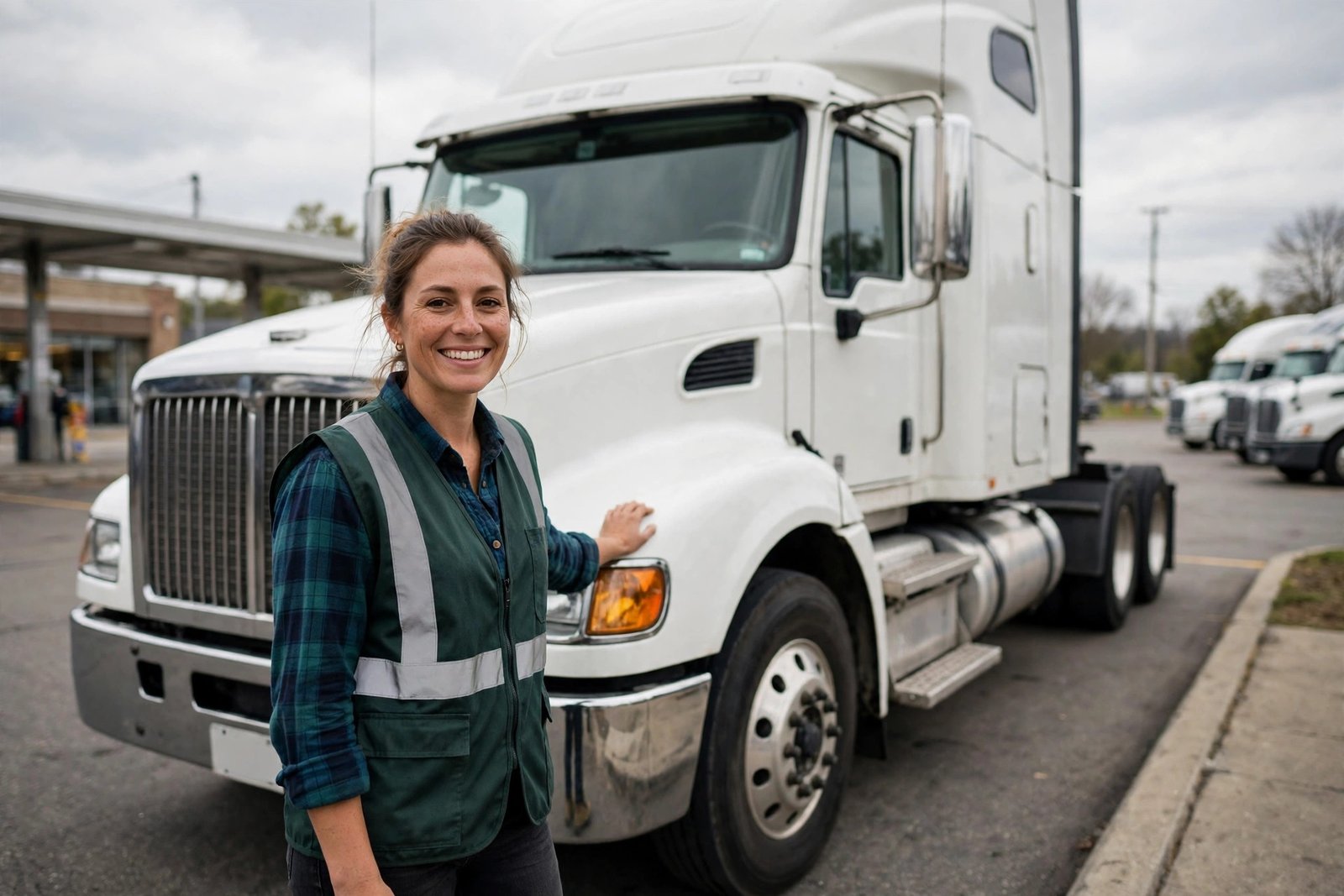
Ireland Truck Driver Jobs with Visa Sponsorship 2026
Ireland has become one of the most talked-about destinations for professional truck drivers who want to work abroad, and the reason is simple: the country needs drivers. Freight keeps the Irish economy moving, from food and drink exports leaving busy ports to everyday goods arriving at shops and warehouses in towns and cities across the island. When there are not enough local drivers to fill the seats, haulage companies look further afield, and some of them are willing to sponsor work permits for experienced drivers from overseas. That is the opportunity this guide is about.
If you are a truck driver thinking about Ireland in 2026, you probably have a long list of questions. What kind of driving work is actually available? Do you need a special licence? Will an employer really help with the visa? How long does the whole process take, and what does life look like once you arrive? This article answers those questions in plain language, with honest detail about what sponsorship can and cannot do. Sponsorship is never a guarantee, and no article can promise you a job or a visa. What it can do is show you how the system works, what employers expect, and how to put together an application that gives you the best possible chance.
Ireland is an English-speaking country with a strong road haulage sector, a growing economy and a transport network that connects farms, factories, ports and distribution centres. For a driver with the right licence, a clean record and a steady work history, it is a realistic destination. The key is to understand the process before you start, prepare your documents properly, and apply only to genuine employers through legitimate channels.
The Role in Detail
A truck driver in Ireland does far more than sit behind a wheel. The job is about moving goods safely, on time and in good condition, and every day brings a mix of driving, loading checks, paperwork and communication with customers and dispatchers. The exact shape of the work depends on the type of haulage you do, and Ireland has plenty of variety.
Long-distance drivers, often called trunk drivers, move full loads between major hubs, ports and distribution centres. A typical run might start early in the morning at a warehouse outside Dublin, Cork or Limerick, with a load bound for a port or a regional depot. These routes use motorways and national roads, and the driver is responsible for planning the journey, keeping to legal driving hours, taking proper rest breaks and arriving within the delivery window. Some long-distance work involves overnight stays away from home, with the driver sleeping in the cab or in arranged accommodation.
Regional and local delivery drivers work shorter routes, often making several drops in a single shift. This is common in food distribution, retail supply and building materials. The work is more physical, because the driver may help unload goods, use a tail lift or a pallet truck, and deal directly with customers at each stop. It suits drivers who prefer to be home every night and enjoy a varied day rather than long stretches of motorway driving.
Other drivers specialise. Tanker drivers move fuel, milk or liquid food products and need extra training for the cargo they carry. Refrigerated transport drivers, known as reefer drivers, carry chilled and frozen goods and must monitor temperatures throughout the journey. Container drivers move shipping containers between ports such as Dublin Port and inland depots. Each specialism has its own skills and its own pay structure, and employers value drivers who already hold the relevant endorsements.
Whatever the specialism, the daily duties share a common core. Before setting off, a driver inspects the vehicle, checking tyres, lights, brakes, mirrors, fluid levels and the condition of the load. Any defect is reported before the journey begins, because driving a faulty vehicle is neither legal nor safe. During the journey the driver follows the planned route, observes speed limits and tachograph rules, and keeps in contact with the transport office. At each delivery point the driver checks the goods against the delivery note, gets the paperwork signed, and reports any damage or shortage. At the end of the shift the driver completes records, refuels if needed, and hands the vehicle over in good order.
Driving hours in Ireland are governed by European rules on driving time and rest periods, and the tachograph in the cab records them. A professional driver is expected to know these rules and follow them without being reminded. Employers take compliance seriously, because breaches can cost a company its operator licence. Good drivers treat the rules as part of the job, not as an obstacle to it.
The Vehicles You May Drive
Sponsored driving roles in Ireland cover a range of vehicles, from rigid trucks and articulated lorries to tankers and tippers. Each type needs different experience: reversing a trailer, handling a liquid load, or working on a construction site all call for specific skills. Say clearly in your application which vehicles you have actually driven, because a practical test will check it.
Why Truck Drivers Are in Demand in Ireland
Ireland’s demand for truck drivers is not a passing trend. It comes from several long-running pressures that have built up over years. The Irish economy has grown steadily, and growth means more goods moving: more construction materials for new housing and infrastructure, more food and drink products for export, more consumer goods arriving through ports and distribution centres. Every one of those movements needs a driver.
At the same time, the supply of drivers has not kept pace. Many experienced Irish drivers are reaching retirement age, and fewer young people are entering the profession than in the past. The cost and time involved in getting a heavy goods licence puts some people off, and others choose work that keeps them closer to home. The result is a gap between the number of driving jobs and the number of available drivers, and haulage companies feel that gap every week.
Changes in trade patterns have added to the pressure. Since the United Kingdom left the European Union, more freight moves directly between Ireland and continental Europe, and more goods are routed through Irish ports. That means more long-distance and port work, and more demand for drivers who can handle international routes and the paperwork that goes with them.
The food and drink sector is another major driver of demand. Ireland exports large volumes of dairy, meat and beverages, and these products move by road to ports and airports. Much of this work is time-sensitive, especially for chilled goods, so companies need reliable drivers they can count on. Seasonal peaks, such as the run-up to Christmas and the summer tourism season, make the shortage more visible, but the underlying demand runs all year.
Because of this shortage, some Irish haulage companies have turned to recruiting drivers from outside Ireland and the European Economic Area. These employers advertise for drivers with the right licence and experience, and for the right candidate they will support a work permit application. This is not charity. It is a business decision: a company that cannot fill a seat loses money, so it is willing to invest in bringing in a driver who can do the job well and stay for the long term.
It is worth understanding that demand varies by region and by type of haulage. Dublin and the east coast have the most freight, but companies in Cork, Limerick, Galway, Waterford and the midlands also recruit. Drivers who are flexible about location and about the type of work they will accept tend to find opportunities more quickly than those who will only consider one city or one kind of route.
Daily Life in Ireland for Truck Drivers
Moving to Ireland for work is about more than the job. Your daily life, your costs and your sense of belonging all matter, and it helps to know what to expect before you arrive.
Ireland is a friendly, English-speaking country with a strong sense of community, and many overseas workers settle in well. People are generally welcoming, and the workplace culture in haulage is practical and team-based. Drivers look out for each other, and a new driver who works hard and is reliable will usually find colleagues willing to help with routes, paperwork and local knowledge.
The cost of living is an important consideration. Ireland is not a cheap country, and housing is the biggest cost for most newcomers. Rents in Dublin are high, and accommodation can be hard to find, especially at short notice. Smaller cities and towns are usually more affordable, and some employers help new drivers with initial accommodation or point them towards suitable options. It is wise to research rents in the area where you will be working before you arrive, and to have enough savings to cover your first weeks while you settle in.
Day-to-day costs such as food, transport and phone services are moderate by Western European standards. Many drivers cook at home to save money, and supermarkets offer a wide range of affordable food. Public transport is good in Dublin and reasonable in other cities, but many drivers use a car once they are settled, especially if they live outside a city centre.
The weather is famously changeable. Ireland has mild temperatures for most of the year, with cool summers and winters that rarely bring severe cold, but rain is frequent and the wind can be strong, especially on exposed roads and near the coast. Drivers learn to check the forecast, allow extra time in poor conditions, and keep the cab stocked with warm clothing and a flask. The roads themselves are generally good on motorways and national routes, but rural roads can be narrow and winding, and care is needed.
Working patterns vary. Some drivers work a regular daytime pattern, while others work early starts, night shifts or a rotating roster. Long-distance work can mean nights away from home, while local work usually means being home each evening. Your contract should set out your hours, and you should understand how overtime and rest days are handled before you start.
Outside work, Ireland offers a good quality of life. The countryside is beautiful, the towns are lively, and there are strong sporting, music and social traditions. Many overseas drivers join local communities, sports clubs or religious groups, and these connections make settling in much easier. If you are bringing family later, you will want to research schools, healthcare and family visa rules separately, because these have their own requirements and timelines.
Healthcare in Ireland is a mix of public and private services. As a legally employed worker you will have access to the public system, and many people also take out health insurance. It is worth understanding how the system works in your first weeks so that you are not caught out if you need care.
What You Need Before You Apply
Before you apply for a truck driving job in Ireland, you need to know what employers and the Irish authorities will ask for. Meeting these requirements is the foundation of any successful application, and it is better to sort them out early than to discover a gap halfway through the process.
The most important requirement is the driving licence. Ireland recognises licences from the European Union and the European Economic Area, and it has exchange arrangements with a number of other countries. If your licence was issued outside these arrangements, you may need to go through a process to have it recognised or to obtain an Irish licence. The rules depend on where your licence was issued, so check the current position with the National Driver Licence Service before you assume anything. Do not rely on what a recruiter tells you alone; verify the licence position yourself.
For heavy goods work you need the correct category on your licence. In Ireland, Category C covers rigid trucks and Category CE covers articulated trucks and drawbar combinations. Most long-distance and container work requires CE, while local delivery and distribution work may only need C. Employers usually state which category they need, and the best-paid roles tend to ask for CE with experience.
Professional drivers in Ireland also need a Driver Certificate of Professional Competence, known as the CPC. This is a qualification for professional goods vehicle drivers, and it involves initial training followed by periodic refresher training. If you are coming from outside the European Economic Area, you will need to understand how the CPC applies to you, because you cannot legally work as a professional driver in Ireland without meeting the CPC requirement. Some employers help new overseas drivers complete the CPC after arrival, but you should confirm this before accepting an offer.
A digital tachograph card is another essential item. Professional drivers use this card to record their driving hours, and you need one before you can legally drive a truck fitted with a digital tachograph. The card is personal to you, and applying for it is a straightforward process once you are in Ireland, but it is something to plan for.
Beyond licences and cards, employers will want evidence of your experience. A clear, honest driving record matters more than anything else. Prepare a record of your employment history as a driver, including the types of vehicles you drove, the routes or sectors you worked in, and how long you held each role. References from previous employers carry real weight, so keep contact details for managers who can confirm your driving history and your reliability.
You will also need a valid passport with enough validity left to cover the application process and your planned stay. If you are applying for a work permit, the authorities will ask for the passport details, and an expired or nearly expired passport can cause delays. Renew it early if it is close to expiry.
A clean driving record is expected. Employers will ask about endorsements, penalty points, accidents and any driving bans. Honesty is essential here. A minor offence from years ago may not end your chances, but hiding it and having it discovered later almost certainly will. If you have a criminal record, you should understand that this can affect a work permit and visa application, and you should seek accurate advice rather than guessing.
Medical fitness matters too. Professional driving is physically demanding, and drivers must meet medical standards for eyesight and general health. You may be asked to provide a medical report as part of the licence or permit process. If you wear glasses or have a health condition, get the facts early so you know where you stand.
Language is a practical requirement. Ireland is an English-speaking country, and you need enough English to read road signs, understand delivery instructions, complete paperwork and communicate with customers and colleagues. You do not need perfect English, but you do need working English. Some employers may ask for evidence of your language ability, and improving your English before you apply is one of the best investments you can make.
Finally, keep your documents organised. Scan your licence, passport, employment references and any training certificates, and keep both digital and paper copies. When an employer or an official asks for a document, being able to send it quickly shows professionalism and keeps your application moving.
Applying From Abroad: The Steps That Work
Applying for a truck driving job in Ireland from overseas is a process with several stages, and each one matters. Rushing it or skipping a step usually leads to delays or disappointment. Here is how to approach it in an orderly way.
The first step is research. Learn about the Irish haulage sector, the types of employers that recruit overseas drivers, and the regions where the work is. Look at job advertisements on reputable Irish job boards and on company websites. Pay attention to what employers actually ask for: the licence category, the years of experience, the type of work, and whether they mention work permit support. This research will help you target your applications instead of sending the same message to everyone.
The second step is to prepare your application materials. Your CV should be clear, honest and focused on driving. Put your licence categories at the top, followed by your driving experience, the types of vehicles you have driven, and any specialist training such as tanker or refrigerated work. Include your employment dates, the names of your employers, and a short description of what each role involved. Keep it to two pages if you can. Write a short cover note for each application that explains why you are interested in that particular company and what you can offer. Generic messages get ignored; a short, specific note gets read.
The third step is to apply directly to employers. The safest route is to apply to the haulage company itself, through its own website or a recognised job board. Be cautious about intermediaries who charge large fees upfront or who promise a guaranteed job and visa. Genuine employers recruit drivers because they need them, and while some use recruitment agencies, a legitimate agency will not ask you to pay large sums before you have even been interviewed. If someone guarantees you a visa, that is a warning sign, because no employer or agent can guarantee a government decision.
The fourth step is the interview. Many Irish employers interview overseas drivers by video call. Treat this like any professional interview. Be on time, dress sensibly, and be ready to talk about your driving experience in detail. The interviewer may ask about the vehicles you have driven, the routes you know, how you handle long hours, and how you deal with problems on the road. They may also ask why you want to come to Ireland and how long you plan to stay. Answer honestly. Employers are looking for drivers who will stay, work safely and fit into the team, not for perfect answers.
The fifth step is the job offer. If the employer wants to hire you, they will send a written offer setting out the role, the working pattern, the pay arrangement and any support they provide with the permit process. Read the offer carefully before you accept. Check the working hours, the type of work, the location, and what happens about accommodation. If anything is unclear, ask. A genuine employer will answer your questions plainly.
The sixth step is the work permit application. For most non-EEA drivers, the employer applies for an employment permit on your behalf. The employer will need your documents, and you will need to provide accurate information. The permit application is assessed by the Irish authorities, and processing takes time. You cannot start work until the permit is granted, so be patient and keep in touch with the employer while you wait.
The seventh step is the visa, if you need one. Depending on your nationality, you may need an entry visa as well as the employment permit. Your employer or the Irish embassy or consulate can advise on this. Apply as soon as you are told to, and make sure every detail on the application matches your passport and your permit documents. Small inconsistencies cause delays.
The eighth step is preparation for arrival. Once your permit and visa are in place, confirm your start date, your travel plans and your first accommodation with your employer. Ask practical questions: where will you stay in the first weeks, how will you get to work, and who will meet you on arrival? Having these answers in advance makes the first week far less stressful.
How the Visa Process Works for Truck Drivers
The phrase visa sponsorship is used so often that it can be misleading, so it is worth explaining exactly what it means in the Irish context and what it does not mean.
In Ireland, sponsorship usually means that an employer is willing to support your employment permit application. The employer offers you a genuine job, provides the employment details the authorities need, and in many cases pays the permit fee or helps with the paperwork. Without that employer support, a non-EEA driver generally cannot get a permit to work in Ireland. The employer’s role is therefore essential, but it is only part of the process.
What sponsorship does not mean is a guaranteed visa or a guaranteed permit. The final decision rests with the Irish government, not with the employer. The authorities check that the job is genuine, that the employer is eligible to hire from overseas, that you meet the requirements, and that all documents are in order. If any part of the application is weak, it can be refused, even with a willing employer behind it. No employer, agent or website can promise you a different outcome, and anyone who does is not being honest with you.
It also does not mean the employer pays for everything. Some employers help with travel or initial accommodation, and some do not. Some cover the permit fee, and some expect the driver to contribute. These arrangements vary from company to company, and they should be set out clearly in your offer before you accept it. Never assume costs are covered; always ask and get the answer in writing.
Sponsorship does not remove your own responsibilities either. You must provide genuine documents, accurate information and a truthful account of your driving history. If a document is found to be false, the consequences can be serious, including refusal and a ban on future applications. Your honesty is part of the application, not a separate matter.
There are also conditions attached to a work permit. It is normally tied to a specific employer and a specific role, at least at first. If you want to change employer, there are rules about when and how you can do that, and you should understand them before you make any move. Your permit also has a duration, and renewing it depends on you still being employed and still meeting the conditions. Planning for the long term means keeping your record clean, your documents current and your employment stable.
For many drivers, the honest picture is encouraging but not effortless. Sponsorship is real, and Irish haulage companies do sponsor experienced drivers. But it is a formal process with checks, waiting times and conditions, and it works best for drivers who prepare properly and apply through genuine employers. Treat any promise of a fast, guaranteed result with caution, and put your trust in the official process instead.
Common Mistakes Truck Driver Applicants Make
Many overseas drivers make the same avoidable mistakes when applying for work in Ireland, and most of them come from rushing or from trusting the wrong source of information.
The first mistake is applying before checking the licence position. Some drivers spend weeks applying for jobs only to discover that their licence cannot be exchanged or that they need a different category. Check the licence rules first, before you send a single application. It will save you time and disappointment. If truck driver jobs in Ireland are not the right fit, warehouse worker jobs in Ireland follow a similar sponsorship route.
The second mistake is paying large fees to an agent who promises a guaranteed job and visa. Genuine employers do not need you to pay thousands to get a job, and no agent can guarantee a government decision. If you use an agent, check their reputation, understand exactly what you are paying for, and never pay a large sum upfront without a written agreement and a clear refund policy. If truck driver jobs in Ireland are not the right fit, cleaner jobs in Ireland follow a similar sponsorship route.
The third mistake is sending the same generic CV to every employer. Irish haulage companies can tell when an application has been copied and pasted. A short, specific note about why you want to work for that company and what experience you bring is far more effective than a mass application. If truck driver jobs in Ireland are not the right fit, truck driver jobs in Germany follow a similar sponsorship route.
The fourth mistake is being dishonest about your driving record. Penalty points, accidents and previous employers will be checked, and a lie that is discovered will damage your application far more than the truth would have. Be honest, explain the context if there is one, and let your overall record speak for itself.
The fifth mistake is accepting an offer without reading it properly. Some drivers agree to a job without checking the working hours, the location, the pay arrangement or the accommodation situation, and then find the reality does not match their expectations. Read every offer carefully, ask questions, and get important points confirmed in writing.
The sixth mistake is arriving without enough savings. Even with a job waiting, the first weeks involve costs: a deposit for accommodation, food, transport and setting up a phone and a bank account. Having a financial cushion makes the transition far smoother and reduces stress at a time when you are already adjusting to a new country.
The seventh mistake is neglecting English. Some drivers assume their driving skills alone will be enough, but poor English makes every part of the job harder, from reading delivery notes to talking with customers. Even a modest improvement in English before you arrive will make a real difference.
What People Ask Before Applying
Do I need a special licence to drive a truck in Ireland?
Yes. You need the correct heavy goods category on your licence, usually C or CE depending on the vehicle, and you need to meet the Driver Certificate of Professional Competence requirement. Check the recognition rules for your licence with the National Driver Licence Service before you apply.
Can an Irish employer really sponsor my visa?
Some Irish haulage companies do support employment permit applications for experienced overseas drivers. Sponsorship means the employer offers you a genuine job and supports your permit application. It does not guarantee that the permit or visa will be granted, because the final decision is made by the Irish authorities.
How much experience do I need?
Most employers look for drivers with solid, recent experience driving heavy goods vehicles. The exact amount varies by employer and by role, but a driver with a year or two of steady, verifiable experience is in a stronger position than a newly qualified driver. Specialist experience, such as refrigerated or tanker work, is an advantage.
Will I need to take a driving test in Ireland?
That depends on where your licence was issued and on the exchange arrangements in place. Some drivers can exchange their licence, while others may need to take a test. Check the current rules for your country of issue rather than assuming.
How long does the process take?
The timeline varies. Finding an employer, completing interviews, waiting for a permit decision and arranging a visa can take several months from start to finish. Be wary of anyone who promises a much faster result, and plan your finances around a realistic timeline.
Do I need to speak English fluently?
You need working English to do the job safely and to handle paperwork and communication. Fluency is not required, but you should be able to read instructions, understand customers and colleagues, and complete basic forms. Improving your English before you apply will help.
Can I bring my family with me?
Family reunification has its own rules and usually depends on your permit type, your income and how long you have been working in Ireland. Many drivers come alone first and apply for family members later. Research the current rules rather than assuming family can travel with you from the start.
Is accommodation provided?
Some employers help with initial accommodation, and some do not. Ask this question before you accept an offer, and research housing options in the area where you will be working so you know what to expect.
Final Word
Ireland offers a genuine opportunity for experienced truck drivers who want to work abroad, and the demand in the haulage sector is real. Companies need reliable drivers, and some of them are willing to sponsor work permits for the right candidates. For a driver with the correct licence, a clean record and a steady work history, Ireland in 2026 is a realistic and rewarding destination.
The opportunity comes with conditions, and understanding them is part of doing the job well. Sponsorship is support, not a guarantee. The licence rules matter. The application process takes time, and it rewards drivers who prepare properly and apply honestly through genuine employers. Avoid shortcuts, avoid anyone who promises a guaranteed result, and build your application on real experience and real documents.
If you take the time to check your licence position, prepare a strong application, research employers carefully and plan your move with enough savings and realistic expectations, you will give yourself the best possible chance. Ireland needs good drivers, and a good driver who arrives prepared has every reason to build a stable and rewarding working life there.