Switzerland Cleaner Jobs with Visa Sponsorship 2026
Cleaning work is essential in every country, and Switzerland is no exception. Hotels, offices, hospitals, schools and homes across the country need to be cleaned every day, and the people who do this work keep Swiss life running smoothly. For international workers, cleaning jobs in Switzerland offer a practical route into one of Europe’s most prosperous countries, and some employers are willing to sponsor work permits for overseas workers.
This guide explains what cleaner jobs in Switzerland involve, why employers are hiring, what you need to qualify, and how to apply in 2026. It is written in plain language, with honest information about sponsorship. Sponsorship is never guaranteed, and no employer or agent can promise you a visa. What this article offers is a clear picture of the work, the requirements and the process, so you can decide whether this path suits you and pursue it properly.
Switzerland has high standards in every part of working life, and cleaning is no exception. Swiss workplaces expect thorough, careful cleaning, and a worker who takes pride in doing the job well is valued. The work is physical and the hours can include early mornings and evenings, but for a reliable worker who is willing to learn, a cleaning job can be the first step towards a stable life in Switzerland.
What You Will Actually Do
Cleaner jobs in Switzerland cover a wide range of settings, and the daily tasks depend on where you work. An office cleaner, a hotel housekeeper, a hospital cleaner and a domestic cleaner all do different work, but they share a common purpose: keeping spaces clean, hygienic and pleasant.
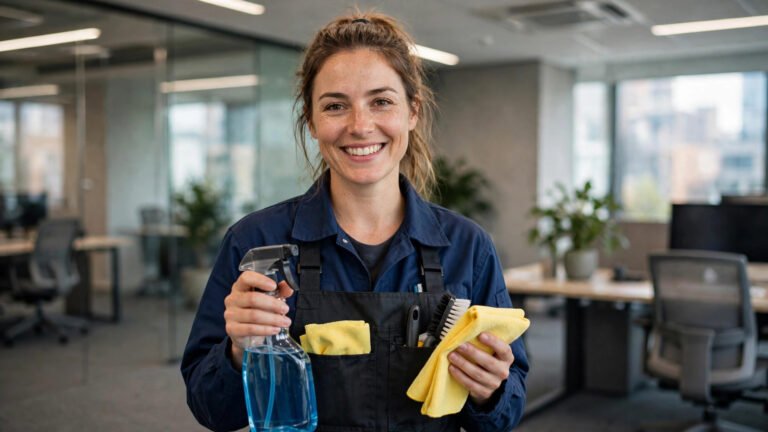
Swiss office cleaning usually happens in the early morning or the evening, once the staff have left. In a Zurich bank office or a Geneva headquarters, the cleaner vacuums the floors, dusts desks and shelves, empties bins, wipes the kitchen and toilets, and leaves the meeting rooms ready for the next day. The work is done in a fixed order, area by area, so that nothing is missed on a busy evening round. Instructions are often given in German in Zurich and in French in Geneva, so even a few words of the local language help a cleaner follow the round without mistakes.
Hotel housekeeping is one of the largest areas of cleaning work in Switzerland. The country attracts millions of visitors each year, and hotels in Zurich, Geneva, Lucerne, Interlaken and the mountain resorts need housekeepers to prepare rooms for guests. Housekeepers clean guest rooms between stays, changing bed linen, cleaning bathrooms, dusting furniture, vacuuming carpets and restocking supplies such as towels and toiletries. The work is fast-paced, especially in larger hotels, because rooms must be ready for the next guest by a set time. Attention to detail matters, because guests notice a room that has been cleaned properly.
Hospital cleaning in Switzerland is specialist work. Cleaners in a Zurich or Bern hospital follow strict hygiene routines to prevent infection, using separate products and cloths for wards, bathrooms and treatment rooms. The employer provides training, but the job still needs constant care and attention, because the standards in healthcare are far higher than in an office.
Cleaning a Swiss school, council building or shopping centre means large spaces: long corridors, wide entrance halls, rows of toilets and busy communal areas. The work is usually done early in the morning or late in the afternoon, and it depends on machines, floor scrubbers for the halls, industrial vacuums for the corridors, and a trolley carrying everything the cleaner needs.
Private home cleaning in Switzerland is usually arranged through a cleaning company or agency. The cleaner visits the same households each week, cleaning kitchens and bathrooms, dusting living areas, changing beds and vacuuming throughout. It suits someone who enjoys working alone, organising their own day, and building a steady relationship with regular clients.
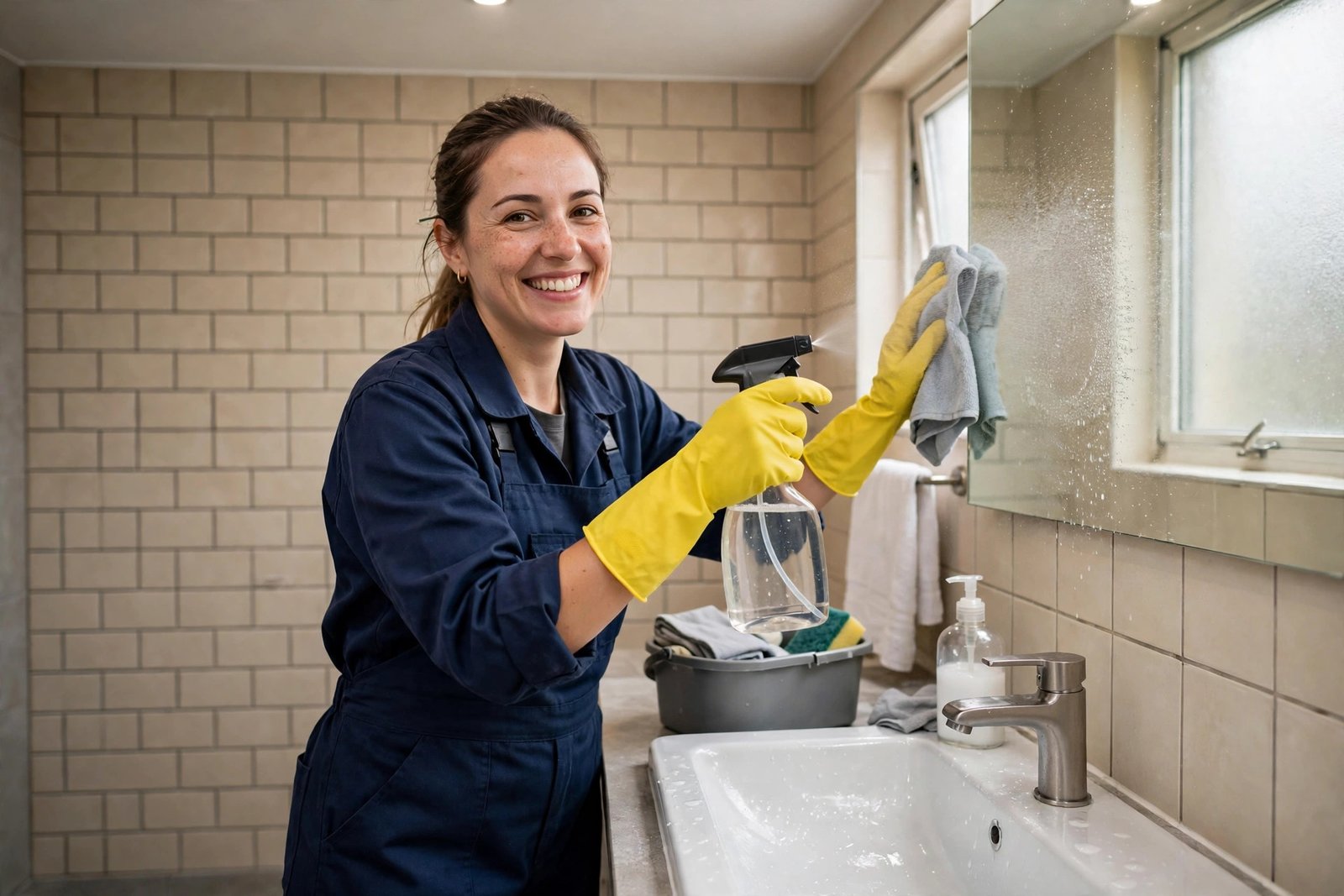
Whatever the setting, a Swiss cleaner’s day follows the same pattern. You arrive, collect your trolley, cloths and products, and clean the rooms in a planned order, following each product label and wearing gloves where needed. Chemicals are handled carefully, ladders are used safely, and machines are checked before use. At the end of the shift the equipment is stored away, anything damaged or broken is reported, and the work is signed off.
The cleaners Swiss employers value most are thorough, reliable and discreet. They notice the dusty shelf and the smudged mirror that others walk past, they respect the privacy of the homes and offices they enter, and they take pride in a job done properly. Clients notice that care, and it is what builds a cleaner’s reputation.
Equipment, Chemicals and Safe Practice
Professional cleaning uses machines and chemicals that need care: floor scrubbers, vacuum systems, and cleaning agents that must be diluted correctly and never mixed. Employers in Switzerland provide training, but a cleaner who already knows how to handle equipment safely and store chemicals properly starts ahead. Always follow the label and the training, and ask when you are unsure.
Why Cleaners Are in Demand in Switzerland
The demand for cleaners in Switzerland is steady and broad, and it comes from the way Swiss society and the Swiss economy are organised.
Switzerland has a large number of offices, hotels, hospitals, schools and public buildings, and all of them need regular cleaning. Tourism is a major factor: the country attracts millions of visitors each year for its cities, its lakes and its mountains, and hotels, holiday apartments and restaurants need cleaners to prepare rooms and facilities for guests. The ski season and the summer season both bring peaks in demand.
The Swiss labour market is tight, with low unemployment and many sectors competing for workers. Cleaning work is physically demanding, and it often involves early mornings, evenings or weekends, so it can be harder to fill than other roles. Employers therefore look beyond the local workforce. Workers from the European Union and the European Free Trade Association have easier access to the Swiss labour market, and for workers from outside Europe the rules are stricter, but some employers do sponsor permits for the right candidates.
Cleaning companies in Switzerland are often professional organisations that hold contracts with offices, hospitals and hotels. These companies need a reliable workforce to meet their contracts, and they recruit continuously. Some of them work with international workers and are familiar with the process of supporting work permit applications.
The hospitality sector is a particularly large source of cleaning jobs. Switzerland’s hotels range from small family-run guesthouses to large international hotels, and all of them need housekeeping staff. The demand is year-round, with peaks during the tourist seasons.
Because of these pressures, some Swiss cleaning employers and the recruitment agencies that work with them are open to hiring international workers and supporting work permit applications. Sponsorship is not offered for every cleaning job, and it is more common for full-time, longer-term positions with larger employers than for casual or very short-term work, but for workers who are reliable and willing to commit, the opportunity is real.
Demand is strongest in the larger cities and in tourist areas: Zurich, Geneva, Basel, Lausanne, Lucerne and the mountain resorts. Workers who are flexible about location and about working hours will find more options than those who will only consider one city or one shift pattern.
Requirements, Documents and Checks
Cleaning work in Switzerland needs no degree or professional qualification, yet employers do have clear expectations, and meeting them is where any application starts.
Reliability comes first. Cleaning depends on trust: a client gives you the keys to their home or office and relies on you to arrive on time, clean thoroughly and respect the space. A solid record of reliability and a positive attitude matter far more than formal qualifications.
Physical fitness comes second. Cleaning means standing, walking, bending, lifting and repeating the same movements for most of the shift, often across several floors. You need to be fit enough to keep that pace safely all day. If a health condition limits physical work, say so honestly and weigh up whether the role is right for you.
Previous cleaning experience helps, though Swiss employers often train new staff themselves, teaching the products, the machines and the hygiene routines. If you have worked as a cleaner or housekeeper before, in a hotel, a hospital or a private home, put it clearly on your CV, because it shows you already understand the work.
Language requirements are real in Switzerland. The country has several official languages, and the language you need depends on where you will work: German in most of the country, French in the west, Italian in the south. English is widely spoken in international hotels, but many cleaning teams work in the local language, and employers often expect at least basic German or French. Even basic knowledge of the local language will strengthen your application considerably. Learning the language of the region where you want to work is one of the best investments you can make.
You will need a passport that remains valid throughout the application and your planned stay in Switzerland. Renew it early if it is near expiry, as an expiring passport can delay the permit.
For a work permit application, the Swiss authorities will ask for evidence that the job is genuine and that you meet the conditions. Your employer will guide you through this, but you should have your documents ready: your passport, your employment history, and any references that support your application. Honesty is essential. False documents or false information can lead to refusal and to serious problems with future applications.
Keep your documents together and organised. Scan the passport, CV, references and any certificates, and store them in one folder so you can send them quickly whenever a Swiss employer asks.
Sponsorship and Visas: What to Expect
The word sponsorship is used loosely, and it helps to understand exactly what it means for cleaning work in Switzerland.
In Switzerland, sponsorship means an employer is willing to hire you and back your application for a work and residence permit. The employer offers a genuine cleaning job, supplies the information the authorities need, and supports the permit application. Without an employer prepared to do this, a worker from outside the EU and EFTA generally cannot get permission to work in Switzerland, so that support is essential.
Sponsorship is not a guarantee. The Swiss authorities make the final decision, not the employer, and Switzerland applies strict rules to hiring from outside the EU and EFTA, including quotas and a requirement that the employer show the job could not be filled locally. The authorities check the job is genuine, the employer is eligible, the conditions meet the rules, and your documents are in order. Any shortfall can mean refusal. No employer, agency or website can promise a different outcome, and anyone who does is not being honest with you.
Sponsorship does not mean the employer pays for everything either. Some Swiss employers help with travel or first housing, others do not, and the arrangements vary widely. They must be set out clearly in your contract before you accept, so read the deductions section and ask about anything you do not understand.
Your own responsibilities remain as well. You must supply genuine documents and truthful information. False papers can lead to refusal, to losing the permit, and to problems with future applications.
A permit comes with conditions. It is normally linked to one employer and one role at first, and changing employer follows set rules and procedures. It also has a duration, and renewal depends on continued employment. Knowing this from the start helps you plan for the longer term.
The honest picture is that sponsorship for cleaning work in Switzerland is real but selective and competitive. Switzerland’s rules for non-EU workers are among the strictest in Europe, and permits are limited. It works best for workers with relevant experience, useful language skills and a genuine offer from an established employer. Treat any promise of a fast or guaranteed result with caution, and rely on the official process and on genuine employers.
Your Application, Step by Step
Applying for a cleaner job in Switzerland from overseas follows a clear sequence, and working through it in order gives you the best chance.
Start with research. Learn about the Swiss cleaning and hospitality sectors and the main employers and agencies that recruit cleaners. Look at job advertisements on reputable Swiss job boards and on the websites of large cleaning companies and hotel groups. Note what employers ask for, where the jobs are, which language is used, and whether they mention work permit support. This will help you target roles you can realistically get.
Next, prepare a CV that is clear and honest, running to one or two pages. Put contact details at the top, then a short summary of your experience, followed by your work history with dates and employer names and a brief note on your duties, with cleaning, housekeeping or hotel work highlighted. Add your languages and any training you have completed.
Apply directly to employers and to reputable recruitment agencies. Many cleaning jobs in Switzerland are filled through agencies that specialise in cleaning and hospitality, and some of these agencies work with international workers. A legitimate agency will explain the job, the hours, the pay and the accommodation arrangements clearly, and will not ask you to pay large fees upfront. Be very cautious about anyone who charges a large sum before you have an offer, or who promises a guaranteed visa.
If an employer or agency is interested, the next step is usually a video interview. The interviewer will ask about your experience, your availability, your fitness for physical work, your language skills and your reasons for wanting to work in Switzerland. Answer honestly and directly. Employers are looking for reliable workers who will stay and do the job well.
If you are chosen, a written offer or contract will follow. Read it carefully before accepting: the job title, the work locations, the hours and shift pattern, the pay arrangement and any housing details. If a room is offered, ask what it costs and what is included, and ask about anything unclear. A genuine employer will explain plainly.
After you accept, the permit process begins. For workers from outside the EU and EFTA, the Swiss employer applies for a work permit for you, and the authorities assess it. The process is selective and slow, and you cannot start cleaning until the permit is granted. Stay in touch with your employer while you wait and answer quickly if more information is needed.
Once the permit is granted, sort out your travel and first accommodation. Confirm the start date and arrival details and find out who will meet you. Ask what to wear on the first day, what to bring, and how to get to the workplace. Arriving prepared makes the first week far easier.
Settling Into Life and Work in Switzerland
Moving to Switzerland involves more than the cleaning job, and knowing what daily life looks like will help you settle in and make the most of the opportunity.
Switzerland is a prosperous, well-organised country with a very high standard of living. The cities are clean and safe, public services work well, and the landscape is spectacular. Many overseas workers find the quality of life excellent, but the costs deserve honest attention, because Switzerland is one of the most expensive countries in Europe.
Housing is the biggest expense and the biggest challenge for newcomers. Rents are high, especially in Zurich, Geneva and Basel, and finding a place can take time. Some employers help new workers with initial accommodation or point them to suitable options. If housing is offered, check the cost, the location, the facilities and the rules before you accept. If you are arranging your own place, start early and be ready for competition and for requests for references and proof of income. Swiss landlords commonly ask for a deposit of up to three months’ rent, so that cost belongs in your first-months budget from the start.
The cost of living is high in Switzerland. Food, transport, health insurance and everyday services all cost more than in many other European countries, although wages are higher too. Research the costs in the area where you will work before you arrive, and keep enough savings to cover your first weeks while you settle in.
Public transport in Switzerland is outstanding. Trains, trams and buses run on time, come often and connect well, and many cleaners commute by public transport. A travel pass makes it simple, and the system is easy to use even for a newcomer.
The Swiss work culture is known for its precision, punctuality and professionalism. People value being on time, following rules, and doing work to a high standard. In cleaning work, this means turning up on time, doing the job thoroughly, and taking hygiene and safety rules seriously. Managers expect workers to be reliable and to speak up if there is a problem. A worker who meets these standards will be respected and can progress.
Working hours are regulated, and overtime rules are set out in your contract and in Swiss labour law. Cleaning work often involves early mornings, evenings or weekends, and work at unsocial hours usually attracts additional pay. Check your contract to understand how this works for your role.
Outside work, Switzerland offers an exceptional quality of life. The mountains, lakes and towns are beautiful, the air is clean, and there are endless chances for walking, cycling and winter sports. The cities are lively and multicultural, with large international communities, and many overseas workers join local clubs, language classes or community groups, which makes settling in much easier.
Healthcare in Switzerland is excellent, and health insurance is compulsory for residents. As an employed worker you will need to arrange it promptly after arrival, and your employer can usually explain how it works. It is worth sorting it out in your first weeks so you are covered.
Language is part of daily life in Switzerland. Depending on where you live you will hear German, French or Italian, and learning the local language makes everything easier, from shopping to handling official letters. Even basic skills help you settle in and improve your prospects at work.
Mistakes to Avoid When You Apply
Many international workers make the same mistakes when applying for cleaning jobs in Switzerland, and most of them are easy to avoid once you know about them.
The first mistake is paying a large fee to an agent who promises a guaranteed job and visa. Genuine employers and legitimate agencies do not ask workers for large payments up front. If someone asks for a big sum before you have an offer, or guarantees a visa, step back and check their reputation carefully. This matters most of all for Switzerland, where the permit system is strict and no agent can override it.
The second mistake is applying without checking the language. Many workers apply for Swiss cleaning jobs with no German or French at all, then wonder why they hear nothing back. Even a basic knowledge of the local language makes a real difference, so start learning before you apply if you can.
The third mistake is accepting a job without reading the contract. Some workers arrive to find the hours, the pay deductions or the accommodation are not what they expected. Read every contract carefully, ask about deductions for housing or transport, and get the important points confirmed in writing before you travel.
The fourth mistake is arriving without enough savings. Switzerland is expensive, and even with a job arranged, the first weeks involve significant costs: a deposit for accommodation, food, transport, health insurance and a bank account. A financial cushion is essential.
The fifth mistake is underestimating the cost of living. Research rents, food and transport costs where you will be working and make a realistic budget before you travel. A higher wage does not help if the costs turn out higher than you expected.
The sixth mistake is being dishonest on your application. Employers check references and documents, and a false claim that is discovered damages your application far more than an honest account of limited experience would.
The seventh mistake is having no plan for housing. Do not assume accommodation will simply appear. Confirm your housing arrangements before you travel, know the address, the cost and who to contact on arrival, and have a backup plan if the first option falls through.
Common Questions About Cleaner Jobs in Switzerland
Do I need experience to get a cleaner job in Switzerland?
Previous cleaning experience helps, but many Swiss employers provide training for new cleaners. Reliability, fitness and a willingness to learn are often more important than experience, and hotel housekeeping or hospital cleaning experience is a clear advantage.
Can a Swiss employer sponsor my work permit?
Some employers can and do sponsor work permits for overseas cleaners, but the rules for workers from outside the EU and EFTA are strict, and permits are limited. Sponsorship means the employer supports your permit application. It does not guarantee that the permit will be granted, because the final decision is made by the Swiss authorities.
Do I need to speak German or French?
It depends on where you will work. German is used in most of Switzerland, French in the west, Italian in the south. English is widely spoken in international hotels, but basic knowledge of the local language will strengthen your application considerably.
Will accommodation be provided?
Some employers help with initial accommodation and some do not. Ask about housing before you accept an offer and check the cost and conditions. Housing in Switzerland is expensive, so this question matters.
How long does the application process take?
The timeline varies with the employer, the permit type and the workload of the authorities. From application to arrival can take several months, so plan around a realistic timeline and be cautious of anyone promising a much faster result.
Can I change employer once I am in Switzerland?
Changing employer is possible, but rules and procedures apply, and a permit is normally linked to a specific employer at first. Understand the rules before you make any move, and get advice if you are unsure.
Is cleaning work in Switzerland physically hard?
Yes, it is physical work. You will be on your feet for most of the shift, bending, lifting and moving around. Good fitness, proper technique and following the safety rules are essential.
The Bottom Line for Cleaners
Cleaner jobs in Switzerland offer a realistic route into Europe for international workers who are reliable, fit and willing to work hard, but it is also one of the more competitive routes. The demand for cleaners is steady and broad, covering hotels, offices, hospitals, schools and homes, and some employers are prepared to sponsor work permits for the right candidates. For a worker who prepares properly, applies through genuine employers and understands the process, Switzerland in 2026 is a real possibility.
Cleaning work in Switzerland comes with honest conditions. Sponsorship is support, not a guarantee, and the Swiss rules for non-EU workers are strict. The process takes time, the work is physical, the cost of living is high, and language skills matter. Avoid agents who promise guaranteed results, read every contract carefully, and build your application on truthful documents and real experience.
If you research employers, prepare a clear application, learn some of the local language, understand the permit process and arrive with realistic expectations and enough savings, you will give yourself the best possible chance of building a stable working life in Switzerland. The work is essential, the demand is real, and a reliable cleaner who shows up and does the job well has every reason to succeed.