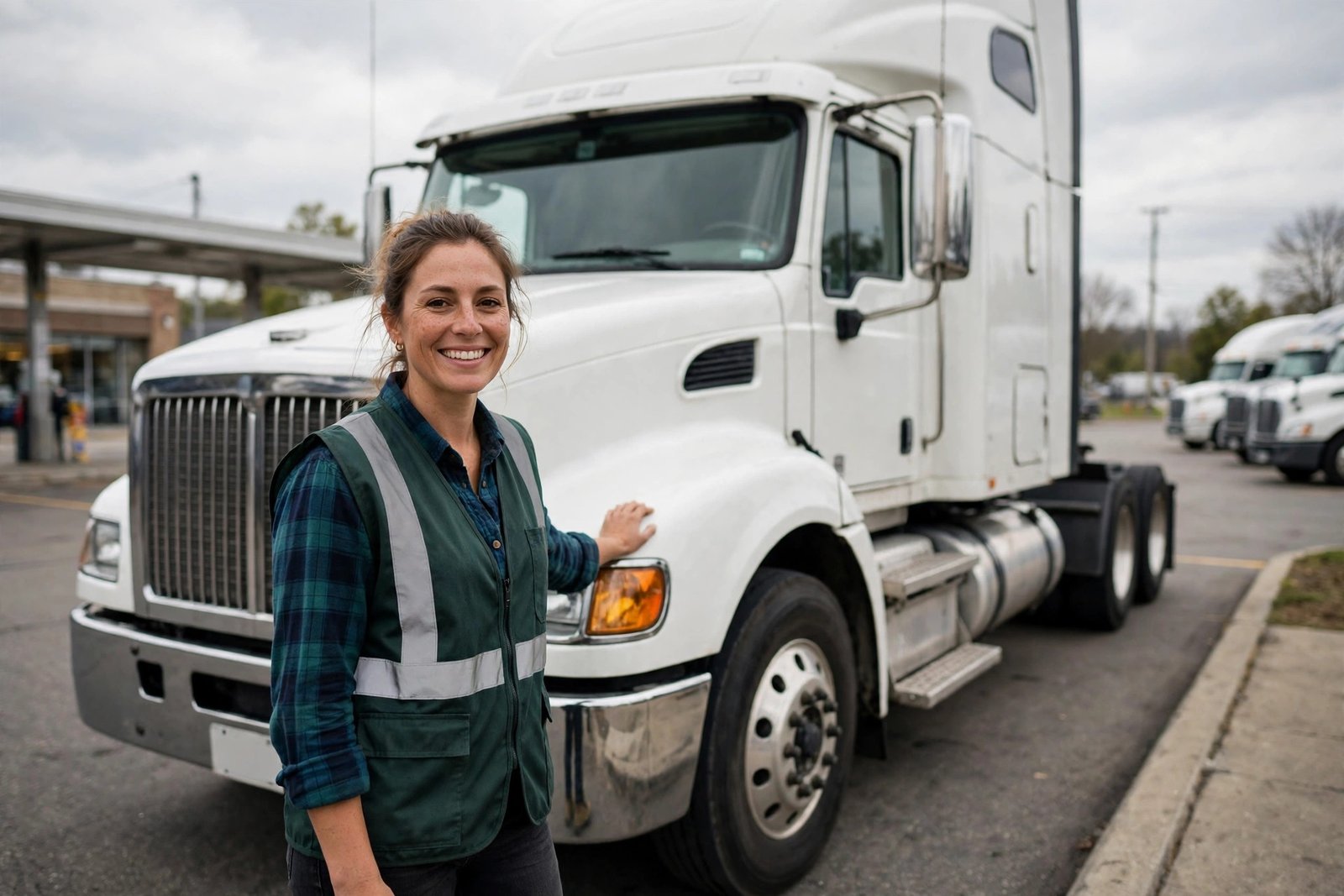
USA Truck Driver Jobs with Visa Sponsorship 2026
USA Truck Driver Jobs with Visa Sponsorship 2026 are among the most searched driving jobs in the world, and the reason is simple: the United States runs on trucks, and American trucking companies are short of drivers. Almost everything Americans buy travels by truck at some point, from groceries and clothes to building materials and medicine, and the country has more than three million miles of roads for those trucks to cover. With around 1,000 truck driver listings visible on major job boards at any given time, and pay commonly reported in the range of $1,200 to $2,000 a week for long-haul drivers, the job attracts workers from all over the world, including from Pakistan, India, Nepal, Bangladesh, the Philippines and Sri Lanka. This article explains what the job actually involves, what license you need, which routes and regions hire the most, what the pay and hours look like, which visa routes drivers use, and how to apply safely. It also tells you the honest limits: no employer can guarantee you a visa, and no genuine trucking job will ever ask you to pay a large fee upfront for a work permit.
The driver shortage in the United States is real and long running. Industry estimates regularly put the shortfall at tens of thousands of drivers, and the gap exists because the work is demanding, the hours are long, and many American workers prefer jobs that keep them at home every night. Long-haul trucking means days or weeks away from home, sleeping in a truck cab, eating at truck stops and driving through all weather. For the right person, that life is not a drawback but a trade: in return for the hard work and the time away, drivers earn a solid wage, see the country from coast to coast, and build a career that does not need a university degree. Some drivers come for a few years and save, others settle permanently, and many move on to become owner-operators, running their own truck and their own small business. Whatever your plan, the first step is understanding the job honestly, because trucking rewards people who know what they are signing up for.
Why American Trucking Companies Hire Drivers From Overseas
American trucking companies hire drivers from overseas for a straightforward reason: there are more loads to move than there are drivers to move them, and the shortage is worst in long-haul and over-the-road work. Freight volumes in the United States keep growing as online shopping expands, and every extra parcel, pallet and container needs a truck and a driver. At the same time, many experienced American drivers are retiring, and fewer young Americans are choosing trucking, because the job keeps you away from home and the first year can be tough. Companies that move freight across the country therefore look abroad for reliable drivers who are willing to do the long-haul work, and they are often willing to support a visa application for a driver they genuinely want to hire.
It helps to understand what kind of companies do the hiring. Large national carriers with hundreds or thousands of trucks are the most likely to sponsor overseas drivers, because they have the legal and human resources teams to handle visa paperwork, and they run structured training programs for new drivers. Smaller regional carriers sometimes hire overseas drivers too, but they are less likely to sponsor, because the cost and paperwork are harder for a small company to manage. The work itself is the same either way: you pick up a loaded trailer, drive it hundreds or thousands of miles, deliver it on schedule, and repeat. Companies value drivers who are safe, punctual and honest, because a single accident or a missed delivery can cost them a customer, and a driver who treats the truck and the cargo with care is worth keeping.
A Day Behind the Wheel in the USA
A truck driver’s day in the United States starts early, usually between 4:00 and 6:00 in the morning, when the driver does a pre-trip inspection of the truck and trailer before turning a wheel. The inspection is a legal requirement and a matter of safety: the driver checks the tires, brakes, lights, mirrors, fuel, oil and the coupling between the truck and the trailer, and reports any fault before leaving. Then the driving begins, and a long-haul driver can cover 500 to 700 miles in a day, which is roughly 800 to 1,100 kilometres, stopping for fuel, food and rest breaks along the way. The cab is the driver’s office, bedroom and kitchen for the trip, with a bunk bed, a small fridge, a microwave in many trucks, and a phone or tablet for navigation and for staying in touch with the dispatcher.
American trucking law sets strict limits on driving hours. Under the hours of service rules, a driver may drive a maximum of 11 hours after 10 consecutive hours off duty, and may not drive beyond the 14th consecutive hour after coming on duty. There is also a mandatory 30-minute break after 8 hours of driving, and a weekly limit of 60 or 70 hours in 7 or 8 days, depending on the company. After reaching the limit, the driver must take a 34-hour restart, which is usually spent at a truck stop or at home. These rules exist to stop tired drivers causing accidents, and electronic logging devices in every truck record driving time automatically, so the hours cannot be faked. For a new driver, the discipline of the logbook is one of the first things to learn, because breaking the hours rules can cost you your job and your license.
License, Routes and the Roads You Will Drive
To drive a large truck in the United States you need a Commercial Driver’s License, known as a CDL, and the type most long-haul drivers hold is the Class A CDL, which covers combination vehicles such as tractor-trailers with a gross weight above 26,001 pounds. Getting a CDL involves passing a written knowledge test, a skills test in the truck, and a medical examination that checks your vision, hearing and general health, including a drug and alcohol screening. Since 2022, new drivers must also complete entry-level driver training with a registered training provider before they can take the skills test. For a driver arriving from overseas, the usual path is to obtain a US CDL after arriving, because a foreign truck license is not directly interchangeable, although your driving experience will help you learn faster and may impress employers.
The routes you drive depend on the job. Long-haul or over-the-road drivers cover the whole country, from the ports of Los Angeles and New York to the warehouses of Texas and the Midwest, and they can be away from home for one to three weeks at a time. Regional drivers stay within a smaller area, such as the southeastern states or the Pacific Northwest, and are usually home most weekends. Local drivers work within a single city or state, delivering to stores and businesses, and they are home every night, although the pay is often lower than long-haul. The freight also varies: dry van trailers carry general goods, refrigerated trailers carry food, flatbeds carry building materials and machinery, and tankers carry liquids. Each type needs different skills and sometimes extra endorsements on your CDL, such as a hazardous materials endorsement or a tanker endorsement, and those endorsements usually mean higher pay.
Where the Driving Jobs Are in the USA
Truck driving jobs exist in every American state, but the biggest numbers are in the states that sit at the centre of the country’s freight network. Texas leads the way, with the Dallas-Fort Worth area, Houston and San Antonio all serving as major trucking hubs, and the state has thousands of carriers and more driving jobs than almost anywhere else. California is another giant, because the ports of Los Angeles and Long Beach handle a huge share of the goods arriving from Asia, and those containers have to move inland by truck. The Midwest, especially Illinois, Ohio, Indiana and Pennsylvania, is full of warehouses and distribution centres for national retailers, and the I-80 and I-95 corridors that run across the country are lined with truck stops and freight terminals.
For an overseas driver, the choice of region matters for more than just the number of jobs. The weather varies sharply: driving through the Rocky Mountains in winter means snow, ice and mountain passes, while summer driving in Arizona and Texas means extreme heat and long, empty stretches of desert highway. The cost of living also varies, with Texas and the southern states generally cheaper than California or the Northeast, which matters if you plan to settle and bring family. Some drivers prefer the steady work of the Midwest and the South, while others take the higher pay of the West Coast ports. Wherever you go, the work is the same, and the best advice is to choose a company with a good safety record and a clear pay structure rather than choosing a region and hoping the company works out.
Pay, Hours and Time Away From Home
Pay for truck drivers in the United States is usually calculated per mile rather than per hour, and the rate depends on experience, the type of freight and the region. As a rough guide, long-haul drivers commonly earn in the range of $1,200 to $2,000 a week, which works out to roughly $60,000 to $100,000 a year for a driver who works a full schedule, although the exact figure depends on how many miles you drive and what bonuses you earn. New drivers start at the lower end, around 50 to 60 cents per mile, while experienced drivers with clean records can earn 65 to 75 cents per mile or more, and drivers hauling hazardous materials or oversized loads can earn still more. Many companies also pay bonuses for safety, for fuel efficiency, for on-time delivery and for staying with the company, and these can add thousands of dollars a year.
Hours and time away from home are the hardest part of the job, and it is important to be honest about them. A long-haul driver is typically away from home for one to three weeks at a time, sleeping in the truck cab and living on the road, and then home for a few days before the next trip. Some companies offer a better balance, with regional routes that get you home at weekends, but the pay is usually lower. Benefits matter too: most large carriers offer health insurance, paid time off, retirement plans and sometimes a sign-on bonus, and these should be checked in writing before you accept a job. The money is real, but so is the sacrifice, and drivers who last in the job are the ones who accept the trade and plan their finances and family life around it.
What Employers Ask For
American trucking employers look for drivers who are safe, reliable and willing to learn, and a clean record matters more than a long list of qualifications. The first requirement is a valid Commercial Driver’s License, or the ability and legal right to obtain one, and most employers want drivers who are at least 21 years old, because federal rules do not allow drivers under 21 to cross state lines in a commercial truck. A clean driving record is essential: employers check your history for accidents, traffic violations and license suspensions, and a record with serious offences will usually end an application. You must also pass a Department of Transportation medical examination and a drug and alcohol test, and you will be subject to random testing throughout your employment, because safety is the first rule of the industry.
Other qualities employers value include honesty, patience and the ability to work alone for long periods, because long-haul driving is solitary work that demands self-discipline. Basic English is important, because you need to read road signs, understand dispatch instructions, fill in delivery paperwork and pass the CDL written test, which is in English, although some states offer the test in other languages. Experience helps, and employers will ask about any truck driving you have done in your home country, so keep records of the vehicles you drove, the routes you covered and the companies you worked for, and get written references from former employers. A driver who turns up on time, communicates clearly with the dispatcher, looks after the truck and delivers on schedule is a driver companies want to keep, and many carriers promote their best drivers to trainer roles or help them become owner-operators.
The Visa Route for Drivers in the USA
USA Truck Driver Jobs with Visa Sponsorship 2026 usually lead to one of two visa routes, and it is important to understand both honestly. The most common route for overseas truck drivers is the EB-3 visa, which is an employment-based immigrant visa for skilled and unskilled workers, and it is used by trucking companies that want to hire a driver permanently. Under EB-3, the employer files a labor certification showing that no qualified American worker is available for the job, then sponsors the driver for a green card, and the process can take many months or even years, depending on the driver’s country of birth and the visa backlog. The second route is the H-2B visa, which is a temporary visa for non-agricultural workers, used by some carriers for seasonal or peak-period driving work, and it allows a driver to work in the United States for a limited period, usually up to a year, with the possibility of extension.
It is vital to be clear about what sponsorship does and does not mean. Sponsorship means the employer supports your visa application with a genuine job offer and the required paperwork, and it usually means the employer pays the costs of the labor certification and the petition, although the exact split of costs should be confirmed in writing. Sponsorship does not mean the employer can guarantee the visa will be granted, because the US government makes the final decision, and it can refuse an application if any requirement is not met, or if the annual visa quota for the route has been reached. Sponsorship also does not mean the job is free: visa application fees, medical examinations and travel costs are real, and you should confirm in writing who pays each cost before you accept an offer. Anyone who promises you a guaranteed visa, a guaranteed green card, or a job without any checks is not being honest, and you should walk away.
How to Apply Step by Step
The safest way to apply for a US truck driving job is through recognised job platforms and direct contact with carriers. Start with well-known job websites such as Indeed, where around 1,000 truck driver listings can be found at any given time, and also check company career pages, because large carriers advertise directly and often have dedicated pages for drivers applying from overseas. Read each job advertisement carefully, and apply only to advertisements that name the company, describe the role clearly, and give a real company email address or phone number. Prepare a short CV that lists your driving experience honestly, including the vehicles you drove, the loads you carried, the routes you covered and the dates you worked, and say clearly that you are applying from overseas and would need visa sponsorship, because hiding that fact wastes everyone’s time.
After you apply, a genuine employer will usually arrange a video interview, ask detailed questions about your driving experience and your record, and check your references before making any offer. If you are offered a job, ask for a written job offer and a written explanation of the visa process, including which visa route the company will use, what the timeline is, and who pays each cost, and read both documents carefully before you pay any fees. Check the company yourself by searching for its name, its safety record on the Federal Motor Carrier Safety Administration website, and reviews from other drivers, because a real carrier has a real address, real trucks and a real safety rating. If anything is unclear, ask the employer to explain it, or seek advice from a licensed US immigration lawyer, whose credentials you can verify, and never pay money to a personal bank account or through a money transfer service for a job offer.
Mistakes That Cost Drivers the Job
The most common mistake overseas applicants make is paying an agent who promises a guaranteed job and a guaranteed visa, and then disappearing with the money. No genuine American trucking company charges a driver for a job offer, and no agent can guarantee a US visa, so any request for a large upfront payment for a job offer is a warning sign. Another common mistake is lying about driving experience or about a driving record, because American employers check records thoroughly, and a lie discovered after hiring will end the job and can damage your immigration case. A third mistake is accepting a job without reading the pay structure: some companies pay only for loaded miles and not for empty miles, some pay by the hour for waiting time and some do not, and the difference can be thousands of dollars a year.
New drivers also make mistakes on the road that cost them their jobs. The most serious is breaking the hours of service rules, because electronic logging devices record every hour, and a company that finds a driver falsifying logs will usually dismiss them immediately. Speeding, harsh braking and accidents stay on a driver’s record and make it harder to get the next job, so safe driving is not just a rule but a career asset. Finally, many drivers underestimate the cost of the first months: the CDL training, the medical examination, the travel and the wait for the visa all cost money, and drivers who arrive without savings can find themselves under pressure to accept a bad offer. Plan your finances before you apply, keep copies of every document and every payment, and never hand your original passport to an agent or a stranger.
Questions Applicants Ask
Do I need a US license before I apply?
No, you do not need a US Commercial Driver’s License before you apply, because most overseas drivers obtain their CDL after arriving in the United States, usually with training arranged through the employer. What you do need is driving experience, a clean record, and the legal right to work once your visa is approved, and your existing driving experience will help you pass the CDL tests faster.
How long does the visa process take for truck drivers?
The timeline depends on the visa route. The H-2B temporary visa can take a few months, while the EB-3 immigrant visa route typically takes much longer, often a year or more, and sometimes several years, depending on your country of birth and the visa backlog. There is no fixed timeline, and delays are common, so do not book flights or leave your current job until the visa is granted.
How much do truck drivers really earn in the USA?
Long-haul drivers commonly earn in the range of $1,200 to $2,000 a week, which is roughly $60,000 to $100,000 a year for a full schedule, although the exact figure depends on experience, the type of freight and how many miles you drive. New drivers start at the lower end, and pay rises with experience, a clean record and extra endorsements such as hazardous materials.
Can my family join me in the United States?
It depends on the visa route. Drivers on the EB-3 immigrant visa route can usually include a spouse and unmarried children under 21 in the same application, and they receive green cards together. Drivers on the H-2B temporary visa can have family members apply for dependent visas, but the rules and the length of stay are more limited. Check the current rules on the official US Citizenship and Immigration Services website or ask a licensed immigration lawyer before making plans.
Is truck driving a safe job for someone from overseas?
Truck driving is a regulated profession in the United States, with strict rules on driving hours, vehicle safety and driver health, and large carriers have safety departments and training programs. The work itself has risks, including long hours on the road and driving in bad weather, but drivers who follow the rules, keep to the hours limits and maintain their vehicles work safely for many years.
Final Word
USA Truck Driver Jobs with Visa Sponsorship 2026 offer a genuine opportunity for the right person, but they are real jobs, not shortcuts, and they reward safe driving, patience and honesty. The pay is solid, the work is demanding, the time away from home is real, and the visa process takes time and has requirements that cannot be skipped. If you have driving experience, a clean record and the willingness to live on the road, start by searching recognised job sites such as Indeed, apply only to genuine carriers, and never pay anyone for a job offer. Check every claim against official sources, keep your documents ready, and be patient with the process. The highways of America need good drivers, and if you are one of them, a truck cab could be the start of a new chapter in your working life.