Top 20 Animals That Start With X
Introduction
Top 20 Animals That Start With X is a list that feels almost impossible at first, because X is the rarest starting letter in the whole animal kingdom. Most letters of the alphabet can fill a whole book of animal names, but X barely fills a page, and that is exactly what makes it interesting. The animals that do start with X come from every corner of the planet: a see-through fish from the Amazon, a hairless dog from Mexico, a ground squirrel from the African savanna, a tiny owl from the cloud forests of Peru, and a seabird that nests on rocky islands off Baja California. This list counts down twenty of them, explains where each one lives, what it eats, how big it grows, and what makes it special, and finishes with the patterns that tie these very different creatures together.
One reason X animals are so fascinating is that many of them were named by scientists using Greek words, and the letter X in their names often comes from Greek roots such as xanthos, meaning yellow, xenos, meaning strange, and xiphias, meaning sword. That is why so many of the animals on this list are little known outside zoology: they were named in laboratories and museums rather than in everyday language. Yet several of them are animals that millions of people have seen without knowing it, such as the swordfish on a restaurant menu, the carpenter bee in a garden fence, and the Xoloitzcuintli dog that appears in Mexican art and film. Learning their names is a small step towards appreciating how much variety hides behind a single rare letter.
1. X-ray Fish
The X-ray fish, also called the X-ray tetra, is a small freshwater fish from the rivers of the Amazon basin in South America, and it is famous for a body so clear that you can see its spine and internal organs through its skin. The fish grows to about 5 centimetres long, which is roughly two inches, and it lives in slow-moving streams and flooded forest areas in countries such as Brazil, Venezuela and Guyana. Its scientific name is Pristella maxillaris, and its see-through body is not a trick of the light: the skin and muscles are genuinely translucent, with a silvery patch near the tail and a yellow and black marking on the dorsal fin. X-ray fish are peaceful schooling fish that swim in groups, and they eat tiny insects, worms and small crustaceans. In home aquariums they are popular because they are hardy, calm and easy to keep, and a group of them moving together in a tank looks like a school of tiny ghosts. Their transparency is thought to help them hide from predators, because a nearly invisible fish is hard to spot in dappled river light, and it is one of the cleverest disguises in the whole freshwater world.
2. Xenopus Frog
The Xenopus frog, better known as the African clawed frog, is a fully aquatic frog from sub-Saharan Africa that almost never leaves the water, and it is one of the most important animals in the history of science. Its scientific name is Xenopus laevis, and it grows to about 12 centimetres long, with smooth, slippery skin, a flattened head, small eyes set on top of its head, and powerful hind legs tipped with sharp black claws. These frogs live in warm ponds, lakes and slow rivers, where they eat insects, small fish, worms and anything else they can catch with their front feet and push into their wide mouths. African clawed frogs have been used in laboratories for decades, because their large eggs helped scientists understand how embryos develop, and they were once used in pregnancy tests. A female can lay thousands of eggs at a time, and the tadpoles filter tiny food particles from the water. In the wild they can live for fifteen years or more, and escaped pets have started wild populations in several countries, where they can disturb local wildlife by eating native frogs and small fish.
3. Xerus
The Xerus is an African ground squirrel that lives in the dry savannas and deserts of Africa, and it is one of the toughest little mammals on the continent. The best known species is the striped ground squirrel, Xerus erythropus, which grows to about 30 centimetres long with a bushy tail of similar length, and wears a coat of sandy brown fur with a pale stripe down each side. Xerus live in large colonies and dig deep burrow systems with many entrances, where they shelter from the fierce midday heat and from predators such as jackals, eagles and snakes. During the day they forage for seeds, roots, bulbs, fruit and the occasional insect, and they often stand upright on their hind legs to scan the horizon, using their tails as sunshades held over their backs like parasols. They communicate with sharp whistles and chirps that warn the whole colony when danger is near, and their burrows, which can be many metres long, also provide homes for other animals. A Xerus may look like an ordinary squirrel, but it is a desert specialist that survives where very few other squirrels could.
4. Xoloitzcuintli
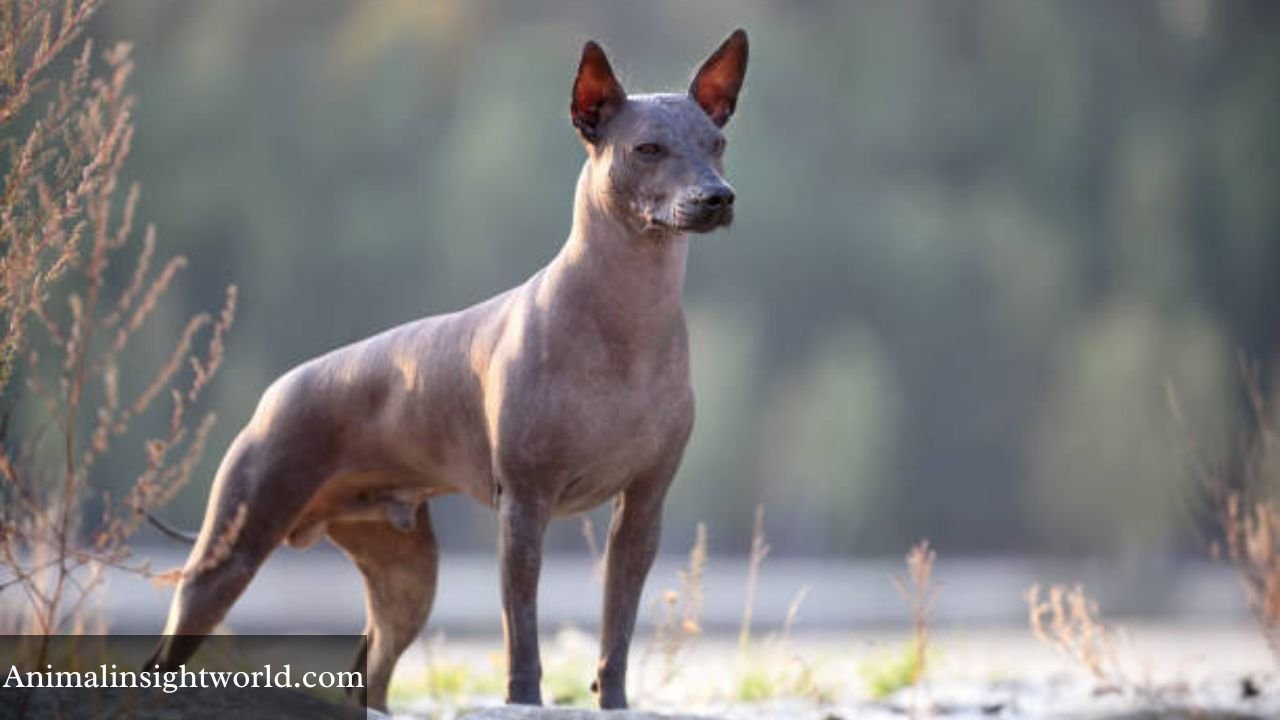
The Xoloitzcuintli, often shortened to Xolo, is a Mexican hairless dog with a history that stretches back more than three thousand years, and it is one of the oldest and rarest dog breeds in the world. The name comes from the Aztec god Xolotl and the Aztec word itzcuintli, meaning dog, and the breed was sacred to the Aztec people, who believed the dogs guided the souls of the dead through the underworld. Xoloitzcuintli come in three sizes, toy, miniature and standard, with the largest standing about 60 centimetres tall at the shoulder, and most of them have smooth, warm skin with no fur at all, although a few are born with a short coat. Their skin can be black, grey, bronze or reddish, and it needs protection from strong sun and cold weather, just like human skin. Xolos are loyal, calm and intelligent dogs that bond closely with their families, and they are excellent watchdogs because they are alert and wary of strangers. In 2016 the breed became the national dog of Mexico, and it has appeared in Mexican art for centuries, most famously in the paintings of Frida Kahlo, who kept Xolos as companions.
5. Xantus’s Hummingbird
Xantus’s hummingbird is a small, glittering bird that lives only on the Baja California peninsula in Mexico, and it is one of the few hummingbirds in the world that lives nowhere else. Its scientific name is Basilinna xantusii, and it was named after John Xantus, a Hungarian naturalist who collected birds in Baja California in the nineteenth century. The male is a jewel of a bird, with a green back, a white stripe behind the eye, a rusty red tail and a throat that flashes green and purple in the sunlight, while the female is softer in colour with a pale, speckled underside. The bird is about 9 centimetres long and weighs only a few grams, yet it feeds constantly, hovering in front of flowers and drinking nectar with its long, thin bill, and it also catches tiny insects in midair for protein. Xantus’s hummingbirds live in mountain canyons, desert oases and gardens, where flowering shrubs provide food all year round, and they are fearless defenders of their feeding spots, chasing away birds many times their size. Because they live in only one place, they are vulnerable to habitat loss, but they adapt well to gardens, and many people in Baja California welcome them with feeders and flowering plants.
6. Xantus’s Murrelet
Xantus’s murrelet is a small black and white seabird that spends most of its life far out at sea and comes to land only to breed on a few rocky islands off the coast of Baja California in Mexico. Its scientific name is Synthliboramphus hypoleucus, and it is about 24 centimetres long, with a black cap and back, white underside, and a short, pointed bill made for catching small fish and plankton. Unlike many seabirds, Xantus’s murrelets do not build nests: they lay their two eggs in a rock crevice or a shallow scrape under a boulder, and both parents take turns sitting on the eggs. When the chicks hatch, they are taken to sea at only a day or two old, swimming out into the dark with their parents calling to guide them. The birds are excellent divers, using their wings to fly underwater in pursuit of anchovies, sardines and krill, and they can stay at sea for months without ever touching land. Because they breed on so few islands, they are vulnerable to introduced predators such as rats and cats, and conservation work on the islands of Baja California has helped their numbers recover in recent years.
7. Plain Xenops
The plain xenops is a small, brown bird of the forests of Central and South America that spends its whole life climbing tree trunks and branches in search of insects, and it does the job of a woodpecker without ever being one. Its scientific name is Xenops minutus, and it is about 12 centimetres long, with streaked brown plumage, a pale stripe above the eye, and a short, upturned bill that it uses like a tiny chisel to pry insects and spiders out of bark and dead leaves. Plain xenops live from southern Mexico down through the Amazon to northern Argentina, and they are usually seen alone or in pairs, moving quietly through the middle layers of the forest and often joining mixed flocks of other small birds. They nest in holes in rotting trees, lining the cavity with soft plant fibres, and both parents help to feed the chicks. Their name comes from the Greek word xenos, meaning strange, which is fitting, because their climbing style is unusual: they brace themselves with their stiff tail feathers and hitch their way up trunks in a spiral, picking off insects that other birds miss. They are not colourful or loud, but they are a reminder that the forest is full of small specialists doing jobs no one else can do.
8. Desert Night Lizard
The desert night lizard, whose scientific name is Xantusia vigilis, is a small, secretive lizard of the deserts of the southwestern United States and northern Mexico, and it is named for a genus that begins with X. It grows to only about 10 centimetres long, with soft grey or olive skin covered in fine dark speckles, and it spends almost its entire life hidden under fallen yucca logs, agave leaves and piles of dead plant matter. Desert night lizards eat ants, termites, small beetles and other insects, and they are most active at dawn and dusk, when the desert is cool enough to hunt safely. They are unusual among lizards because they give birth to live young instead of laying eggs, with a female producing one to three babies in late summer, and the young stay with their mother for a time, which is rare in lizards. Their skin is soft and delicate, and they depend completely on the cover of dead plants, so clearing away yucca and agave can destroy a whole local population. Despite their name, they are not strictly nocturnal, and on cool, cloudy days they may be active in the open. They are harmless, gentle animals, and they are an important part of the desert food web, eating insects and in turn being eaten by snakes and birds.
9. Sunbeam Snake
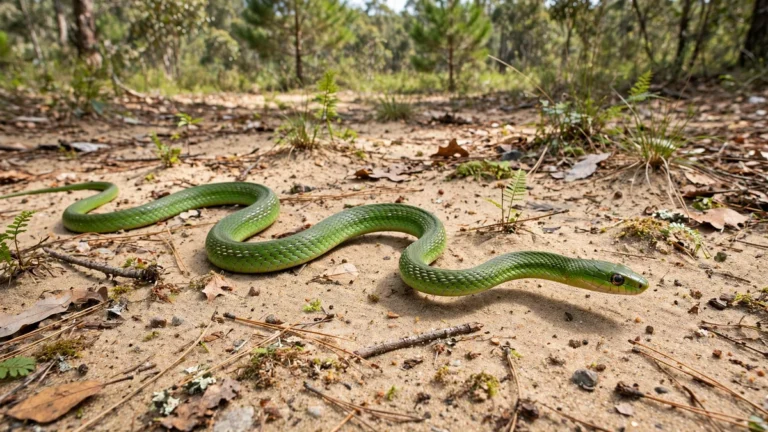
The sunbeam snake, known to scientists as Xenopeltis unicolor, is a burrowing snake of Southeast Asia whose scales shine with an oily rainbow colour when they catch the light, and it is one of the most beautiful snakes that most people never see. It grows to about one metre long, with smooth, highly polished scales that are dark brown or black on top and white underneath, and the iridescence that gives it its name appears when sunlight strikes the scales at the right angle. Sunbeam snakes live in the forests and rice fields of countries such as Thailand, Vietnam, Malaysia and Indonesia, where they spend most of their lives underground or under leaf litter, hunting frogs, small rodents and other snakes. They are non-venomous and kill their prey by constriction, wrapping their muscular bodies around it, and they are powerful diggers that can push through soft soil with their blunt heads. They are rarely seen in the wild because of their hidden lifestyle, and they are sometimes kept as pets, although they are shy and prefer to stay buried. Their shining scales have made them famous among snake lovers, and they are a good example of how the most striking animals are often the ones that live out of sight.
10. Swordfish
The swordfish, whose scientific name is Xiphias gladius, is one of the fastest and most powerful fish in the ocean, and it is named for the long, flat bill that extends from its upper jaw like a sword. The bill can be up to a metre long, and the fish itself can grow to more than four metres and weigh over 600 kilograms, although most swordfish caught today are much smaller. Swordfish live in the open waters of the Atlantic, Pacific and Indian Oceans, where they hunt squid, mackerel, tuna and other fast fish, using their bills to slash through schools of prey and stun them before eating them. They are famous for their speed, with reported bursts of up to 60 miles per hour, and they are also remarkable for their ability to warm their eyes and brains, which helps them hunt in the cold, deep water where their prey hides. Female swordfish lay millions of eggs, and the young grow quickly, reaching a metre in length within their first year. Swordfish have been fished by people for centuries, and today they are managed with catch limits in many countries because overfishing reduced their numbers, although stocks have recovered in some oceans thanks to better rules.
11. Carpenter Bee
The carpenter bee, a member of the genus Xylocopa, is a large, heavy bee that gets its name from its habit of drilling neat round holes into wood to make its nest, and it is one of the most important pollinators in warm parts of the world. There are more than five hundred species of carpenter bees, found across Africa, Asia, Australia and the Americas, and most of them are about 2 to 3 centimetres long, with shiny black bodies and, in some species, males covered in golden fur. Unlike honeybees, carpenter bees are mostly solitary: each female digs her own tunnel in dead wood, a fence post or a tree branch, and lays her eggs in a row of separate chambers, each stocked with a ball of pollen and nectar for the young bee to eat. They are powerful fliers that can hover in front of flowers and buzz loudly, and they visit many kinds of flowers, including some that other bees cannot pollinate. Male carpenter bees cannot sting, although they will hover aggressively around intruders, while females can sting but rarely do. Gardeners sometimes see them as pests because of the holes they drill, but they are valuable pollinators of crops such as passion fruit, tomatoes and eggplants, and the damage they cause to wood is usually minor.
12. Sabine’s Gull
Sabine’s gull, whose scientific name is Xema sabini, is a graceful Arctic seabird with a forked tail and a striking pattern of black, white and grey on its wings, and it is one of the most beautiful gulls in the world. It breeds on the low, marshy tundra of the far north, in Alaska, Canada, Greenland and Siberia, where it nests in shallow scrapes on the ground near ponds and lakes, laying two or three speckled eggs. After the breeding season, Sabine’s gulls fly thousands of miles south to spend the winter at sea off the coasts of South America and southern Africa, a migration that takes them across whole oceans. They feed on small fish, plankton, crustaceans and insects, often picking food from the surface of the water while flying, and they are famous for following whales, because the whales drive small fish and krill to the surface. Sabine’s gulls are smaller and more delicate than most gulls, with a gentle, tern-like flight, and they are a favourite sight for birdwatchers who travel to the Arctic in summer. Their long migration and their life split between the Arctic tundra and the open ocean make them one of the great travellers on this list.
13. White Monjita
The white monjita, whose scientific name is Xolmis irupero, is a small, almost entirely white bird of the open grasslands of South America, and it looks like a snowflake that has settled on a fence post. It grows to about 18 centimetres long, with pure white plumage, black wings and tail, and a dark eye that stands out against its pale face. White monjitas live in Argentina, Brazil, Paraguay, Uruguay and Bolivia, where they perch on fence posts, wires and low bushes in open country, watching for insects on the ground. When they spot prey, they drop down to snatch it and then return to the same perch, a hunting style that makes them easy to watch and a favourite of birdwatchers. They eat grasshoppers, beetles, ants and other insects, and they nest in holes in trees or in old nests abandoned by other birds, lining the nest with soft feathers and plant fibres. White monjitas often gather in small, loose groups outside the breeding season, and their bright white feathers make them visible from a long way off across the pampas. They are not shy birds, and they are a common sight for anyone travelling through the grasslands of southern South America.
14. Yellow-headed Blackbird
The yellow-headed blackbird, whose scientific name is Xanthocephalus xanthocephalus, is a bold marsh bird of North America whose male looks as if it has been dipped in bright yellow paint from the neck up. The male is about 25 centimetres long, with a black body, white patches on the wings, and a head and chest of vivid yellow, while the female is smaller and browner, with a pale yellow wash on her face and chest. These birds live in the freshwater marshes of western and central North America, from Canada down to Mexico, where they nest among reeds and cattails, weaving their nests onto the stems above the water. They eat seeds and grain in winter and insects in summer, and they often feed in farm fields, where flocks of hundreds can gather after the breeding season. The male’s song is famous for being one of the strangest sounds in the bird world, a harsh, grating note that sounds like a rusty gate hinge, and males sing it loudly from the tops of reeds to defend their territories. Yellow-headed blackbirds migrate south for the winter, and they are a welcome sign of spring when they return to the northern marshes each year.
15. Knob-scaled Lizard
The knob-scaled lizard, a member of the genus Xenosaurus, is a flattened, armoured lizard of Mexico and Central America that lives its whole life in the cracks of rocks and old stone walls, and it is one of the most secretive reptiles in its range. There are about a dozen species of Xenosaurus, and most of them grow to about 15 to 25 centimetres long, with rough, knobbly scales that help them wedge themselves into narrow crevices where predators cannot reach them. They are usually grey or brown with dark bands, which camouflages them perfectly against the rock, and they have flattened heads and bodies that let them slip into gaps only a few millimetres wide. Knob-scaled lizards eat insects, spiders and other small invertebrates, and they are ambush hunters that wait in their crevice and dart out to grab prey before retreating to safety. Like the desert night lizard, they give birth to live young instead of laying eggs, and a female usually produces only a few babies at a time. Many species live in very small areas, sometimes a single mountain or a single valley, which makes them vulnerable when their rocky habitat is damaged, and several are protected because of their limited range.
16. Rhinoceros Beetle
The rhinoceros beetle, a member of the genus Xylotrupes, is one of the strongest animals on Earth for its size, and the male carries a large, curved horn on its head that looks like the horn of a rhinoceros. Xylotrupes species live in Asia and Australia, and the males can grow to more than 6 centimetres long, with a dark, shiny shell and a powerful horn used to fight other males for mates and feeding spots. These beetles are famous for their strength: they can lift objects many times their own body weight, and they are often used in strength tests by scientists studying insect muscle. The larvae, which are large white grubs, live in rotting wood and compost, eating decaying plant matter for a year or more before they pupate and emerge as adults. Adult rhinoceros beetles feed on tree sap, fruit and nectar, and they are strong fliers that are attracted to lights at night. In some parts of Asia they are kept as pets and even raced, and in traditional medicine their larvae have been used for centuries. They are harmless to people, and their horn, which looks fearsome, is used only against other beetles.
17. False Coral Snake
The false coral snake, whose scientific name is Xenodon severus, is a South American snake that wears the bright red, black and yellow bands of a true coral snake, but it is completely non-venomous, and the disguise is its whole defence. It grows to about 80 centimetres long, with smooth, glossy scales in bold bands, and it lives in the forests and river edges of the Amazon basin, where it hunts frogs and toads, which it swallows whole. The mimicry is so good that even experienced naturalists can mistake it for a venomous coral snake, and that is the point: predators that have learned to avoid coral snakes leave the false coral snake alone too. Unlike true coral snakes, the false coral snake has a rounder head and a less distinct banding pattern, but the differences are small, and the safest rule for anyone in the Amazon is to leave every banded snake alone. False coral snakes are active at night and during the day after rain, when frogs are plentiful, and they are gentle snakes that rarely bite even when handled. They are a classic example of Batesian mimicry, where a harmless animal copies a dangerous one, and they show how much of survival in the rainforest depends on colour and bluff.
18. Sargassum Triggerfish
The sargassum triggerfish, whose scientific name is Xanthichthys ringens, is a reef fish of the western Atlantic that is named for its habit of hiding among floating mats of sargassum seaweed, and it is one of the most unusual triggerfish in the Caribbean. It grows to about 25 centimetres long, with a pale, silvery body, a dark patch near the tail, and a small mouth full of sharp teeth made for picking plankton and small animals from the water. Unlike most triggerfish, which live on the reef and eat hard-shelled animals, the sargassum triggerfish spends much of its time in the open water, drifting with the seaweed and feeding on tiny crustaceans, jellyfish and fish eggs. When it is threatened, it can lock its first dorsal spine upright like a trigger, wedging itself into a crevice so that a predator cannot pull it out, and it can also make a grunting sound by grinding its teeth. Young sargassum triggerfish are often found hiding in floating seaweed far from land, which helps them spread to new reefs across the Caribbean. They are popular with divers because of their curious behaviour and their unusual habit of swimming in open water rather than hugging the reef.
19. Long-whiskered Owlet
The long-whiskered owlet, whose scientific name is Xenoglaux loweryi, is one of the smallest and rarest owls in the world, and it was unknown to science until 1976, when it was discovered in the cloud forests of northern Peru. It is only about 14 centimetres tall and weighs around 50 grams, with mottled brown plumage, bright orange eyes, and long, thin facial bristles that look like whiskers and give the bird its name. The owlet lives in the dense, mossy cloud forest of the eastern Andes, at heights of about 2,000 metres, where it hunts insects and other small invertebrates at night, perching quietly and listening for the sounds of its prey. For decades, almost nothing was known about it, and it was feared to be extinct, until researchers found a small population in the Abra Patricia area of Peru in the 2000s. Its habitat is one of the most threatened in South America, because cloud forest is cleared for farming, and the owlet is now listed as endangered. Conservation groups are working to protect the forests where it lives, and the long-whiskered owlet has become a symbol of how much wildlife is still hidden in the Andes, waiting to be discovered and protected.
20. Southern Platyfish
The southern platyfish, whose scientific name is Xiphophorus maculatus, is a small, colourful freshwater fish from the rivers and ponds of Mexico and Central America, and it is one of the most popular aquarium fish in the world. It grows to about 5 centimetres long, and wild fish are usually olive green with a dark spot, but breeders have produced dozens of colour varieties, including red, orange, yellow, blue and black, with fins in many shapes. Southern platyfish are livebearers, which means the females give birth to fully formed baby fish instead of laying eggs, and a single female can produce dozens of fry every few weeks. In the wild they live in slow-moving streams, ditches and ponds, where they eat algae, small insects and plant matter, and they are peaceful fish that do well in community tanks. They are hardy and easy to keep, which is why they are often recommended for beginners, and they have been introduced to warm waters around the world, where escaped pets have started wild populations. Their scientific name comes from the Greek words xiphos, meaning sword, and phoros, meaning bearer, a reference to the sword-like tail fin of their close relatives, the swordtails, and they are a reminder that even the smallest aquarium fish can have a story worth telling.
Where They Live and How They Survive
Top 20 Animals That Start With X spans almost every habitat on Earth, from the rivers of the Amazon to the cloud forests of Peru, from the deserts of Africa to the open ocean, and the variety is the real story of this list. Eight of the twenty are fish or seabirds that live in water, six are birds of forest, marsh or grassland, four are reptiles, one is a frog and one is a mammal, and only one of them, the Xoloitzcuintli, is a domestic animal that lives with people. What they share is not a habitat but a survival strategy: most of them are specialists. The X-ray fish hides by being see-through, the false coral snake survives by copying a dangerous neighbour, the Xerus survives the desert by digging deep and living in a colony, and the desert night lizard survives by never leaving its cover. Specialisation is what lets a rare animal hold on in a tough place, but it also makes it vulnerable when that place changes.
Size is another pattern worth noticing. Most X animals are small: the X-ray fish is five centimetres long, the long-whiskered owlet weighs fifty grams, the desert night lizard fits in the palm of a hand, and the plain xenops is smaller than a sparrow. Only the swordfish and the Xoloitzcuintli are large, and even they are modest compared with the biggest animals in their groups. Small animals live in a different world from large ones: they can hide in a rock crack, a rotting log or a floating mat of seaweed, and they can survive on insects, plankton and seeds that bigger animals ignore. That is probably why so many X animals are still here: they found small, quiet corners of the world and made them their own. The lesson for anyone who loves animals is to look in the small places, because that is where the rarest names are hiding.
Questions People Ask
How many animals start with the letter X?
There are only a few dozen commonly recognised animal names that start with X, which makes it one of the rarest letters in the animal kingdom. This list covers twenty of the best known, from the X-ray fish and the Xenopus frog to the swordfish and the Xoloitzcuintli, and most of the rest are subspecies, regional variants or scientific names that are rarely used outside zoology.
What is the most famous animal that starts with X?
The Xoloitzcuintli is the most famous X animal for most people, because it is a dog with a three-thousand-year history in Mexico, and it appears in art, film and dog shows around the world. The X-ray fish is the most famous in the aquarium world, and the swordfish is the most famous as food, but the Xolo is the one that most people can picture.
Is the X-ray fish really see-through?
Yes, the X-ray fish is genuinely translucent, and you can see its spine and some of its internal organs through its skin, although the fish is not completely transparent like glass. The clear body helps it hide from predators in the dappled light of Amazon streams, and it is one of the few fish in the world with this kind of natural camouflage.
Does the Xoloitzcuintli have any hair at all?
Most Xoloitzcuintli are hairless, with smooth skin that needs sunscreen in strong sun and a coat in cold weather, but a small number are born with a short, thin coat of fur. The coated variety is recognised by breeders, and both types are the same breed, with the same loyal and calm temperament.
Can I keep an X-ray fish as a pet?
Yes, X-ray fish are popular and easy to keep in a home aquarium, because they are peaceful, hardy and small. They should be kept in a group of at least six, in a tank with clean, warm water and plenty of plants for cover, and they eat standard tropical fish food, including flakes and small frozen foods.
Final Thoughts
Top 20 Animals That Start With X proves that the rarest letter in the animal kingdom hides one of the richest collections of creatures. From the see-through X-ray fish and the ancient Xoloitzcuintli to the tiny long-whiskered owlet and the mighty swordfish, these twenty animals span every continent and almost every habitat, from desert burrows and cloud forests to coral reefs and the open ocean. Some of them are famous, some are almost unknown, and several are in danger, but all of them deserve to be remembered, because each one found a way to survive in a corner of the world that no other animal had claimed. The next time someone asks you to name an animal that starts with X, you will have twenty answers ready, and a story to go with each one.