New Zealand Dairy Farm Worker Jobs with Visa Sponsorship 2026
Why New Zealand Dairy Farms Hire Workers From Overseas
New Zealand Dairy Farm Worker Jobs with Visa Sponsorship 2026 are among the most searched farm jobs in the world, and for good reason. New Zealand is one of the largest dairy exporters on the planet, its green pastures support millions of cows, and its farms regularly hire workers from overseas, including from Pakistan, India, Nepal, Bangladesh, the Philippines and Sri Lanka. If you have worked with animals, driven a tractor, or simply grown up around farming, a dairy farm job in New Zealand could be a real path to steady work, a fair wage and a new life abroad. This article explains what the job actually involves, what employers look for, what the pay is, which visa route workers use, and how to apply safely. It also tells you the honest limits: no employer can guarantee you a visa, and no genuine farm job will ever ask you to pay a large fee upfront for a work permit.
New Zealand dairy farming is big business. The country has around 11,000 dairy farms and close to five million dairy cows, and dairy products are New Zealand’s biggest export earner, worth tens of billions of dollars every year. Most farms are family-owned businesses in regions such as Waikato, Canterbury, Southland, Taranaki and Otago, and they range from small farms with a few hundred cows to large operations milking more than a thousand. Because the work is physical, the hours are early, and the farms are often far from towns, many farmers struggle to find local workers, and that is why they turn to overseas workers. For the right person, that gap is a genuine opportunity, not a shortcut, and it rewards people who are willing to work hard in all weather.
A Dairy Worker’s Day: First Milking to Last Feed
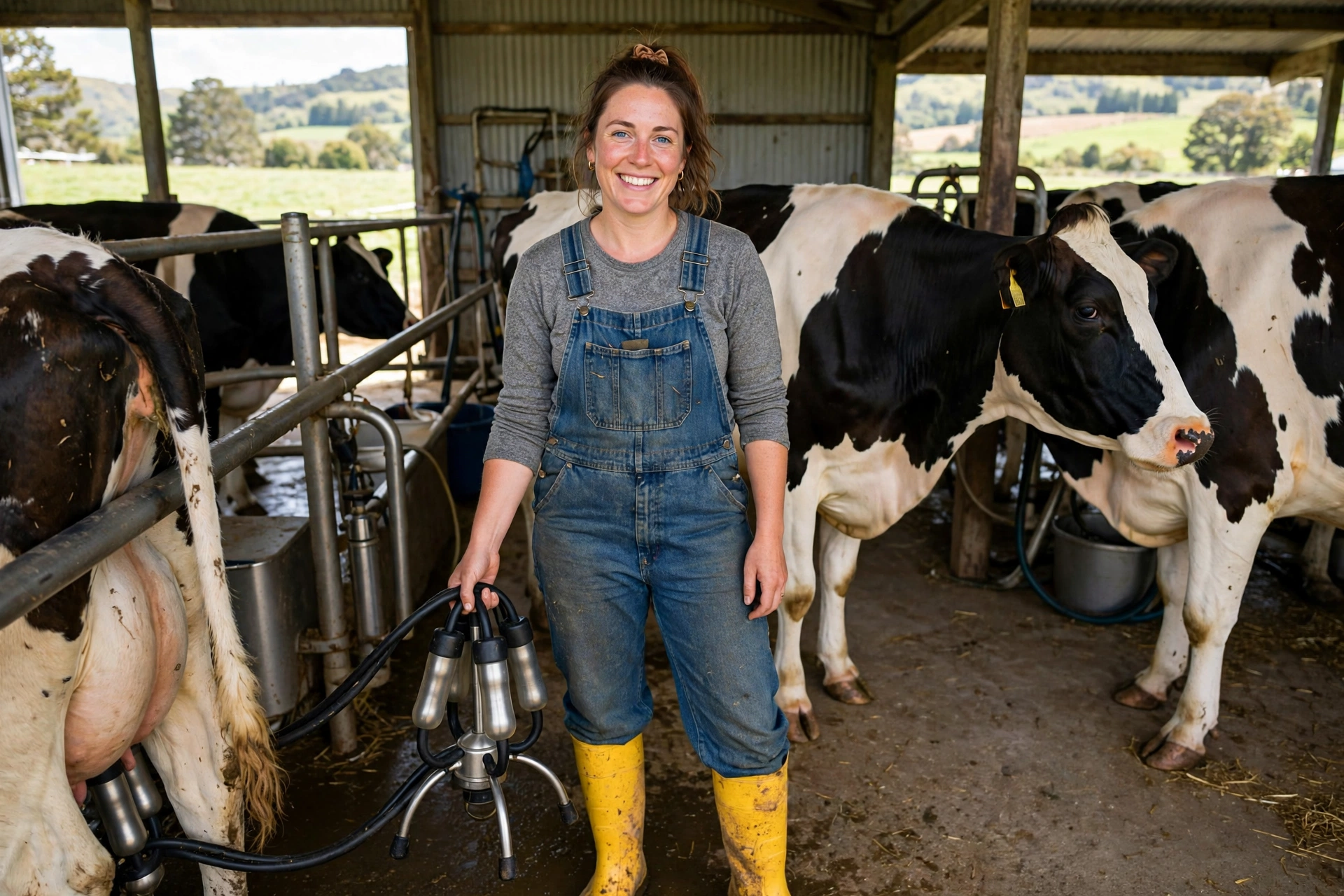
A dairy farm worker’s day starts early, usually between 4:00 and 5:00 in the morning, when the cows are brought in for the first milking of the day. The milking itself takes place in a rotary shed or a herringbone shed, where cows walk onto a rotating platform or into stalls, and workers attach the milking cups, check the milk flow, and watch for any cow that looks unwell. A typical milking session lasts two to three hours, and the same routine repeats in the afternoon, usually starting around 2:00 or 3:00. Between milkings there is a long list of other jobs: feeding calves, moving fences, cleaning the shed, checking water troughs, and keeping records of each cow’s health and milk production.
The working week on a New Zealand dairy farm is usually five or six days, with rosters that give workers regular days off, although the exact pattern depends on the farm. During calving season, which runs roughly from late winter into spring, the work gets much busier, because calves are born every day and need feeding, checking and sometimes help being born. Many farms use a roster system where workers take turns doing the early morning shift and the afternoon shift, so nobody works every single milking. The work is outdoors in all weather, from cold, wet winter mornings to hot summer afternoons, and it involves a lot of walking, lifting and bending. People who enjoy being outside, working with animals and seeing a clear result at the end of each day tend to do well in this job.
The Herd, the Shed and the Work Between Milkings
Modern New Zealand dairy farms use a lot of machinery, and a farm worker needs to be comfortable around it. The milking shed itself is a complex machine, with vacuum pumps, milk lines, cooling tanks and automatic cup removers, and workers learn to operate it, clean it and spot problems before they become expensive. Tractors are used every day for feeding out silage, spreading fertiliser and moving heavy loads, while quad bikes and side-by-side farm vehicles are used to check stock and move fences across large paddocks. Many farms now use farm management software and apps to record milk yields, cow health and mating dates, so basic comfort with a smartphone and simple record keeping is part of the job.
The main product is raw milk, which is collected by tanker, usually every day or every second day, and taken to a processing plant run by companies such as Fonterra, which is one of the largest dairy companies in the world. Workers handle milk, animal feed, hay and silage, fencing wire, veterinary medicines and cleaning chemicals, and they must follow strict hygiene and safety rules, because milk quality is tested at every collection and poor hygiene can cost the farm money. Calves are another important part of the job: during calving season, workers feed newborn calves, teach them to drink from a feeder, and keep their pens clean and dry. Handling animals safely is a skill that improves with practice, and good employers will train new workers rather than expecting them to know everything on the first day.
What a Dairy Farm Pays and What Comes With the Job
Pay for dairy farm workers in New Zealand is generally fair and is set by the market and by immigration rules. As a rough guide, most dairy farm workers earn between NZD 25 and NZD 32 per hour, depending on experience, the region and the responsibilities of the role, while experienced workers, herd managers and those with extra skills such as artificial insemination or tractor licences can earn more. Workers on the Accredited Employer Work Visa must be paid at least the New Zealand minimum wage, which is reviewed every year, and employers must also meet the market rate for the role. A standard week is around 40 to 50 hours, and overtime is common during calving and mating seasons, so weekly pay can vary through the year. Always check the current minimum wage on the official Employment New Zealand website before accepting a job, because rates change and old figures go out of date quickly.
Beyond the hourly wage, many dairy farm jobs come with benefits that make a real difference. Accommodation is often provided on or near the farm, sometimes free and sometimes at a low rent deducted from wages, and this is a major advantage, because rental housing in New Zealand can be expensive and hard to find in rural areas. Some farms provide a work vehicle, a phone allowance, or meat and milk from the farm, and most offer paid annual leave and sick leave as required by New Zealand law. After a period of work, some workers move into more senior roles, such as assistant herd manager or herd manager, with higher pay and more responsibility. These benefits are part of why dairy farm work appeals to overseas workers, but they should always be written into the employment agreement before you accept a job, not promised verbally.
The Workers Dairy Farmers Want to Hire
New Zealand dairy farmers look for workers who are reliable, physically fit and willing to learn, and formal qualifications matter less than attitude and experience. The most useful background is any hands-on work with cattle, whether on a family farm, a commercial dairy, or a livestock operation in your home country, and employers will ask about it in detail. A valid driving licence is a strong advantage, because farm work involves driving tractors, utes and quad bikes, and some farms will ask you to get a New Zealand licence after you arrive. Basic English is important, because you need to understand safety instructions, follow milking routines and communicate with the farm team, and immigration rules require a minimum standard of English for most work visa applications.
Other qualities employers value include honesty, punctuality and the ability to work as part of a small team, because dairy farms are small workplaces where everyone depends on each other. Workers must be comfortable working early mornings, weekends and public holidays on a roster, and they must be able to lift heavy buckets, walk long distances and work in rain and cold. Some farms prefer workers with experience in artificial insemination, hoof trimming or pasture management, and these skills can increase both your pay and your chances of being hired. A clean police record and good health are also required, because the visa process includes medical and character checks. If you have no farm experience at all, be honest about it: some employers will train the right person, but pretending to have experience you do not have will be found out quickly on a working farm.
Papers to Have Ready Before You Apply
Before you apply for a dairy farm job in New Zealand, gather your documents so you can move quickly when an employer shows interest. The most important document is a valid passport with at least six months of validity beyond your planned stay. You will also need a detailed CV that lists your farm experience honestly, including the names of farms or employers, the animals you worked with, the machines you operated, and the dates you worked there. References from previous employers carry a lot of weight, so ask former bosses for written references and keep their phone numbers and email addresses ready, because New Zealand employers often call references before making an offer.
Other documents include copies of any training certificates, driving licences and qualifications you hold, and these should be translated into English if they were issued in another language. When the visa stage comes, you will need a medical certificate from an approved panel physician and a police clearance certificate from every country where you have lived for more than a year, and these take time to arrange, so start them only when the employer asks, because they have expiry dates. Keep digital copies of everything in one folder, and never hand your original passport or documents to an agent or a stranger. A genuine employer or licensed immigration adviser will ask for copies, not originals, and will never ask you to pay for a job offer.
The Accredited Employer Work Visa Route for Dairy Workers
New Zealand Dairy Farm Worker Jobs with Visa Sponsorship 2026 usually lead to the Accredited Employer Work Visa, which is the main work visa for people who have a job offer from an accredited New Zealand employer. For this visa, three things must be true: the employer must be accredited by Immigration New Zealand, the job must pass a job check that shows no suitable New Zealand worker is available, and the worker must meet the health, character and English language requirements. The employer starts the process by becoming accredited and advertising the job, and only after the job check is approved can the worker apply for the visa. This process takes weeks or months, and it costs the employer money, which is why employers only sponsor workers they genuinely want to hire.
It is important to be clear about what sponsorship does and does not mean. Sponsorship means the employer supports your visa application with a genuine job offer, it does not mean the employer can guarantee the visa will be granted, because Immigration New Zealand makes the final decision, and it can refuse an application if any requirement is not met. Sponsorship also does not mean the job is free: visa application fees and medical costs are real, and you should confirm in writing who pays each cost before you accept an offer. Some workers later become eligible for residence through the Skilled Migrant Category or other pathways, but that depends on your role, your pay, your qualifications and the immigration rules at the time, and it is never automatic. Anyone who promises you a guaranteed visa, a guaranteed residence outcome, or a job without any checks is not being honest, and you should walk away.
Applying for a Dairy Farm Job the Safe Way
The safest way to apply for a New Zealand dairy farm job is through recognised job platforms and direct contact with farms. Start with well-known New Zealand job websites such as Seek, Trade Me Jobs and Farm Source Jobs, and search for dairy farm assistant, farm assistant, herd manager and dairy farm worker roles, using filters for the regions you are interested in. Read each job advertisement carefully, and apply only to advertisements that name the farm or the company, describe the role clearly, and give a New Zealand contact email or phone number. Prepare a short cover letter that explains your farm experience in plain language and says clearly that you are applying from overseas and would need visa sponsorship, because hiding that fact wastes everyone’s time.
Recruitment agencies can also help, but only use licensed agencies, and check that the agency is genuine before you share personal documents. In New Zealand, employers and agencies are not allowed to charge workers a fee for finding them a job, and any agency that asks you to pay for a job offer is breaking the law. After you apply, a genuine employer will usually arrange a video interview, ask detailed questions about your experience, and contact your references. If you are offered a job, ask for a written employment agreement and a written job offer before you pay any visa fees, and read both documents carefully, checking the pay rate, the hours, the accommodation and the start date. If anything is unclear, ask the employer to explain it, or seek advice from a licensed immigration adviser, whose licence number you can verify on the official Immigration Advisers Authority register.
Scams Aimed at Farm Job Seekers and How to Dodge Them
Unfortunately, the popularity of New Zealand farm jobs attracts scammers, and overseas applicants are a common target. The most common scam is a fake job offer sent by email or WhatsApp, often with a New Zealand company name and logo copied from the internet, asking you to pay a fee for a visa, a work permit, a medical check or an agent’s commission before you can start. Genuine employers do not charge workers for job offers, and Immigration New Zealand does not ask for visa fees through WhatsApp, personal bank accounts or cryptocurrency. If anyone asks you to pay money to a personal account, to a money transfer service, or to an agent you cannot verify, stop and check before you pay anything.
Other warning signs include job offers that arrive without an interview, salaries that are far above the normal rate for the job, and pressure to pay quickly or lose the offer. Real employers interview their workers, check references and take time to complete the accreditation and job check process, so urgency is itself a warning sign. To protect yourself, verify the employer by searching for the farm or company online, checking that it has a real website, a real address and a real phone number, and call the number yourself rather than using the number in the suspicious message. You can also check whether an immigration adviser is licensed, and you can contact Immigration New Zealand directly through its official website if you are unsure about a visa process. Never send money to someone you have only spoken to on WhatsApp, and never share your passport number or bank details with an unverified contact.
Settling Into Rural Life in New Zealand
Life on a New Zealand dairy farm is rural, quiet and community-based, and it suits people who enjoy open spaces and a slower pace of life. Most dairy farms are in regions such as Waikato, Canterbury, Southland and Taranaki, where the nearest town may be a twenty or thirty minute drive away, and workers often socialise with other farm families, join local sports clubs and take part in community events. The cost of living is lower in rural areas than in Auckland or Wellington, but groceries, fuel and transport still cost money, so budget carefully and ask your employer about local shops, doctors and schools if you are bringing family. New Zealand has a public health system, good schools and a safe environment, and farm workers and their families can use these services once they hold the right visa.
The weather is a real part of daily life. New Zealand has four seasons, and winters can be cold, wet and muddy, especially in Southland and Otago, while summers are warm and dry. Good waterproof clothing, sturdy boots and warm layers are essential, and most workers buy these after arriving. The working culture is informal and practical: farmers value workers who turn up on time, work hard and speak up when something is wrong, and they expect you to ask questions rather than guess. If you are coming from Pakistan, India, Nepal or another South Asian country, you will find established communities in many New Zealand towns, with mosques, temples, halal shops and cultural associations, and many dairy regions have workers from all over the world, so you are unlikely to be the only overseas worker on your farm.
Questions Dairy Job Applicants Ask Most
Do I need hands-on dairy experience before I apply?
Previous dairy experience is a strong advantage, but it is not always essential. Employers prefer workers who have handled cattle, driven tractors or worked on a farm, but some will train a reliable and hardworking person with general farm or animal experience. Be honest about your background in your application, because any gap in experience will become obvious during your first week on the farm.
How many weeks does the visa process usually take?
The Accredited Employer Work Visa process typically takes several weeks to a few months from the job offer to a decision, depending on how quickly the employer completes accreditation and the job check, and how quickly you provide your medical and police certificates. There is no fixed timeline, and delays are common during busy seasons, so do not book flights or leave your current job until the visa is granted.
Can my partner and children join me in New Zealand?
Partners and dependent children of work visa holders can often apply for visas to join them in New Zealand, but the rules depend on your visa type, your pay rate and the length of your employment. Check the current rules on the Immigration New Zealand website or ask a licensed immigration adviser before making plans, because family visa rules change from time to time.
Does the farm really provide a place to live?
Many dairy farm jobs include accommodation on or near the farm, but not all of them do, and the terms vary. Some farms provide a house free of charge, others charge a low rent, and some provide a room in a shared house. Always confirm the accommodation arrangement in writing in your employment agreement, including what is included and what it costs, before you accept the job.
Could dairy work lead to living in New Zealand for good?
It can, but it is never guaranteed. Some dairy farm workers later qualify for residence through the Skilled Migrant Category or other pathways, depending on their role, their pay, their qualifications and the immigration rules at the time. The work visa itself is temporary, and residence is a separate application with its own requirements, so treat the job as a good first step rather than a promise of permanent residence.
A Straight Answer Before You Apply
New Zealand Dairy Farm Worker Jobs with Visa Sponsorship 2026 offer a genuine opportunity for the right person, but they are real jobs, not shortcuts, and they reward hard work, honesty and patience. The pay is fair, the work is physical, the mornings are early, and the visa process takes time and has real requirements that cannot be skipped. If you have farm experience, a driving licence and a willingness to work in all weather, start by searching recognised job sites, apply only to genuine employers, and never pay anyone for a job offer. Check every claim against the official Immigration New Zealand website, keep your documents ready, and be patient with the process. The farms of Waikato, Canterbury and Southland need good workers, and if you are one of them, a dairy farm in New Zealand could be the start of a new chapter in your working life.