Top 20 Animals That Start With Q
Introduction
Top 20 Animals That Start With Q is a list that surprises most people, because Q is one of the rarest letters in the animal kingdom, and yet it hides some of the most loved, most colourful and most unusual creatures on Earth. From the smiling quokka of Australia to the glowing quetzal of the Central American cloud forest, Q animals live on every continent except Antarctica, and they include birds, mammals, fish, reptiles and even a clam that can live for five hundred years. This article counts down twenty of them, explains where each one lives and what makes it special, and finishes with a few facts that are hard to believe. Whether you are a student working on an alphabet project, a trivia fan, or just someone who loves animals, this list shows that the letter Q punches far above its weight.
One reason Q animals are so interesting is that many of them are found in only one place. The quokka lives almost entirely on a single small island off Western Australia, the quetzal lives only in the mountain cloud forests of Central America, and the Queensland lungfish survives in just a few rivers in one Australian state. That rarity makes them precious, and several of the animals on this list are endangered or protected. Learning their names is a first step towards caring about the places they live, and many conservation groups use the quokka and the quetzal as symbols of the wild places they are trying to save.
What Makes These Animals Special
Q animals are special for three reasons: their names, their homes and their habits. Many of them were named by the first European explorers to reach their homelands, and the names often come from local Indigenous words, such as quokka from the Noongar word quak, and quoll from another Aboriginal word. Others were named for their shape or colour, such as the queen angelfish, which looks like it is wearing a crown, and the queen conch, whose shell is fit for royalty. The letter Q itself comes from Latin and Greek roots, and it reached English through French, which is why so few English animal names begin with it.
Their habits are just as varied as their names. The red-billed quelea gathers in flocks of millions, the largest flocks of any bird in the world, while the quokka lives a quiet life eating leaves on a single island. The quagga is extinct, the ocean quahog can outlive every other animal on this list by centuries, and the quetzal was sacred to the Maya and the Aztec peoples, who used its long green tail feathers in royal headdresses. No other letter of the alphabet packs this much variety into twenty animals, and that is what makes the Q list worth reading to the end.
1. Quokka
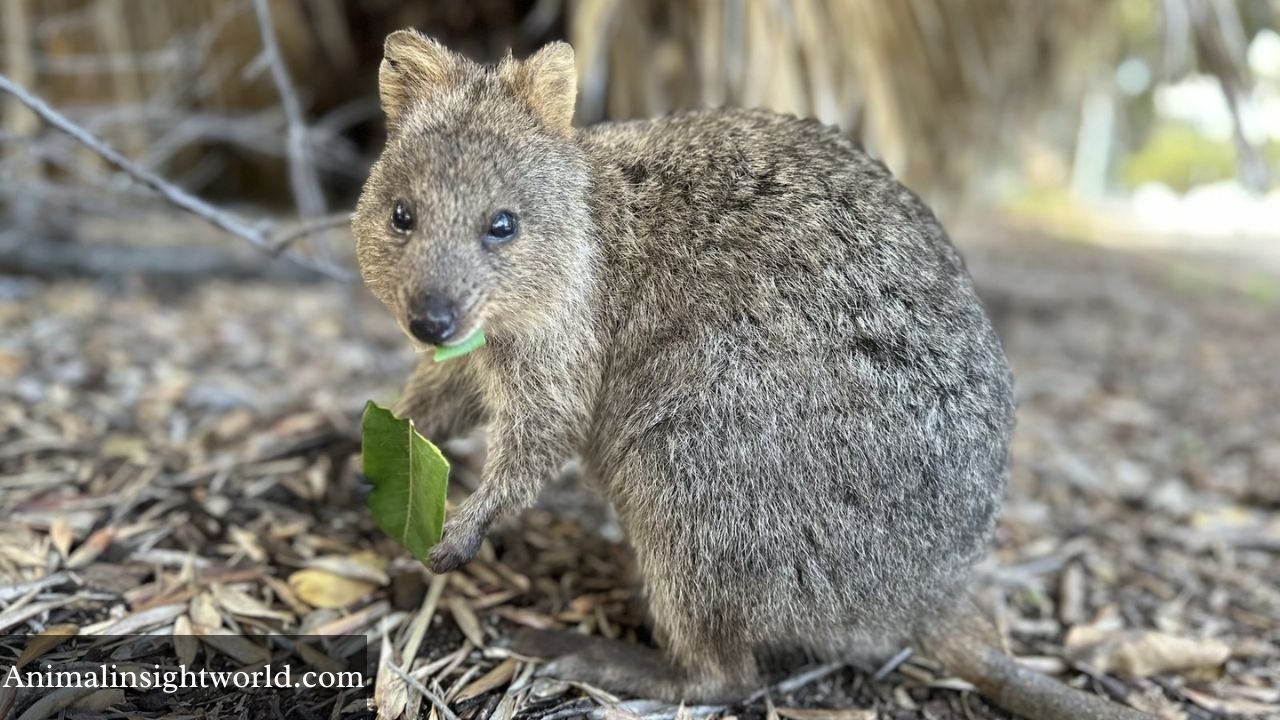
The quokka is a small marsupial about the size of a house cat, and it is famous around the world as the happiest animal on Earth because its face always looks like it is smiling. Quokkas live almost entirely on Rottnest Island off the coast of Western Australia, with a small population on the mainland, and they eat leaves, grasses and stems. They are nocturnal, which means they are most active at night, and during the day they rest in the shade of shrubs and trees. Quokkas became internet stars when tourists started taking selfies with them, and the island now has strict rules to protect them, including a ban on touching or feeding them. Their numbers are stable on Rottnest Island, but mainland quokkas are threatened by foxes and cats, so the island population is vital for the species.
2. Common Quail
The common quail is a small, plump game bird that lives across Europe, Asia and Africa, and it is famous for its long migrations, flying from Europe to Africa every autumn and back again every spring. Quails are ground birds that prefer to run through tall grass rather than fly, and they are hard to spot because their brown, streaked feathers blend perfectly with dry grass and stubble. Their call is a distinctive three-note whistle that sounds like wet my lips, and it can be heard across fields on summer evenings. Common quails have been hunted for food for thousands of years, and they are also farmed for their meat and their small, speckled eggs, which are popular in many cuisines around the world.
3. California Quail
The California quail is one of the most charming birds in North America, with a neat black plume that curls forward from the top of its head like a question mark. It lives in the scrublands, parks and gardens of California and the western United States, and it is the state bird of California. California quails live in family groups called coveys that can hold more than a hundred birds in winter, and they walk in single file through the undergrowth, calling to each other with a cheerful chi-ca-go sound. They eat seeds, berries and insects, and they scratch the ground with both feet at once to uncover food. When danger appears, the whole covey explodes into flight in different directions, which confuses predators and gives most of the birds time to escape.
4. Resplendent Quetzal
The resplendent quetzal is one of the most beautiful birds in the world, with shimmering green feathers, a red belly and a tail that can grow more than three feet long on the male. It lives in the cloud forests of Central America, from southern Mexico to Panama, where it eats wild avocados and other fruit, swallowing them whole and spreading the seeds through the forest. The quetzal was sacred to the Maya and the Aztec peoples, who believed it was a god, and its feathers were worth more than gold, used only by kings and priests. Today the quetzal is the national bird of Guatemala, and its name appears on the country’s money, the quetzal. Habitat loss threatens the bird, because it needs old, undisturbed cloud forest with hollow trees for nesting.
5. Eastern Quoll
The eastern quoll is a small, spotted marsupial predator that lives in Tasmania, after disappearing from mainland Australia in the 1960s. It is about the size of a small cat, with soft brown fur covered in white spots, a pink nose and a long tail, and it hunts at night for insects, small mammals, birds and fruit. Eastern quolls are excellent climbers and can leap between branches, and they make their dens in hollow logs, rock piles and old burrows. They are now extinct on the mainland because of foxes and cats, but they survive in Tasmania, where foxes never became established. Conservationists have started releasing eastern quolls back into protected areas on the mainland, and early results suggest the species could return if the foxes can be kept out.
6. Spotted-Tailed Quoll
The spotted-tailed quoll, also called the tiger quoll, is the largest marsupial predator on mainland Australia, and it is the only quoll with spots on its tail as well as its body. It is a powerful hunter that climbs trees, hunts possums and bandicoots, and can leap across gaps of more than six feet. Spotted-tailed quolls live in the forests of eastern Australia, from Queensland to Victoria, and they need large territories with old trees, hollow logs and rocky dens. They are listed as endangered in some states, because their forest habitat has been broken into small patches by roads, farms and towns. A single spotted-tailed quoll needs a huge home range, so protecting this one animal means protecting whole forests, which helps countless other species too.
7. Red-Billed Quelea
The red-billed quelea is a small African bird that gathers in the largest flocks of any bird on Earth, with some flocks estimated to hold tens of millions of birds. When a flock takes off, it looks like a moving cloud that can darken the sky, and farmers dread it, because a single flock can strip a field of grain in hours. Queleas live in the dry grasslands of sub-Saharan Africa, where they eat grass seeds, and they breed in huge colonies where thousands of nests hang from thorny trees. Their numbers are estimated at more than a billion birds, which makes them one of the most common wild birds in the world. Despite their reputation as pests, queleas are an important part of the African grassland food web, feeding eagles, falcons and other predators.
8. Queen Angelfish
The queen angelfish is a bright and beautiful reef fish that lives in the warm waters of the western Atlantic, from Florida and the Bahamas down to Brazil. It is easy to recognise by its blue and yellow body, its long, trailing fins and the dark spot on its forehead that looks like a crown, which is how it got its royal name. Queen angelfish live on coral reefs, where they eat sponges, algae, jellyfish and small invertebrates, and young queen angelfish work as cleaners, picking parasites off larger fish. They are popular aquarium fish, but they grow large and need a big tank, so they are best admired in the wild or in a public aquarium. Like many reef fish, queen angelfish depend on healthy coral, and their numbers fall when reefs are damaged by warming seas or pollution.
9. Quagga
The quagga was a subspecies of the plains zebra that lived in South Africa, with stripes only on the front half of its body and a plain brown back half, and it is the only animal on this list that is extinct. Quaggas were hunted heavily by European settlers in the 1800s, both for their meat and their hides, and the last wild quagga died around 1878, while the last captive one died in Amsterdam in 1883. The quagga’s name comes from the sound of its call, which the Khoikhoi people heard as kwa-ha-ha. Today, scientists in South Africa are working on the Rau quagga project, breeding zebras that look like quaggas by selecting animals with fewer stripes on their back halves. The project cannot bring back the original quagga, but it shows how much people regret losing this unusual animal.
10. Queensland Lungfish
The Queensland lungfish is a living fossil that has barely changed in more than one hundred million years, and it is one of only six lungfish species left in the world. It lives in slow-moving rivers in Queensland, Australia, and it can breathe air through a single lung as well as taking oxygen from the water through its gills. This lets it survive in warm, still pools where other fish would suffocate, and it can live for more than a hundred years. Queensland lungfish eat frogs, snails, small fish and plants, and they are slow, gentle animals that spend most of their time resting on the riverbed. They are protected by law in Australia, because dams and river changes threaten the slow, shallow waters they need for breeding.
11. Queen Conch
The queen conch is a large sea snail that lives in the shallow, warm waters of the Caribbean, and it is famous for its beautiful pink shell and its delicious meat. Queen conchs can grow to more than a foot long, and they live on sandy sea floors and seagrass meadows, where they eat algae and detritus. Their shells have been used for centuries as ornaments, trumpets and decorations, and their meat is a staple food in the Bahamas and the Caribbean. Queen conchs are slow growers and take years to reach breeding age, so they are easily overfished, and many Caribbean countries now have strict rules about how many can be caught. When you see a queen conch shell, look for the flared pink lip, which shows that the animal inside was fully grown.
12. Quaker Parrot
The quaker parrot, also called the monk parakeet, is a small green parrot from South America that is famous for building huge communal nests out of sticks, the only parrot in the world that does so. These nests can weigh hundreds of pounds and hold many families, and in cities the birds often build them on power poles and towers, which sometimes causes problems for electricity companies. Quaker parrots are popular pets because they are intelligent, talkative and social, and escaped pets have started wild populations in Florida, New York, Chicago and many European cities. In the wild they eat seeds, fruit and buds, and they are noisy, playful birds that live in large, chattering flocks. Their success in cities shows how adaptable parrots can be when they find food and shelter in a new place.
13. Queen Snake
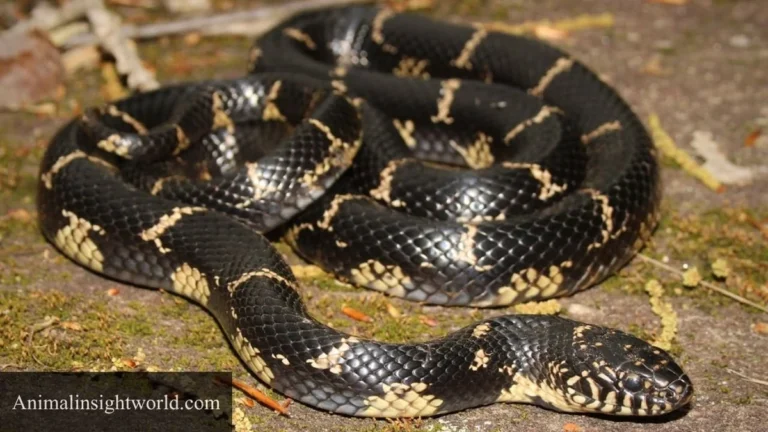
The queen snake is a small, shy water snake that lives in the streams and rivers of eastern North America, and it is one of the few snakes that eats almost nothing but crayfish. Queen snakes are slender, olive-brown snakes with yellow stripes down their sides, and they spend their days hunting under rocks and along stream banks for freshly moulted crayfish, which are soft enough to swallow. They are excellent swimmers and climbers, and they often bask on branches hanging over the water so they can drop in and escape if danger appears. Queen snakes are harmless to people and are a sign of a healthy stream, because they need clean water and plenty of crayfish to survive. Where streams become polluted or crayfish disappear, queen snakes vanish too.
14. Queen Triggerfish
The queen triggerfish is a striking reef fish with a blue, green and yellow body, a yellow-lined mouth and a pair of spines on its back that lock into place like a trigger. It lives on coral reefs in the western Atlantic, from the southern United States and Bermuda down to Brazil, and it eats sea urchins, crabs, shrimp and other hard-shelled animals, crushing them with powerful teeth. Queen triggerfish are territorial and will defend their nests aggressively, even charging at divers who swim too close, although they are not dangerous to people. They are popular with divers because of their bold colours and curious behaviour, and they are also caught for food in the Caribbean. Their ability to lock their dorsal spine into a reef crevice lets them wedge themselves in so tightly that a predator cannot pull them out.
15. Quillback Rockfish
The quillback rockfish is a mottled brown and yellow fish that lives on rocky reefs along the Pacific coast of North America, from Alaska to California. Its name comes from the tall, sharp spines on its back, which look like quills and can give a painful sting if handled carelessly. Quillback rockfish are slow-growing and long-lived, and some individuals live for more than ninety years, which makes them very vulnerable to overfishing. They eat crabs, shrimp and small fish, and they hide in cracks and crevices during the day, coming out to hunt at night. Because they live so long and breed late in life, fisheries now have strict catch limits and marine protected areas to give quillback populations time to recover.
16. Ocean Quahog
The ocean quahog is a clam that holds one of the most amazing records in the animal kingdom: one individual, nicknamed Ming, was found to be 507 years old, which makes the ocean quahog the longest-lived animal ever measured. Ocean quahogs live buried in the sandy sea floor of the North Atlantic, from North America to Europe, and they filter tiny food particles from the water with their gills. They grow very slowly, adding only a thin layer to their shells each year, and scientists can count the rings in their shells like tree rings to learn about past ocean temperatures and climates. Their extreme age has made them valuable to climate researchers, and it has also made them a symbol of how much we still have to learn about the deep, quiet lives of animals we rarely see.
17. Golden-Headed Quetzal
The golden-headed quetzal is a close cousin of the resplendent quetzal, with a golden-green head, a red belly and a shorter tail than its famous relative. It lives in the cloud forests of the Andes, from Venezuela and Colombia down to Bolivia, at heights of up to 8,000 feet, where it eats fruit, insects and small frogs. Like other quetzals, it nests in holes carved into dead trees, and both parents take turns sitting on the eggs and feeding the chicks. Golden-headed quetzals are less famous than resplendent quetzals, but they are just as beautiful, and they face the same threats from forest clearing and climate change. As cloud forests warm, the cool, misty habitat these birds need is moving higher up the mountains, and there is only so much mountain left to climb.
18. Gambel’s Quail
Gambel’s quail is a desert cousin of the California quail, with the same forward-curling head plume, a chestnut cap and a black face patch that makes it look like it is wearing a mask. It lives in the hot deserts of Arizona, New Mexico, Texas and northern Mexico, where it runs between cactus, mesquite and thorny shrubs in family groups called coveys. Gambel’s quail get most of their water from the food they eat, including seeds, berries, cactus fruit and insects, and they can survive in places where there is almost no standing water. They are famous for their call, a low, whistled chi-ca-go that echoes across the desert at dawn. Like California quails, they explode into flight when startled, and their strong legs let them run fast through thorny cover where predators cannot follow easily.
19. Northern Quoll
The northern quoll is the smallest of the four quoll species, and it lives across northern Australia, from Queensland to the Kimberley region of Western Australia. It is a spotted, cat-sized marsupial that hunts at night for insects, reptiles, small mammals and fruit, and it is an excellent climber that often hunts in trees. Northern quolls are in serious trouble because of the cane toad, a poisonous introduced animal that quolls try to eat and die from, and their numbers have fallen sharply across much of their range. Conservationists are now training quolls to avoid cane toads by feeding them small, non-lethal toads that make them sick, a technique called taste aversion training, and it is starting to work. The northern quoll is listed as endangered, and saving it means controlling cane toads and protecting the rocky woodlands it calls home.
20. Queen Butterfly
The queen butterfly is a close relative of the famous monarch butterfly, with rich orange wings edged in black and white spots, and it lives across the southern United States, Mexico and Central America. Like monarchs, queen butterflies lay their eggs on milkweed plants, and their caterpillars eat the milkweed and store its toxins in their bodies, which makes them taste bad to birds. Queen butterflies migrate, although not as far as monarchs, and they are often seen feeding on wildflowers in gardens, fields and deserts. They are smaller and darker than monarchs, and their wings have a deep, velvety orange colour that makes them easy to spot on a sunny day. Planting milkweed and wildflowers in a garden is one of the best ways to help queen butterflies and their monarch cousins survive.
Surprising Facts
Top 20 Animals That Start With Q hides some genuinely astonishing facts. The ocean quahog can live for more than five hundred years, which means one clam alive today was born before the first Europeans reached the Americas. The red-billed quelea gathers in flocks so large that they can be seen on weather radar, and a single flock can eat more grain in a day than a small town. The quagga is the only animal on this list that humans drove to extinction, and scientists are now breeding lookalike zebras in an attempt to bring its appearance back. The quetzal was once worth more than gold to the Maya, and its feathers were used only by royalty. The quokka smiles, the quoll climbs trees at night, and the queen conch builds a shell so beautiful that people have used it as a trumpet for centuries.
Another surprise is how many Q animals are in danger. The northern quoll is endangered because of cane toads, the eastern quoll is extinct on mainland Australia, the golden-headed quetzal is losing its cloud forest, and the queen conch is overfished across the Caribbean. Even the quokka, which looks safe on Rottnest Island, is threatened on the mainland. The letter Q may be rare, but the animals behind it are a reminder that rare and unusual creatures need the most protection, because once they are gone, there is nothing quite like them to take their place.
Questions People Ask About Q Animals
How many animals start with the letter Q?
There are only a few dozen commonly recognised animal names that start with Q, which makes it one of the rarest letters in the animal kingdom. This list covers twenty of the best known, from quokkas and quails to queen angelfish and ocean quahogs, and most of the rest are subspecies or regional variants of the animals listed here.
What is the most famous animal that starts with Q?
The quokka is the most famous Q animal today, thanks to its smiling face and its popularity in tourist selfies on Rottnest Island in Australia. The quetzal is the most historically important, because it was sacred to the Maya and the Aztec peoples and is now the national bird of Guatemala.
Is the quagga really extinct?
Yes, the quagga is extinct. The last wild quagga died around 1878, and the last captive one died in Amsterdam in 1883. Scientists in South Africa are breeding plains zebras that look like quaggas through selective breeding, but these are not true quaggas, only animals with a similar striped pattern.
Where do quokkas live?
Quokkas live almost entirely on Rottnest Island off the coast of Western Australia, with a small population on the mainland near Perth. They are nocturnal marsupials that eat leaves and grasses, and visitors to Rottnest Island are asked not to touch or feed them.
What do queen butterflies eat?
Queen butterfly caterpillars eat milkweed plants, and adult queen butterflies feed on nectar from wildflowers. The toxins from the milkweed make the caterpillars and the adult butterflies taste bad to predators, which is their main defence.
Conclusion
Top 20 Animals That Start With Q proves that a rare letter can hide a remarkable collection of animals. From the smiling quokka and the glowing quetzal to the five-hundred-year-old ocean quahog and the extinct quagga, these twenty creatures span every continent except Antarctica and every kind of habitat, from desert and cloud forest to coral reef and deep ocean. Some of them are famous, some are almost unknown, and several are in danger, but all of them deserve to be remembered. The next time someone asks you to name an animal that starts with Q, you will have twenty answers ready, and a story to go with each one.