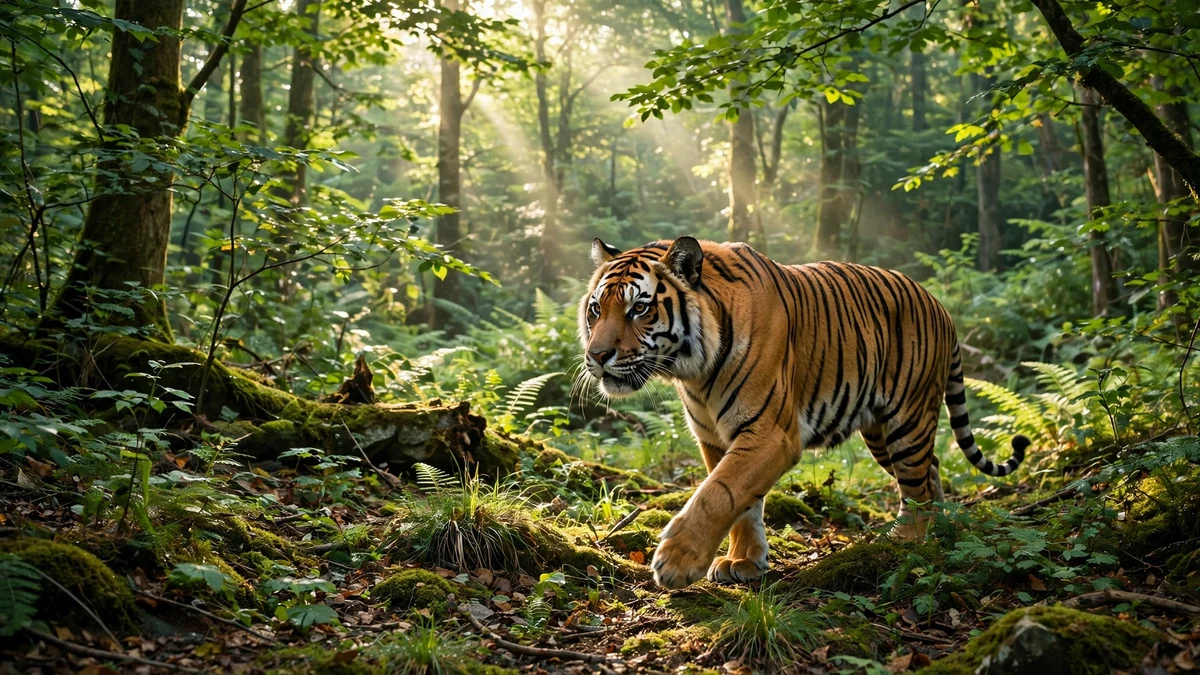
Top 20 Animals That Start With T
Introduction
Top 20 Animals That Start With T brings together some of the most remarkable creatures in the animal kingdom, from the largest cat in Asia to a tiny insect that builds towers taller than a house. The letter T covers hunters and grazers, swimmers and climbers, animals that live in the deepest oceans and animals that spend their whole lives in a single tree. Each one has its own way of finding food, staying safe and raising its young, and each one shows a different answer to the same basic problems of life in the wild.
This list gives you twenty real animals that start with T, with facts you can remember and share. You will meet a tiger that can swim for kilometres, a tortoise that can live longer than a human, a spider the size of a dinner plate, a bird with a beak longer than its body, and a fish that can cross an entire ocean without stopping. Whether you are a student working on a school project, a teacher looking for examples, or simply someone who loves animals, this guide will show you how much variety a single letter can hold. Top 20 Animals That Start With T is a good place to start if you want to see how different animals can be while sharing only one letter of the alphabet.
1. Tiger
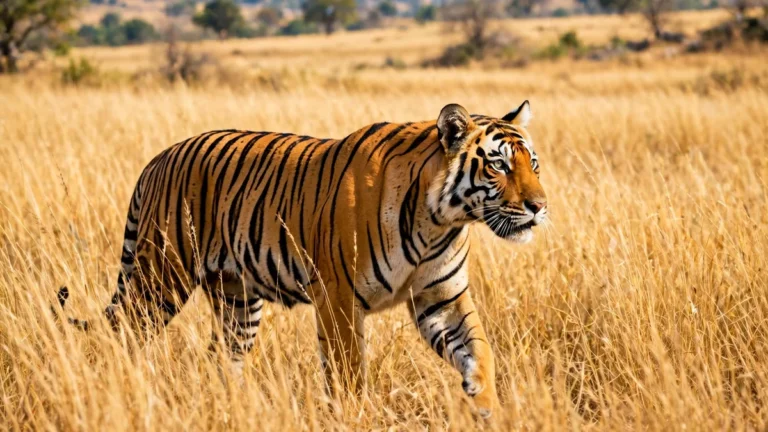
The tiger is the largest cat in the world, and a big male can weigh more than 300 kilograms and measure over three metres from nose to tail. Tigers live in Asia, from the cold forests of Siberia to the hot mangrove swamps of India and Bangladesh. Unlike most cats, tigers love water and are strong swimmers. They will cross rivers and even swim between islands in search of food. Each tiger has a stripe pattern that is completely unique, just like a human fingerprint, and no two tigers look exactly alike.
Tigers hunt alone, mostly at night, and they rely on surprise rather than speed over long distances. A tiger can leap as far as ten metres in a single bound. Their main prey includes deer and wild pigs, and a tiger may eat as much as 40 kilograms of meat in one meal. Sadly, wild tigers are endangered, with only around 5,500 left in the wild. Conservation work in India, Nepal and Russia has helped numbers rise slowly, and protecting forests is the most important step in keeping tigers alive.
2. Tortoise
The tortoise is a land reptile famous for its slow walk and its very long life. Some giant tortoises live for more than 150 years, and the oldest known tortoise, Jonathan, has lived past 190 years on the island of Saint Helena. Tortoises carry a heavy domed shell that protects them from predators, and they can pull their head and legs inside when danger comes near. Their slow pace is not a weakness. It matches a slow and steady way of life that uses very little energy.
Tortoises eat mostly plants, leaves, grasses and fruit, and some species can go for months without food or water. The Galapagos tortoise can weigh more than 400 kilograms, making it the largest tortoise on Earth. Baby tortoises are tiny and vulnerable, and many are eaten by birds and other animals before they grow big enough to be safe. Tortoises remind us that in nature, slow and careful can be a winning strategy.
3. Tarantula
The tarantula is a large, hairy spider that can have a leg span of up to 30 centimetres in the biggest species, about the size of a dinner plate. Tarantulas live in warm regions across the Americas, Africa, Asia and Australia. They live in burrows in the ground or in trees, and they hunt at night. Despite their frightening look, most tarantulas are not dangerous to people. Their bite is painful but is usually no worse than a bee sting.
Tarantulas do not spin webs to catch prey. Instead, they wait quietly and then rush out to grab insects, small frogs and even mice with their strong fangs. The hairs on their body are not just for show. A tarantula can flick tiny barbed hairs at an attacker, and these hairs irritate the skin and eyes. Female tarantulas can live for 20 years or more, while males usually live only a few years after reaching adulthood.
4. Tapir
The tapir looks like a mix of several animals put together. It has the body of a pig, the ears of a donkey and a short flexible trunk like a small elephant. Tapirs live in the rainforests of Central and South America and in Southeast Asia. They are excellent swimmers and spend much of their time near water, where they can escape predators and cool off. A tapir uses its trunk to grab leaves and fruit from branches.
There are four living species of tapir, and the Malayan tapir is the largest, weighing up to 500 kilograms. Baby tapirs are born with white spots and stripes that help them hide in the dappled light of the forest floor, and these markings fade as they grow up. Tapirs are important for the forest because they eat fruit and spread seeds in their droppings, helping new trees grow. All four species are threatened by hunting and by the loss of their forest homes.
5. Toucan
The toucan is one of the most colourful birds in the world, with a huge bright beak that can be longer than its body. The toco toucan, the largest species, has an orange beak that makes up about a third of its total length. The beak looks heavy but is actually very light, because it is made of a spongy bone structure covered by a thin shell. Toucans live in the rainforests of Central and South America, where they hop from branch to branch rather than flying long distances.
Toucans eat fruit, eggs, insects and small lizards, and they use their long beak to reach fruit on thin branches that cannot support their weight. At night, toucans sleep with their beak tucked under their wing, and several birds may crowd into a single tree hole. Their bright colours help them recognise each other in the thick green forest. A toucan’s loud croaking call can be heard from far away through the trees.
6. Tasmanian Devil
The Tasmanian devil is a small marsupial that lives only on the island of Tasmania in Australia. It is about the size of a small dog, with black fur and white patches on its chest. Early European settlers gave it the name devil because of its loud screeching calls at night and its fierce temper when it feels cornered. Tasmanian devils have one of the strongest bites of any mammal for their size, and their jaws can crush bones.
Devils are scavengers, and they clean up the forest by eating dead animals, including roadkill and carrion. This job makes them very important for the health of their habitat. Sadly, a contagious cancer called devil facial tumour disease has killed many devils since the 1990s, and conservationists are working hard to breed healthy devils and protect them. Baby devils are born tiny and grow up in their mother’s pouch, just like kangaroos and other marsupials.
7. Termite
Termites are small insects that live in huge colonies, sometimes with millions of workers. They are famous for eating wood, and they can damage houses and furniture, but in nature they play a vital role by breaking down dead trees and returning nutrients to the soil. Termite colonies are built like small cities, with a queen, workers and soldiers, each with a different job. The queen can live for decades and lay thousands of eggs every day.
Some termite species build mounds that can rise more than five metres above the ground, taller than a house, and these mounds have clever air channels that keep the inside cool even in the hottest weather. Termites cannot digest wood on their own. Tiny organisms living in their gut break down the wood fibres for them. In many parts of Africa and Australia, termite mounds are a familiar part of the landscape and are used by other animals for shelter.
8. Tuna
Tuna are powerful ocean fish built for speed. The bluefin tuna can swim at more than 70 kilometres per hour and can cross the entire Atlantic Ocean in a matter of weeks. Tuna have a streamlined torpedo-shaped body and a strong tail that pushes them through the water. They are warm-blooded, which is unusual for a fish, and this helps their muscles work hard even in cold deep water.
There are several kinds of tuna, including yellowfin, skipjack and albacore, and they are some of the most valuable fish in the world. A single large bluefin tuna has sold for millions of dollars at auction in Japan, where tuna is prized for sushi and sashimi. Tuna travel in schools and hunt smaller fish, squid and crustaceans. Because they are caught in such large numbers, many tuna populations are now in danger, and fishing limits are needed to keep them from disappearing.
9. Turkey
The turkey is a large bird native to North America, and the wild turkey is the ancestor of the domestic turkey eaten at Thanksgiving. A male turkey, called a tom, has bright red wattles, a fanned tail and iridescent feathers that shine green, bronze and copper in the sunlight. Male turkeys make a gobbling sound that can be heard from more than a kilometre away, and they display their feathers to impress females during the breeding season.
Wild turkeys are much better flyers than farm turkeys. They can fly in short bursts at up to 90 kilometres per hour and they roost in trees at night to stay safe from predators. Turkeys eat seeds, nuts, berries, insects and small frogs, and they scratch the forest floor with their strong feet to find food. Benjamin Franklin is often said to have wanted the turkey as the national bird of the United States instead of the bald eagle, though historians still argue about whether that story is true.
10. Turtle
Turtles are reptiles with a shell that protects their body, and they live in almost every habitat on Earth, from deserts to deep oceans. Sea turtles can hold their breath for hours and travel thousands of kilometres across the ocean, always returning to the same beach where they were born to lay their own eggs. The leatherback sea turtle is the largest turtle in the world, growing to more than two metres long and weighing up to 900 kilograms.
Turtles have no teeth. Instead, they have a sharp beak that they use to bite food. Some turtles are plant eaters, some eat jellyfish and crabs, and some eat almost anything they find. Many turtle species live for 50 years or more, and some tortoises, their land cousins, live past 150 years. Female sea turtles lay their eggs in nests dug into the sand, and the temperature of the sand decides whether the babies will be male or female.
11. Tarsier
The tarsier is a tiny primate with enormous eyes, each one bigger than its brain. Tarsiers live in the forests of Southeast Asia, especially the Philippines, Borneo and Sumatra. Their huge eyes help them see in the dark, because tarsiers are nocturnal hunters that catch insects, spiders and small lizards. They cannot move their eyes, so they turn their head almost all the way around to look behind them, just like an owl.
Tarsiers are amazing jumpers. Their long hind legs let them leap several metres between trees, and their long fingers help them grip thin branches. A tarsier is only about 15 centimetres tall, small enough to fit in the palm of your hand. They are the only primates that eat nothing but meat, and they never eat plants. Tarsiers are shy and very sensitive to noise and stress, so they do not survive well in captivity, and protecting their forest home is the best way to keep them safe.
12. Tamandua
The tamandua is a medium-sized anteater that lives in the forests of Central and South America. It has a long snout, a very long sticky tongue and strong curved claws for tearing open ant nests and termite mounds. A tamandua can flick its tongue in and out of an ant nest up to 150 times a minute, catching thousands of ants in a single meal. Unlike its larger cousin, the giant anteater, the tamandua spends much of its time climbing trees.
Tamanduas have poor eyesight but an excellent sense of smell, and they can smell an ant colony from far away. They have no teeth at all. Instead, they crush ants against the roof of their mouth. A tamandua’s long tail is prehensile, which means it can grip branches like an extra hand while the animal climbs. When threatened, a tamandua rears up on its hind legs and shows its sharp claws, and even large predators like jaguars think twice before attacking it.
13. Takin
The takin is a large goat-antelope that lives in the high mountains of the eastern Himalayas, in Bhutan, China, India and Myanmar. It has a thick golden-brown coat, a stout body and curved horns, and it looks like a mix of a goat, a cow and a gnu. Takins live at altitudes of up to 4,000 metres, where the air is cold and thin, and they move down the mountains in winter to find food in the valleys.
Takin horns are found on both males and females, and they grow outward and then curve back. These animals are strong climbers despite their size, and they use their broad hooves to grip rocky slopes. Takins eat leaves, bamboo shoots, grasses and bark, and they gather in herds of up to 20 animals. The takin is the national animal of Bhutan, where it is protected by law, but it is still threatened by hunting and by the loss of its mountain forests.
14. Tenrec
Tenrecs are small mammals found mostly on the island of Madagascar, and they are a wonderful example of how one animal family can evolve into many different forms. Some tenrecs look like hedgehogs, some look like shrews, and some look like otters. The common tenrec looks like a hedgehog and can roll into a spiny ball when a predator comes near. The web-footed tenrec, on the other hand, swims in rivers and catches small fish and frogs.
There are more than 30 species of tenrec, and they live in forests, grasslands and rivers across Madagascar. Some tenrecs can hibernate for months during the dry season, and some can lower their body temperature to save energy. Tenrecs eat insects, worms and other small animals, and they use their long snout to sniff out food in the leaf litter. Because so many tenrecs live only on Madagascar, protecting the island’s forests is essential for their survival.
15. Tamarin
Tamarins are small, lively monkeys that live in the rainforests of South America. They are famous for their striking looks. The golden lion tamarin has a bright orange mane like a tiny lion, while the emperor tamarin has a long white moustache that droops down past its chin. Tamarins are small enough to fit in your hand, weighing only about 500 grams, but they are bold and active, leaping through the trees all day.
Tamarins live in family groups, and the whole family helps raise the babies. Twins are common, and fathers and older brothers and sisters carry the babies on their backs. Tamarins eat fruit, insects, eggs and tree sap, and they use their sharp claws to cling to tree trunks. The golden lion tamarin was once close to extinction, with only a few hundred left in the wild, but breeding and forest protection programmes have brought its numbers back to a few thousand.
16. Tetra
Tetra is the name for a large group of small, colourful freshwater fish that live in the rivers of South America and Africa. The neon tetra is one of the most popular aquarium fish in the world, with a bright blue stripe and a red belly that glow in the light. In the wild, tetras live in large schools of hundreds of fish, and their shiny colours help the school stay together in dark, tea-coloured river water.
There are more than 150 species of tetra, ranging from the tiny ember tetra, barely two centimetres long, to larger species like the Congo tetra, which can grow to eight centimetres. Tetras eat small insects, larvae and plant matter, and they are an important food source for bigger fish, birds and river dolphins. Because they are so small, tetras rely on speed and numbers for safety, and a school can turn and dart away in a flash when a predator approaches.
17. Tuatara
The tuatara is a reptile found only in New Zealand, and it is a living fossil. Its ancestors lived alongside the dinosaurs more than 200 million years ago, and the tuatara is the only surviving member of its entire order of reptiles. It looks like a lizard, but it is not a lizard at all. Tuataras grow slowly and can live for more than 100 years, and some may live even longer.
Tuataras have a third eye on the top of their head, called a parietal eye, which is covered by scales in adults but may help young tuataras sense light and dark. They are active at night, when they hunt insects, worms, lizards and seabird chicks. Tuataras like cool weather and are most active when the temperature is between 16 and 21 degrees Celsius. They live in burrows on small islands off the coast of New Zealand, where conservationists protect them from rats and other introduced predators.
18. Tree Frog
Tree frogs are small frogs that live in trees and bushes instead of on the ground. They have long legs and special sticky toe pads that let them climb smooth leaves and even glass. The red-eyed tree frog of Central America is one of the most famous, with bright red eyes, a green body and orange feet. Its bright colours are a warning to predators that its skin is poisonous.
Tree frogs are mostly active at night, and males call loudly to attract females during the breeding season. Some tree frogs can change colour, turning from green to brown to match their surroundings. Their calls can be surprisingly loud for such a small animal, and a chorus of tree frogs can be heard from far away on a warm rainy night. Tree frogs lay their eggs on leaves overhanging water, and when the tadpoles hatch they drop into the water below.
19. Tahr
The tahr is a wild mountain goat that lives on steep rocky slopes in the Himalayas and in the mountains of Arabia. The Himalayan tahr has a thick reddish-brown coat and curved horns, and males grow a long shaggy mane around their neck and shoulders during the breeding season. Tahrs are superb climbers, and they can leap from rock to rock on cliffs that look impossible to climb.
Tahrs live in herds, with females and young in one group and males often living alone or in small bachelor groups. They eat grasses, leaves and shrubs, and they can survive on the sparse food of high mountain slopes. In New Zealand, Himalayan tahrs were introduced long ago and now live in the Southern Alps, where they are hunted as game animals. In their native Himalayas, tahrs are threatened by hunting and by competition with domestic livestock for grazing land.
20. Thylacine
The thylacine, also called the Tasmanian tiger, was a striped marsupial predator that lived in Australia and Tasmania. It looked like a dog with tiger stripes across its back, and it could open its jaws wider than almost any other land mammal. Thylacines hunted kangaroos, wallabies and other animals at night, and they could hop on their hind legs like a kangaroo when they moved quickly.
The last known thylacine died in a zoo in Hobart in 1936, and the animal is now officially extinct. Hunting, disease and competition with introduced dogs and dingoes are believed to have caused its disappearance from the mainland long before it vanished from Tasmania. Scientists still study thylacine specimens in museums, and there are occasional reports of sightings, though none have ever been confirmed. The thylacine is a reminder of how quickly a unique animal can be lost when people do not protect it.
How These Animals Compare
The twenty animals in Top 20 Animals That Start With T show just how much variety one letter can hold. The tiger is the largest animal on the list, weighing more than 300 kilograms, while the tetra is one of the smallest, weighing only a few grams. The tortoise is the longest lived, with some individuals passing 150 years, while the termite queen is the most productive, laying thousands of eggs every day. The tuna is the fastest swimmer, the tarsier is the best jumper for its size, and the toucan has the most oversized beak relative to its body.
Their homes are just as varied. Tigers, takins and tahrs live in mountains and forests, tuna and turtles roam the open ocean, tuataras live only on small islands in New Zealand, and tenrecs live only on Madagascar. Some of these animals are common, like the turkey and the termite, while others are rare or even extinct, like the thylacine. What they share is that each one has found a clever way to survive. The tarantula uses hair as a weapon, the tamandua uses a tongue instead of teeth, the tree frog uses sticky toes to climb, and the Tasmanian devil uses a powerful bite to clean up the forest. Learning about them together shows that there is no single best way to be an animal. There are many ways, and each one works in its own place.
Frequently Asked Questions
What is the biggest animal that starts with T?
The tiger is the biggest animal on this list. A large male Siberian tiger can weigh more than 300 kilograms. The leatherback turtle is also very large, reaching up to 900 kilograms, but the tiger is the largest land predator among the T animals listed here.
Which T animal lives the longest?
The tortoise lives the longest of all the animals on this list. Giant tortoises regularly live past 100 years, and Jonathan, a Seychelles giant tortoise on Saint Helena, has lived past 190 years. The tuatara is also very long lived, with some individuals living more than 100 years.
Are tarantulas dangerous to people?
Most tarantulas are not dangerous to people. Their bite is painful but is usually no worse than a bee sting. Tarantulas would rather run away or flick irritating hairs at a threat than bite, and they only bite when they feel trapped.
What is the fastest animal that starts with T?
The tuna is the fastest swimmer on this list, reaching speeds of more than 70 kilometres per hour. On land, the tiger can sprint at around 60 kilometres per hour in short bursts. The tarsier is the best jumper for its size, leaping many times its own body length.
Is the Tasmanian tiger still alive?
No, the thylacine, also called the Tasmanian tiger, is extinct. The last known animal died in 1936. There are occasional reported sightings, but none have ever been confirmed by scientists, and the species is officially listed as extinct.
Why do toucans have such big beaks?
A toucan’s beak is long and light, and it helps the bird reach fruit on thin branches that cannot hold its weight. The beak is also used to peel fruit, to scare away rivals and to help control body temperature by releasing heat.
Final Thoughts
Top 20 Animals That Start With T shows that a single letter can open up a whole world of wildlife. From the tiger in the forests of Asia to the tiny tetra in a South American river, from the long-lived tortoise to the extinct thylacine, these animals prove that nature rewards many different ways of living. Some are famous, like the tiger and the toucan, while others, like the tenrec and the takin, are known only to people who study wildlife. All of them deserve attention, because each one plays a role in its own habitat.
If this list has sparked your interest, pick one animal and learn more about it. Find out where it lives, what it eats and what threatens it today. Many of the animals on this list need our help, from tigers losing their forests to devils fighting disease and tuataras surviving only on protected islands. Learning about animals is the first step towards protecting them, and every letter of the alphabet holds stories worth telling.