What Animals Have No Legs?
Introduction
What Animals Have No Legs? The question sounds simple, but the answer covers a surprising range of creatures, from snakes that can climb trees to worms that live deep underground, from eels that swim across oceans to snails that carry their homes on their backs. Legs seem essential for getting around, yet thousands of species have given them up completely, or never had them in the first place, and they move, hunt, escape and survive just as well as animals with four legs or six.
Animals without legs are found in almost every habitat on Earth. They live in soil, in fresh water, in the sea, in trees and even inside other animals. Some of them, like snakes, lost their legs over millions of years of evolution. Others, like worms and snails, belong to animal groups that never evolved legs at all. In this guide we look at the main kinds of legless animals, how each one moves without limbs, what it eats, and which one is the fastest of them all. What Animals Have No Legs? is a question that leads straight into one of the most interesting stories in evolution.
What Makes These Animals Special
Animals without legs have solved the problem of movement in clever ways. A snake moves by pushing its belly scales against the ground, a worm squeezes and stretches its body in waves, a snail glides on a layer of slime, and an eel swims with the same side-to-side motion a fish uses. None of these methods needs a single leg, and each one is perfectly suited to the place where the animal lives. A worm’s way of moving would be useless in a tree, and a snake’s way of moving would be useless in the open sea, but each animal’s body matches its home.
Losing legs can actually be an advantage. A legless body can slip into burrows, cracks and holes that a legged animal could never enter. Snakes can squeeze through gaps barely wider than their own heads. Worms can tunnel through soil that is packed hard. Eels can slide through reefs and into narrow crevices where fish with fins cannot follow. Legless animals also have a low profile, which makes them hard for predators to spot and grab. Their bodies are often smooth, flexible and strong, built for pushing, sliding and squeezing rather than stepping and running.
Scientists study legless animals to understand how bodies change over time. Snakes, for example, evolved from lizards that had legs. Fossils show that early snakes still had small hind legs, and some modern snakes, like pythons and boas, still have tiny spurs where their back legs used to be. Caecilians, the legless amphibians, evolved from ancestors with four legs. Studying these animals helps us understand how evolution can remove a feature as useful as legs when a different body plan works better.
1. Snakes
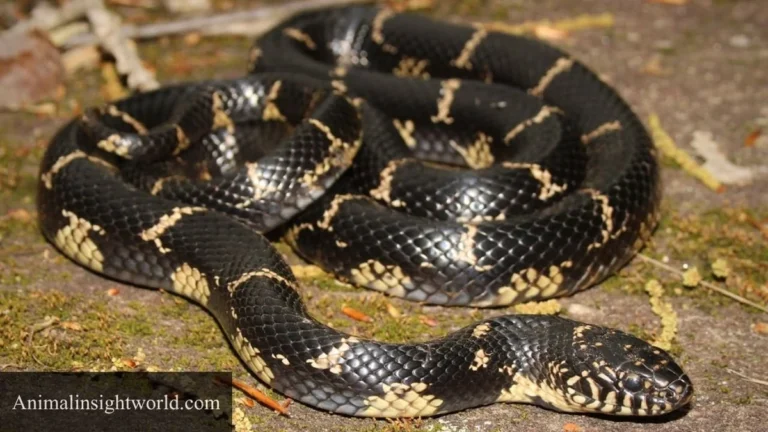
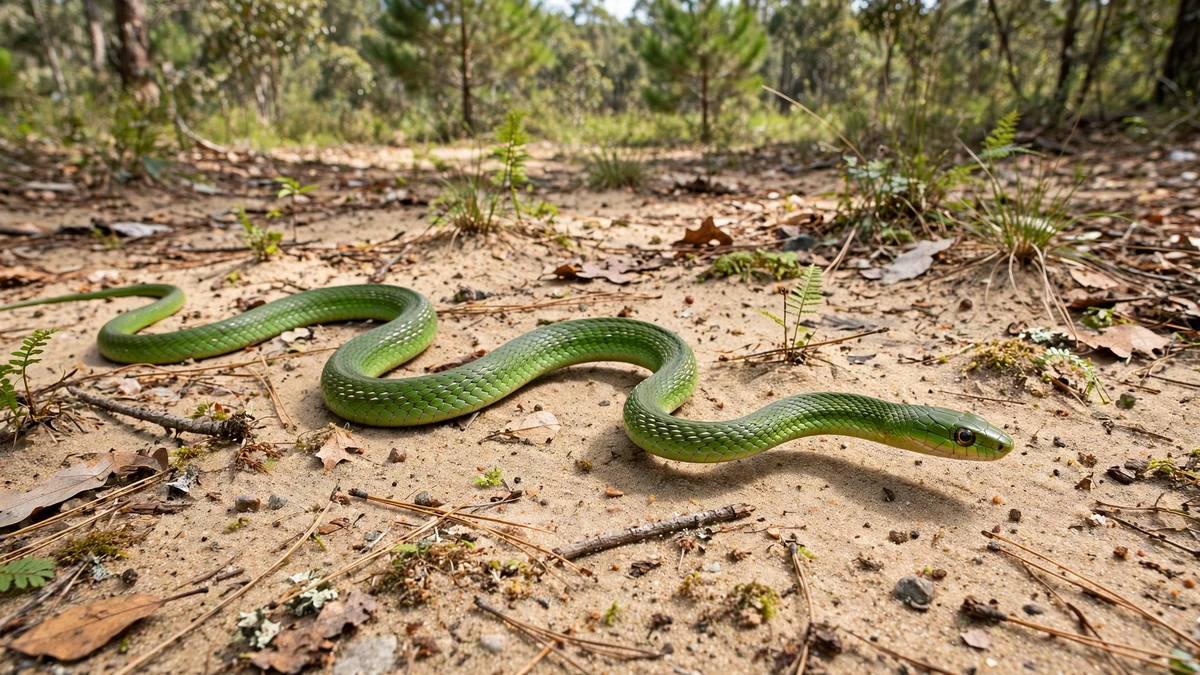
Snakes are the most famous animals without legs, and there are more than 3,000 species of them on every continent except Antarctica. Snakes move in four main ways. The most common is serpentine movement, where the body makes S-shaped curves and pushes against stones, grass and other objects. Sidewinding snakes in deserts lift parts of their body off the hot sand and move sideways. Concertina movement lets a snake grip a narrow space and pull itself forward, which is how tree snakes climb. Rectilinear movement, used by large heavy snakes like pythons, moves the body forward in a straight line using belly scales.
Snakes have no eyelids and no external ears, and they smell the air with their forked tongue. Their jaws can open very wide so they can swallow prey whole, and some snakes kill with venom while others squeeze their prey. Snakes range from the tiny thread snake, no longer than a pencil, to the green anaconda, which can grow longer than five metres. Snakes shed their skin several times a year as they grow, and a healthy snake can live for 20 years or more in the wild.
2. Earthworms
Earthworms live in the soil, where they tunnel, eat and breathe through their skin. A worm moves by squeezing and stretching its body in a wave. Tiny bristles called setae grip the soil and stop the worm from slipping backwards. The worm’s body is made of many segments, and fluid inside each segment acts like a skeleton, giving the body its shape and strength. Earthworms have no eyes, no lungs and no legs, yet they are among the most important animals on land.
Worms eat dead leaves and organic matter in the soil, and their droppings, called casts, make the soil richer and healthier for plants. A single acre of good soil can hold more than a million earthworms, and their tunnels let air and water reach plant roots. Without worms, soil would become hard and poor, and many plants would struggle to grow. Charles Darwin studied earthworms for many years and called them one of the most important animals in the history of the world.
3. Legless Lizards
Legless lizards look exactly like snakes, but they are lizards that have lost their legs. You can tell them apart by looking closely. Legless lizards have eyelids and can blink, while snakes cannot. They also have external ear openings, which snakes lack, and their belly scales are different. The slow worm, found in Europe, is a legless lizard that is often mistaken for a snake, but it is completely harmless and eats slugs and worms in gardens.
There are several kinds of legless lizard, including the glass lizard of North America and Europe, the Burton’s legless lizard of Australia, and the sheltopusik of Eastern Europe and Asia, which can grow to more than a metre long. Legless lizards move more slowly than snakes because their bodies are stiffer, but they can drop their tail to escape a predator, just like other lizards. The tail grows back over time. These animals show that losing legs can happen in more than one group of reptiles.
4. Eels
Eels are long, snake-like fish that have no legs, as no fish does, but their legless body is special because it lets them live in places other fish cannot reach. Eels swim by moving their whole body in waves, and they can also crawl over wet ground and climb damp walls and rocks. The European eel and the American eel are born in the Sargasso Sea in the Atlantic Ocean and swim thousands of kilometres to rivers in Europe and North America, where they live for many years before swimming all the way back to breed and die.
Moray eels live in coral reefs and hide in cracks during the day, coming out at night to hunt fish and crabs. They have a second set of jaws in their throat that shoots forward to grab prey and pull it down. Electric eels, which are not true eels but a kind of knifefish, can produce electric shocks of up to 600 volts to stun prey and defend themselves. Eels are eaten as food in many countries, and their long journeys remain one of the great mysteries of animal migration.
5. Caecilians
Caecilians are strange legless amphibians that look like large earthworms. They live in the warm, wet soils of Central and South America, Africa and Southeast Asia, and they spend almost their whole lives underground. Caecilians have no legs at all, and most have no eyes either, or only tiny eyes covered by skin. They find their way with a keen sense of smell and with two small tentacles on their head that sense chemicals in the soil.
Caecilians eat worms, termites and other small soil animals, and they catch prey with rows of sharp teeth. Some species give birth to live young, and the babies of some species eat a special layer of their mother’s skin, which grows back. This is one of the most unusual forms of parental care in the animal kingdom. Because they live underground, caecilians are rarely seen, and scientists are still discovering new species. There are now more than 200 known species, and many more are probably still hidden in the soil.
6. Snails
Snails are molluscs that carry a shell on their back and move on a single muscular foot. They have no legs, but they can climb walls, cross leaves and travel surprising distances for such a slow animal. A snail moves by making ripples in its foot and gliding on a layer of slime, which protects it from sharp surfaces and helps it stick to vertical walls. The slime also leaves a shiny trail that other snails can follow.
Land snails breathe air through a small hole in their body, while sea snails have gills and live underwater. Snails eat leaves, algae and decaying matter, and they scrape food with a rough tongue called a radula, which is covered in thousands of tiny teeth. Some sea snails are predators that hunt other molluscs, and a few, like the cone snail, have a venomous harpoon that can be dangerous to people. Snails are food for many animals, including birds, hedgehogs and frogs, and their shell is their main defence.
7. Slugs
Slugs are snails without an outer shell, though some species have a small shell hidden inside their body. Like snails, slugs move on a single muscular foot and glide on slime. They are mostly active at night or after rain, when the air is damp, because their soft bodies dry out quickly in the sun. Slugs live in gardens, forests and fields, and they eat leaves, fungi, dead animals and even other slugs.
Slugs are an important food for birds, frogs, toads and hedgehogs, and gardeners often see them as pests because they eat lettuce and other crops. But slugs also help the garden by eating dead leaves and rotting matter. The banana slug of North America can grow to 25 centimetres long and is bright yellow. Sea slugs are even more colourful, with bright patterns that warn predators that they taste bad or are poisonous. Some sea slugs steal stinging cells from the jellyfish they eat and use them for their own defence.
8. Leeches
Leeches are segmented worms related to earthworms, and they have no legs. They move by attaching their suckers to a surface and looping their body forward, a bit like an inchworm. Most leeches live in fresh water or damp land, and many of them feed on blood. A leech attaches to its host with a sucker, makes a small painless bite, and releases a chemical that stops the blood from clotting so it can drink easily.
Not all leeches drink blood. Many species eat snails, worms and insect larvae. Leeches have been used in medicine for thousands of years, and doctors still use them today after surgery to help blood flow in reattached fingers and skin grafts. A leech can drink several times its own body weight in blood in one meal, and then it may not need to eat again for months. Leeches have 32 brains, one in each segment of their body, which is one of the strangest facts about them.
9. Hagfish
Hagfish are jawless fish that live on the sea floor, and they have no legs, no jaws and no true backbone. They look like eels, with a long slimy body and a mouth full of tooth-like plates. Hagfish feed on dead and dying animals on the sea floor, and they can burrow inside a dead whale or fish and eat it from the inside. They are one of the oldest kinds of vertebrates still alive, and they have changed very little in more than 300 million years.
Hagfish are famous for their slime. When threatened, a hagfish releases a huge amount of slime that expands in water and can choke a predator’s gills. A single hagfish can fill a bucket with slime in minutes. Scientists study hagfish slime because it is stronger than nylon when stretched, and it might one day be used to make new materials. Hagfish are caught for food in Korea and Japan, where their skin is also used to make leather.
10. Sea Cucumbers
Sea cucumbers are soft-bodied animals related to starfish and sea urchins, and they have no legs. They live on the sea floor, where they crawl slowly on tiny tube feet and eat sand and mud, taking out the organic matter and passing the clean sand behind them. In this way they clean the sea floor, just as earthworms clean the soil. Some sea cucumbers can grow to more than a metre long.
When threatened, some sea cucumbers push out their own internal organs to distract a predator, and then grow new ones over a few weeks. Others release a sticky white thread that tangles an attacker. Sea cucumbers are eaten as food in many Asian countries, where they are called trepang or beche-de-mer, and they are valued in traditional medicine. Because they are collected in large numbers, some sea cucumber populations are now in danger, and fishing limits are being introduced in many places.
Surprising Facts
The fastest animal without legs is the black mamba, a snake from Africa that can move at around 20 kilometres per hour in short bursts over flat ground. That is faster than most people can run. The sidewinder, a desert rattlesnake, is also fast, moving at up to 29 kilometres per hour across sand in its strange sideways motion. In water, the fastest legless animal is the tuna, which can reach more than 70 kilometres per hour, and the fastest eel can swim far faster than any snake can crawl.
Some legless animals can do things that seem impossible without limbs. Snakes can climb trees, swim rivers and even glide through the air between branches. Flying snakes of Southeast Asia flatten their body into a wing shape and glide for up to 100 metres. Worms can survive being cut in half, and some species can grow a whole new body from a single piece. Snails can sleep for years during a drought, sealed inside their shell, and wake up when the rain returns. A hagfish can tie itself in a knot to scrape slime off its own body, which is one of the strangest skills in the animal kingdom.
Legless animals are also older than many legged animals. Hagfish and lampreys have been around for more than 300 million years, long before dinosaurs. Snakes have been on Earth for more than 100 million years. The success of these animals shows that legs are not the only way to move well. Sliding, squeezing, swimming and gliding can work just as well, and in some places they work better.
Frequently Asked Questions
What is the fastest animal without legs?
The black mamba is the fastest legless animal on land, reaching about 20 kilometres per hour in short bursts. The sidewinder rattlesnake can move even faster across loose sand, at up to 29 kilometres per hour. In water, the tuna is the fastest legless swimmer, reaching more than 70 kilometres per hour.
Do snakes have legs?
Modern snakes have no legs, but their ancestors were lizards with four legs. Fossils show that early snakes still had small hind legs, and some living snakes, like pythons and boas, still have tiny spurs where their back legs used to be. Snakes lost their legs over millions of years because a long, legless body was better for burrowing and swimming.
How do worms move without legs?
Earthworms move by squeezing and stretching their body in a wave. Tiny bristles called setae grip the soil and stop the worm from sliding backwards. Fluid inside each body segment acts like a skeleton and gives the worm its shape and strength. This lets a worm push through soil that is packed hard.
Are legless lizards the same as snakes?
No, legless lizards are lizards that have lost their legs, not snakes. You can tell them apart because legless lizards have eyelids and can blink, and they have external ear openings, while snakes have neither. Legless lizards also have a stiffer body and can drop their tail to escape a predator, just like other lizards.
Can an animal with no legs climb a tree?
Yes, many legless animals can climb. Tree snakes use concertina movement to grip a trunk and pull themselves up, and some snakes can climb smooth walls. Snails and slugs climb plants and walls on a layer of slime. Flying snakes can even glide from one tree to another through the air.
Do any mammals have no legs?
No mammal is completely legless. Whales and dolphins have no back legs, but they have flippers, which are modified front legs, and a tail. Seals have flippers too. Among land animals, the only truly legless groups are reptiles like snakes, amphibians like caecilians, fish like eels, and invertebrates like worms, snails and leeches.
Conclusion
What Animals Have No Legs? covers far more creatures than most people expect. Snakes, worms, legless lizards, eels, caecilians, snails, slugs, leeches, hagfish and sea cucumbers all get through life without a single leg, and each one does it in its own clever way. Some push, some slide, some swim and some glide, and each method fits the place where the animal lives. The fastest of them, the black mamba, can outrun a person, while the slowest, the snail, moves at a pace we can barely see.
The next time you see a snake in the grass or a worm in the soil, remember that you are looking at a body plan that has worked for hundreds of millions of years. Legs are useful, but they are not the only answer. Nature has found many ways to move, and the legless animals prove that sometimes the simplest body can be the most successful. If this guide has made you curious, look for legless animals in your own garden or local park. You will find more of them than you might think.