Top 20 Animals That Start With Y
Introduction
Top 20 Animals That Start With Y is a list that rewards anyone who takes the time to look, because Y is one of the least common starting letters in the animal kingdom, and yet it hides some of the most colourful and most unusual creatures on Earth. From the shaggy yak of the high Himalayas to the glowing yellow tang of a coral reef, Y animals live on every continent, and they include birds, mammals, fish, reptiles, insects and even a spider that hides in a silken sac. This article counts down twenty of them, explains where each one lives, how big it grows, what it eats, and what makes it special, and finishes with the patterns that tie these very different creatures together. Whether you are a student working on an alphabet project, a trivia fan, or just someone who loves animals, this list shows that the letter Y punches far above its weight.
One reason Y animals are so interesting is that so many of them carry the word yellow in their name. The letter Y gave scientists and ordinary people a ready-made label for any animal with golden feathers, yellow fins, or a bright yellow belly, and the result is a list full of colour. Yet the Y list is not only about yellow animals. It also holds the yak, the yabby, the yeti crab and the Yorkshire terrier, animals whose names come from Tibetan, Aboriginal Australian, deep sea science and an English county. Learning their names is a first step towards caring about the places they live, and several of the animals on this list are endangered or protected, so knowing them matters as well as being fun.
What Makes These Animals Special
The animals on this list share very little at first glance, and that is the point. A yellowfin tuna can weigh more than two hundred kilograms and swim at highway speeds through the open ocean, while a yellow sac spider weighs less than a gram and spends its life in a garden. A yak survives winters at five thousand metres above sea level, while a yellow spotted lizard lives in the hot deserts of Mexico. What ties them together is how well each one fits its own home. The yak grows a double coat against the cold, the yeti crab grows hairy arms that farm bacteria around volcanic vents, and the yellow bellied marmot whistles a warning that saves the whole colony. Each animal solved the problem of survival in its own way, and each solution is worth a closer look.
Another thing these animals share is that many of them are far better known than people realise. The Yorkshire terrier is one of the most popular pet dogs in the world, the yellowfin tuna is on dinner plates across the planet, and the yellow warbler sings in gardens all over North America every spring. Others are almost unknown, such as the yellow crowned night heron, the yellow footed tortoise and the yellow sac spider, which live quiet lives away from the spotlight. This list gives both kinds their moment, because the famous and the forgotten are equally part of the story of the letter Y.
1. Yak
The yak is a shaggy, long haired wild ox of the high mountains of Central Asia, and it is one of the toughest large mammals on Earth. Wild yaks live on the Tibetan Plateau and in the Himalayas, at heights of four thousand to six thousand metres, where the air is thin, the wind is bitter, and the temperature can fall to minus forty degrees. A wild male yak can stand two metres tall at the shoulder and weigh up to one thousand kilograms, with a massive body, curved horns and a coat of long, dark hair that hangs down like a skirt and keeps it warm through the winter. Domesticated yaks are smaller and are kept by mountain peoples for milk, meat, wool and transport, and they have carried loads across high passes for thousands of years. Yaks eat grasses, mosses, lichens and low shrubs, and they can graze on frozen ground that no other farm animal can use. Their lungs and hearts are larger than those of lowland cattle, which lets them breathe thin mountain air, and their blood carries oxygen far more efficiently. Wild yaks are now rare and protected, because hunting and mixing with domestic herds have reduced their numbers, but in the remote mountains they still roam in herds that have changed little in thousands of years.
2. Yellow Warbler
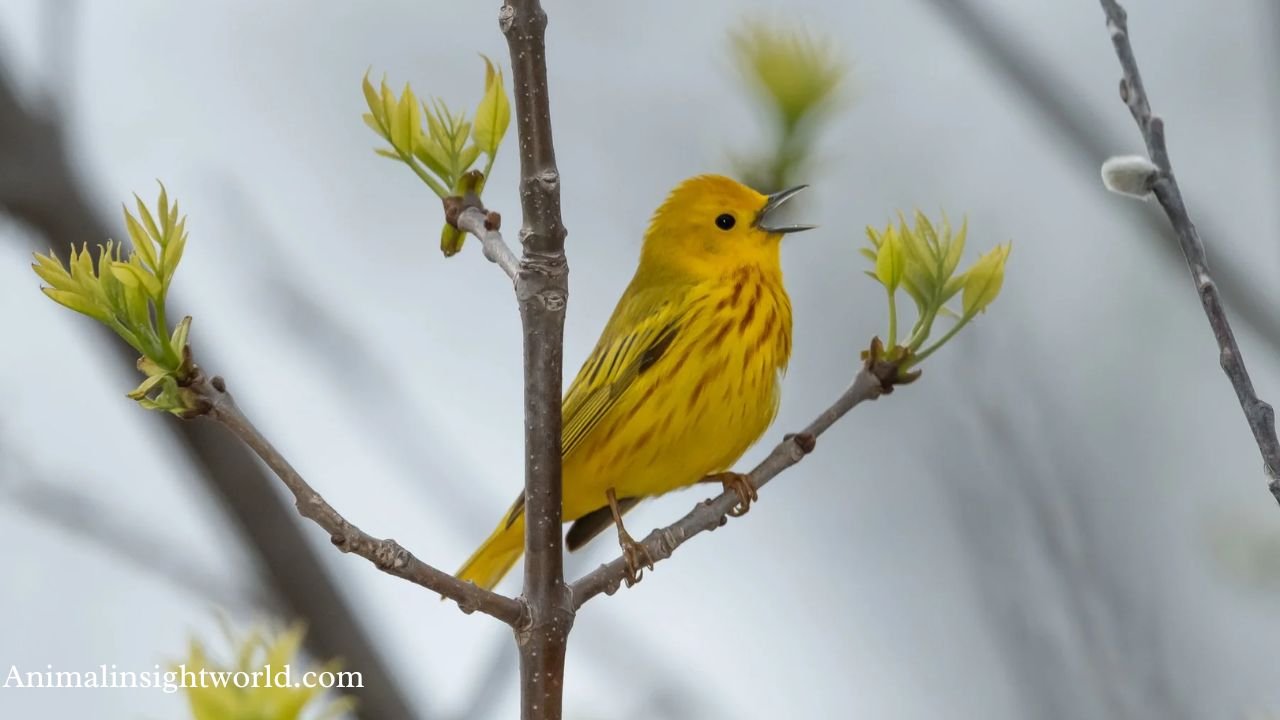
The yellow warbler is a small, bright songbird that brings a flash of sunshine to gardens, wetlands and riverbanks across North America every spring. The male is almost entirely golden yellow, with reddish streaks on the breast, while the female is a softer yellow green, and both are about thirteen centimetres long and weigh only about ten grams. Yellow warblers breed in Canada and the United States, then migrate thousands of kilometres to Mexico and Central America for the winter, travelling mostly at night. They eat insects and spiders, catching caterpillars, beetles and flies among the leaves, and their sweet, cheerful song is one of the first sounds of spring in many places. The female builds a neat cup nest in a shrub or small tree, often near water, and she lines it with plant fibres and feathers. Yellow warblers are famous for their response to cowbirds, which lay eggs in other birds nests. When a warbler finds a cowbird egg in its nest, it often builds a new floor over the egg and lays a fresh clutch on top, sometimes stacking three layers in a single season. It is a small bird with a big voice and a clever answer to a very old problem.
3. Yellowfin Tuna
The yellowfin tuna is a fast, powerful ocean fish named for the bright yellow fins that trail behind it like ribbons, and it is one of the most important fish in the world for both people and the sea. Yellowfin tuna grow to about two metres long and can weigh more than two hundred kilograms, although most caught fish are smaller, and they live in the warm open waters of the Atlantic, Pacific and Indian Oceans. They are built for speed, with a streamlined torpedo shaped body, a deeply forked tail and a body temperature warmer than the water around them, which lets their muscles work harder and faster. A yellowfin tuna can swim at speeds of more than seventy kilometres per hour in short bursts, and it travels in schools that follow warm currents and feed on smaller fish, squid and crustaceans. Yellowfin are a major food fish, prized for their firm red meat, and they support fishing communities and industries in dozens of countries. Because they are caught in such large numbers, their populations are carefully watched by international bodies, and fishing limits and protected areas help keep the stocks healthy. In the open ocean they are also prey for sharks and toothed whales, so speed is not a luxury for a yellowfin, it is survival.
4. Yellow-bellied Marmot
The yellow bellied marmot is a large, chunky ground squirrel of the mountains of western North America, and it is famous for the loud, piercing whistle that warns the whole colony of danger. Marmots grow to about seventy centimetres long including the tail and weigh up to five kilograms, with thick grey brown fur and a pale yellow belly that gives them their name. They live in rocky meadows and alpine slopes from British Columbia to New Mexico, at heights up to four thousand metres, and they dig deep burrow systems with several entrances under boulders and in old rock piles. A marmot colony is a family affair, with one dominant male, several females and their young sharing the burrows and taking turns as lookouts. The lookout sits upright on a rock and scans for eagles, coyotes and other predators, and when it spots danger it gives a sharp whistle that sends every marmot diving for cover. Yellow bellied marmots spend most of the year asleep, hibernating for eight or nine months in a deep burrow chamber, and they wake in spring to feed on grasses, flowers and seeds. During their short summer they must eat enough to double their weight, because the long winter sleep depends on the fat they store.
5. Yeti Crab
The yeti crab is one of the strangest animals ever discovered, a pale, ghostly crab with long, hairy arms that lives around hydrothermal vents on the deep ocean floor. It was first found in 2005 near Easter Island in the Pacific Ocean, at a depth of more than two thousand metres, where no sunlight reaches and the water around the vents is hot and full of chemicals that would poison most animals. The yeti crab grows to about fifteen centimetres across, with a white body and arms covered in silky bristles that look like fur, which is why scientists named it after the yeti of Himalayan legend. Those bristles are not for warmth. They are covered in bacteria that the crab farms and eats, because the bacteria can turn the toxic chemicals from the vents into food, and the crab waves its arms through the vent water to feed its bacterial crop. Yeti crabs live in crowds around the vents, sometimes packed so tightly that they cover the rocks like a pale carpet, and they compete for the best spots near the warm water. Females carry their eggs under their tails until they hatch, and the young larvae drift in the deep currents until they find a new vent. The yeti crab shows that life can thrive in the most extreme places on Earth, with no sunlight and no plants at all.
6. Yorkshire Terrier
The Yorkshire terrier, known to its fans as the Yorkie, is one of the smallest and most popular dog breeds in the world, and it began life as a working dog in the mills and mines of northern England. Yorkies were bred in the nineteenth century in Yorkshire to catch rats in textile mills and coal mines, and the first ones were larger and rougher coated than the tiny companions we know today. A modern Yorkie weighs only two to three kilograms and stands about twenty centimetres tall, with a long, silky coat of steel blue and tan that grows to the floor if it is not trimmed. That beautiful coat needs daily brushing, and many owners keep it in a short puppy cut for easy care. Yorkies are bold, clever and full of energy, far braver than their size suggests, and they are loyal to their families and often suspicious of strangers. They need training and socialisation like any terrier, because a Yorkie left to its own devices will happily take charge of the house, and they are famous for their sharp bark and their love of sitting on laps. Despite their small size they can live for fifteen years or more, and they adapt well to apartment life, which is one reason they are so popular in cities around the world. The Yorkie proves that a dog bred to hunt rats in a mill can become one of the most loved companions on Earth.
7. Yellowhammer
The yellowhammer is a bright, cheerful songbird of the farmland and hedgerows of Europe, and its song is one of the most famous sounds of the English countryside. The male is a striking bird, with a golden yellow head and belly, a chestnut brown back and a song that sounds like a little bit of bread and no cheese, a phrase that birdwatchers have used to remember it for generations. Yellowhammers grow to about sixteen centimetres long, with a sturdy seed eating bill and a long tail, and the female is duller, with a yellow wash and brown streaks that help her hide on the nest. They live in open farmland, scrub, hedgerows and woodland edges, where they feed on seeds and grain in winter and insects in summer, when they need protein for their chicks. The female builds a nest low in a hedge or on the ground among grass, and she lays three to five eggs that are pale with dark scribbles like handwriting. Yellowhammer numbers have fallen in many places as farming has changed and hedgerows have been lost, but conservation work that leaves seed rich field margins and thick hedges is helping them recover. Their song is a reminder that even common farmland birds can be beautiful, and that a hedgerow full of singing yellowhammers is worth protecting.
8. Yabby
The yabby is a freshwater crayfish from Australia, a small lobster like creature that lives in rivers, dams, swamps and farm ponds, and it is one of the most popular animals in Australian freshwater fishing. Yabbies grow to about twenty centimetres long and weigh up to two hundred grams, with a blue green or brown body, strong claws and a tail that they use to swim backwards in a sudden flick when danger appears. The most common species is the common yabby, which lives across eastern and southern Australia and can survive in water that would kill most other crayfish, including warm, muddy and low oxygen water. Yabbies dig burrows into the banks of dams and streams, where they shelter during the day and during dry spells, and they can survive for months in a damp burrow when their pond dries up. They eat almost anything, including algae, dead plants, insects and small water creatures, and they are an important food for birds, fish and other animals. People catch yabbies with nets and traps and eat them boiled or grilled, and yabby fishing is a favourite pastime for Australian families. Farmers also keep them in dams because they help clean the water and control weeds, and a healthy yabby population is a sign of a healthy farm dam.
9. Yellow-bellied Slider
The yellow bellied slider is a freshwater turtle of the southeastern United States, and it is one of the most familiar pet turtles in the world. Its name comes from the bright yellow patch on each side of its head and the yellow underside of its shell, which contrast with the dark green and yellow striped shell on its back. Adults grow to about twenty eight centimetres long, with females larger than males, and they live in ponds, lakes, slow rivers and marshes from Virginia to Florida and west to Alabama. Yellow bellied sliders are excellent swimmers, with webbed feet and a streamlined shell, and they spend much of the day basking on logs and rocks in the sun, sliding into the water at the first sign of danger, which is how they got the name slider. They eat water plants, algae, insects, small fish and snails, and young turtles eat more meat while adults eat mostly plants. Females lay their eggs in a nest dug in sandy soil near the water, and the temperature of the nest decides whether the babies are male or female, with warmer nests producing females. Yellow bellied sliders are popular pets, but they need a large tank, clean water, a basking spot and the right light, and they can live for thirty years or more, so keeping one is a long commitment. Released pets have started wild populations in many countries, where they can compete with native turtles.
10. Yellowjacket
The yellowjacket is a small, brightly striped wasp that is both one of the most feared and one of the most useful insects in the garden. Yellowjackets grow to about one to two centimetres long, with a black body marked with bright yellow bands, a narrow waist and a smooth stinger that can be used more than once. They live in colonies that can hold thousands of workers, and they build their nests in the ground, in wall cavities, in hollow trees or hanging from branches, with a papery nest made from chewed wood fibre. The workers feed the colony by hunting insects, especially caterpillars and flies, and by scavenging for meat, fruit and sweet foods, which is why they appear at picnics and barbecues in late summer. Yellowjackets are important predators that control garden pests, and they also visit flowers for nectar, helping to pollinate plants. Unlike honeybees, yellowjackets can sting repeatedly, and they will defend their nest fiercely, so a nest near a house needs care and respect. Only the fertilised queens survive the winter, hiding in sheltered places, and each spring a queen starts a new colony on her own, building the first cells and raising the first workers herself. A yellowjacket colony is a marvel of cooperation, even if its sting is best avoided.
11. Yellow-eyed Penguin
The yellow eyed penguin is one of the rarest and most beautiful penguins in the world, a shy, forest nesting bird that lives only in New Zealand. It is named for the pale yellow band that runs from its eyes around the back of its head, and it stands about sixty five centimetres tall and weighs around six kilograms, with a slate grey back, white belly and a soft pink tinge on its feet. Yellow eyed penguins live on the southeast coast of the South Island and on the sub Antarctic Auckland and Campbell Islands, where they nest in coastal forest and scrub rather than in big colonies like other penguins. Pairs are faithful and return to the same nest site each year, raising one or two chicks in a nest hidden under ferns or fallen trees. They hunt at sea for fish and squid, diving to depths of more than one hundred metres and travelling many kilometres from shore, and they come back to land each evening to feed their chicks. Yellow eyed penguins are one of the most endangered penguins, with only a few thousand breeding pairs left, and they are threatened by introduced predators such as stoats and dogs, by fishing nets, and by changes in the sea that reduce their food. Conservationists protect their nesting areas, control predators and rescue sick and injured birds, and the penguin has become a symbol of New Zealand wildlife. In 2024 it was voted New Zealand Bird of the Year, a sign of how much the country cares about this shy, yellow eyed bird.
12. Yellow Anaconda
The yellow anaconda is a huge, powerful snake of the wetlands of South America, and it is one of the largest snakes in the world. Yellow anacondas grow to three to four metres long and can weigh more than fifty kilograms, with a thick, muscular body marked with black and brown spots on a yellow or olive green background. They live in the slow rivers, marshes and flooded grasslands of the Pantanal, the vast wetland that spreads across Brazil, Paraguay, Bolivia and Argentina, and they spend most of their time in the water, where their size and weight are supported and they can move with surprising speed. Yellow anacondas are not venomous. They hunt by ambush, grabbing prey such as fish, birds, capybaras and even caimans, and wrapping their coils around it until it cannot breathe, then swallowing it whole. A large meal can keep a snake fed for weeks, and after eating it may rest for days while it digests. Females give birth to live young, sometimes more than forty babies at a time, and the young are independent from birth and must avoid predators including herons, caimans and other anacondas. Yellow anacondas are often confused with their larger cousin, the green anaconda, but they are smaller and more yellow, and they prefer the open wetlands to the deep forest rivers. They are not dangerous to people unless cornered, and they are an important part of the Pantanal food web.
13. Yellow Tang
The yellow tang is a bright, sunshine yellow fish that is one of the most recognisable fish on a coral reef, and it is a favourite of divers and aquarium keepers alike. Yellow tangs grow to about twenty centimetres long, with a deep, flat, disc shaped body, a pointed snout and a tail that carries a sharp, blade like spine on each side that can be raised for defence. They live on the coral reefs of the Pacific Ocean, especially around Hawaii, where they graze in groups on the algae that grows on rocks and dead coral. Their colour is not just for show. In a school of yellow tangs the bright colour helps the fish stay together and recognise each other, and it also warns predators that the fish carries a sharp spine. Yellow tangs are herbivores, and their grazing is vital for the reef, because it stops algae from smothering the corals. A single yellow tang can eat a large amount of algae every day, and a school of them can keep a whole patch of reef clean. Young yellow tangs are even brighter in colour and often live in small groups in shallow water, while adults form larger schools on the outer reef. Yellow tangs are popular in home aquariums, but they need a large tank with plenty of swimming space and algae to eat, and wild populations in Hawaii are now protected by catch limits so that enough fish stay on the reef to keep it healthy.
14. Yellow Baboon
The yellow baboon is a large, intelligent monkey of the savannas and woodlands of eastern and southern Africa, and it is named for its sandy yellow brown coat. Yellow baboons grow to about sixty to eighty centimetres long with a tail of similar length, and males can weigh up to twenty five kilograms, with a dog like muzzle, strong jaws and a mane of fur around the shoulders. They live in troops of up to two hundred animals, with a clear social order led by dominant males, and they spend their days moving across the savanna in search of food. Yellow baboons eat almost anything, including fruit, seeds, grasses, leaves, insects, eggs and small animals, and they are clever enough to raid crops and bins when they live near people. They are excellent climbers and spend the night sleeping in trees or on cliffs, safe from leopards and lions, and during the day they groom each other, play and care for their young, which strengthens the bonds in the troop. Communication is a big part of baboon life, with barks, grunts, screams and a rich range of facial expressions and gestures. Mothers carry their babies on their bellies for the first weeks and then on their backs, and young baboons learn by watching and copying the adults. Yellow baboons are not endangered, but they come into conflict with farmers when they eat crops, and keeping them away from farms without harming them is a challenge for wildlife managers across Africa.
15. Yellow-footed Tortoise
The yellow footed tortoise is a large, gentle land tortoise of the rainforests of South America, and it is named for the bright yellow scales on its legs and the yellow patches on its dark, domed shell. Adults grow to about forty to sixty centimetres long and can weigh more than ten kilograms, with a shell that is dark brown or black with yellow centres on each scale. They live on the forest floor in Brazil, Colombia, Venezuela, the Guianas and other South American countries, where they move slowly through the leaf litter in search of fallen fruit, flowers, leaves and fungi, and they also eat insects, worms and carrion when they find it. Yellow footed tortoises are important seed dispersers, because the seeds of many forest fruits pass through their digestive system unharmed and grow in new places, which helps the forest renew itself. Females dig a nest in soft soil and lay up to a dozen eggs, which hatch after several months, and the babies are tiny and vulnerable to predators such as birds, snakes and mammals. Yellow footed tortoises can live for fifty years or more, and they are popular pets, but they need a warm, humid home with space to roam and the right food. Wild numbers are falling because of hunting for meat and the pet trade and the loss of rainforest, and they are now protected in several countries. A tortoise that has walked the same forest floor for decades is a living link to the health of the rainforest itself.
16. Yellow-spotted Lizard
The yellow spotted lizard is a small, shy reptile of the deserts of Mexico and the southwestern United States, and it is named for the rows of yellow spots that decorate its dark, scaly body. These lizards grow to about twenty centimetres long, with a slender body, a long tail and a head that is slightly wider than the neck, and their colouring helps them blend into the rocky, sun dappled ground where they live. Yellow spotted lizards spend the day in rock crevices, under stones and in the shade of desert plants, coming out to hunt for insects, spiders and other small creatures when the temperature is right. They are secretive and rarely seen, which is one reason they are less well known than many desert lizards, and they rely on camouflage and quick dashes between rocks to escape predators such as snakes, birds and larger lizards. Their scientific name is Lepidophyma flavimaculatum, and they belong to a family of lizards known as night lizards, because they are most active at dawn, dusk and on cloudy days rather than in the fierce midday sun. Females give birth to live young instead of laying eggs, and a female may produce several babies at a time, each one a miniature copy of the adult. Because they live in such specific rocky habitats, yellow spotted lizards are vulnerable to habitat loss, and protecting the rocky desert ground they need is the best way to keep them safe.
17. Yellow Mongoose
The yellow mongoose is a small, bright eyed predator of the dry grasslands and semi deserts of southern Africa, and it is one of the most social mongooses in the world. Yellow mongooses grow to about fifty centimetres long including the tail and weigh less than one kilogram, with a sandy yellow coat, a pale belly, a bushy tail tipped with white, and sharp claws for digging. They live in large colonies in burrow systems that can have dozens of entrances, and they share these burrows with ground squirrels and other animals. During the day the colony is busy, with mongooses foraging for insects, scorpions, lizards, eggs and small rodents, while others stand upright on their hind legs as lookouts, watching for eagles, jackals and snakes. Yellow mongooses are famous for their ability to kill venomous scorpions and snakes, because they are fast, agile and have some resistance to venom, and they work together to mob a snake and drive it away. They communicate with a range of chirps, squeaks and purrs, and they groom each other and huddle together for warmth at night. Unlike many mongooses, yellow mongooses are active during the day and live in family groups, which makes them easier to watch than their nocturnal cousins. They are common across southern Africa and are not endangered, but they depend on open grassland, and they are a delight to watch as they stand upright and scan the horizon like tiny desert sentries.
18. Yellow Wagtail
The yellow wagtail is a slender, elegant bird of wet meadows, marshes and farmland across Europe and Asia, and it is named for its bright yellow belly and its habit of wagging its long tail up and down as it walks. Yellow wagtails grow to about seventeen centimetres long, with a greenish yellow back, a yellow underside and a long black and white tail that they flick constantly. Males are brighter than females, with a vivid yellow breast and a blue grey or green head depending on the region, and there are several different forms across Europe and Asia that birdwatchers love to compare. They breed in wet grasslands, marshes and river valleys, where they feed on insects, catching flies and beetles on the ground or snapping them out of the air in short flights. Yellow wagtails often follow cattle and other grazing animals, catching the insects that the animals disturb as they walk, and they are a common sight on farms in spring and summer. In autumn they migrate south to Africa and southern Asia, travelling in flocks and sometimes resting in huge roosts in reed beds. The female builds a nest on the ground hidden in grass, and she lays four to six eggs that are speckled and well camouflaged. Yellow wagtail numbers have fallen in some places as wet meadows have been drained, but where damp grassland survives, this bright, tail wagging bird is still a cheerful sight.
19. Yellow Sac Spider
The yellow sac spider is a small, pale spider that lives in houses, gardens and fields around the world, and it is named for the silken sac it spins as a daytime hiding place. Yellow sac spiders grow to about ten millimetres long, with a pale yellow or cream body, long legs and dark jaws, and they do not build a web to catch prey. Instead, they are active hunters that prowl at night for insects and other small creatures, and during the day they rest in a small silken tube spun in a corner, under a leaf or behind a picture frame. They are one of the most common house spiders in North America and Europe, and they often appear in homes in autumn, when they come inside looking for shelter. Yellow sac spiders have a reputation for biting people, but their bite is usually mild, causing only a small red mark, and they bite only when trapped against the skin. They are useful predators that eat pests such as flies, moths and other spiders, and they are part of the natural pest control in every garden. Females lay their eggs in a silken sac and guard them until they hatch, and the spiderlings disperse by ballooning, floating away on threads of silk in the wind. The yellow sac spider is a reminder that even the smallest animals in our homes have a life of their own, with hunting, hiding and family care just like any other creature.
20. Yellow-crowned Night Heron
The yellow crowned night heron is a striking, stocky heron of the coasts and wetlands of the Americas, and it is named for the pale yellow crown and the white cheek patch that stand out against its grey body. These herons grow to about sixty centimetres tall with a wingspan of more than a metre, and they have a thick, powerful bill that is made for crushing crabs. They live along the coasts of the southeastern United States, Mexico, Central America and the Caribbean, and they are also found on the Galapagos Islands, where they hunt in mangroves and rocky shores. Unlike most herons, which hunt fish, yellow crowned night herons specialise in crabs, and they have learned to eat them in a clever way. They grab a crab, carry it to a flat rock, and use their strong bill to crack the shell and remove the legs and claws before swallowing the body. They hunt mostly at night and at dawn and dusk, when crabs are active, and during the day they rest in trees near the water. Yellow crowned night herons nest in trees, often in small colonies, and both parents help to build the nest, sit on the eggs and feed the chicks. Their numbers are stable in most places, but they depend on healthy coastal wetlands and mangroves, and protecting those habitats keeps this handsome, crab eating heron safe. Its yellow crown is a small flash of colour on a bird that works the night shift on the shore.
Surprising Facts
The animals on this list hold more surprises than their names suggest. The yellow warbler can build a new floor over a cowbird egg and start again, the yak can breathe easily at heights where most people struggle to walk, and the yeti crab farms bacteria on its own hairy arms, a trick no other crab is known to use. The yellowfin tuna is warm blooded in a way that helps it swim faster than almost any other fish its size, and the yellow bellied marmot sleeps for eight or nine months of the year, waking for a short summer of eating and raising young. The yellow eyed penguin nests in forest rather than in a colony, the yellow anaconda can give birth to more than forty babies at once, and the yellow sac spider hunts without a web, using speed and stealth instead of silk. Each of these facts shows that the letter Y is not a quiet corner of the animal kingdom, it is a showcase of invention.
Another surprise is how many Y animals are connected to people. The Yorkshire terrier went from rat catcher to lap dog, the yellowfin tuna feeds millions of people, the yabby is a favourite catch for Australian families, and the yellow mongoose has learned to live alongside farms and towns. At the same time, several Y animals need our help, including the yellow eyed penguin, the wild yak and the yellow footed tortoise, whose numbers are falling. Knowing their names and their stories is a first step towards protecting them, and it is a step anyone can take.
Frequently Asked Questions
What is the most famous animal that starts with Y?
The yak is probably the most famous, because it is a symbol of the high Himalayas and the Tibetan Plateau, and it has been used by mountain peoples for thousands of years. The Yorkshire terrier is also very famous as a pet, and the yellowfin tuna is known worldwide as a food fish. For children, the yellow warbler and the yellowhammer are often the first Y animals they meet in books and songs.
Are there many animals that start with Y?
No, Y is one of the rarest starting letters for animal names, which is why lists of Y animals often repeat the same few creatures. This article found twenty real ones by including birds, mammals, fish, reptiles, insects and a spider, and by counting animals whose common names begin with yellow as well as animals such as the yak, the yabby and the yeti crab.
Which Y animal is the biggest?
The yellowfin tuna is the largest animal on this list by weight, with the biggest fish reaching more than two hundred kilograms. The yak is the largest land animal on the list, with wild males weighing up to one thousand kilograms, which makes it heavier than the tuna but shorter in length. The yellow anaconda is the longest, reaching four metres or more.
Which Y animal is the smallest?
The yellow sac spider is the smallest animal on this list, with a body only about ten millimetres long. The yellow warbler is the smallest bird, weighing only about ten grams, and the yellowhammer and yellow wagtail are only slightly larger. Small size does not mean small importance, because each of these animals plays a vital role in its habitat.
Do yellow animals get their colour from their food?
Some do and some do not. The yellow tang and the yellow warbler get much of their colour from pigments in their food, but the yellowhammer, the yellow baboon and the yellow mongoose have colour built into their fur and feathers by their genes. In many cases the yellow colour is a signal, either to attract a mate, to warn a predator, or to help members of a group recognise each other.
Conclusion
Top 20 Animals That Start With Y proves that a rare letter can hide a rich world. From the shaggy yak of the high mountains and the ghostly yeti crab of the deep sea to the bright yellow warbler of the garden and the mighty yellowfin tuna of the open ocean, these twenty animals span every continent and almost every habitat on Earth. Some of them are famous, some are almost unknown, and several are in danger, but all of them deserve to be remembered, because each one found its own way to survive in a corner of the world that no other animal had claimed. The next time someone asks you to name an animal that starts with Y, you will have twenty answers ready, and a story to go with each one.