Top 20 Animals That Start With S
Introduction
Top 20 Animals That Start With S brings together some of the most surprising creatures in the animal kingdom, from a fish that can smell a single drop of blood in the sea to a mammal that spends almost its whole life hanging upside down in a tree. The letter S is one of the richest letters for animal names, and it covers hunters and grazers, swimmers and climbers, animals that live in the deepest oceans and animals that visit our gardens every day. Each one has its own way of finding food, staying safe and raising its young, and each one shows a different answer to the same basic problems of life in the wild.
This list gives you twenty real animals that start with S, with facts you can remember and share. You will meet a snake that can swallow prey wider than its own head, a bird that mates for life and flies thousands of kilometres, a tiny fish that a father carries in a pouch, and a big cat that lives higher in the mountains than almost any other predator. Whether you are a student working on a school project, a teacher looking for examples, or simply someone who loves animals, this guide will show you how much variety a single letter can hold.
1. Snake
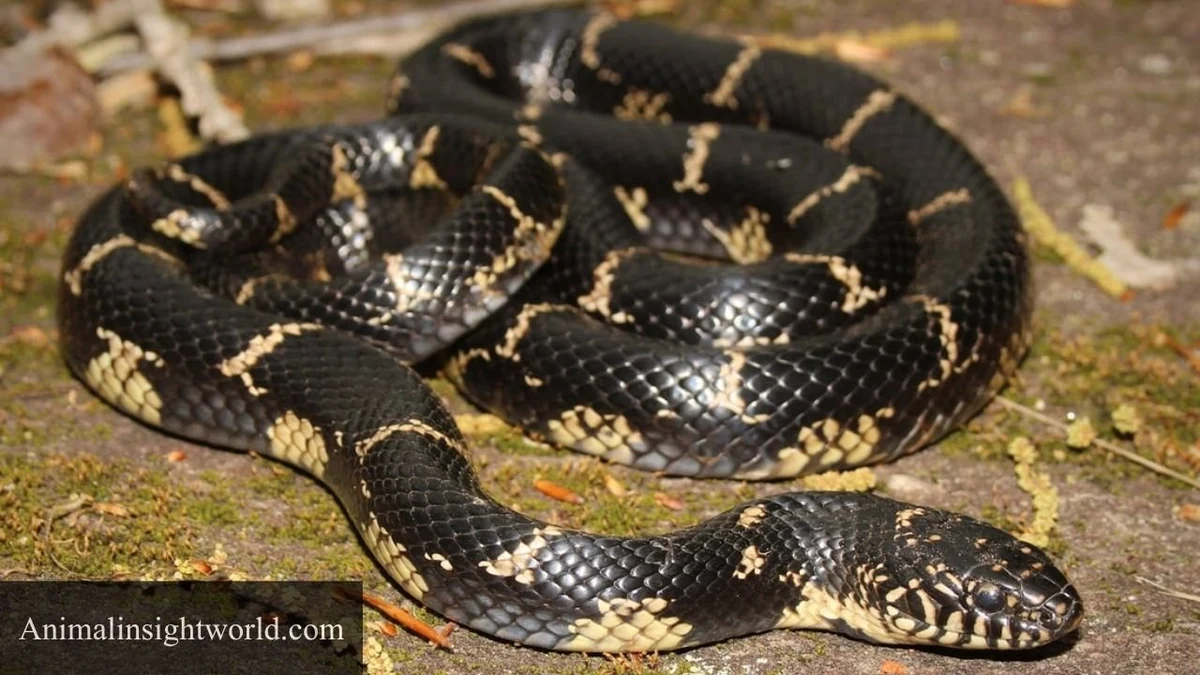
The snake is one of the most successful animals on Earth, and it lives on every continent except Antarctica. Snakes have no legs, yet they move with grace through grass, water, trees and even sand. They do this with strong muscles and special belly scales that grip the ground, and some species can climb trees, swim across rivers or glide from branch to branch. There are more than 3,000 species of snake, from tiny thread snakes no longer than a pencil to the giant green anaconda, which can grow longer than five metres and weigh more than 200 kilograms.
Snakes do not chew their food. Instead, they swallow prey whole, and their jaws can open far wider than most people expect because the bones of the lower jaw are joined by a stretchy ligament. A snake can eat a meal as wide as its own body and then go for weeks or even months without eating again. Most snakes are harmless to people, and only a small number have venom strong enough to be dangerous. Snakes play a vital role in nature by keeping rats and mice under control, and farmers in many countries welcome them for that reason.
2. Shark
The shark is one of the oldest animals in the sea, and sharks were swimming in the oceans long before the first dinosaurs walked on land. There are more than 500 species of shark, and they come in many shapes and sizes. The whale shark is the largest fish in the world and can grow longer than twelve metres, yet it eats only tiny plankton. At the other end of the scale, the dwarf lantern shark is smaller than a human hand. Sharks have skeletons made of cartilage instead of bone, which makes them light and flexible in the water.
A shark can sense the world in ways we cannot imagine. It can detect the tiny electrical signals made by the muscles of a hidden fish, and it can smell a single drop of blood in a huge amount of water. Most sharks are shy and avoid people, and the chance of being hurt by a shark is far smaller than the chance of being struck by lightning. Sadly, many shark species are now in danger because millions are caught every year for their fins and meat. Protecting sharks matters because they keep ocean food chains in balance.
3. Squirrel
The squirrel is one of the most familiar animals in parks and gardens, and it is famous for its bushy tail and its love of nuts. Squirrels live in trees, on the ground and even in deserts, and there are more than 200 species around the world. A grey squirrel can leap from branch to branch with ease, and it uses its long tail as a balance pole, a blanket in cold weather and a sunshade in hot weather. Its sharp claws grip bark, and its strong back legs let it jump several metres in a single bound.
Squirrels are nature’s gardeners. They bury thousands of nuts and seeds each autumn to eat in winter, and they forget where many of them are hidden. Those forgotten seeds grow into new trees, so squirrels help forests spread without even knowing it. A squirrel can remember the rough area where it buried food, but it relies on smell to find each nut again. In winter, squirrels that live in cold places may sleep for long stretches, while tree squirrels stay active and visit their food stores on mild days.
4. Sheep
The sheep is one of the oldest farm animals in the world, and people have kept sheep for wool, milk and meat for more than ten thousand years. A sheep’s coat is covered in wool, which grows all year round and must be sheared each spring. One sheep can produce enough wool in a year to make several warm jumpers, and wool is still one of the most useful natural materials we have. Sheep are gentle animals that live in flocks, and they stay close together because there is safety in numbers.
Sheep are smarter than many people think. They can recognise the faces of other sheep and of the people who look after them, and they remember those faces for years. A ewe knows her own lamb by its smell and its call, even in a flock of hundreds. Sheep graze on grass and other plants, and their grazing shapes the landscapes of hills and valleys in many countries. Wild sheep, like the bighorn sheep of North America, live in rocky mountains and can climb steep cliffs with ease on their hard, split hooves.
5. Seal
The seal is a marine mammal that spends most of its life in the sea but comes ashore to rest, give birth and moult its fur. Seals have smooth, torpedo shaped bodies and flippers instead of legs, which makes them graceful swimmers. They can dive deep and stay underwater for a long time, and some species can hold their breath for more than an hour. A seal’s whiskers are very sensitive, and they can detect the tiny movements of fish in dark or murky water.
There are many kinds of seal, from the small ringed seal of the Arctic to the huge elephant seal, whose males can weigh more than three tonnes. Seals eat fish, squid and shellfish, and they are in turn hunted by sharks and killer whales. Seal pups are born with soft white fur in many species, and their mothers feed them with milk so rich that a pup can double its weight in a few weeks. Seals are playful animals, and they are often seen surfing waves, chasing each other and balancing objects on their noses.
6. Swan
The swan is one of the most graceful birds in the world, and it is famous for its long curved neck, its white feathers and its quiet beauty on the water. Swans are among the largest flying birds, and the mute swan can weigh more than twelve kilograms. Despite their size, they are strong fliers and can travel hundreds of kilometres during migration. A swan takes off from water by running across the surface and beating its wings until it gains enough speed to lift into the air.
Swans usually mate for life, and a pair stays together for many years, raising their cygnets together. The male, called a cob, guards the nest while the female, called a pen, sits on the eggs. When the cygnets hatch, they ride on their parents’ backs and follow them everywhere. Swans are fiercely protective of their young and will chase away dogs, foxes and even people who come too close. In some countries, swans are protected by law, and harming one has been a serious offence for hundreds of years.
7. Sloth
The sloth is one of the slowest animals in the world, and it spends almost its whole life hanging upside down from the branches of rainforest trees in Central and South America. A sloth moves so slowly that algae grows in its fur, turning it green and helping it blend in with the leaves. This slow life is not laziness. A sloth eats leaves that give very little energy, so it saves energy by moving as little as possible, and its slow movements also make it hard for eagles and other predators to spot.
Sloths are excellent swimmers, even though they can barely walk on the ground. They come down from their trees only about once a week, to go to the toilet at the base of the tree. This risky trip is one of the great mysteries of sloth life, and scientists think it may help the moths that live in their fur, which in turn feed the algae that camouflages them. A sloth mother carries her baby on her belly for months, and the baby learns to hang, climb and find the right leaves by watching her.
8. Skunk
The skunk is a small black and white mammal of North America, and it is famous for one thing above all others: its spray. A skunk can shoot a foul smelling liquid from glands under its tail, and the smell is so strong and lasting that most predators learn to leave skunks alone after one meeting. Before it sprays, a skunk gives clear warnings. It stamps its feet, raises its tail and turns its back, and any animal that ignores those warnings soon regrets it.
Skunks are not just a walking warning sign. They are useful animals that eat insects, grubs, mice, eggs and fallen fruit, and they help keep gardens free of pests. They are mostly active at night, and during the day they sleep in burrows, hollow logs or under buildings. A mother skunk raises her babies, called kits, on her own, and the kits stay with her through their first summer, learning to dig, hunt and find shelter. Skunks are good climbers and swimmers, and they adapt well to life near towns and farms.
9. Seahorse
The seahorse is a tiny fish that looks nothing like a fish at all. It swims upright, has a curled tail that grips seaweed, a head shaped like a horse and a pouch on the male’s belly. There are about 45 species of seahorse, and most are only a few centimetres long. Seahorses are weak swimmers, so they hold on to seagrass and coral with their tails and wait for tiny shrimp and plankton to drift past, which they suck up with their long tube shaped snouts.
Seahorses have one of the most unusual family lives in the animal world. The female lays her eggs into a special pouch on the male’s belly, and the male carries the eggs until they hatch, sometimes giving birth to hundreds of tiny seahorses at once. Seahorses can change colour to match their surroundings, and their eyes move independently, so one eye can watch for food while the other watches for danger. Sadly, seahorses are threatened by the loss of seagrass beds and by being caught for souvenirs and traditional medicine.
10. Starfish
The starfish, also called a sea star, is a sea animal with five or more arms spreading out from a central body. It is not a fish at all, and it has no brain and no blood. Instead, it pumps seawater through its body, and it moves on hundreds of tiny tube feet under its arms. Starfish live on the sea floor in oceans all over the world, from shallow rock pools to deep water thousands of metres down.
A starfish has an amazing power of regrowth. If it loses an arm to a predator, it can grow a new one, and in some species a single lost arm can grow into a whole new starfish. Starfish eat shellfish, and they do it in a strange way. A starfish wraps its arms around a mussel, pulls the shell open with its tube feet, and then pushes its stomach out of its mouth and into the shell to digest the soft animal inside. Starfish come in many colours, from bright orange and red to purple and blue, and they are one of the most popular animals in rock pools.
11. Sparrow
The sparrow is a small brown bird that lives close to people in towns, villages and farms all over the world. House sparrows nest in roofs, walls and hedges, and they eat seeds, crumbs and insects. A male house sparrow has a black bib and a grey cap, while the female is plain brown all over. Sparrows are noisy, cheerful birds, and a group of them chattering in a hedge is one of the most familiar sounds of a garden.
Sparrows are tough survivors. They have followed humans across the world, and they thrive wherever people build houses and grow crops. A pair of sparrows can raise three or four families in a single summer, and both parents feed the chicks with insects. In recent years, sparrow numbers have fallen in many cities, and scientists think the loss of nesting holes in modern buildings and the fall in insect numbers are part of the reason. Leaving a gap in a roof or putting up a nest box can help sparrows return to a neighbourhood.
12. Stork
The stork is a tall, long legged bird with a long bill and broad wings, and it is famous in stories as the bird that brings babies. White storks nest on rooftops, chimneys and specially built platforms in Europe, and they return to the same nest year after year, adding sticks until the nest can weigh hundreds of kilograms. Storks migrate huge distances, flying from Europe to Africa for the winter and back again in spring.
Storks are strong fliers that use rising warm air to soar for hours without flapping their wings, which saves them a great deal of energy on migration. They eat frogs, fish, insects, small mammals and even snakes, which they catch in wetlands and meadows. A stork pair greets each other at the nest by clattering their bills together, a loud rattling sound that can be heard from far away. In many villages, a stork nesting on a roof is seen as a sign of good luck, and people build platforms to welcome them back each spring.
13. Scorpion
The scorpion is an ancient animal that has lived on Earth for more than 400 million years, which is long before the first dinosaurs. Scorpions have eight legs, two large claws and a long tail that curves over the back and ends in a sting. They use their claws to catch insects and spiders, and they use the sting only when they need to defend themselves or to subdue large prey. Most scorpion stings are painful but not dangerous to people, and only a small number of species have venom that can seriously harm a human.
Scorpions are mostly active at night, and they hide during the day under stones, bark and in burrows. They can go for months without eating, and they can survive in some of the hottest and driest deserts on Earth. A scorpion can sense tiny vibrations through the ground with hairs on its legs, which helps it find prey in the dark. Mother scorpions carry their babies on their backs until the young are old enough to hunt alone, and a single mother may carry dozens of tiny white babies at once.
14. Salamander
The salamander is an amphibian with a long body, four short legs and a tail, and it looks a little like a small lizard. Salamanders live in damp places, in forests, under logs and near streams, and many species spend part of their lives in water and part on land. Their skin must stay moist for them to breathe through it, so they are most active on rainy nights. Some salamanders are brightly coloured, with orange, yellow or red spots that warn predators that their skin contains poison.
Salamanders have one of the most remarkable powers in the animal world. If a salamander loses a leg, a tail or even part of its heart, it can grow the missing part back. Scientists study salamanders to learn how this regrowth works, in the hope of helping people heal better one day. Many salamanders start life as larvae in water, with feathery gills, and then change into land animals. Some species never leave the water at all, and the axolotl of Mexico keeps its gills and lives its whole life as a larva that can still have babies.
15. Sea Turtle
The sea turtle is a reptile that spends almost its whole life in the ocean, and it is one of the oldest animals in the sea. Sea turtles have been swimming in the oceans for more than 100 million years. They have large flippers instead of legs, and they can travel thousands of kilometres across open ocean, returning to the very same beach where they were born to lay their own eggs. Scientists still do not fully understand how they navigate, but they think sea turtles may sense the Earth’s magnetic field like a built in compass.
A female sea turtle comes ashore at night, digs a nest in the sand with her back flippers, and lays more than a hundred soft white eggs. Then she covers them and returns to the sea, never seeing her babies. When the tiny turtles hatch, they scramble to the water under the moonlight, and many are eaten by birds and crabs on the way. Those that survive grow slowly and can live for many decades. Sea turtles eat jellyfish, seaweed and shellfish, and they are now threatened by plastic in the sea, by fishing nets and by the loss of nesting beaches.
16. Snow Leopard
The snow leopard is a big cat of the high mountains of Central Asia, and it is one of the most beautiful and mysterious animals in the world. Its thick grey fur is covered in dark rosettes, and it blends perfectly with the rocky slopes and snow. Snow leopards live at heights of up to 5,000 metres, higher than almost any other large predator, and they hunt wild sheep, goats and smaller animals among the cliffs. They are so shy and so well hidden that even scientists who study them for years may only see one a few times.
A snow leopard can leap more than fifteen metres in a single bound, and its long tail, which can be nearly as long as its body, helps it balance on narrow ledges and wraps around its face like a scarf when it sleeps in the cold. Unlike other big cats, snow leopards cannot roar. Instead, they make a soft chuffing sound. They live alone except when a mother is raising cubs, and each cat needs a huge territory because prey is scarce in the mountains. Snow leopards are in danger from poaching and from the loss of their mountain habitat, and fewer than ten thousand are thought to remain in the wild.
17. Sea Lion
The sea lion is a marine mammal that is closely related to seals, but it is easy to tell apart because sea lions have small ear flaps and can turn their back flippers forward, which lets them walk on land and climb onto rocks. Sea lions are intelligent, playful and social animals, and they gather in large colonies on beaches and rocky shores. They are fast swimmers and can dive to great depths to catch fish, squid and octopus.
Sea lions are famous for their intelligence, and they are often seen in aquariums and marine parks, where they learn tricks quickly. In the wild, they use their intelligence to work together, herding schools of fish into tight balls before feeding. A mother sea lion knows her own pup by its smell and its call, even in a colony of hundreds of animals. Male sea lions, called bulls, defend small territories on the beach during the breeding season, and they roar loudly to warn rivals away. Sea lions are threatened by fishing nets, pollution and the loss of fish stocks in some parts of the world.
18. Snail
The snail is a slow moving animal that carries its home on its back, and it is found in gardens, forests, deserts and seas all over the world. A snail’s shell is made of calcium, and it grows with the snail, adding new rings as the animal gets bigger. When danger comes near, the snail pulls its soft body inside the shell and seals the opening, safe from most predators. Land snails breathe air, while sea snails breathe through gills like fish.
Snails move on a single muscular foot, and they glide along on a layer of slime that they make themselves. This slime protects their soft bodies and lets them crawl over sharp surfaces without being hurt. A snail has eyes on the tips of its longer tentacles, and it can pull them in when something touches them. Snails eat leaves, algae and decaying plants, and they are food for birds, hedgehogs and many other animals. Some snails can live for many years, and the giant African land snail can grow a shell longer than twenty centimetres.
19. Starling
The starling is a medium sized bird with dark, speckled feathers that shine green and purple in the sunlight. Starlings are famous for their murmurations, when thousands of birds fly together in the evening sky, twisting and turning as one huge moving shape. No one knows exactly how they do it, but each bird watches its nearest neighbours and copies their movements, and the whole flock changes direction in less than a second. A murmuration is one of the most spectacular sights in the bird world.
Starlings are excellent mimics, and they can copy the songs of other birds and even sounds like car alarms and ringing phones. They nest in holes in trees and buildings, and they eat insects, fruit and seeds. In winter, starlings from northern Europe fly south to warmer countries, and huge flocks gather at roost sites in the evening. Starlings were brought to North America in the nineteenth century by people who wanted to bring all the birds mentioned in the works of Shakespeare to America, and they have now spread across the whole continent.
20. Swordfish
The swordfish is a large ocean fish named for its long, flat bill, which looks like a sword and can be more than a metre long. Swordfish use this bill to slash through schools of fish, stunning or injuring their prey before they eat it. They are among the fastest fish in the sea, and they can swim at speeds of up to 100 kilometres per hour in short bursts. A large swordfish can weigh more than 500 kilograms and grow longer than four metres.
Swordfish live in warm and temperate oceans all over the world, and they travel great distances, following warm currents and the fish they hunt. They can dive deep, to more than 500 metres, where the water is cold and dark, and their large eyes help them see in the gloom. Swordfish have a special organ that warms their eyes and brain, which lets them hunt in cold deep water better than other fish. They are a popular food fish, but they are caught in large numbers, and people are now asked to choose swordfish only from fisheries that catch them in a way that does not harm the ocean.
How These Animals Compare
The twenty animals in this list show how one letter can cover almost every kind of life on Earth. The smallest is the snail, which moves at a crawl and carries its home on its back, while the largest is the whale shark’s cousin in size among the group, the swordfish and the shark, which are among the fastest swimmers in the sea. The snake and the scorpion are ancient hunters that have changed little in hundreds of millions of years, while the sparrow and the starling are modern success stories that have spread around the world by living close to people.
Some of these animals live alone, like the snow leopard in its high mountains and the sloth in its tree, while others live in great crowds, like starlings in their murmurations and sea lions in their colonies. Some are gentle grazers, like the sheep and the swan, while others are skilled hunters, like the shark, the snake and the swordfish. What they all share is a body and a way of life that fits their home perfectly, from the seahorse’s curled tail that grips seaweed to the seal’s whiskers that find fish in the dark. That is the real lesson of the letter S: there is no single best way to be an animal, only the way that works where you live.
Frequently Asked Questions
Which animal that starts with S is the fastest?
The swordfish is one of the fastest, reaching speeds of up to 100 kilometres per hour in short bursts, and the shark is a strong fast swimmer too. On land, the squirrel is quick and agile, but none of the land animals in this list can match the speed of the fastest ocean hunters.
Which S animal is the largest?
The largest animal in this list is the shark family, since the whale shark can grow longer than twelve metres. Among the land animals, the largest is the sheep’s wild cousin, the bighorn sheep, which is much smaller than a shark, and the snow leopard is the largest land predator in this list.
Are all snakes and scorpions dangerous to people?
No. Most snakes are harmless, and only a small number have venom that can seriously hurt a person. The same is true of scorpions: most stings are painful but not dangerous, and only a few species are a real risk. Both animals use venom mainly for hunting and defence, and they prefer to avoid people.
Why do sloths move so slowly?
Sloths eat leaves that give very little energy, so they save energy by moving as little as possible. Their slow movement also helps them stay hidden from predators, because eagles and other hunters spot movement easily. Algae grows in their fur and turns it green, which adds to their camouflage.
Do swans really mate for life?
Swans usually stay with the same partner for many years, and a pair raises their cygnets together. If one partner dies, the other may find a new mate. The bond between a swan pair is one of the strongest in the bird world, and they defend their nest and their young fiercely.
Final Thoughts
Top 20 Animals That Start With S shows that a single letter can hold hunters and grazers, swimmers and climbers, tiny snails and huge sharks. From the snake that swallows its dinner whole to the seahorse father that carries his babies, each animal has found its own clever way to survive. If this list has introduced you to even one animal you had never heard of, it has done its job. Keep exploring, keep asking questions, and remember that every animal, however small or slow, has a story worth knowing.