Do Spiders Have 8 Legs? 15 Amazing Spider Facts
Introduction
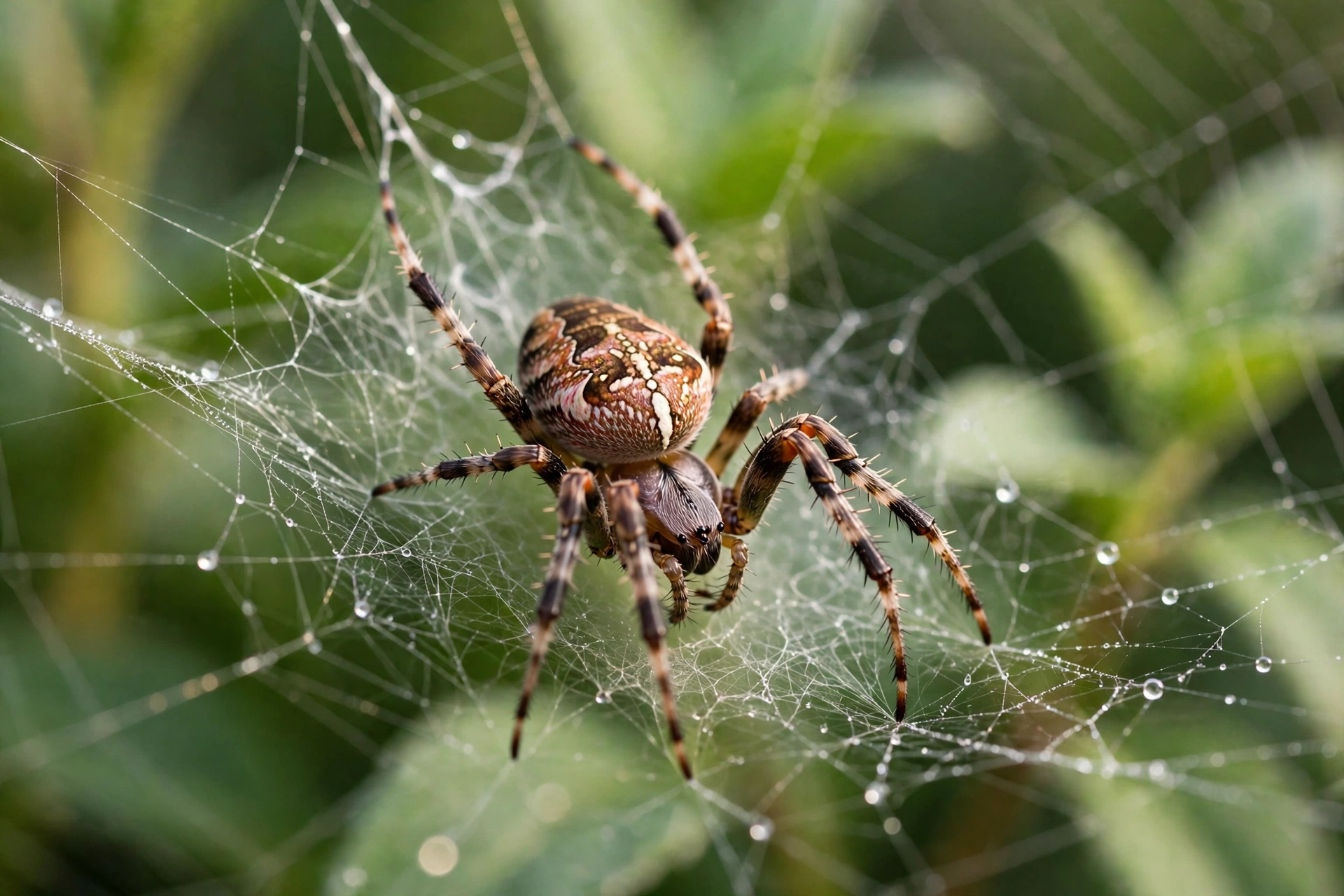
Do Spiders Have 8 Legs? 15 Amazing Spider Facts answers the question right away. Yes, spiders have 8 legs. Every spider in the world has eight legs, and that is one of the easiest ways to tell a spider from an insect, because insects have six legs. Spiders are not insects at all. They belong to a group called arachnids, along with scorpions, ticks and mites, and all arachnids have eight legs. If you see a small creature with eight legs, you are almost certainly looking at a spider or one of its close relatives.
Spiders are found on every continent except Antarctica, and they live in almost every habitat on Earth, from rainforests and deserts to gardens, houses and even the corners of your own home. There are more than fifty thousand known species of spider, and scientists believe there are many more still waiting to be discovered. Some spiders are smaller than a grain of rice, while others are as big as a dinner plate. Some spin beautiful webs, while others hunt on foot like tiny wolves. This guide shares fifteen amazing facts that show why spiders are far more interesting, and far less frightening, than most people think.
What Makes Spiders Special
Spiders are special because they are so different from the animals we know best. They have no wings and no antennae. They have eight legs, two main body parts and up to eight eyes. They make silk that is stronger than steel of the same thickness, and they use it to build homes, to catch food, to wrap their eggs and even to fly through the air on the wind. No other animal makes a material quite like spider silk.
Spiders are also special because of the job they do in nature. They are the most important predators of insects in the world, and without them, insect numbers would explode and crops would suffer badly. A single spider can eat hundreds of insects in a year, and all the spiders in the world together eat more insects than all the birds and bats combined. Spiders are shy animals that would much rather run away than bite a person, and most of them are completely harmless to us. Once you understand them, it is hard not to admire them.
1. Spiders Have 8 Legs Because They Are Arachnids
The reason spiders have eight legs is that they are arachnids, not insects. Insects have six legs, three body parts and antennae, while spiders have eight legs, two body parts and no antennae at all. The two body parts are called the cephalothorax, which holds the head and the legs, and the abdomen, which holds the silk glands and most of the internal organs. This body plan is shared by scorpions, harvestmen, ticks and mites, and it has worked well for hundreds of millions of years.
Having eight legs gives spiders a real advantage. It helps them balance on thin silk threads, climb smooth walls and ceilings, and move quickly in any direction, including sideways and backwards. Each leg has seven segments and is covered in tiny hairs that can sense vibrations, smells and even tastes. If a spider loses a leg in a fight or an accident, it can sometimes grow a new one when it moults, which is the process of shedding its old skin. Young spiders can regrow a lost leg more easily than older ones.
2. Spiders Have Been Around for More Than 300 Million Years
Spiders are ancient animals. The first spiders appeared more than 300 million years ago, long before dinosaurs walked the Earth, and long before the first birds or mammals existed. The earliest spiders lived in the forests of the Carboniferous period, when the world was warm and humid and giant insects flew through the air. Fossils of early spiders have been found in rocks and in amber, and they show that spiders have changed very little in their basic design since then.
This long history is a sign of how well the spider body plan works. While dinosaurs came and went, and while whole groups of animals rose and fell, spiders kept on hunting, spinning silk and raising their young in much the same way. They survived the mass extinction that killed the dinosaurs, and they spread to almost every land habitat on Earth. Today, spiders are one of the most successful groups of animals on the planet, and they are found from sea level to high mountain tops.
3. Most Spiders Have Eight Eyes, But They Do Not All See Well
Most spiders have eight eyes, arranged in two rows on the front of the cephalothorax, but not all spiders see the world in the same way. Jumping spiders have excellent eyesight, and they can see in colour and judge distances well enough to leap onto their prey with great accuracy. Wolf spiders also have good eyesight, and their eyes shine green at night when a light is held near them. But many web building spiders have very poor eyesight, and they depend almost entirely on feeling vibrations in their webs.
Some spiders have fewer than eight eyes. Some cave spiders have six eyes, and some spiders that live in total darkness have no eyes at all. The number and arrangement of the eyes is one of the ways scientists tell spider families apart. The eyes of a spider do not move like ours do, and the spider cannot focus them in the same way. Instead, different pairs of eyes do different jobs. Some are good at spotting movement, while others are better at seeing shapes and details.
4. Spider Silk Is Stronger Than Steel of the Same Thickness
Spider silk is one of the strongest natural materials in the world. A single strand of dragline silk, which is the silk spiders use for the frame of a web and for their safety line, is stronger than steel of the same thickness, and it is also more flexible. It can stretch by up to forty percent of its length before it breaks, which is why webs can absorb the impact of a flying insect without snapping. Scientists have tried for years to copy spider silk, and it is still hard to make anything as good.
Spiders do not make just one kind of silk. Most spiders can produce up to seven different types, each with a different job. There is strong silk for the frame of the web, sticky silk for catching prey, soft silk for wrapping eggs, and fine silk for making a shelter. A spider makes silk in glands inside its abdomen, and the silk comes out through tiny nozzles called spinnerets. The silk starts as a liquid and turns solid as soon as it touches the air, which is a remarkable piece of natural engineering.
5. Not All Spiders Spin Webs
Many people think all spiders spin webs, but that is not true. Only about half of all spider species build webs to catch their food. The rest are hunters that chase, stalk or ambush their prey. Wolf spiders hunt on foot, chasing down insects with speed and sharp eyesight, just like wolves. Jumping spiders stalk their prey and then leap onto it from a short distance. Crab spiders sit on flowers and wait for a bee or a butterfly to land within reach.
Even spiders that do build webs use many different designs. Orb weavers build the classic round web that most people picture. Funnel weavers build a flat sheet of silk with a funnel shaped retreat at one corner, where the spider waits. Cobweb spiders build a messy tangle of threads in the corner of a room. Some spiders, like the bolas spider, do not build a web at all. Instead, they swing a single thread with a sticky ball on the end, like a fishing line, to catch moths in mid air.
6. Almost All Spiders Are Venomous, But Very Few Are Dangerous to People
Almost all spiders have venom, and they use it to paralyse or kill their prey. Spiders cannot chew their food, so they inject venom and digestive juices into their prey, which turns the inside of the insect into a liquid that the spider can drink. This sounds frightening, but it is important to remember that spider venom is made for small insects, not for people. Most spiders are far too small to bite through human skin, and those that can bite usually cause no more pain than a bee sting.
Only a very small number of spiders are dangerous to people. The black widow, the Brazilian wandering spider, the Sydney funnel web spider and a few others have venom that can make a person seriously ill, and they should be treated with respect. Even so, deaths from spider bites are extremely rare, and far fewer people die from spider bites each year than from bee stings. Spiders are shy animals, and they bite people only when they feel trapped, for example when they are pressed against the skin inside clothing. They would much rather run away.
7. Spiders Have Blue Blood
Spiders have blue blood, and so do many other animals with the same kind of blood chemistry. Human blood is red because it uses iron to carry oxygen, but spider blood uses copper instead, and copper turns blue when it carries oxygen. The blue liquid in a spider is called hemolymph, and it does the job of both blood and the fluid that fills the spaces between the organs. It carries oxygen and nutrients around the body, and it also helps the spider move.
Spiders do not have muscles that stretch their legs outwards. Instead, they use the pressure of their hemolymph to extend their legs, a little like a hydraulic machine. When a spider dies, this pressure drops, which is why dead spiders often curl their legs inwards. Spiders also have a heart that pumps hemolymph around the body, and they breathe through small openings called book lungs, which look like the pages of a book, and through tiny tubes. It is a very different body from ours, and it works very well for a small animal.
8. Spiders Taste and Smell With Their Feet
Spiders taste and smell with their feet, because their legs are covered in tiny sensory hairs that can detect chemicals, vibrations and air movements. When a spider walks across a surface, it is also tasting that surface, and it can tell whether it is walking on a leaf, a rock or the silk of another spider. A web building spider can feel the tiniest vibration in its web, and it can tell from the pattern of the vibration whether the thing that touched the web is a fly, a leaf or a possible mate.
This sense of touch is so important that spiders have special organs at the tips of their legs that work like a combination of a nose and a tongue. Male spiders use these organs to find females, because female spiders leave chemical signals on their silk that tell males they are ready to mate. A male spider may follow a silk thread for a long distance to find a female, and he must be careful, because a female may mistake him for prey if he does not approach in the right way.
9. Male Peacock Spiders Dance to Impress Females
Male peacock spiders perform one of the most beautiful dances in the animal world. These tiny Australian jumping spiders are only a few millimetres long, but the males have brightly coloured flaps on their abdomens that they raise like a peacock’s tail. When a male finds a female, he raises his colourful fan, waves his legs in the air and dances from side to side, all to the rhythm of tiny vibrations he makes on the ground.
The dance is not just for show. It is a matter of life and death for the male, because the female may eat him if she is not impressed. Scientists have found that females prefer males that dance longer and with more energy, and they often choose the best dancer. Each species of peacock spider has its own colours and its own dance, and more than a hundred species have been discovered so far. They are a wonderful example of how much beauty can fit into an animal smaller than your fingernail.
10. Baby Spiders Can Fly on Silk Threads
Baby spiders can fly, even though they have no wings. When young spiders are ready to leave their birthplace, they climb to a high point, raise their abdomens into the air and release one or more threads of silk. The wind catches the silk and carries the spider away, sometimes for hundreds of kilometres. This is called ballooning, and it is how spiders spread to new places, including islands that have just formed and fields that have just been ploughed.
Ballooning spiders have been found high in the atmosphere, more than four kilometres above the ground, and they have been seen landing on ships far out at sea. Charles Darwin watched ballooning spiders land on his ship, the Beagle, when he was sixty kilometres from land, and he was amazed by how far they could travel. Ballooning is risky, because the spider cannot control where it lands, but it is a very effective way for a small animal to find a new home.
11. Spiders Moult Their Skin as They Grow
Spiders moult their skin as they grow, because their outer skeleton, called the exoskeleton, does not grow with them. When a spider gets too big for its old skin, it splits the old skin open and crawls out, soft and pale, with a new skin underneath. The new skin is soft at first, and the spider is weak and vulnerable until it hardens, which can take hours. During this time the spider hides in a safe place.
A young spider may moult many times as it grows, and each moult lets it grow a little bigger. An adult spider usually stops moulting, although some species, like tarantulas, keep moulting throughout their lives. Moulting is also how a spider can regrow a lost leg. A young spider that loses a leg can grow a new one over the next few moults, although the new leg may be a little smaller than the original. The empty skin left behind after a moult is called an exuvia, and it looks like a perfect hollow copy of the spider.
12. The Largest Spider Is the Goliath Birdeater
The largest spider in the world is the Goliath birdeater, a tarantula from the rainforests of South America. It can have a leg span of up to thirty centimetres, which is about the size of a dinner plate, and it can weigh more than 170 grams, which is as heavy as a small puppy. Despite its name, it rarely eats birds. It mostly eats large insects, frogs, lizards and small rodents, and it hunts on the forest floor at night.
The Goliath birdeater is not dangerous to people, although its bite is painful and its hairs can irritate the skin. When it feels threatened, it rubs its back legs against its abdomen to release a cloud of tiny barbed hairs, which can sting the eyes and skin of an attacker. It also makes a hissing sound by rubbing its legs together, which is loud enough to be heard from several metres away. Female Goliath birdeaters can live for more than twenty years, which is a very long life for a spider.
13. The Smallest Spiders Are Smaller Than a Grain of Sand
The smallest spiders in the world are smaller than a grain of sand. The tiny spider Patu digua from Colombia is one of the smallest known spiders, with a body length of less than half a millimetre. It is so small that it can walk on the head of a pin. Another tiny spider, Anapistula caecula from West Africa, is also less than half a millimetre long, and it has no eyes at all because it lives in the dark.
These tiny spiders live in leaf litter on the forest floor, where they hunt even tinier animals like springtails and mites. They build webs that are only a few centimetres across, and they are almost impossible to see without a magnifying glass. Scientists are still discovering new species of tiny spiders, and many of them live in places that have never been properly studied. The smallest spiders show that there is a whole world of animals that most people never notice, simply because they are too small to see.
14. Spiders Eat an Enormous Number of Insects Every Year
Spiders eat an enormous number of insects every year. Scientists have estimated that all the spiders in the world together eat between 400 and 800 million tonnes of insects and other small animals each year. That is more than the weight of all the meat eaten by all the people in the world in a year. Spiders are the most important predators of insects on land, and they play a vital role in keeping insect numbers under control.
This matters for farmers, because many of the insects that spiders eat are pests that damage crops. A field with plenty of spiders needs fewer pesticides, and the crops are healthier as a result. Gardeners also benefit, because spiders in the garden eat aphids, flies and other pests. A single spider in a house can eat hundreds of flies and other insects in a year, which is why it is often better to leave a house spider alone, or to catch it gently and put it outside, rather than killing it.
15. Some Spiders Live for More Than 40 Years
Some spiders live for a very long time. The longest lived spider on record was a trapdoor spider in Australia, known as Number 16, which lived for 43 years. She was studied by scientists for her whole life, and she spent almost all of it in the same burrow, coming out only at night to catch prey. When she died, she was the oldest known spider in the world, and her long life showed that spiders can be far more long lived than most people think.
Most spiders live for only one or two years, and many male spiders die soon after mating. But female tarantulas and trapdoor spiders can live for twenty years or more, because they grow slowly and they live in safe burrows where predators cannot easily reach them. A long life lets a female spider produce many egg sacs, and each egg sac can hold hundreds of baby spiders. The trapdoor spider Number 16 produced many egg sacs during her 43 years, and her burrow was home to generations of her young.
Surprising Facts
Spiders hide many surprises beyond the fifteen facts above. A spider’s silk is stronger than steel of the same thickness, yet it is made from protein and water. A jumping spider can see in colour and judge distances well enough to leap many times its own body length. A bolas spider catches moths with a single sticky ball on a thread, like a fisherman with a line. A diving bell spider lives underwater, carrying a bubble of air with it like a tiny diving bell, and it is the only spider that spends almost its whole life below the surface.
Other surprises are just as striking. A spider’s blood is blue, because it uses copper to carry oxygen. A baby spider can fly for hundreds of kilometres on a thread of silk, with no wings at all. A male peacock spider dances in bright colours to win a mate, and the dance can save his life. A female trapdoor spider can live for 43 years in the same burrow. Together, these facts show that spiders are far more clever, colourful and surprising than their reputation suggests, and they deserve respect rather than fear.
Frequently Asked Questions
Do spiders have 8 legs?
Yes, spiders have 8 legs. Every spider in the world has eight legs, because spiders are arachnids, not insects. Insects have six legs, while spiders, scorpions, ticks and mites all have eight legs. If you count eight legs on a small creature, you are almost certainly looking at a spider or one of its close relatives.
Are spiders insects?
No, spiders are not insects. Spiders are arachnids, a different group of animals. Insects have six legs, three body parts and antennae, while spiders have eight legs, two body parts and no antennae. Spiders are more closely related to scorpions and ticks than they are to ants, bees or beetles.
Do all spiders spin webs?
No, not all spiders spin webs. Only about half of all spider species build webs to catch food. The rest are hunters that chase, stalk or ambush their prey. Wolf spiders hunt on foot, jumping spiders stalk and leap onto their prey, and crab spiders wait on flowers for bees and butterflies to land within reach.
Are spiders dangerous to people?
Most spiders are not dangerous to people at all. Almost all spiders have venom, but it is made for small insects, and most spiders cannot bite through human skin. Only a very small number of species, like the black widow and the Sydney funnel web spider, have venom that can make a person seriously ill, and deaths from spider bites are extremely rare.
What should I do if I find a spider in my house?
If you find a spider in your house, the best thing to do is to leave it alone or to catch it gently in a glass with a piece of card and put it outside. House spiders eat flies and other insects, and they help to keep your home free of pests. Spiders are shy animals that would much rather run away than bite, so there is no need to be afraid of them.
Conclusion
Do Spiders Have 8 Legs? 15 Amazing Spider Facts shows that the answer is yes, and that eight legs are only the start of the story. Spiders have been around for more than 300 million years, they make silk stronger than steel, they can fly on threads of silk, dance in bright colours and live for more than forty years. They are the most important predators of insects in the world, and they do a job that helps farmers, gardeners and everyone who eats food grown in fields. The next time you see a spider, take a moment to look at it properly. Count its eight legs, watch how it moves, and remember that you are looking at one of the most successful and surprising animals on Earth.