Top 20 Animals That Start With V
Top 20 Animals That Start With V brings together some of the most surprising creatures in the animal kingdom, from the soaring vulture to the tiny vaquita, the rarest porpoise on Earth. The letter V may not start as many animal names as C or S, but the animals it does start are full of character. Some are famous, some are almost unknown, and some look like they walked out of a storybook. In this guide you will meet 20 real animals that start with V, learn where they live, what they eat, and what makes each one worth knowing. Whether you are a student building a list for school, a parent helping with homework, or simply curious about wildlife, this list gives you clear facts and a useful comparison at the end so you can see how these very different animals stack up against each other.
1. Vulture
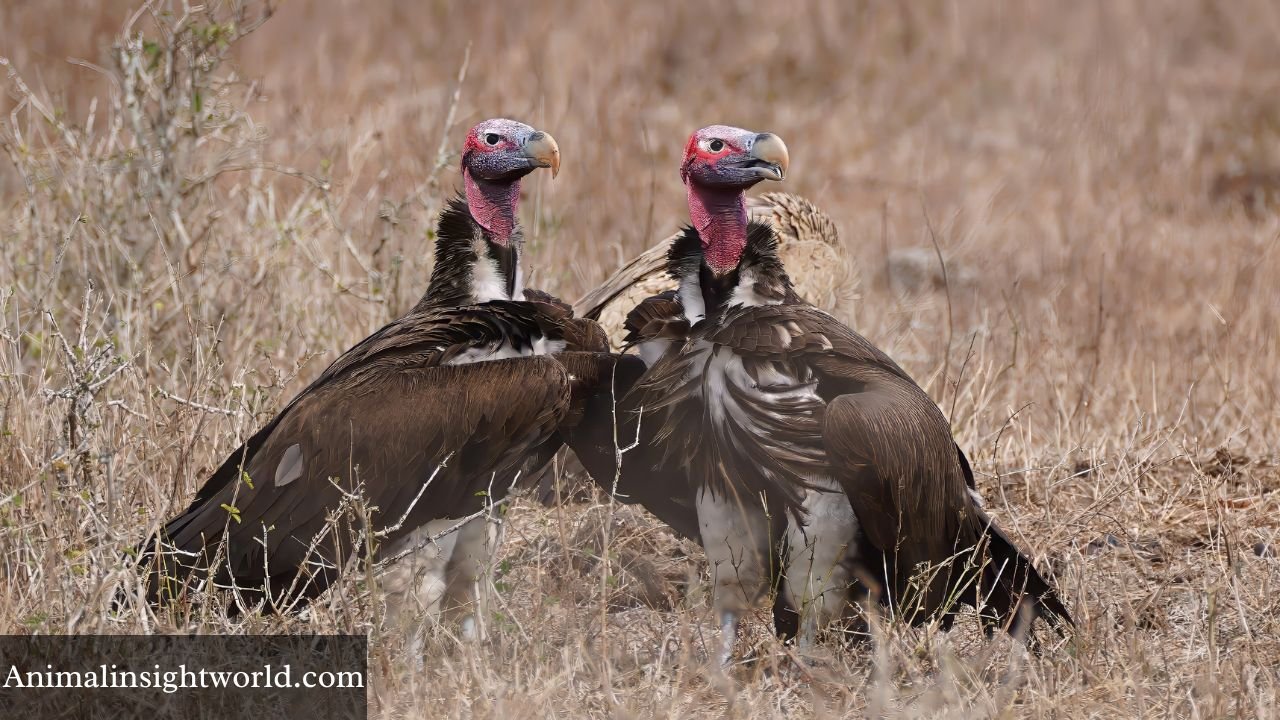
The vulture is one of the best known animals that start with V, and it is also one of the most misunderstood. Vultures are large birds of prey with broad wings, strong hooked beaks, and a bald or lightly feathered head that helps them stay clean while they feed. They do not hunt live animals in the way eagles do. Instead, they feed on carrion, which is the flesh of animals that have already died. This job sounds unpleasant, but it is vital for nature. By cleaning up dead animals quickly, vultures stop diseases from spreading through the landscape, and they help recycle nutrients back into the soil.
Vultures live on every continent except Australia and Antarctica, and they come in many forms, from the huge Andean condor of South America to the white backed vulture of Africa and the griffon vulture of Europe and Asia. They are masters of the sky, and they can soar for hours on warm rising air without flapping their wings, scanning the ground below with eyesight far sharper than ours. A vulture can spot a small carcass from several kilometres away. Many vulture species are now in trouble, because of poisoned carcasses, habitat loss, and collisions with power lines, and conservation groups around the world are working hard to protect them.
2. Viper
The viper is a venomous snake found across Europe, Asia, Africa, and the Americas, and it is one of the most famous snakes in the world. Vipers are known for their long, hinged fangs, which fold back against the roof of the mouth when not in use and swing forward in a flash when the snake strikes. This folding fang system lets vipers carry very long fangs in a compact head, and it makes their bite fast and effective. Most vipers are ambush hunters. They sit still and camouflaged for hours, waiting for a mouse, frog, or small bird to wander close, and then they strike in a fraction of a second.
There are many kinds of viper, from the common adder of Europe to the saw scaled viper of Asia and Africa and the rattlesnakes of the Americas, which are a kind of pit viper with heat sensing pits on their faces. Vipers are usually shy and would rather escape than bite a person, and most bites happen when someone steps on a snake by accident or tries to pick it up. Their venom is mainly used to subdue prey, and it starts to digest the prey from the inside. If you ever see a viper in the wild, the safe and respectful thing to do is to give it space and watch from a distance.
3. Vicuna
The vicuna is a graceful relative of the llama and the alpaca, and it lives high in the Andes mountains of South America, in Peru, Bolivia, Chile, and Argentina. It is one of the smallest members of the camel family, standing about 90 centimetres tall at the shoulder, with a slender body, a long neck, and a coat of soft cinnamon brown wool with a pale belly. Vicunas live at altitudes of 3,200 to 4,800 metres, where the air is thin and cold, and their thick wool keeps them warm through freezing Andean nights.
The vicuna is famous for its wool, which is one of the finest and most expensive natural fibres in the world. A vicuna produces only a small amount of wool each year, and it was once hunted almost to extinction for that wool. In the 1960s, fewer than 10,000 vicunas remained. Thanks to strong protection laws and community managed shearing, in which wild vicunas are rounded up, gently shorn, and released, the population has recovered to several hundred thousand. The vicuna is also a national symbol of Peru, and it appears on the Peruvian coat of arms. It is a shy, alert animal that lives in family groups led by a single male, and it can run at speeds of nearly 50 kilometres per hour when danger appears.
4. Vole
The vole is a small rodent that looks a little like a mouse, but with a shorter tail, a rounder body, and a blunter face. Voles live in grasslands, meadows, marshes, and woodland edges across Europe, Asia, and North America. There are more than 150 species of vole, including the field vole, the meadow vole, the bank vole, and the water vole, which was made famous in the book The Wind in the Willows as the character Ratty. Voles are busy animals, and they spend their lives tunnelling through grass and soil, building nests, and gathering seeds, roots, stems, and bark.
Voles may be small, but they are a vital part of the food web. Owls, kestrels, foxes, stoats, and snakes all depend on voles as a major food source, and vole numbers rise and fall in cycles that shape the fortunes of their predators. A single female vole can have several litters of young in one year, which is why their populations can grow very fast in a good summer. Voles are also excellent engineers, and their tunnels and runways help to aerate the soil and spread plant seeds. If you walk through a meadow and see tiny paths worn through the grass at ground level, you are probably looking at a vole highway.
5. Vervet Monkey
The vervet monkey is a clever, social monkey from Africa, easily recognised by its grey green fur, black face, and long tail. Vervet monkeys live in groups called troops, which can contain anywhere from 10 to 50 animals, and they spend their days foraging for fruit, leaves, flowers, seeds, and insects, grooming each other, and playing. They are highly intelligent, and researchers have discovered that vervet monkeys use different alarm calls for different predators, one call for a leopard, another for an eagle, and another for a snake, and the rest of the troop responds in the right way, climbing a tree for a leopard, looking up for an eagle, or standing on two legs to scan the grass for a snake.
Vervet monkeys live across southern and eastern Africa, from Senegal to South Africa, and they are very adaptable, living in savannas, woodlands, and even near towns and farms. They are excellent climbers and swimmers, and they sleep in trees at night for safety. Young vervets learn by watching the adults, and mothers carry their babies close for the first few months of life. Vervets are also known for their expressive faces and their habit of sitting in a row on a branch in the morning sun, warming up before the day begins. They remind us that monkeys are not just entertaining, they are deeply social animals with real communication skills.
6. Vampire Bat
The vampire bat is a small bat from Central and South America, and it is the only mammal that feeds entirely on blood. There are three species of vampire bat, and the common vampire bat feeds mainly on the blood of mammals such as cattle, horses, and pigs, while the other two species feed on birds. Vampire bats are much smaller than most people imagine, with a wingspan of about 20 centimetres and a body about the size of a thumb. They are also surprisingly agile on the ground, and they can walk, run, and even jump using their strong thumbs and hind legs.
A vampire bat feeds by landing near a sleeping animal, using heat sensors on its nose to find a good blood vessel close to the skin, and then making a small, painless bite with razor sharp teeth. Its saliva contains a substance that stops the blood from clotting, so the bat can lap up the blood with its tongue. A vampire bat drinks about two teaspoons of blood per night, and it needs to feed every night or it can starve within a few days. Vampire bats are also generous with each other, and a bat that has fed well will share regurgitated blood with a hungry roost mate, a rare act of kindness in the animal world. Despite their spooky reputation, vampire bats are important, and scientists study their saliva for medicines that help treat strokes.
7. Vaquita
The vaquita is the smallest porpoise in the world, and also the rarest marine mammal on Earth. It is a small, shy creature, about 1.5 metres long, with a dark ring around each eye and dark lips that give it a permanent little smile. Vaquitas live only in one place, the northern part of the Gulf of California in Mexico, and nowhere else in the world. They were only discovered by scientists in 1958, and for many years very little was known about them, because they are quiet, avoid boats, and surface only briefly to breathe.
The vaquita is now in desperate danger. Fewer than 20 individuals are thought to remain, and the main threat is illegal fishing nets set for another fish, the totoaba, whose swim bladder is sold for high prices. Vaquitas get caught in these gillnets by accident and drown. Mexico has banned gillnets in the vaquita’s home range, and conservation groups are working to remove illegal nets and protect the remaining animals, but the vaquita’s future is still uncertain. The vaquita has become a symbol of how quickly a species can slide toward extinction, and of how much effort it takes to pull one back. Every vaquita matters, and protecting this tiny porpoise is one of the most urgent conservation jobs in the world today.
8. Velvet Worm
The velvet worm is one of the strangest and oldest animals on this list, and it has barely changed in hundreds of millions of years. It is not a worm at all, but a soft bodied creature with a velvety skin, many pairs of small stubby legs, and two small antennae on its head. Velvet worms live in damp forests in the Southern Hemisphere, in places such as Australia, New Zealand, South Africa, and South America, hiding under logs and leaves during the day and coming out at night to hunt.
The velvet worm hunts in a remarkable way. When it finds a small insect or other invertebrate, it squirts two jets of sticky slime from glands on its head, trapping its prey in a net of glue. It then bites the prey and sucks out the soft insides, leaving the hard shell behind. The slime is so effective that scientists are studying it to design new kinds of glue. Velvet worms breathe through tiny holes in their skin, which is why they need damp places to live, and they are very sensitive to drying out. They are living fossils, giving us a window into what animal life looked like long before dinosaurs walked the Earth.
9. Volcano Rabbit
The volcano rabbit, also known as the teporingo or the zacatuche, is a small rabbit that lives only on the slopes of four volcanoes near Mexico City. It is the second smallest rabbit in the world, about 30 centimetres long, with short ears, a short tail, and a dark brown coat. Unlike most rabbits, which live in open grassland or desert, the volcano rabbit lives in dense pine forest and alpine grassland at altitudes of 2,800 to 4,250 metres, where it eats a grass called zacaton and hides in thick clumps of vegetation.
The volcano rabbit is endangered, because its habitat is shrinking as forests are cleared, grasslands are burned, and Mexico City spreads outward. Its total range is now smaller than many cities, and its population is fragmented into small groups that cannot easily reach each other. Conservationists are working to protect the remaining pine forests and grasslands on the volcanoes, and to reconnect the patches of habitat so the rabbits can move and breed safely. The volcano rabbit is a reminder that some animals live in only one tiny place on Earth, and that protecting that place is the only way to save them.
10. Vietnamese Mossy Frog
The Vietnamese mossy frog is a master of disguise, and it is one of the most beautiful frogs in the world. Its skin is mottled in greens, browns, and blacks, with bumpy textures that look exactly like moss growing on a rock, and when it sits still among the mossy rocks of a Vietnamese mountain stream, it is almost impossible to see. This camouflage protects it from predators, and it also helps it ambush the insects and other small creatures it eats. The frog grows to about 9 centimetres long, and its large eyes and wide feet with sticky pads help it climb wet rocks and cling to vegetation.
Vietnamese mossy frogs live in the rainforests of northern Vietnam, and they are also found in parts of China. They breed in streams and in water filled tree holes, and the males call at night with a soft, low voice. In recent years, these frogs have become popular in the pet trade, and too many have been taken from the wild, which is why they are now protected. In captivity, they are kept by specialist frog keepers who recreate their cool, damp mountain habitat. The mossy frog shows how evolution can turn an animal into a living piece of its landscape, so perfect that you can look straight at it and still miss it.
11. Violet-backed Starling
The violet backed starling is one of the most colourful starlings in Africa, and the male is a living jewel. His back, head, and throat shine with a deep metallic purple violet colour that changes in the sunlight, while his belly is clean white. The female looks quite different, with a streaked brown back and a speckled belly, which is a good example of how male and female birds of the same species can look like two different birds. Violet backed starlings live in woodlands and savannas across sub Saharan Africa, and they are also known as the plum coloured starling or the amethyst starling.
These starlings feed on fruit, insects, and nectar, and they often gather in small flocks, moving through the trees with quick, chattering calls. They nest in holes in trees, sometimes in old woodpecker holes, and both parents help to feed the chicks. Violet backed starlings are migratory in parts of their range, moving with the seasons to follow food, and they are a favourite sight for birdwatchers visiting Africa. Their vivid colour comes from the microscopic structure of their feathers, which reflects light in a special way, rather than from a pigment in the feather itself. It is a reminder that nature can produce colours no paint could ever match.
12. Virginia Opossum
The Virginia opossum is the only marsupial that lives wild in North America, and it is a remarkable survivor. A marsupial is a mammal that carries its tiny babies in a pouch, like a kangaroo, and the Virginia opossum’s babies are born the size of a honeybee, crawling into their mother’s pouch to finish growing. Adult opossums are about the size of a house cat, with grey fur, a pink nose, a long naked tail that can grip branches, and a face that looks a little like a rat, which is unfair, because opossums are gentle, useful animals.
Virginia opossums live from Canada to Central America, and they are famous for playing dead when they are frightened. If a predator grabs an opossum, the animal may go limp, close its eyes, open its mouth, and even produce a foul smell, convincing the predator that it is already dead and not worth eating. Opossums are also nature’s cleaners, eating ticks, slugs, snails, fallen fruit, and carrion, and a single opossum can eat thousands of ticks in a season. They are resistant to snake venom, they rarely carry rabies because their body temperature is too low for the virus to thrive, and they are one of the few animals that can eat a venomous snake and walk away unharmed. They deserve far more respect than they get.
13. Viceroy Butterfly
The viceroy butterfly is a beautiful orange and black butterfly from North America, and it is famous for a clever trick. For many years, scientists believed that the viceroy was a harmless copy of the monarch butterfly, which tastes bad to predators because it feeds on milkweed as a caterpillar. The viceroy looks so much like a monarch that birds leave it alone, thinking it will taste bad too. Later research showed that the viceroy is actually distasteful in its own right, so the two butterflies are both protected by their bad taste, and they reinforce each other’s warning colours. This is called Mullerian mimicry, and it is one of the best examples of it in nature.
Viceroy butterflies live near wetlands, streams, and lakes, where their caterpillars feed on willow, poplar, and aspen leaves. The caterpillars are also clever, and they look like bird droppings, which is a very effective disguise. Adult viceroys feed on nectar from flowers, and they are strong fliers that can be seen from spring through autumn across the United States, Canada, and Mexico. You can tell a viceroy from a monarch by a thin black line that runs across the hindwing of the viceroy, a line the monarch does not have. It is a small detail, but it is the key to telling these two lookalikes apart.
14. Hook-billed Vanga
The hook billed vanga is a striking bird from Madagascar, and it is one of the most unusual members of the vanga family, a group of birds found only on that island. It is a medium sized bird, about 30 centimetres long, with blue grey upperparts, a white belly, and a huge pale bill that ends in a strong hook. That bill is its main tool, and it uses it to tear apart dead wood and bark, searching for insects, lizards, and other small animals hiding inside. It is so good at this job that other birds often follow it around, hoping to catch the insects it disturbs.
Hook billed vangas live in the dry forests and spiny forests of western and southern Madagascar, and they usually live in pairs or small family groups. They are shy birds, and they keep to the middle and upper levels of the forest, moving slowly through the branches as they search for food. Madagascar is home to many animals found nowhere else on Earth, and the vanga family is one of the best examples, with 22 species that have evolved to fill many different roles, from shrike like hunters to nuthatch like bark probers. The hook billed vanga is a reminder of how isolation on an island can produce a whole family of birds found nowhere else.
15. Velvet Ant
The velvet ant is not an ant at all, but a kind of wasp, and the females are wingless, furry, and brightly coloured in red, orange, and black. That fur gives them their name, because they look as if they are covered in soft velvet. Velvet ants live in dry, sandy places across the world, and the females run quickly across the ground, searching for the nests of bees and other wasps. When a female finds a nest, she lays her eggs inside, and her larvae feed on the bee larvae they find there.
Velvet ants are famous for their sting, which is said to be one of the most painful insect stings in the world. They are sometimes called cow killers, although that name is an exaggeration, and no cow has ever been killed by one. The sting is a warning to predators, and the bright colours are a warning too, telling other animals to leave them alone. Male velvet ants have wings and can fly, but they do not sting. Velvet ants are solitary, and they do not build colonies like real ants. They are a good reminder that names in nature can be misleading, and that the most interesting animals are often the ones that break the rules.
16. Venezuelan Poodle Moth
The Venezuelan poodle moth is one of the strangest insects ever discovered, and it looks like a tiny white poodle with wings. It was discovered in 2009 in the Gran Sabana region of Venezuela, and it has a fluffy white body, large black eyes, and feathery antennae. It is only about 2 centimetres long, but photographs of it went viral around the world, because it looks so unlike any moth most people have seen. Scientists believe it is related to a group of moths called the flannel moths, which are also known for their furry bodies.
Very little is known about the Venezuelan poodle moth, because it has only been seen a few times, and no one has studied its life cycle in detail. It is thought that its caterpillars, like other flannel moth caterpillars, may have stinging hairs, but this has not been confirmed. The moth lives in a remote and beautiful part of Venezuela, in a landscape of flat topped mountains and grasslands, and its discovery shows how many species are still waiting to be found, even in the age of satellites and smartphones. There may be thousands of insects like it, living quietly in places few people ever visit.
17. Vancouver Island Marmot
The Vancouver Island marmot is a large ground squirrel that lives only on Vancouver Island in Canada, and it is one of the rarest mammals in North America. It is a chunky animal, about 70 centimetres long including its tail, with dark brown fur, a white chest, and a loud, whistling alarm call that warns other marmots of danger. Marmots live in alpine meadows, where they dig deep burrows, eat grasses and wildflowers, and hibernate for eight months of the year, sleeping through the long Canadian winter.
By the early 2000s, the Vancouver Island marmot was on the edge of extinction, with fewer than 30 animals left in the wild. A captive breeding programme, run by zoos and conservation groups, has brought the species back from the brink, and hundreds of marmots have now been released back into the wild. The recovery is still fragile, and marmots face threats from predators, habitat change, and climate warming, which shortens the alpine summer they need to fatten up for hibernation. The marmot’s story is one of the great conservation successes of Canada, and it shows what can happen when people work together to save a species that lives in only one place.
18. Vulturine Guineafowl
The vulturine guineafowl is a large, beautiful bird from East Africa, and it is the largest and most colourful of all the guineafowl. It has a cobalt blue chest, a black and white striped body, a long neck, and a small bare head, which is why it is named after the vulture. It lives in dry savannas and scrubland in Kenya, Ethiopia, Somalia, and Tanzania, and it spends most of its time on the ground, walking in groups and scratching for seeds, roots, and insects. When danger appears, it prefers to run rather than fly, and it can run fast on its long legs.
Vulturine guineafowl live in large flocks, sometimes of more than 100 birds, and they roost in trees at night for safety. They are noisy birds, with a loud, chattering call that carries across the savanna. They are also good parents, and the chicks follow their parents closely, learning what is safe to eat. Unlike many other guineafowl, vulturine guineafowl do not have spots, and their striped plumage makes them easy to recognise. They are a favourite sight on safari in Kenya, and they add a splash of blue to the dry golden grasslands of East Africa.
19. Violet Sabrewing
The violet sabrewing is one of the largest hummingbirds in Central America, and it is a stunning sight. The male is a deep, shimmering violet purple, with a long curved bill and long wings that give it its name, sabrewing, because the outer wing feathers are thick and curved like a sabre. It lives in the mountain forests of Mexico, Guatemala, Honduras, El Salvador, Nicaragua, Costa Rica, and Panama, where it feeds on the nectar of flowers, hovering in front of each bloom and drinking with its long tongue.
Violet sabrewings are aggressive for their size, and males will defend a patch of flowers from other hummingbirds, chasing intruders away with fast, darting flights. They are also important pollinators, carrying pollen from flower to flower as they feed, and helping the forest plants to reproduce. Female sabrewings are green above and grey below, and they build a tiny cup shaped nest out of moss and spider webs, where they raise two chicks no bigger than a thumbnail. Watching a violet sabrewing feed is like watching a jewel fly, and it is a highlight for anyone who visits the cloud forests of Central America.
20. Velvet Gecko
The velvet gecko is a small, soft skinned lizard from Australia, and it is one of the most charming geckos in the world. There are several species of velvet gecko, and they live in rocky outcrops, in tree bark, and in the walls of houses in eastern Australia. They are nocturnal, coming out at night to hunt insects, and their soft, velvety skin and large eyes give them a gentle appearance. Like many geckos, they have sticky toe pads that let them climb smooth surfaces, and they can lose their tail to escape a predator and grow a new one later.
Velvet geckos are also known for their social behaviour, which is unusual for a gecko. Some species live in family groups, with parents and young sharing the same rock crevice, and they communicate with each other using chirps and clicks. They are popular in the pet trade, but they are best left in the wild, where they play their part in controlling insect numbers. The velvet gecko closes our list with a reminder that the letter V covers animals from every corner of the animal kingdom, from birds and mammals to reptiles, insects, and sea creatures, and that each one has its own story worth telling.
How These V Animals Compare
Top 20 Animals That Start With V covers animals that could hardly be more different, and comparing them side by side makes those differences clear. The largest animals on the list are the vulture and the vicuna, both of which can weigh many kilograms and stand close to a metre tall, while the smallest are the velvet worm and the Venezuelan poodle moth, which are only a few centimetres long. In between sit the mid sized animals such as the vervet monkey, the Virginia opossum, and the volcano rabbit, each of them about the size of a small cat or a large rabbit.
Habitat is another big difference. The vaquita lives only in one small part of the sea in Mexico, the volcano rabbit lives only on four volcanoes near Mexico City, and the Vancouver Island marmot lives only on one island in Canada. By contrast, the vulture, the viper, and the vole are found across whole continents, and the vervet monkey ranges across much of Africa. Diet varies just as widely. Vultures and opossums are scavengers and cleaners, vipers and velvet worms are hunters, vicunas and voles are plant eaters, and vampire bats are the only animals on the list that feed on blood. Some of these animals are common and secure, such as the vole and the vervet monkey, while others are in serious danger, such as the vaquita, the volcano rabbit, and the Vancouver Island marmot. The list shows that the letter V contains both the ordinary and the extraordinary, and that size and fame have nothing to do with how important an animal is to its ecosystem.
Which V Animal Lives Longest
Long life is another way these animals differ. Vultures can live for more than 30 years in the wild, and some in captivity have lived past 40, which makes them one of the longest lived birds on this list. Vicunas can live for 15 to 20 years, and vervet monkeys for about 20 years in the wild. At the other end of the scale, most insects on the list, such as the viceroy butterfly and the velvet ant, live for only a few weeks or months as adults, although their full life cycle, including the caterpillar or larval stage, can be longer. The vaquita can live for about 20 years, which makes its decline even more tragic, because each animal that is lost takes two decades of life with it. The velvet worm can live for several years, which is long for such a small creature. These differences remind us that every animal lives on its own timescale, and that protecting an animal means protecting the whole span of its life.
Frequently Asked Questions About Animals That Start With V
What is the most famous animal that starts with V?
The most famous animal that starts with V is probably the vulture, because it appears in stories, films, and cartoons around the world, and because it is found on almost every continent. The vampire bat is also very famous, thanks to stories about vampires, and the viper is well known as a venomous snake. Among the less famous animals, the vaquita is becoming better known as people learn about its fight for survival.
What is the rarest animal that starts with V?
The rarest animal on this list is the vaquita, with fewer than 20 individuals thought to remain in the wild. The Vancouver Island marmot and the volcano rabbit are also very rare, with small populations living in only one place. All three are endangered, and all three depend on active conservation work to survive.
Are there any V animals that are pets?
Some V animals are kept as pets, but most are not suitable for a home. Vietnamese mossy frogs and velvet geckos are kept by specialist reptile and amphibian keepers, and the Virginia opossum is sometimes kept in wildlife rehabilitation centres. Vultures, vipers, vampire bats, and vaquitas should never be kept as pets, and in most countries it is illegal to keep them. Wild animals belong in the wild, and the best way to enjoy them is to watch them in nature or in a good zoo or wildlife centre.
What is the smallest animal that starts with V?
The smallest animals on this list are insects such as the Venezuelan poodle moth, which is about 2 centimetres long, and the velvet ant, which is about 2 centimetres long as well. The velvet worm is also very small, usually 3 to 5 centimetres long. Among vertebrates, the volcano rabbit is one of the smallest, at about 30 centimetres long, and the vaquita is the smallest porpoise in the world.
Do any V animals fly?
Yes, several V animals fly. Vultures are powerful fliers that can soar for hours, vampire bats fly at night, viceroy butterflies fly during the day, violet backed starlings and violet sabrewings fly, and the hook billed vanga flies through the forests of Madagascar. The vaquita swims rather than flies, and the vicuna, vole, and volcano rabbit are all land animals.
Final Thoughts on Animals That Start With V
From the soaring vulture to the tiny vaquita, from the blood drinking vampire bat to the moss disguised frog, animals that start with V are full of surprises. They live on every continent, in deserts, forests, mountains, and seas, and they fill every role in nature, from hunter to scavenger, from pollinator to prey. Some are common, some are rare, and some are fighting for survival, but all of them matter. If this list has introduced you to even one animal you did not know before, then it has done its job. Keep exploring, keep asking questions, and remember that every letter of the alphabet has its own wonders waiting to be discovered.