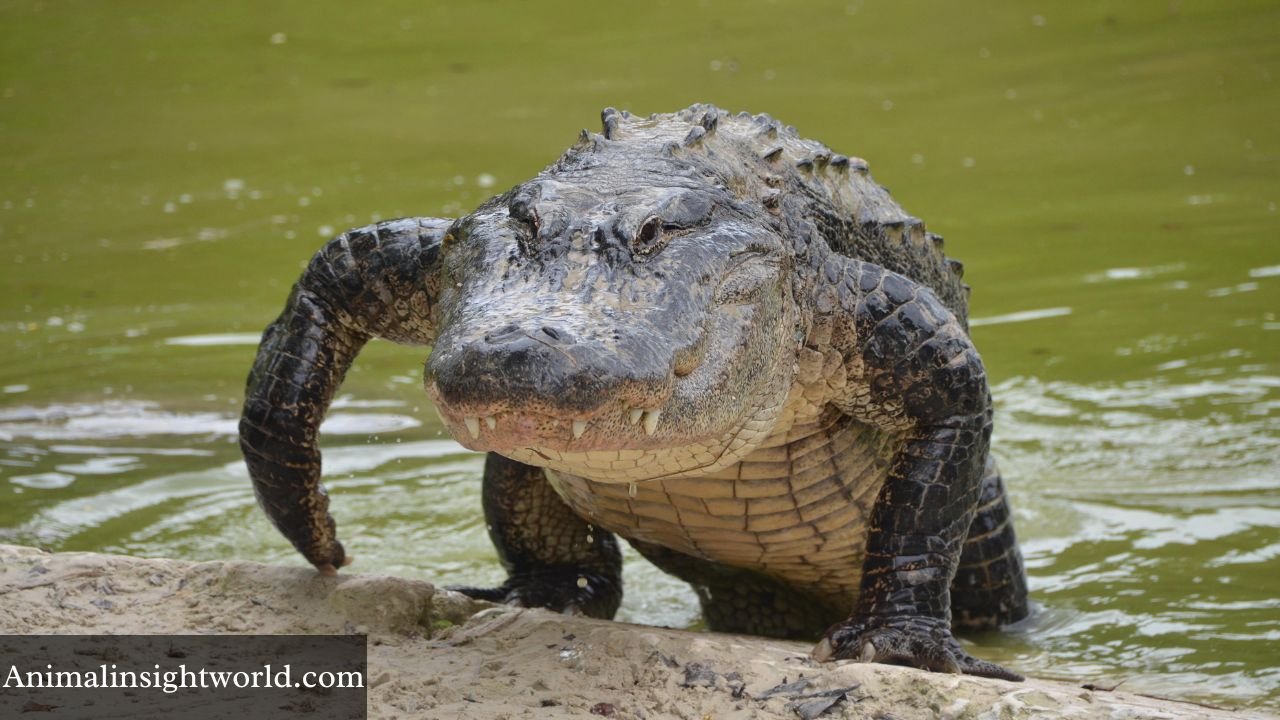
Do Alligators Eat People? 15 Amazing Alligator Facts
Introduction
Do Alligators Eat People? 15 Amazing Alligator Facts starts with the question everyone asks when they first see one of these powerful reptiles, and the honest answer is reassuring: no, alligators do not normally eat people. Alligator attacks on people are rare, and fatal attacks are rarer still. Alligators generally avoid people, and most bites happen when a person gets too close, tries to feed an alligator, swims in water where alligators live at night, or surprises a mother guarding her nest. An alligator is a wild predator that deserves respect and distance, but it is not a hunter of humans, and people who follow simple safety rules can share the same landscape with alligators for a lifetime without ever having a problem.
That does not mean alligators are harmless. They are strong, fast over short distances, and armed with one of the most powerful bites in the animal world. Understanding them is the best way to stay safe around them, and it is also the best way to appreciate what remarkable animals they are. Alligators have survived almost unchanged for millions of years, and they play a vital role in the wetlands where they live. This article answers the big question first, then shares fifteen amazing facts that show why the alligator is one of the most fascinating reptiles on Earth.
1. Alligators Have Been Around for Millions of Years
Alligators belong to a family of reptiles that has existed for more than 150 million years, which means their ancestors were alive at the same time as the dinosaurs. The American alligator we know today has changed very little over millions of years, because its body plan works so well. Its armoured skin, powerful tail, strong jaws and patient hunting style have helped it survive ice ages, changing climates and the rise and fall of countless other species.
Scientists call animals like the alligator living fossils, because they look much the same today as they did in the distant past. When you watch an alligator resting at the edge of a swamp, you are looking at an animal whose design has already passed the hardest test in nature: time. Very few animals can make that claim, and it is one of the reasons alligators fascinate biologists and wildlife lovers around the world.
2. An Alligator Can Grow Longer Than a Small Car
A full grown male American alligator can reach more than four metres in length and weigh over 450 kilograms, which is longer than most small cars and heavier than a grand piano. Females are smaller, usually growing to around three metres, but they are still powerful animals. The largest American alligator ever reliably measured was more than five metres long, and it was found in Alabama in 2014.
Alligators keep growing throughout their lives, although they grow more slowly as they get older. A young alligator grows quickly in its first few years, adding more than 30 centimetres a year when food is plentiful. Their size depends on food, temperature and habitat, and alligators in warmer places with plenty of prey tend to grow larger than those in colder or poorer wetlands.
3. Their Bite Is One of the Strongest in the Animal World
An alligator’s bite is among the most powerful of any living animal. Researchers have measured bite forces of more than 9,000 newtons in large American alligators, which is stronger than the bite of a lion or a tiger. Their jaws are built for crushing, and they can snap shut with enough force to break the shell of a turtle or the bones of a large fish. This power is what lets them catch and hold prey that would be too strong for most other predators.
Interestingly, the muscles that open an alligator’s jaws are much weaker than the ones that close them. A person could hold a large alligator’s mouth shut with their hands, although no one should ever try it. This weakness is why wildlife handlers can tape an alligator’s snout shut safely when they need to move one. The contrast is remarkable: a mouth that can crush bone can be held closed by a strip of tape, and that tells you a lot about how evolution shapes an animal for one job.
4. Alligators Can Live for More Than 50 Years
American alligators are long lived animals, and many of them survive for 50 years or more in the wild. In zoos and wildlife parks, where food is regular and there are no predators, some alligators have lived for more than 70 years. Their slow metabolism helps them live long, and they can go for weeks without eating when food is scarce, especially in cold weather when they become sluggish.
An alligator’s age is hard to judge from the outside, because they grow slowly and their skin shows few signs of ageing. Scientists estimate age by measuring size and by counting growth rings in bones, much like counting rings in a tree. A long life gives an alligator many breeding seasons, and a single female can produce hundreds of young over her lifetime, which helps keep the population healthy even though most baby alligators do not survive to adulthood.
5. Baby Alligators Chirp to Call Their Mother
When baby alligators hatch, they make high pitched chirping sounds from inside the egg, and the mother hears them and digs the nest open to help them out. This is one of the most touching sights in the reptile world. The mother alligator then carries her babies gently in her mouth down to the water, where they stay close to her for protection for up to two years.
Baby alligators are about 20 centimetres long when they hatch, and they have bright yellow stripes on their dark skin that help them hide among reeds and plants. They eat insects, small fish and frogs, and they grow quickly in their first year. The mother stays nearby and will charge at anything that threatens her young, which is one reason people are warned never to approach a nest or a group of baby alligators in the wild.
6. Alligators Help Build Their Own Wetlands
Alligators are not just residents of the wetlands. They are builders that shape the landscape around them. In the dry season, alligators dig deep holes in the mud called gator holes, and these holes hold water when the surrounding marsh dries out. Fish, frogs, turtles and birds all gather in gator holes to survive the dry months, and when the rains return, those animals spread back out across the wetland.
This makes the alligator a keystone species, which means many other animals depend on it. Without alligators, the wetlands of Florida and Louisiana would lose one of their most important sources of water in the dry season, and many species would suffer. It is a good reminder that even a feared predator can be a provider for the whole ecosystem around it.
7. They Can Survive Freezing Weather by Icing
Alligators are cold blooded, which means they cannot make their own body heat, yet they have a remarkable trick for surviving cold snaps. When a pond starts to freeze, an alligator will push its snout up through the surface of the water and let the ice form around it, keeping its nostrils above the ice so it can keep breathing. This behaviour is called icing, and it looks strange, but it works.
While icing, the alligator slows its body down almost to a stop. Its heart beats slowly, and it waits for the weather to warm up. Once the ice melts, the alligator swims away as if nothing happened. Alligators have been seen surviving in frozen ponds in North Carolina and Oklahoma, far north of where most people expect to find them. It is a survival skill that shows how tough these animals really are.
8. Alligators Can Run Fast on Land in Short Bursts
Most people picture alligators as slow animals on land, but they can move surprisingly fast when they need to. An alligator can run at speeds of up to 30 kilometres per hour in a short burst, which is faster than most people can sprint. They usually run in a straight line and tire quickly, so they cannot keep up that speed for long, but it is enough to catch prey at the water’s edge or to escape danger.
Alligators move on land in two ways. They can do a low belly crawl, dragging their body along the ground, or they can do a high walk, lifting their body up on their legs. The high walk is faster and is used when they need to move quickly. In the water, they are even faster, using their powerful tail to swim at speeds of more than 30 kilometres per hour. The lesson for people is simple: never assume an alligator is too slow to reach you.
9. Their Eyes Shine Red at Night
If you shine a light across a swamp at night, you may see pairs of glowing red eyes staring back at you. Those eyes belong to alligators, and they shine because of a special layer behind the retina called the tapetum lucidum, which reflects light and helps the alligator see in the dark. This is the same kind of structure that makes a cat’s eyes shine at night, although in alligators the glow often looks red.
Wildlife researchers use this eyeshine to count alligators at night, shining a spotlight across the water and counting the pairs of glowing eyes. Alligators are excellent night hunters, and their eyes are placed on top of their heads so they can see above the water while the rest of their body stays hidden below. Combined with their hearing and their sense of touch, their night vision makes them formidable hunters after dark.
10. Alligators Have Tiny Sensors on Their Skin
Alligators have small black dots all over their jaws and face, and these dots are actually highly sensitive touch organs. They can detect the tiniest movement in the water, including the ripple made by a fish swimming nearby or a drop of water falling on the surface. This sense is so fine that an alligator can hunt in complete darkness, finding prey by touch alone.
These sensors are called integumentary sense organs, and they are found only on crocodilians. They help alligators judge exactly when to snap their jaws shut, and they also help mothers handle their babies gently without hurting them. It is a sense that humans do not have, and it gives the alligator an awareness of its surroundings that is hard for us to imagine.
11. A Mother Alligator Guards Her Nest for Months
Female alligators build nests out of mud, sticks and plants, and they lay between 20 and 50 eggs in a single nest. The temperature inside the nest decides whether the babies will be male or female. Warmer nests produce mostly males, and cooler nests produce mostly females, which is a trait shared by many reptiles. The mother stays near the nest for the whole incubation period, which lasts around 65 days.
During that time, the mother rarely leaves the nest, and she will defend it fiercely against raccoons, birds and other animals that try to steal the eggs. She does not eat much while she guards, and she relies on her fat reserves. When the eggs hatch, she carries the babies to the water and stays with them for a year or more. Only about one in ten baby alligators survives to adulthood, which is why a mother’s protection matters so much.
12. Alligators Were Once Close to Extinction
In the early 1900s, American alligators were hunted so heavily for their skins that their numbers collapsed. By the 1950s, they were rare in many parts of their range, and people feared they might disappear completely. Laws were passed to protect them, hunting was banned or strictly limited, and their wetland habitats were preserved. The recovery was one of the great success stories of wildlife conservation.
By 1987, the American alligator was removed from the endangered species list, and today there are more than a million alligators in Florida and Louisiana alone. The recovery shows that when people act in time, even a species on the edge can come back. Alligators are still protected by law, and hunting is allowed only under strict licences and quotas, which keeps the population healthy.
13. Alligators Eat Almost Anything They Can Catch
Alligators are not picky eaters. They eat fish, frogs, snakes, turtles, birds and mammals, and larger alligators have been known to catch deer and wild pigs that come to the water to drink. Young alligators start with insects and small fish, and as they grow, they move on to larger prey. They swallow small prey whole, and they tear larger prey apart by spinning in the water, a move called the death roll.
Alligators also eat fruit and seeds sometimes, and researchers have found that they help spread seeds through the wetlands. They can go for long periods without food, and a large alligator can survive for months on its fat reserves. Their ability to eat almost anything is one reason they have survived for so long. When food is scarce, they simply wait, patient and still, until the next meal comes to them.
14. They Communicate with Deep Bellows
Male alligators make a deep bellowing sound during the breeding season that can be heard from far away. The bellow is so low and powerful that it makes the water around the alligator vibrate and dance. This is called the water dance, and it is one of the most impressive sights in the animal world. Males bellow to attract females and to warn other males to stay away.
Alligators also communicate with head slaps on the water, jaw claps and body vibrations. Young alligators chirp to their mother, and she answers with a low grunt. These sounds are part of a rich social life that most people never see, because alligators are usually quiet during the day. At night, especially in spring, the swamp can be full of alligator voices.
15. Alligators and Crocodiles Are Not the Same Animal
Many people confuse alligators with crocodiles, but they are different animals, and there are easy ways to tell them apart. An alligator has a broad, rounded snout shaped like a U, while a crocodile has a narrower, pointed snout shaped like a V. When an alligator closes its mouth, its lower teeth are hidden, but when a crocodile closes its mouth, its fourth lower tooth sticks out and is visible.
Alligators also live in different places from most crocodiles. American alligators live in the south eastern United States, and Chinese alligators live in the Yangtze River. Crocodiles live in many more places, including Africa, Asia, Australia and the Americas, and they can live in salt water as well as fresh water. Alligators prefer fresh water, although they can tolerate salty water for short periods. Knowing the difference matters, because crocodiles are generally more aggressive towards people than alligators are.
Where They Live and How They Survive
American alligators live in the warm wetlands of the south eastern United States, mainly in Florida and Louisiana, with smaller numbers in Georgia, Alabama, Mississippi, South Carolina, Texas, North Carolina and Arkansas. They live in swamps, marshes, rivers, lakes and ponds, and they are most at home in slow moving fresh water with plenty of plants and prey. Chinese alligators are much rarer, and they live only in a small area around the Yangtze River in China.
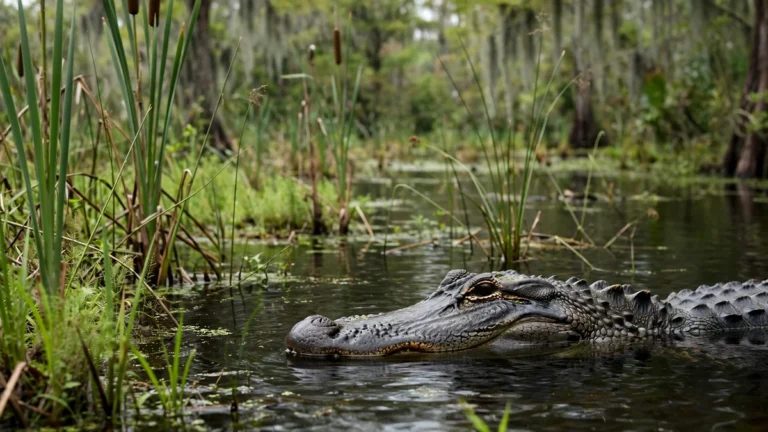
Alligators survive because they are perfectly built for their home. Their eyes and nostrils sit on top of their heads, so they can see and breathe while almost completely underwater. Their powerful tail drives them through the water, and their armoured skin protects them from rivals and from the rough plants of the swamp. They bask in the sun to warm up, because they need heat from outside their bodies to stay active, and they cool off in the water when they get too hot. In the dry season they dig gator holes that keep water available for themselves and for many other animals. Every part of the alligator’s body and behaviour fits the wetland, and that is why this ancient animal is still here today.
Staying safe around alligators is mostly a matter of common sense. Never feed an alligator, because a fed alligator loses its fear of people and starts to see them as a source of food. Keep pets on a lead near water, and do not let children play at the water’s edge in places where alligators live. Avoid swimming at night or at dawn and dusk, when alligators are most active, and stay at least a few metres back from the water’s edge. If you see an alligator, enjoy it from a distance and leave it alone. An alligator that is left alone will almost always leave you alone too.
Questions People Ask
Do alligators eat people?
No, alligators do not normally eat people. Attacks on people are rare, and fatal attacks are rarer still. Most bites happen when a person gets too close, tries to feed an alligator or surprises one. Alligators generally avoid people, and they do not see humans as their usual prey.
How dangerous is an alligator to a swimmer?
An alligator can be dangerous to a swimmer, especially at night or in murky water where alligators live. The risk is low if you swim only in designated swimming areas, stay out of the water at dawn and dusk, and never swim alone in wild wetlands. Most alligator bites on swimmers happen when the person is in the water at a time when alligators are hunting.
What should I do if I see an alligator?
Stay calm and keep your distance. Do not approach it, do not feed it and do not try to take a photo up close. Walk away slowly, and keep children and pets close to you. If an alligator is in a place where it poses a danger, such as a garden or a public park, call the local wildlife authorities, who are trained to move it safely.
Can alligators climb trees or fences?
Young alligators can climb low fences and even trees, although adults are too heavy to climb high. Alligators have been seen resting on low branches overhanging the water. A fence of at least 1.5 metres with no gaps at the bottom is usually enough to keep alligators out of a garden.
What is the difference between an alligator and a crocodile?
An alligator has a broad, rounded snout, and its lower teeth are hidden when its mouth is closed. A crocodile has a narrower, pointed snout, and its fourth lower tooth shows when its mouth is closed. Alligators prefer fresh water, while crocodiles can live in salt water too.
Final Thoughts
Do Alligators Eat People? 15 Amazing Alligator Facts shows that the answer to the big question is no, not normally, and that the real story of the alligator is far more interesting than the fear around it. These animals have survived for millions of years, they build wetlands that other animals depend on, they raise their young with real care, and they carry senses and strengths that humans can only envy. They deserve respect, distance and protection, not fear. If you ever see an alligator in the wild, watch it from a safe distance and remember that you are looking at one of the oldest survivors on Earth. That is a privilege, and it is worth treating with care.