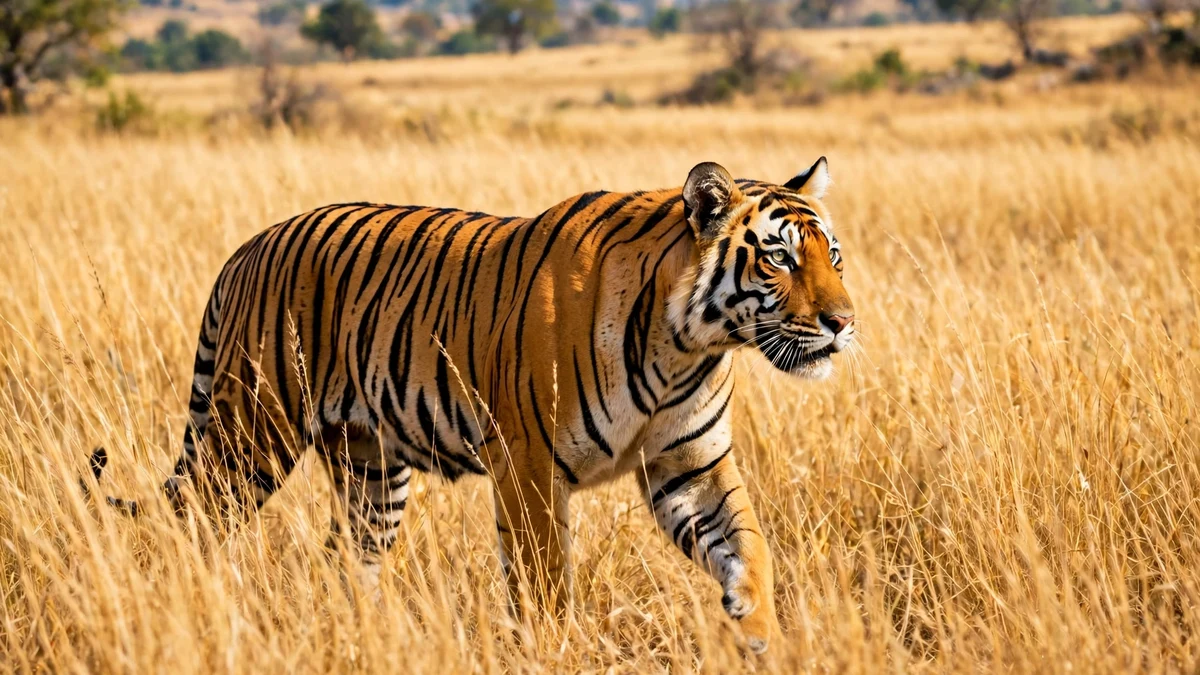
Top 20 Animals With Stripes
Top 20 Animals With Stripes brings together some of the most recognisable creatures on Earth, from the orange and black coat of a Bengal tiger to the tiny bands on a bumblebee. Stripes are not decoration for its own sake. They help animals hide, warn predators away, confuse attackers, attract mates and even stay cool. In this guide you will meet twenty striped animals from forests, oceans, grasslands and gardens, and you will learn what each set of stripes actually does.
Stripes appear in almost every animal group. Mammals wear them, fish swim in them, insects fly with them and reptiles crawl in them. The same pattern can serve very different jobs in different animals. A tiger uses stripes to disappear into tall grass. A clownfish uses stripes to be recognised by its own kind. A skunk uses stripes as a warning sign that every predator learns fast. By the end of this list you will see stripes as one of nature’s cleverest tools, not just a pretty pattern.
1. Bengal Tiger
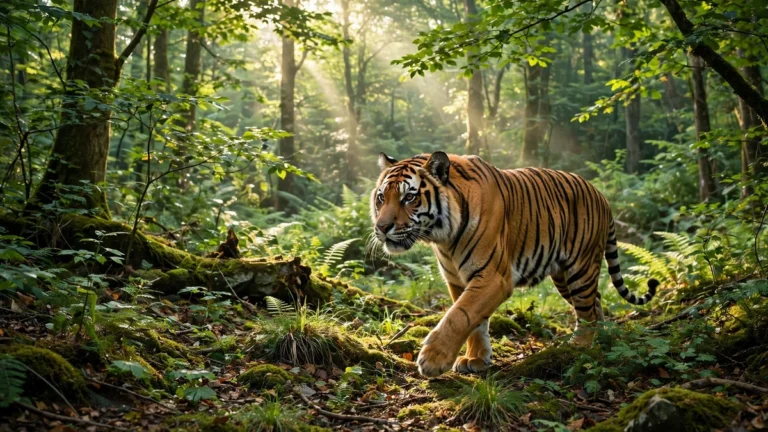
The Bengal tiger is the most famous striped animal in the world, and its coat is a masterpiece of camouflage. Each tiger has a unique stripe pattern, just as every person has unique fingerprints. No two tigers share the same arrangement of stripes, which helps researchers identify individual animals in the wild from camera trap photographs.
A tiger’s stripes break up the outline of its body in tall grass and dappled forest light. When a tiger stands still among reeds or bamboo, the vertical dark lines blend with the shadows of stems and leaves. Prey animals such as deer often look straight past a tiger that is only a few metres away. The stripes continue onto the skin underneath the fur, so even a shaved tiger would still show its pattern.
Bengal tigers live mainly in India, with smaller numbers in Bangladesh, Nepal and Bhutan. They are powerful hunters that can weigh more than 200 kilograms. Their stripes help them hunt at dawn and dusk, when the light is low and their prey is active. Sadly, tigers are endangered, with only a few thousand left in the wild, and their stripes are one reason poachers target them.
2. Plains Zebra
The plains zebra wears black and white stripes that have puzzled scientists for more than a century. Every zebra has its own stripe pattern, and foals can recognise their mothers by stripes alone. The stripes are so individual that they work like a name tag in a herd of hundreds of animals.
Recent research suggests that stripes help zebras in several ways at once. The bold pattern makes it hard for a lion to pick out one zebra from a running herd, because the moving stripes merge into a confusing mass. Stripes may also keep biting flies away, because flies seem to avoid landing on striped surfaces. The black stripes also absorb more heat than the white ones, which may create tiny air currents that help cool the animal.
Plains zebras live on the grasslands of eastern and southern Africa. They graze in large herds and migrate with wildebeest across the Serengeti. A zebra’s stripes begin to form before birth, and the pattern is set for life. When a zebra is born, its stripes are brown and white, and they darken as the foal grows.
3. Chipmunk
The chipmunk is a small striped rodent that lives in the forests and gardens of North America. Its back carries five dark stripes separated by pale lines, running from head to tail. These stripes help the chipmunk vanish against fallen leaves, bark and dappled sunlight on the forest floor.
Chipmunks are busy hoarders. They stuff their cheek pouches with seeds, nuts and berries and carry the food back to underground burrows. A single chipmunk can gather thousands of seeds in a season. Its stripes make it harder for hawks and owls to spot it while it works in the open. When danger appears, the chipmunk freezes, and its stripes blend into the leaf litter.
There are more than twenty species of chipmunk, and most live in North America, with one species in Siberia. They are excellent climbers and can also dig deep burrows with separate chambers for sleeping, storing food and raising young. Their cheerful chirps are a familiar sound in woodland gardens.
4. Okapi
The okapi looks like a cross between a giraffe, a deer and a zebra. Its chestnut brown body hides in the rainforest gloom, while its hind legs carry bright white horizontal stripes that look like zebra legs. Those leg stripes break up the outline of the animal in the patchy light of the Congo rainforest.
Okapis were unknown to science until 1901, even though local people had known them for centuries. They are the closest living relatives of giraffes, and they share the long neck, large ears and long tongue that can reach their own eyes and ears. An okapi uses its long dark tongue to strip leaves from branches.
Okapis live only in the Ituri rainforest of the Democratic Republic of Congo. They are shy and solitary, and they are hard to spot in the wild. Their stripes help calves stay hidden while their mothers feed nearby. The okapi is now endangered because of habitat loss and hunting, and it is protected in reserves.
5. Bongo
The bongo is a large forest antelope with a rich chestnut coat crossed by ten to fifteen thin white vertical stripes. The stripes help it disappear among the vertical stems and sunbeams of the African rainforest. Like a tiger, each bongo has a unique stripe pattern.
Bongos are the largest forest antelopes, and both males and females grow long spiralled horns. They feed at night on leaves, shoots, roots and fruit, and they visit mineral licks to eat soil rich in salts. Their striped coats make them almost invisible when they stand still in dense undergrowth.
Bongos live in the rainforests of central and western Africa. The mountain bongo of Kenya is critically endangered, with only a small number left in the wild. Conservation breeding programmes in zoos are working to save the species. A bongo’s stripes also help mothers and calves recognise each other in the dark forest.
6. Striped Skunk
The striped skunk wears two bold white stripes down its black back, and those stripes are a warning, not camouflage. Every predator in North America learns that black and white stripes mean a spray of foul smelling musk is coming. The skunk stamps its feet and raises its tail before spraying, giving fair warning.
A skunk can spray accurately up to three metres, and the smell can linger for days. The musk is so strong that it can cause temporary blindness and nausea in an attacker. Because the warning works so well, skunks are slow and fearless, and they rarely need to run from danger.
Striped skunks live across North America, from Canada to Mexico. They eat insects, small rodents, eggs, fruit and carrion, and they are useful to farmers because they eat crop pests. They are nocturnal and spend the day in burrows or under buildings. Their young are born with stripes already visible.
7. Clownfish
The clownfish is a small orange reef fish with three white stripes outlined in black. The stripes help clownfish recognise members of their own species on a busy coral reef, and they may also help the fish blend into the waving tentacles of the sea anemone it calls home.
Clownfish live in a close partnership with sea anemones. The anemone’s stinging tentacles protect the fish from predators, while the fish defends the anemone and feeds it scraps. A clownfish is covered in a layer of mucus that stops the anemone from stinging it. The bright stripes advertise the fish to other clownfish while the anemone hides it from hunters.
Clownfish are found in the warm waters of the Pacific and Indian Oceans. They are popular aquarium fish, and the film about a lost clownfish made them famous around the world. In the wild, a clownfish rarely leaves its anemone, and it may live in the same anemone for its whole life.
8. Striped Hyena
The striped hyena is a shy nocturnal scavenger with a grey coat marked by dark vertical stripes on its sides and legs. The stripes help it blend into dry grass and rocky scrub at night, when it searches for carrion and small prey across North Africa and Asia.
Striped hyenas have enormously strong jaws that can crush bones to reach the marrow inside. They clean up the remains of dead animals, which helps stop disease spreading. They also hunt small animals and eat fruit. Their striped coats make them hard to see in moonlight, and their large ears help them hear prey in the dark.
Striped hyenas live from North Africa through the Middle East to India. They are usually solitary, unlike their spotted cousins, and they are often misunderstood and feared. In truth they are timid animals that avoid people. Their stripes fade slightly as they age, and older animals can look almost plain grey.
9. Ring-tailed Lemur
The ring-tailed lemur is famous for its long tail ringed with thirteen or fourteen black and white bands. The tail is longer than the body, and the lemur holds it up like a flag so that the group can follow each other through the trees and across open ground.
Ring-tailed lemurs live in the dry forests and spiny deserts of southern Madagascar. They are social animals that live in groups of up to thirty, and they sunbathe together in the morning with their arms outstretched. Their striped tails help them stay together when they move through thick bush.
These lemurs eat fruit, leaves, flowers and insects. They are excellent climbers and leapers, and they can jump several metres between branches. Their striped tails also play a part in scent marking, because males rub their tails with scent glands and wave them at rivals during contests.
10. Bumblebee
The bumblebee wears bands of yellow, orange and black fur that warn predators to stay away. The stripes say clearly that this insect can sting, and most birds and other hunters learn the lesson after one painful try. The bright colours are called warning colours, and they work because predators remember them.
Bumblebees are important pollinators. They visit flowers for nectar and carry pollen from flower to flower, helping plants produce seeds and fruit. A bumblebee can fly in cool weather when other bees stay home, because it can warm its flight muscles by shivering. Its furry striped body helps it keep warm.
There are more than 250 species of bumblebee, found mainly in the northern hemisphere. They live in small colonies in old mouse nests, compost heaps and grass tussocks. Their numbers are falling in many places because of habitat loss and pesticides, so gardeners are encouraged to plant bee friendly flowers.
11. Zebra Shark
The zebra shark is a gentle reef shark with a remarkable striped childhood. Young zebra sharks are dark brown with bold white stripes, which is how they got their name. As they grow, the stripes break up into spots, and the adult looks like a leopard shark. The young stripes help the small shark hide among reef corals.
Zebra sharks are nocturnal hunters that rest on the seabed during the day. They feed on molluscs, crabs, small fish and sea snakes, which they find by sniffing through sand with their barbels. They are slow swimmers and are harmless to people. They can grow to more than two metres long.
Zebra sharks live in the warm waters of the Indo-Pacific, from the Red Sea to Australia. They are popular in public aquariums because they are calm and hardy. In the wild their numbers are falling because of fishing and habitat damage, and they are now listed as endangered.
12. Tiger Shark
The tiger shark is one of the largest sharks in the ocean, and young tiger sharks carry dark vertical stripes like a tiger. The stripes fade as the shark grows, but they help young sharks blend into the dappled light of shallow water. The stripes give the species its common name.
Tiger sharks are powerful hunters with a reputation for eating almost anything. They eat fish, seals, turtles, seabirds and even rubbish that falls into the sea. Their broad heads and strong jaws let them crush turtle shells. They patrol tropical and subtropical waters around the world and can grow to more than five metres long.
Tiger sharks are mostly solitary and they roam over huge distances. They are one of the few shark species that regularly enters shallow water near beaches, which is why swimmers are advised to avoid swimming at dawn and dusk in tiger shark areas. Despite their fearsome reputation, attacks on people are rare.
13. Striped Bass
The striped bass is a popular game fish with seven or eight dark horizontal stripes running along its silvery sides. The stripes break up the outline of the fish in open water, making it harder for predators and prey to spot it from the side.
Striped bass live along the Atlantic coast of North America, from Canada to Florida, and they have been introduced to the Pacific coast and to lakes inland. They migrate between fresh and salt water, and they are strong fighters that anglers prize. They can live for more than thirty years and grow to over a metre long.
The stripes of a striped bass are a useful identification mark, because no other common bass has such clear continuous lines. Young fish have fainter stripes that darken as they grow. Striped bass feed on smaller fish, crabs and shrimp, and they often hunt in schools that drive bait fish to the surface.
14. Striped Dolphin
The striped dolphin is a fast and acrobatic ocean dolphin with a striking pattern of dark stripes. A dark band runs from its eye to its flipper, and another stripe runs along its side. The pattern is unique to each dolphin and helps scientists identify individuals at sea.
Striped dolphins are found in warm and tropical waters around the world. They live in large groups that can number in the hundreds, and they often leap clear of the water and ride the bow waves of ships. They feed on small fish and squid, diving to depths of several hundred metres.
These dolphins are among the most common dolphins in the open ocean, but they face threats from fishing nets, pollution and noise. Their stripes may help them recognise each other in a large pod, and the countershading of their bodies helps them hide from predators above and below.
15. European Badger
The European badger has one of the most recognisable faces in the animal world, with bold black and white stripes running from its nose over its head. The stripes may help badgers recognise each other in the dark, and they may also warn predators that a badger is a tough animal with sharp claws and teeth.
Badgers live in family groups in underground setts that can be used for generations. A sett can have many entrances and chambers, and badgers keep it clean by carrying out old bedding. They are nocturnal and emerge at dusk to search for earthworms, insects, fruit and small mammals.
European badgers live across Europe and parts of Asia. They are powerful diggers with long claws, and they can move large amounts of soil in a night. Their striped faces make them easy to identify, and they are a favourite animal of wildlife watchers, though they are shy and rarely seen in daylight.
16. Zebra Duiker
The zebra duiker is a small forest antelope with a reddish brown coat crossed by twelve to sixteen bold black stripes. The stripes help it hide in the sun flecked undergrowth of the West African rainforest, where it feeds on fallen fruit, leaves and seeds.
Zebra duikers are shy and secretive animals that live alone or in pairs. They are most active at dawn and dusk, and they freeze when danger approaches, letting their stripes blend them into the forest. They are excellent jumpers and can leap over fallen trees with ease.
Zebra duikers live only in the rainforests of Liberia, Sierra Leone, Guinea and Ivory Coast. Their numbers are falling because of hunting and forest loss, and they are now listed as vulnerable. Their stripes are so bold that early naturalists thought they were a kind of miniature zebra.
17. Coral Snake
The coral snake is a small venomous snake with bands of red, yellow and black. The bright stripes are a warning to predators that the snake is dangerous. The famous rhyme about red touching yellow helps people tell a coral snake from harmless snakes that copy its colours.
Coral snakes live in the southern United States, Mexico and Central and South America. They are shy and secretive, spending most of their time underground or under leaf litter. They feed on other snakes and lizards, and they are active at night and after rain.
Despite their powerful venom, coral snakes rarely bite people because they are small, shy and reluctant to attack. Their stripes are a classic example of warning colouration in nature, and many harmless snakes have evolved to copy the pattern to gain the same protection.
18. Zebra Finch
The zebra finch is a small Australian songbird with fine black and white stripes on its throat and tail. The male has a striped throat, orange cheek patches and a red beak, while the female is plainer. The stripes help the male attract a mate, because females prefer males with clear bold markings.
Zebra finches are popular pet birds and are widely used in scientific research on song learning. Young males learn their songs from their fathers, and they practise for weeks before they sing properly. In the wild they live in large flocks in the dry grasslands of Australia.
These little finches are tough survivors that can live in hot dry country with little water. They breed quickly when rain brings grass seeds, and they build domed nests in bushes and trees. Their striped plumage helps them blend into dry grass when they feed on the ground.
19. Striped Possum
The striped possum is a rare marsupial from the rainforests of New Guinea and northern Australia. It has a black coat with three white stripes running from its head to its tail. The stripes help it hide in the rainforest canopy at night, when it searches for grubs and insects.
Striped possums have a remarkable long fourth finger that they use to tap on dead wood and extract wood boring grubs, in the same way that the aye-aye of Madagascar uses its long finger. They are nocturnal and solitary, and they are rarely seen because they live high in the trees.
These possums were little known to science until recent decades, and they are still poorly studied. Their striped coats are unique among possums, and they make the animal easy to identify in camera trap photographs. Habitat loss in New Guinea threatens their rainforest home.
20. Striped Marlin
The striped marlin is a fast ocean fish with vivid blue stripes running along its sides. The stripes are part of its countershading, which helps it hide from predators and prey in the open ocean. The marlin can change the brightness of its stripes, flashing them during hunting.
Striped marlin are among the fastest fish in the sea, capable of bursts of speed over 80 kilometres per hour. They use their long bills to slash through schools of small fish and then eat the stunned prey. They are powerful leapers and are prized by sport fishermen.
Striped marlin live in the tropical and subtropical waters of the Pacific and Indian Oceans. They migrate over huge distances and can live for more than ten years. Their stripes fade after death, which is why fresh caught marlin look so much more vivid than fish seen in a market.
How These Animals Compare
Top 20 Animals With Stripes shows that the same pattern does very different jobs. Camouflage is the most common job, and it belongs to the tiger, the bongo, the zebra duiker, the okapi and the chipmunk. All of them use stripes to break up their outline in grass or forest. Warning is the second job, and it belongs to the skunk, the coral snake and the bumblebee. Their stripes say danger, and predators learn to leave them alone.
Recognition is a third job. Zebras, striped dolphins and clownfish use their stripes to tell each other apart, which matters in herds, pods and reefs where hundreds of similar animals live together. Courtship is a fourth job, seen in the zebra finch, where bold stripes help a male win a mate. Hunting is a fifth job, seen in the tiger shark and the striped marlin, whose stripes hide them from prey.
Size also varies hugely. The list runs from a bumblebee that weighs less than a gram to a tiger shark that can weigh more than 500 kilograms. Habitat varies just as much, from rainforest canopy to open ocean, from Australian grassland to North American gardens. The one thing all twenty animals share is that their stripes earn their keep. No animal on this list wears stripes for decoration alone.
Frequently Asked Questions
Why do animals have stripes?
Animals have stripes for camouflage, warning, recognition, courtship and temperature control. The same pattern can do more than one job, and different species use stripes in different ways. Stripes break up an animal’s outline, which makes it harder for predators and prey to see it clearly.
Are any two zebras stripe patterns the same?
No, every zebra has a unique stripe pattern, just as every person has unique fingerprints. Researchers use photographs of stripe patterns to identify individual zebras in the wild, and foals recognise their mothers by their stripes.
Do tiger stripes go through to the skin?
Yes, a tiger’s stripes are visible on its skin as well as on its fur. The pattern is set before birth, and it stays the same for the tiger’s whole life. Even a shaved tiger would still show its stripes.
Which striped animal is the most dangerous to humans?
The tiger shark and the Bengal tiger are the most dangerous animals on this list, because both are large predators that can injure people. The coral snake is also dangerous because of its venom, but it is shy and rarely bites. Most striped animals, such as chipmunks, bumblebees and zebra finches, are harmless.
Are striped animals found on every continent?
Striped animals are found on every continent except Antarctica. They live in rainforests, grasslands, deserts, oceans and gardens, from the Arctic fox’s striped relatives to the tropical reefs of the Pacific. Stripes are one of nature’s most successful patterns.
Final Thoughts
Stripes are far more than a pretty coat. They hide hunters, warn off attackers, help families find each other and even cool a zebra in the African sun. The twenty animals in this guide show how one simple pattern can solve many different problems in nature. The next time you see a striped animal, look closely at its pattern and ask what job those stripes are doing. You will often find that nature has already answered the question, written in black and white, orange and black, or red and yellow, across the animal’s back.