UK Farm Worker Jobs with Visa Sponsorship 2026
Introduction
UK Farm Worker Jobs with Visa Sponsorship 2026 offer a way into seasonal work on British farms for people who want to earn money abroad, learn new skills and see a different country. Every year, farms across the United Kingdom need thousands of workers to pick fruit, milk cows, look after poultry and grow vegetables in glasshouses, and much of that work is done by people who travel to the UK for the season. This guide explains what the work is really like, day by day, how the Seasonal Worker visa route works, what you can expect to be paid, where you will live, and how to apply without falling for a scam.
Nothing in this guide is a promise. No farm and no agent can guarantee you a job, a visa or sponsorship, and anyone who promises you one in exchange for a large fee is almost certainly trying to cheat you. What this article does give you is an honest picture of the work, the pay, the living conditions and the steps to apply through the proper route, so you can decide for yourself whether a season on a UK farm is right for you.
A Morning on a UK Farm: What the Working Day Really Looks Like
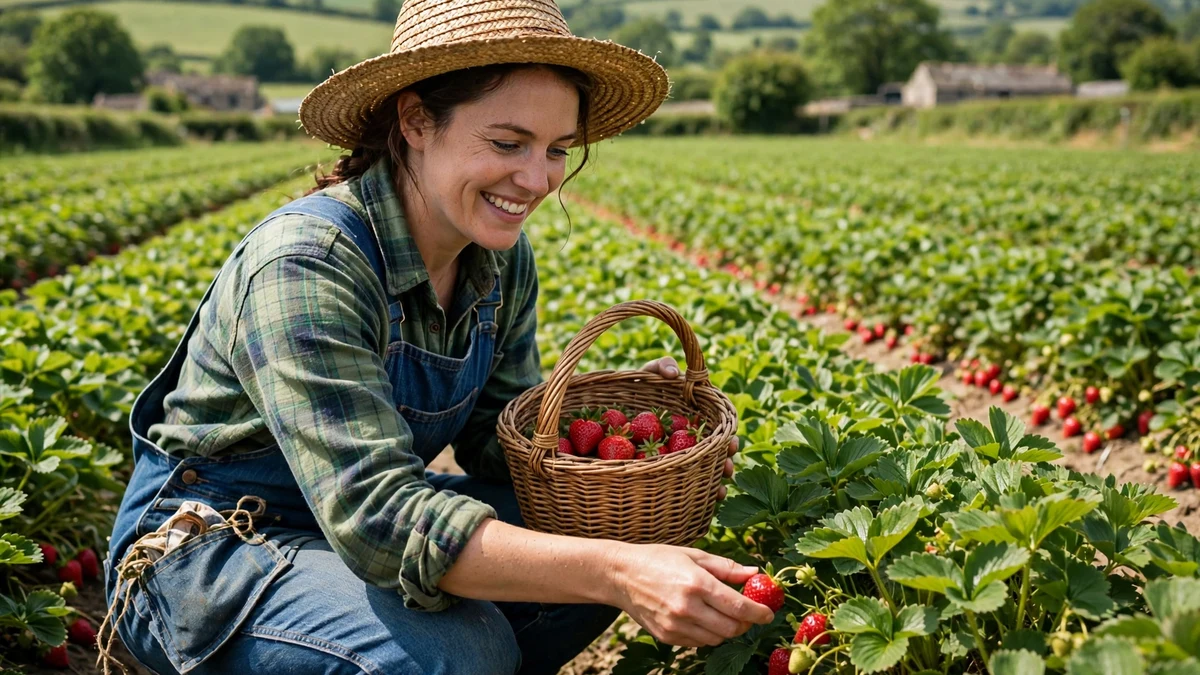
A working day on a UK farm starts early, often before the sun is fully up. In the fruit picking season, workers gather at the edge of a field or a polytunnel at around six in the morning, collect their picking trays and buckets, and walk to the rows they have been given for the day. The supervisor explains which fruit is ready, how to pick it without bruising it, and what the quality standard is. Then the work begins, and it is steady, physical and repetitive. You bend, reach, pick and carry, row after row, until the break.
On a dairy farm, the morning is different but just as early. Cows are milked before dawn, and a farm worker helps to bring the herd in, clean the milking parlour, attach the milking units and check each cow for signs of illness. After milking, there is feeding, cleaning the sheds and checking fences and water troughs. In a glasshouse, the morning may be spent tying up tomato plants, checking the temperature and picking ripe vegetables, all in warm and humid air. In a poultry unit, the day starts with checking the birds, collecting eggs and cleaning the sheds. Whatever the farm, the work is physical, the hours are long, and the day is shaped by the weather, the animals and the season.
Fruit Picking, Dairy, Poultry and Glasshouses: Four Very Different Farm Jobs
Fruit picking is the work most people picture when they think of UK farm jobs, and it is the largest source of seasonal work. Strawberries, raspberries, apples, pears and cherries are picked by hand, and the work is often paid by the amount you pick, which is called piece rate. A fast picker can earn more than the hourly minimum, while a slow picker may earn less, although the law sets a floor. The work is outdoors in all weather, and it suits people who are fit, patient and happy to work in a team.
Dairy work is steadier and more skilled. A dairy worker milks cows twice a day, feeds the herd, cleans the parlour and watches for sick animals. The hours are fixed around milking times, early morning and late afternoon, and the work continues all year, not just in summer. Poultry work involves looking after chickens, ducks or turkeys, collecting eggs, feeding the birds and keeping the sheds clean and dry. Glasshouse work is indoors, warm and sheltered from the rain, and it involves growing tomatoes, cucumbers, peppers and salad leaves, tying up plants, picking the crop and packing it for shops. Each of these four jobs suits a different kind of person, and it is worth thinking about which one fits you before you apply.
The Seasonal Worker Visa Route in 2026
The main route for farm work in the UK is the Seasonal Worker visa, which is designed for people who come to the UK to do seasonal work in horticulture or poultry. The visa lets you work for up to six months in horticulture, which covers fruit, vegetables and flowers, or for a shorter period in poultry, usually tied to the Christmas season. You can only apply for this visa if you have a job offer from a licensed sponsor, and your sponsor must be one of the scheme operators approved by the UK government.
The process works like this. First, you apply to a scheme operator, which is an organisation licensed to recruit seasonal workers for UK farms. If the operator accepts you, it matches you with a farm and gives you a certificate of sponsorship, which is a reference number, not a paper certificate. You then apply for the visa online, pay the visa fee and the immigration health surcharge, and give your fingerprints and photo at a visa application centre. The visa does not lead to settlement in the UK, and you cannot bring family members with you on this route. You also cannot switch to a different kind of visa from inside the UK on this route, so it is a temporary working visit, not a path to living in the UK for good.
Where the Farm Jobs Are Across the UK
Farm jobs are spread across the whole United Kingdom, but some regions have far more seasonal work than others. Kent, in the south east of England, is famous for its fruit farms and is often called the garden of England. Herefordshire and Worcestershire grow soft fruit and apples, and Lincolnshire grows vegetables on a huge scale. Scotland grows soft fruit, especially raspberries, around Angus and Perthshire, and the season there runs a little later because the weather is cooler. East Anglia has large vegetable and salad farms, and Wales has dairy and sheep farms that need workers all year.
Where you are placed matters, because it shapes your daily life. A fruit farm in Kent may be near a town with shops, buses and a train station, while a farm in rural Lincolnshire or Scotland may be miles from the nearest shop. Most farms provide transport to the nearest town once or twice a week, and many workers share lifts. Before you accept a placement, ask the scheme operator where the farm is, how far it is from a town, and what transport is provided. A little research before you travel can save you a lonely and difficult season.
Pay, Hours and What Accommodation Really Costs
Pay for UK farm work is set by law, and every worker, including seasonal workers, must be paid at least the National Living Wage, which is the minimum hourly rate for workers aged 21 and over. In 2026, this rate is reviewed each April, so check the current figure before you travel. Some farm work is paid by piece rate, which means you are paid for the amount you pick or pack, but the law says your average pay over a pay period must still reach the minimum wage. If it does not, your employer must top it up. You should receive a payslip each week or each month, and you should check it carefully.
Hours are long in the peak season, often 40 to 48 hours a week, and sometimes more when the fruit is ripe and the weather is good. Overtime is usually paid at the normal rate, although some farms pay extra. Accommodation is normally provided on or near the farm, in a caravan, a shared house or a purpose built block, and your employer may deduct a fixed amount from your wages for it. The law limits how much can be deducted for accommodation, and the housing must meet basic standards for safety, heating and washing facilities. Ask what the accommodation looks like, how many people share a room, and how much will be deducted, before you sign anything.
What UK Farm Employers Ask For
UK farm employers do not usually ask for formal qualifications, but they do ask for certain qualities, and they will check them. The first is physical fitness, because the work involves standing, bending, lifting and walking for long hours in all weather. The second is reliability, because a farm depends on its workers turning up on time every day, and a worker who misses days leaves fruit unpicked and animals unfed. The third is a willingness to learn and to follow instructions, especially about food safety and hygiene, because the fruit and vegetables you pick go straight to shops and to people’s tables.
Some roles ask for more. Dairy work may need experience with animals, and glasshouse work may need experience with plants, although many farms train new workers on the job. A basic level of English is very helpful, because you need to understand safety instructions, talk to your supervisor and read signs in the workplace. You will also need a valid passport, and you must be able to pass the checks that the scheme operator carries out. Having worked on a farm before is a real advantage, and if you have, say so clearly in your application and be ready to describe what you did.
How to Apply Step by Step
The first step is to find a licensed scheme operator. The UK government publishes a list of approved operators for the Seasonal Worker route, and you should only apply through one of these. You can find the list on the official GOV.UK website. Be very careful of agents or websites that claim to offer farm jobs but are not on this list, because they may be running a scam. A genuine operator will never ask you for a large fee just to give you a job.
The second step is to complete the operator’s application form, which asks for your personal details, your work history and your availability. If you are accepted, the operator will match you with a farm and issue your certificate of sponsorship. The third step is to apply for the visa online, pay the fee and the health surcharge, and attend a visa application centre to give your fingerprints and photo. The fourth step is to wait for a decision, which usually takes a few weeks. Once your visa is granted, the operator will tell you when to travel and how to get to the farm. Keep copies of every document, every email and every payment receipt, and never hand your passport to anyone except an official at a visa centre or at the border.
Mistakes That Cost Farm Workers the Job
The most common mistake is applying through an unlicensed agent who charges a large fee and then disappears, or who sends you to a farm that does not exist. This happens every year, and the victims lose their money and their chance of a visa. Always check that your operator is on the official government list, and never pay anyone who promises you a guaranteed job or a guaranteed visa, because no one can guarantee those things.
Other mistakes are smaller but still costly. Some workers arrive without enough money for their first weeks, and then struggle until their first pay day. Some do not read their contract, and are surprised by the accommodation charge or the working hours. Some do not bring proper clothing, and suffer in the rain and cold because they packed only summer clothes. And some leave the farm early without telling anyone, which can cause problems with their visa record and with any future application. A season on a UK farm goes best when you arrive prepared, with warm clothes, waterproof boots, some savings, and a clear understanding of your contract.
Spotting Farm Job Scams Before You Pay
Farm job scams follow a pattern, and once you know the pattern, they are easy to spot. The scammer advertises a farm job on social media or a messaging app, often with a salary that sounds far too high for farm work. They ask you to pay a fee for a job offer, a visa, or a certificate of sponsorship, and they pressure you to pay quickly, saying the places are almost gone. They may send you a fake job offer letter with spelling mistakes and no proper company details. Once you pay, they disappear, or they keep asking for more money.
Protect yourself with a few simple rules. Never pay a fee to a person or a company you found on social media. Never pay for a job offer, because genuine scheme operators do not charge workers for a placement. Check every operator against the official government list. Ask for the company’s full name, address and licence number, and check them online. If an offer sounds too good to be true, it almost certainly is. If you think you have been targeted by a scam, report it to the police in your country and to the UK’s Action Fraud service, and warn others in your community.
Questions Workers Ask Before They Apply
Can I get a UK farm job with visa sponsorship in 2026?
Farm jobs in the UK are offered through the Seasonal Worker visa route, and licensed scheme operators match workers with farms that are approved sponsors. Sponsorship here means the operator and the farm support your visa application, but it is not a guarantee of a job or a visa. You must meet the requirements, pass the checks and be granted the visa before you can travel.
How much do UK farm workers earn?
Farm workers must be paid at least the National Living Wage, and many earn more when they are paid by piece rate and pick quickly. A typical seasonal worker earns the minimum wage or above, and the exact amount depends on the farm, the crop and how fast you work. Your payslip will show your hours and your pay, and you should check it every week.
Is accommodation included with a UK farm job?
Most farms provide accommodation on or near the farm, but it is not free. A fixed amount is usually deducted from your wages, and the law limits how much can be taken. The housing must meet basic standards. Ask your scheme operator what the accommodation is like and how much the deduction will be before you accept the placement.
Can I stay in the UK after the farm season ends?
The Seasonal Worker visa is temporary, and it does not lead to settlement. When your visa ends, you must leave the UK. You cannot bring family members with you, and you cannot switch to a different visa from inside the UK on this route. If you want to return for another season, you will need to apply again through a scheme operator.
Do I need experience to work on a UK farm?
Most fruit picking and packing jobs do not need experience, and farms train new workers on arrival. Dairy, poultry and glasshouse work may prefer people with some experience, but many farms will train you if you are willing to learn. Physical fitness, reliability and a good attitude matter more than formal qualifications for most seasonal roles.
Final Word
UK Farm Worker Jobs with Visa Sponsorship 2026 can be a good way to earn money, gain experience and see the United Kingdom, but only if you go through the proper route and know what to expect. The work is physical, the hours are long, the weather is changeable, and the visa is temporary. The rewards are real too: honest pay, a chance to work outdoors, and an experience that many workers remember for the rest of their lives. Apply only through a licensed scheme operator, never pay for a job offer, and arrive prepared. If you do those three things, a season on a UK farm can be a good chapter in your working life.