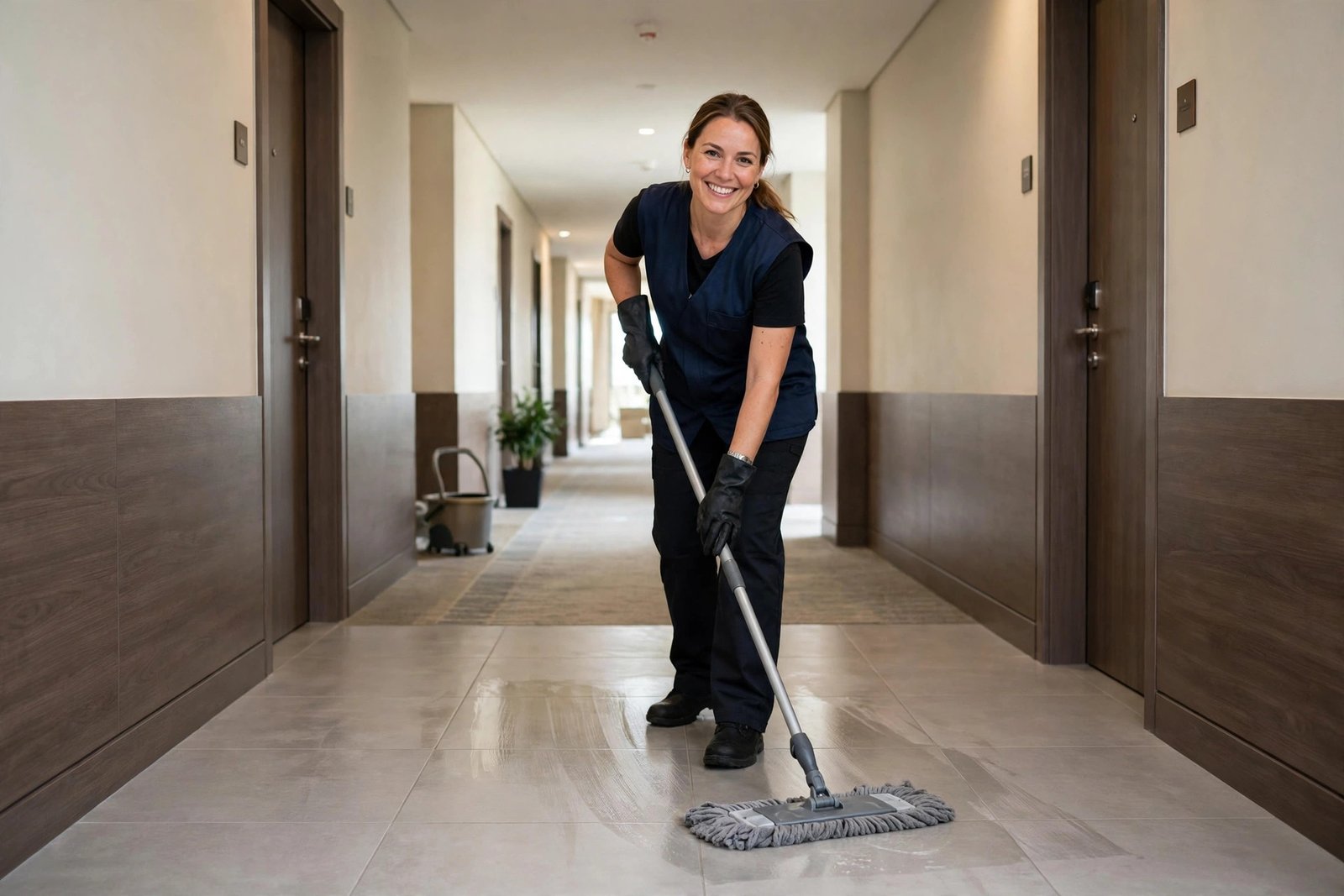
New Zealand Cleaner Jobs with Visa Sponsorship 2026
New Zealand is famous for clean air, green hills, friendly people and a relaxed pace of life, and that love of clean surroundings shows up in its workplaces. Offices in Auckland’s Viaduct and Wellington’s Lambton Quay, hotels in Queenstown, hospitals in Christchurch, schools in Hamilton and rest homes across the country all rely on cleaners who keep them safe, hygienic and welcoming. For an international worker, a cleaning job in New Zealand in 2026 can be a practical way into the country, provided the opportunity is understood honestly and approached with care.
Cleaning is often dismissed as unskilled, but anyone who has done it well knows better. A good cleaner understands hygiene, handles chemicals safely, follows a schedule, notices the details other people walk past and works efficiently without getting in the way of the people around them. In a hospital ward, a cleaner helps stop infections spreading. In a Queenstown lodge, a cleaner shapes what a guest thinks when they open the door. In an Auckland office, a cleaner creates a pleasant place where people can do their best work. In a school, a cleaner helps protect children’s health. The work matters, and New Zealand employers value people who take it seriously.
This guide is written for international workers who are thinking about cleaning jobs in New Zealand. It explains what the work involves, why cleaners are in demand, what employers usually expect, how to apply, and what visa sponsorship really means. It does not promise a job or a visa, because no guide can do that. Sponsorship depends on the employer and on the New Zealand Government, and every application is assessed on its own facts. What this guide offers is a clear, realistic picture so you can prepare properly, avoid common mistakes and decide whether cleaning work in New Zealand is right for you.
If you are reliable, physically fit, detail oriented and willing to work early mornings, evenings or weekends, cleaning can be a steady and rewarding job. It can also be a first step into life in New Zealand, helping you learn workplace culture, improve your English and build experience for future opportunities. The sections below will help you understand the work in detail.
What Cleaner Work Involves
Cleaning work in New Zealand covers many settings, and the exact duties depend on the employer and the workplace. Office cleaners in Auckland, Wellington and Christchurch clean desks, floors, kitchens, toilets and meeting rooms, usually before staff arrive or after they leave. They empty bins, vacuum carpets, mop floors, wipe surfaces, clean windows and restock supplies such as toilet paper, soap and paper towels, and in larger buildings they may look after staff kitchens, showers and end-of-trip facilities used by cyclists.
Hotel cleaning in New Zealand is shaped by tourism, and it is busiest in Queenstown, Rotorua, Auckland and Wellington. A room attendant in a Queenstown hotel or a lakeside lodge in Wanaka might turn over a set number of rooms each shift, changing linen, scrubbing bathrooms, vacuuming, dusting and checking that everything works, from the heater to the kettle. The pace spikes when a tour group checks out on the same morning, and in ski season the lodges around Queenstown and Wanaka fill up and the housekeeping teams work flat out. Motels are common across the country too, and motel cleaning often means a smaller team, a wider range of tasks and a closer relationship with the owners.
Hospital and healthcare cleaners work in public hospitals, private clinics and rest homes, which are New Zealand’s name for care homes for older people. They clean patient rooms, corridors, toilets, waiting areas and treatment rooms, following strict hygiene rules. They use special cleaning products, wear gloves, masks or gowns where needed, and follow routines that stop infection spreading. The work needs care, proper training and a sharp eye for detail, because a ward that is not cleaned properly can put patients at risk, and rest-home residents are often frail.
Industrial cleaners in New Zealand work in factories, warehouses and production plants, including the dairy processing plants of the Waikato and Taranaki, food factories in Canterbury and logistics depots around Auckland’s airport. They clean machines, floors, storage areas and staff rooms, often with industrial equipment such as scrubbers and pressure washers, and they must follow safety rules for working near machinery, chemicals and forklifts. School cleaners look after classrooms, corridors, toilets, gyms and halls, usually after the school day ends. Airport and transport cleaners look after terminals, aircraft and buses, often working through the night when services are quiet, and Auckland Airport runs cleaning around the clock.
Domestic cleaners in New Zealand work inside private homes, cleaning living rooms, kitchens, bathrooms and bedrooms, doing the laundry and ironing, and sometimes helping with simple household tasks. The work depends on trust, discretion and respect for the family’s privacy. Some domestic cleaners work for cleaning companies that send them to several homes in a day, while others are hired directly by the family they clean for, and in smaller towns the arrangement is often word of mouth through neighbours.
Cleaning Standards and the Working Day
In New Zealand, cleaning is judged by standards rather than by effort alone, and most workplaces run on checklists and inspection routines. A commercial cleaner in an Auckland office might work from a site schedule that lists each area, the tasks for that area and how often they are done, and a supervisor will walk the floor with that checklist to check the result. Hotel cleaning follows a room-by-room standard, so a housekeeper knows exactly what a finished room should look like, from the fold of the towels to the shine on the bathroom mirror.
The working day itself follows the rhythm of the building. Commercial cleaning often means working in offices, schools or hospitals after hours, while hotel and residential cleaning follow the rhythm of guests and residents. Workers who follow the checklist, use chemicals and equipment correctly and report damage or hazards are the ones supervisors trust with more responsibility, such as training new staff or looking after a larger area.
A Working Day: Duties and Hours
What a cleaning shift looks like in New Zealand depends on the workplace. Office cleaners often start very early in the morning or work in the evening once the staff have gone. Hotel cleaners usually begin in the morning as guests start to check out, and in Queenstown the busiest hours are late morning, when a whole floor can need turning over before the next arrivals. Hospital cleaners may work days, evenings or nights, because healthcare runs around the clock. Industrial cleaners often work during production breaks or after the factory shift finishes, when the machines have stopped and the floors can be scrubbed properly.
The daily tasks are hands-on and they repeat, but they need care every single time. A cleaner might vacuum a large office floor in Wellington, mop corridors, scrub toilets, wipe desks and empty bins, working through a schedule for each area. A hotel cleaner might turn over a set number of rooms each shift, following a checklist for every room. A hospital cleaner might disinfect surfaces, change bed linen, clean bathrooms and dispose of waste under strict rules. A school cleaner might sweep classrooms, clean toilets, wipe tables and get rooms ready for the next morning.
Cleaners in New Zealand spend most of the day on their feet, walking, bending, lifting and pushing a cleaning trolley. They use vacuum cleaners, mops, buckets, cloths, sprays and sometimes floor machines. They must know which product suits which surface, how to dilute chemicals safely and how to store them properly. The wrong product can damage a surface, and the wrong use of a chemical can be dangerous. Training matters for that reason, and employers usually provide it on site during the first weeks, pairing a new cleaner with an experienced colleague.
Cleaners also need to keep in touch with supervisors, colleagues and sometimes clients. They report damage, supplies running low, broken equipment or safety hazards. They follow instructions about which areas matter most and which jobs to finish first. Good cleaners are observant: they notice a stain on a carpet, a leak under a sink or a light that has stopped working, and they report it instead of walking past, because a small problem reported early is cheap to fix and a small problem ignored becomes expensive.
Why Cleaners Are in Demand in New Zealand
Tourism drives a large share of the demand. Queenstown, Rotorua, Auckland and Christchurch draw visitors all year, and hotels, motels, lodges and holiday parks need cleaners throughout the year and even more during peak seasons. Queenstown’s ski season brings a surge of guests to the lodges around the Remarkables and Coronet Peak, while summer brings hikers, cyclists and tour groups to Rotorua’s geothermal attractions and to the lakes of the South Island. As tourism grows, demand for hotel cleaners grows with it, and in Queenstown employers often struggle to keep a full housekeeping team through the busiest months.
At the same time, many local workers in New Zealand prefer office jobs or roles with more regular daytime hours, which leaves cleaning companies short of staff, above all for early morning, evening, night and weekend shifts. Cleaning is also physically hard work, and some workers move on to less physical roles after a year or two. Employers therefore need dependable staff who can keep standards high and stay in the job, and a worker who turns up reliably in a small town like Wanaka or Taupo, where the local workforce is small, is genuinely valued.
Changes in the population play a part as well. As older workers retire, new workers are needed to take their place, and New Zealand’s rest homes and hospitals keep growing as the population ages. In some parts of the country the local workforce is small while the demand for cleaning services stays strong, particularly in tourist towns and in the regions around the dairy and food-processing plants. International workers who are happy to work flexible hours can help fill those gaps, especially in Auckland, Wellington, Christchurch and Queenstown.
It is worth being honest at this point. Demand for cleaners in New Zealand does not mean every cleaning company sponsors visas, and it does not mean sponsorship is easy to get. Many cleaning jobs are filled locally, and sponsorship happens only in certain situations. It depends on the employer, the role, the region and the visa rules at the time. Sponsorship costs the employer money, paperwork and responsibility, so companies usually sponsor only when they genuinely need staff and when the candidate is reliable and suitable. Keeping that in mind helps you aim at realistic openings.
Documents and Requirements for Cleaner Jobs
Requirements for cleaning jobs in New Zealand vary by employer and workplace, but there are common expectations. Most employers look for workers who are at least eighteen years old, physically fit, reliable, punctual and able to work independently. Previous cleaning experience is helpful, but not always essential for entry level roles. Employers often provide training on cleaning methods, products and safety, especially for hospital and industrial cleaning, and a worker who has cleaned in a hotel or a hospital before will usually settle in faster.
Being physically fit is important for cleaning work in New Zealand. The job involves standing, walking, bending, lifting, pushing trolleys and carrying buckets for most of the shift. Workers may lift a vacuum cleaner, move furniture to clean underneath it, or carry boxes of supplies. The work can be tiring, above all on long shifts or in large buildings, and in a Queenstown hotel the stairs and slopes add to the effort. Building up your fitness before you travel and easing yourself in during the first weeks will help, and stretching at the end of a shift is a habit worth keeping.
English ability matters, although the level needed changes with the role. In many New Zealand cleaning jobs, basic English is enough to start, because the work is practical and supervisors can give simple instructions. Stronger English still helps with safety, training, talking with colleagues and moving into better roles. In hospitals, hotels and offices where cleaners meet staff and guests, better English matters more. Working on your English before you apply will help you in interviews and at work, and it will also help you deal with landlords, banks and doctors once you arrive.
Employers in New Zealand may ask for a CV, references from past employers, proof of identity and evidence of your previous work. Hospital and care cleaning may call for health checks or proof of vaccinations. Industrial cleaning may call for safety training or experience with machinery. Some employers also ask for a police clearance or a character document, so it helps to have these papers ready. Once you are in New Zealand you will also need an IRD number for tax, and your employer will ask for it on your first day, so apply for it as soon as you arrive.
For visa purposes, you will generally need a valid passport and supporting documents. Immigration New Zealand may ask for health checks, proof of a job offer, evidence of qualifications or other supporting papers depending on the visa type, such as the Accredited Employer Work Visa. Requirements change over time, so always check the current official guidance rather than trusting old information. Keep your documents organised, translated where needed, and ready to share when asked.
How to Apply for a Cleaner Role in New Zealand
The first step is to work out which kind of cleaning suits you in New Zealand. Think about your experience, your fitness, whether you can cope with very early starts or night work, and whether you would rather clean offices, hotels, hospitals, schools or industrial sites. Someone who likes quiet, independent work may prefer office cleaning in Wellington. Someone who likes a fast pace may prefer hotel cleaning in Queenstown. Someone drawn to healthcare may prefer hospital or rest-home cleaning, as long as they are comfortable with strict hygiene rules and with working around older or unwell people.
The second step is to prepare a clear CV. List your work history, including any cleaning, housekeeping, hotel, warehouse or maintenance jobs. Name the specific tasks you have done, such as cleaning offices, hotels or homes, using vacuum cleaners and floor machines, or following hygiene routines. Add your contact details, education, language skills and referees. Keep the CV honest and short. Do not stretch your experience, because a New Zealand employer will notice quickly once you start, and a referee who cannot confirm what you claimed will damage your chances.
The third step is to look for genuine openings. Search for cleaning companies, hotels, hospitals and facility management employers in New Zealand that are known and easy to verify. Check the employer’s own careers page, trusted job boards and official employment services. Read each advert carefully. A genuine listing names the employer, describes the role, gives the location and explains how to apply. Be wary of listings that ask for large payments in advance, promise a guaranteed visa, or refuse to share basic facts about the employer.
Next comes the application itself. Pick roles that match your profile and write each application for that job alone, rather than sending one generic message to every cleaning company in New Zealand. Point to the experience that fits the role, note your English level and say when you are free to start. Attach any documents the listing asks for, and follow its instructions to the letter, including how to apply and the closing date, because a sloppy application is often the first to be discarded.
The fifth step is to prepare for interviews. Many overseas interviews are held by video call. Test your internet connection, camera and microphone beforehand. Choose a quiet place with good lighting. Dress neatly. Be ready to talk about your experience, your reasons for wanting to work in New Zealand, your availability and your understanding of cleaning work. Employers may ask how you would handle a busy shift, a difficult stain or a safety hazard. Answer honestly, with examples where possible, and remember that New Zealand interviews are usually relaxed and conversational, so be yourself rather than reciting rehearsed lines.
The sixth step, if you are offered a role, is to discuss sponsorship carefully. Ask the employer to explain the visa process, the timeline, who pays which costs and what your responsibilities will be. Get important details in writing. Do not resign from a current job, pay large fees or make travel plans until you understand the offer and the visa requirements. If anything is unclear, seek advice from a licensed adviser or the official New Zealand Government website rather than relying on an agent who promises fast results.
Visa Sponsorship in New Zealand: The Honest Version
Visa sponsorship is often misunderstood, so it is worth explaining it in plain words. Sponsorship means a New Zealand employer supports a visa application for a worker from overseas, often through the Accredited Employer Work Visa. It does not mean the visa is granted automatically, and it does not mean the employer controls the decision. The New Zealand Government decides in the end, based on the visa rules, whether the employer is eligible and the applicant’s own circumstances.
Not every cleaning company can sponsor workers. An employer must meet certain requirements, and the role must fit the visa rules that apply at the time. In New Zealand, employers who want to sponsor workers generally need to be accredited, and they must show that they have tried to recruit locally in some cases. The right visa depends on the role, the location, the employer’s status and the worker’s background. Because rules change, information that was correct last year may not be correct now. Always check the current official information before you act.
Sponsorship also brings duties for both sides. The New Zealand employer may need to show the role is genuine, the worker will be paid fairly and the workplace meets New Zealand standards. The worker has to meet health, character and other requirements, and must follow the conditions of any visa that is granted. A visa can limit the type of work, the employer, the location or the length of stay. Breaking those conditions can cause serious problems, so it is essential to understand them before you travel.
Costs are another point where honesty matters. In New Zealand, some costs may be paid by the employer and others may be yours, and the split depends on the visa type, the company’s policy and the agreement you reach. Never assume everything is covered, and never pay a large sum to a middleman who promises a guaranteed visa. If you are asked to pay fees, ask for a written breakdown, a receipt and a clear explanation of what each fee is for. If you are unsure, seek independent advice.
It is also worth knowing that sponsorship does not guarantee permanent residence in New Zealand. Some sponsored visas are temporary, and any route to a longer stay or residence may depend on later applications, further years of work, changing rules and government decisions. Do not plan your whole future on the idea that a temporary visa will become permanent by itself. Focus first on doing the job well, following your visa conditions and keeping your records in order.
Living and Working in New Zealand
Life in New Zealand can be enjoyable and relaxed, but it is different from life in many other countries. Cities such as Auckland, Wellington, Christchurch and Hamilton are modern and multicultural, with parks, beaches, cafes and diverse food. Smaller towns are often quieter, with a strong sense of community and easy access to nature. The climate is mild, with warm summers and cool winters, although weather can change quickly and rain is common, so it is worth learning about the climate of the place where you may work and packing suitable clothing, including a waterproof jacket and warm layers for the South Island winter.
New Zealand workplace culture is generally friendly, informal and respectful. Supervisors are often addressed by their first names, and teamwork is valued. Punctuality is important. Arriving on time, informing your supervisor early if you are unwell, and following safety procedures are basic expectations. Workplaces have strict rules about hygiene, food safety and guest privacy where relevant, and staff are expected to follow them carefully. Kiwis tend to be direct and practical, so if a supervisor asks you to do something differently, it is usually a straightforward instruction rather than a criticism.
Accommodation is a practical issue for overseas workers. Rental costs vary greatly by city. Auckland is generally more expensive than smaller cities and towns, and Queenstown is famously expensive because of tourism demand, while places like Invercargill, Whanganui or Timaru are far cheaper. Some employers help workers find accommodation, while others expect workers to find their own housing. Before you accept a job, ask whether accommodation is provided or assisted, what it costs and how far it is from the workplace. Do not assume housing is included unless it is stated clearly in writing.
Transport in New Zealand varies by city. Auckland and Wellington have buses, trains and ferries, and Aucklanders use an AT HOP card for fares, while smaller towns rely more on cars and buses. Many workers use public transport or buy a bicycle or car after they settle in, and a cheap second-hand car is a common first purchase. If you will work early or late shifts, check how you will travel to and from work safely, because buses run less often at night and some small towns have no evening service at all.
Food, healthcare and daily life also take some getting used to. New Zealand has supermarkets, markets and restaurants selling food from many cultures, so most workers can find familiar ingredients, and the large supermarkets in Auckland and Wellington stock a wide range of Asian, Indian and Middle Eastern food. Healthcare is of a high standard, but overseas workers should understand their health cover before they travel. Some visas call for health insurance, and the employer or the worker may be the one to arrange it. Ask about this early, and keep copies of any insurance documents.
Social life in New Zealand is often centred on outdoor activities, sport, beaches, parks and shared meals. Many cleaning workers make friends with colleagues from different countries, which can make the experience richer. At the same time, homesickness is normal, especially in the first months. Staying in touch with family, joining community groups and building a routine can help. Learning about local customs and Maori culture, including basic greetings and respect for the land and community, will also help you settle in, and a simple “kia ora” goes a long way.
What Not to Do: Mistakes That Cost People the Job
A common error is applying for every cleaning job in New Zealand without checking whether the employer sponsors visas. That wastes time and leads to disappointment. Concentrate on employers and roles where sponsorship is genuinely possible, and read each listing properly before you apply, looking for the employer’s name, the location and a clear description of the role.
Another error is overstating your experience or your English on a CV. New Zealand employers notice fast when a new cleaner cannot do the tasks they claimed to know. Being honest about your level and showing you are keen to learn will take you further than starting a job under false expectations that fall apart in the first week.
A third error is paying large fees to middlemen who promise guaranteed cleaning jobs or visas in New Zealand. No one can guarantee a visa decision. Be careful of anyone who asks for money before you have a written job offer, who will not give receipts, or who pushes you to decide in a hurry. Take the time to verify the employer and seek independent advice before handing over anything.
A fourth error is ignoring your visa conditions. Some workers take a sponsored cleaning job in New Zealand and then change employers, take extra jobs or move to another city without checking whether their visa allows it. That can put the visa at risk. Always read your conditions carefully and ask for advice before making a change.
A fifth error is arriving in New Zealand with no idea of the cost of living. New Zealand can be expensive, above all in Auckland and in tourist areas like Queenstown. Workers who land without savings may struggle in the first weeks before the first pay arrives. Work out a budget, understand your pay schedule and keep an emergency fund if you can.
A sixth error is neglecting health and safety. Cleaning work in New Zealand involves chemicals, lifting, wet floors and long hours on your feet. Follow the safety training, wear the protective equipment where it is required, use chemicals the right way and report hazards to your supervisor. Looking after your health is part of doing the job properly.
Before You Apply: Questions Answered
Do New Zealand cleaning companies sponsor overseas cleaners?
Some do, but not all. Sponsorship depends on the company, the role, the location and the visa rules at the time. Companies usually sponsor when they have a genuine need and when the candidate meets the requirements. Always check the specific employer’s policy rather than assuming sponsorship is available.
Do I need previous cleaning experience to apply?
Previous experience helps, but entry level cleaning roles in New Zealand may accept workers without it. Employers often train new staff in cleaning methods, products and safety. Being reliable, fit and willing to learn often matters just as much.
How good does my English need to be?
You need enough English to understand instructions, follow safety procedures and talk with supervisors and colleagues in New Zealand. Basic English is often enough to start in many cleaning roles, but better English helps with training, moving up and everyday life. Working on your English before you apply will help you.
Can I bring my family with me?
Family arrangements for New Zealand depend on the visa type and your circumstances. Some visas allow family members to join the worker, while others have different rules. Check the official visa information for the specific visa that applies to your situation.
How long does the sponsorship process take?
The time it takes varies widely for New Zealand. It depends on the employer, the visa type, whether your documents are complete and government processing times. No employer or agent can give an exact timeline, and delays are possible. Plan patiently and keep in regular contact with the employer.
Will I be paid fairly in New Zealand?
New Zealand has workplace laws that set minimum pay and conditions for cleaners. Employers have to follow those laws, and workers have rights. Before you start, make sure you understand your pay, your hours, the overtime rules and what you are entitled to. If you are unsure, check official workplace information.
What if my visa application is refused?
A refusal does not always mean the door is closed for good, but it does mean this particular application fell short of the requirements at the time. The decision letter should set out the reasons. Get advice before you try again, and do not pay for a fresh application until you know what went wrong.
Summing Up: Your Next Steps
New Zealand cleaner jobs with visa sponsorship in 2026 offer a practical opportunity for international workers who are reliable, physically fit and willing to work flexible hours. Cleaning companies, hotels, hospitals, offices and schools across the country need workers who can maintain high standards of hygiene and cleanliness, and overseas workers can play an important role in meeting that need. The work is practical, physical and detail focused, and it rewards workers who take pride in doing a thorough job, from a spotless office floor in Auckland to a hygienic hospital ward in Christchurch.
Success in this pathway does not come from shortcuts or promises. It comes from choosing the right type of cleaning work, preparing a clear and honest application, improving your English, understanding the visa process and treating every employer and client with respect. It also comes from understanding that sponsorship is never guaranteed, that the New Zealand Government makes the final decision, and that your own conduct, documents and preparation matter.
If you take the time to research, prepare and apply carefully, you will give yourself the best possible chance. Start with a clear CV, focus on genuine employers, prepare for interviews, and ask questions when something is unclear. Cleaning work in New Zealand can be the start of a valuable professional experience and a meaningful chapter in your working life, provided you approach it with realistic expectations and a willingness to work hard.