
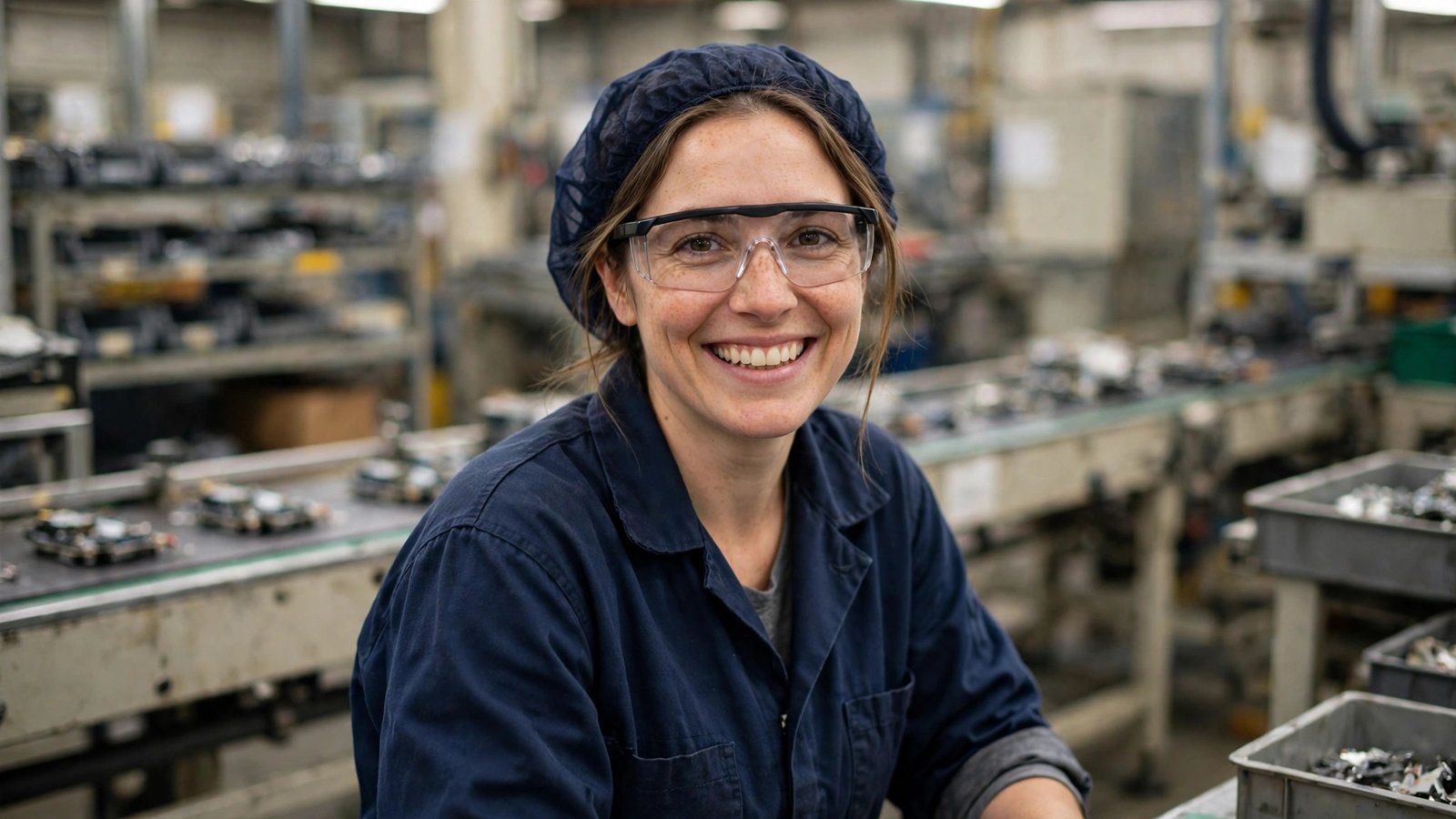
Nigeria Factory Worker Jobs with Visa Sponsorship 2026
Nigeria has a large and growing manufacturing sector. Factories in Lagos, Ogun, Kano, Abuja, Port Harcourt and other industrial areas make food products, beverages, cement, textiles, plastics, packaging, pharmaceuticals, soap, cosmetics, metal goods and building materials. These factories employ thousands of workers, and in 2026 some Nigerian manufacturers are looking for foreign workers to fill roles on production lines, in packing departments, in warehouses and in quality control.
This guide explains Nigeria factory worker jobs with visa sponsorship in 2026 in practical terms. It covers the kinds of factories that hire, what the work involves, what employers look for, how pay and shifts usually work, and what visa sponsorship really means. It does not promise a job or a visa. It gives you an honest picture so you can prepare, apply to genuine employers, and understand the process before you commit to anything.
Factory work suits people who are reliable, careful with detail, able to follow instructions and safety rules, and comfortable working indoors in a structured environment. English is widely used in Nigerian workplaces, which makes the country more accessible for many English-speaking workers. If you have worked in a factory before, your experience will help. If you have not, this guide will show you where beginners can start.
Why Nigeria Needs Factory Workers in 2026
Nigeria’s population of more than two hundred million people creates huge demand for manufactured goods. Food processing plants turn grains, cassava, palm oil, dairy and other raw materials into packaged foods sold across the country. Beverage plants produce soft drinks, water, juices and beer. Cement factories supply the construction sector. Textile and garment factories make clothing and fabrics. Other factories make plastics, paper, chemicals, soap, cosmetics and household goods.
Demand for factory workers rises when production increases, when new factories open, or when large orders arrive. Food and beverage factories, for example, may need extra workers during peak production periods or when new product lines start. Cement and building materials factories may increase production when construction activity is high. In those periods, employers may struggle to fill every shift locally, particularly for night shifts, weekend work, or roles that require specific experience with machinery or quality control.
Larger factories that are formally registered and supply national markets are more likely to have structured hiring processes and to understand immigration paperwork. Smaller workshops may hire locally and informally, and are unlikely to sponsor visas. Your best chances are with established manufacturing companies that have human resources departments, clear job descriptions, and experience with formal employment contracts.
Nigeria’s main industrial areas are in Lagos and Ogun State, where many factories are located in industrial estates close to ports and transport routes. Kano in the north has textile, food and manufacturing activity. Abuja has food, printing and light manufacturing. Port Harcourt has industrial activity linked to oil, gas and petrochemicals. Other cities, including Ibadan, Enugu, Aba and Onitsha, have manufacturing and trading hubs. If you are flexible about location, you may find more opportunities, especially in the Lagos and Ogun industrial corridor.
What Factory Workers Do in Nigeria
Factory work in Nigeria covers a wide range of roles, and your duties will depend on the type of factory and your position. As a general production worker, you may work on a production line, feeding materials into machines, assembling parts, checking products for defects, and packing finished goods into boxes or crates. You may also label products, weigh and count items, and prepare them for dispatch.
In food processing factories, workers wash, cut, sort, mix and pack food products. Hygiene is critical in these roles. You will need to wear protective clothing, wash your hands regularly, follow food safety rules, and keep your work area clean. In beverage plants, workers may operate filling machines, check bottles and cans, label products, and pack them for distribution. In textile factories, workers operate sewing machines, cut fabric, check stitching, iron garments and pack clothing.
In cement, plastics and packaging factories, workers operate machines that mould, fill, seal and stack products, and check quality at different stages. In pharmaceutical and cosmetics factories, workers follow strict hygiene and quality procedures, measure ingredients, fill containers, label products and pack them for sale.
Warehouse and logistics roles are common in Nigerian factories too. Workers in these roles receive deliveries, check goods against orders, store materials in the right place, pick items for dispatch, load and unload trucks and keep stock records. Forklift drivers, where licensed, move pallets and heavy goods around the warehouse and production floor in industrial estates around Lagos and Ogun State.
Quality control workers inspect products, measure and test samples, record results, and report problems to supervisors. Maintenance helpers assist skilled technicians with cleaning, oiling and basic upkeep of machines, and keep tools and spare parts organised.
Most Nigerian factory jobs take place indoors, following a fixed routine and set shift times. On a busy production line in Lagos or Ogun State, each worker repeats one task to a set rhythm, so the pace can feel fast at first. Staying focused, keeping to the order of tasks and working steadily until the scheduled break all matter, and you will be part of a team answering to a supervisor or line leader who checks output through the shift.
Shifts and the Working Week
Many Factory Workers in Nigeria work rotating shifts, including nights and weekends, because production and harvest schedules do not stop for the working week. A Factory Worker should expect a set weekly pattern, scheduled breaks, and overtime during busy periods. Ask the employer how shifts rotate and how overtime is paid before you accept, so the working week holds no surprises.
Requirements and Skills Employers Want
Most general factory roles in Nigeria do not require a university degree, but employers do look for practical qualities and, in some roles, specific experience. Reliability is often the most important quality. Factories depend on workers arriving on time for every shift and completing their tasks consistently. A worker who is regularly late or absent disrupts the line and affects the whole team.
Attention to detail is also valued. Whether you are packing food, operating a filling machine, assembling parts or checking quality, small mistakes can lead to waste, rejected products or safety issues. Employers notice workers who are careful, who check their work, and who report problems rather than hiding them.
Physical fitness and stamina matter, though factory work is generally less physically demanding than construction or farm work. You may need to stand for long periods, lift boxes, move materials, and work at a steady pace through a shift. Some roles involve repetitive movements, so you need to be able to maintain concentration and care over time.
A background in factory work gives your Nigerian application a real lift, above all if you have already worked on a production line, in a food processing plant, in textiles or in a warehouse. Say which machines you ran, whether a mixer, a sealer, a cutting machine or a forklift, and describe what you did with them. Any experience with quality checks or stock control is worth adding, together with copies of licences or certificates for forklift driving or machine operation.
English is the official language of Nigeria and is widely used in factories, in offices, and in written instructions and safety documents. That is a practical advantage for English-speaking applicants. You should be able to read simple instructions, understand safety signs, and communicate clearly with your supervisor and colleagues. Learning a few polite phrases in a local language can help you build good relationships, but it is not usually required for factory work.
In a Nigerian factory, a careful approach to safety is not optional. Each plant sets rules on protective clothing, guards on machines, electrical safety and how materials are handled, and you may need safety shoes, gloves, ear defenders, a hair net or an apron according to the line you work on. Those rules protect everyone on the floor, so follow them from your first day.
A factory application in Nigeria usually calls for a valid passport, a CV that sets out your work history, and references from employers you have worked for. Certificates strengthen the file, whether for operating machinery, food hygiene, forklift driving or first aid, so attach copies where you have them. Keep a digital set and a paper set of everything you submit.
Pay and Conditions: The Honest Picture
Pay for factory workers in Nigeria varies by employer, city, industry, experience and shift. Workers in Lagos and Ogun may be paid differently from those in smaller cities. Skilled machine operators and quality control staff usually earn more than general production workers. Night shifts and overtime may attract additional pay, depending on the employer and the contract.
It is not possible to give one fixed salary figure that applies to all factory jobs in Nigeria, and any source that quotes a single number should be treated with caution. The honest position is that pay varies, and the exact amount will be set out in your job offer and employment contract. Before you accept an offer, make sure you understand how much you will be paid, how often, what your shift pattern will be, what overtime arrangements apply, and what benefits are included.
Working hours in factories are usually organised in shifts. A factory may run one, two or three shifts a day, and you may be asked to work mornings, afternoons, nights, or rotating shifts. Weekend work may be required, particularly in food processing during busy periods. Your contract should state your working hours, your rest days, and your leave entitlement. Read it carefully and keep a copy.
Some employers provide meals during shifts, transport to and from the factory, or an allowance for meals and transport. Others expect workers to arrange their own. Accommodation is less commonly provided for factory workers in cities than it is for workers on remote projects, so you should ask about housing and living costs in the city where the factory is located. If you are moving to Lagos, for example, find out about rents, transport and daily expenses before you accept an offer.
Treat health and safety as a priority in a Nigerian factory. A properly run plant should train you when you start, supply the protective equipment your role needs, and explain what to do if there is an accident or an emergency. Use the training, wear the equipment, and tell your supervisor straight away about any hazard or injury you notice.
Your Application, Step by Step
Start by preparing your documents. Update your curriculum vitae so it clearly lists your factory or warehouse experience, the machines you have used, the products you have worked with, and any quality or safety training you have completed. Include references and copies of certificates where relevant.
Next, research genuine employers. Look for established manufacturing companies in Nigeria, particularly in Lagos, Ogun, Kano and Abuja, that make food products, beverages, cement, textiles or packaging. Check their websites, their products, and any careers pages. Focus on companies that appear professional, have clear contact details, and have a history of formal employment.
Then search for vacancies. Use job portals that list work in Nigeria, company career pages, and recruitment agencies that work with manufacturers. Search using terms for factory work, production, packing, warehouse and quality control. Save the details of each vacancy you apply for.
Submit a clear application following the instructions in the advert. Include your curriculum vitae and a short message introducing yourself, describing your factory experience, explaining why you want to work in Nigeria, and stating that you would need visa sponsorship to work lawfully. Be honest about your experience and availability.
Prepare for an interview, which may be by phone or video call. The employer may ask about your previous factory work, the machines you have operated, how you handle quality checks, how you work in a team, and how you cope with shift work. Prepare examples from your own experience.
If you receive an offer, review it carefully in writing. It should state the job title, duties, location, pay, shift pattern, contract length, and any benefits such as meals or transport. It should also state whether the employer will support your visa and work permit application. Ask for clarification in writing if anything is unclear, and do not accept an offer that exists only in informal messages without a proper document.
Work through the Nigerian visa steps with your employer’s help, sending each document they ask for promptly and exactly as requested. Keep copies of everything you send, stay in contact with the factory while the application is processed, and reply quickly if the immigration office asks for more information. Do not travel until you hold the correct visa or permission to work in a Nigerian factory.
Before you travel, confirm your start date, shift pattern, and transport arrangements with the employer. Bring your original documents, your contract and your visa paperwork. Read about the city where you will live, including housing, transport, shops and healthcare.
What Sponsorship Really Means for Factory Worker Applicants
Visa sponsorship in Nigeria does not guarantee a visa. It means an employer is willing to support your application by providing the employment documents that Nigerian immigration authorities need, such as a job offer and a contract. The final decision is made by the authorities, not by the employer and not by any agent.
Nigeria has different visa and work permit categories, and the right one depends on the type of work, the length of stay, and your circumstances. The employer, or a migration adviser they work with, should explain which category applies and what documents are needed. You may be asked for your passport, the employment contract, employer registration details, and in some cases proof of experience, police clearance or medical information. Requirements can change, so check the most recent guidance from the Nigerian immigration authorities or the Nigerian embassy or consulate in your country.
Factory jobs in Nigeria attract false offers too, so be wary of anyone who promises a visa for money or says approval is guaranteed. A genuine factory in Lagos or Ogun State hires workers for the role and does not sell the position. If you are asked to pay a large sum before you hold a real written offer, if the company cannot show clear registration details, or if you are hurried into paying, treat it as a warning sign and get advice before you send anything.
Processing times for visas and work permits vary and cannot be fixed in advance. They depend on the category, the completeness of your application, and the workload of the authorities. Allow enough time, provide complete documents, and do not travel to Nigeria for work or leave a current job until your visa status is clear.
How to Improve Your Chances
Tailor your curriculum vitae to each role, highlighting the experience that matches the job description. Collect references from previous factory employers or supervisors. Keep a simple record of machines you have operated and products you have worked with.
A short course before you apply can lift a Nigerian factory application. Food hygiene suits food plants, machine safety and quality control suit production lines, and a forklift licence opens warehouse work. First aid is useful anywhere. Whatever you study, check the certificate is still valid and keep a copy ready to send with your application.
Nigerian factories often run around the clock, so a worker who can take nights or weekends has more openings than one who can only work weekday mornings. If you can cover a rotating roster, say so in your application. Be straight about the hours you can manage and when you can start, and keep a simple list of each application you send and each reply you receive.
Mistakes to Avoid When You Apply
One mistake Nigerian factory applicants make is sending the same application to every factory vacancy without reading what the plant actually needs. Read the description, apply only where your experience fits, and adjust each application to the role. Another mistake is paying an agent who promises a guaranteed job or visa. No one can guarantee a visa, and a fee for the job itself is a warning sign, so verify the factory or agent before you pay anything.
Skipping safety training is another common mistake in factory work. Nigerian plants enforce strict rules, and a worker who ignores an induction, works without protective equipment or uses a machine they have not been trained on endangers themselves and their colleagues. Attend every induction, wear what you are given, and ask when anything is unclear.
Accepting an offer without a written contract is also a serious mistake. Always get pay, hours, shifts and visa support in writing and keep a copy. Do not rely on verbal promises alone. Do not travel to Nigeria on a tourist or visit visa intending to work. Working without the correct permission can lead to fines, removal, and future visa problems. Wait for the correct visa before you start work.
Living in Nigeria as a Foreign Worker
Factory workers in Nigeria usually live in cities, where life offers many opportunities to explore. Lagos has markets, beaches, restaurants, music and business activity. Abuja has modern buildings, parks and government institutions. Kano has historic markets and trading culture. In your free time, you can try Nigerian food, learn about local festivals, and meet people from many backgrounds.
Living costs vary by city. Lagos is generally more expensive than smaller cities, especially for rent and transport. Before you accept a job, find out about typical rents in the area near the factory, the cost of transport, and daily expenses. Sharing housing with colleagues is common for foreign workers, and it can help with costs and with settling in.
English is widely spoken, which helps in daily life as much as at work, from shopping and using transport to visiting a doctor and making friends. Nigerians are often warm and welcoming, and workers who show respect, work reliably and make an effort to learn about local culture are more likely to settle in well and be invited to stay longer.
What Applicants Want to Know
Do I need factory experience to work in Nigeria? Experience helps, especially for machine operation, quality control and warehouse roles. Some employers consider beginners for general production and packing roles if they are reliable, careful and willing to learn. If you have no experience, basic training in food hygiene, safety or warehouse work can help.
Can a Nigerian factory sponsor my visa? Some larger, formal factories can support a visa and work permit application with employment documents. Sponsorship is not guaranteed, and the final decision rests with Nigerian immigration authorities. Small or informal workshops are unlikely to be able to offer this support.
Do I need to speak a Nigerian language? English is the official language and is widely used in factories, so it is usually sufficient for work. Learning a few phrases in a local language can help you build relationships, but it is not usually required.
What documents do I need? A valid passport, a curriculum vitae, and evidence of experience or certificates where relevant are normally needed to apply. For a visa and work permit, you may need an employment contract, employer details, and possibly police or medical documents. Requirements depend on the category, so check the latest official guidance.
How long does the visa process take? Processing times vary and cannot be fixed in advance. They depend on the category, the completeness of your application, and the workload of the authorities. Allow plenty of time and do not travel until your visa is confirmed.
Will accommodation be provided? It depends on the employer. Some factories provide transport or meal allowances, but accommodation is less commonly provided for city factory jobs than for remote projects. Ask about this before you accept an offer and get the details in writing.
What shifts will I work? A Nigerian factory may run morning, afternoon, night or rotating shifts, and the pattern should be written in your contract. Busy periods can bring weekend work. Ask about the roster, rest days and overtime before you accept, so the working week holds no surprises.
Can I bring my family? That depends on the Nigerian visa type and the rules in force when you apply. Some work visas allow dependants to join you, while others cover the worker only. Discuss it with your employer and check the current Nigerian immigration rules before making plans for family to travel.
Final Word
Nigeria factory worker jobs with visa sponsorship in 2026 offer a real opportunity for foreign workers who are reliable, careful and willing to work in a structured industrial environment. Nigeria’s food, beverage, cement, textile and manufacturing sectors need workers, and larger formal factories are sometimes able to support visa applications for the right candidates. At the same time, sponsorship is never guaranteed, pay varies by employer, city and role, and the final visa decision rests with the Nigerian authorities.
If you want to work in a Nigerian factory, prepare your documents, research genuine employers, and apply carefully to roles that match your experience. Read every offer in full, ask about pay, shifts, benefits and visa support in writing, and avoid anyone who promises a guaranteed job or visa for a fee. With honest preparation and a professional approach, you can give yourself the best chance of finding lawful factory work in Nigeria and building useful experience in a growing manufacturing sector.


