Croatia Jobs with Visa Sponsorship 2026
Introduction
Croatia Jobs with Visa Sponsorship 2026 is the guide for anyone in Pakistan or India who wants a legal job in Europe on the Adriatic coast. Croatia, a member of the European Union and the Schengen area since 2023, hires tens of thousands of foreign workers every year, and hotels, restaurants and resorts on the coast are among the biggest employers. In the first nine months of 2026 alone, Croatia issued 124,023 work permits, and tourism and hospitality accounted for 48,156 of them. There is no annual quota on foreign workers, so if an employer wants to hire you and the labour market test is passed, there is no lottery and no cap standing in your way.
This article gives you the facts you need before you apply. You will learn who can apply, which jobs are open, what the pay really is, which visa route fits your situation, and how to apply step by step without falling for scams. The shortest version is this. You need a job offer from a Croatian employer, a valid passport, a clean criminal record and a health check. The employer applies for your work and residence permit, and you apply for a visa at the Croatian embassy. No agent can guarantee you a job, a permit or a visa, and anyone who promises one for a fee is almost certainly running a scam. Croatia Jobs with Visa Sponsorship 2026 is worth reading in full, because the rules changed in June 2026 and many older guides online are now out of date.
The Guest-Facing Job: What a Shift Looks Like
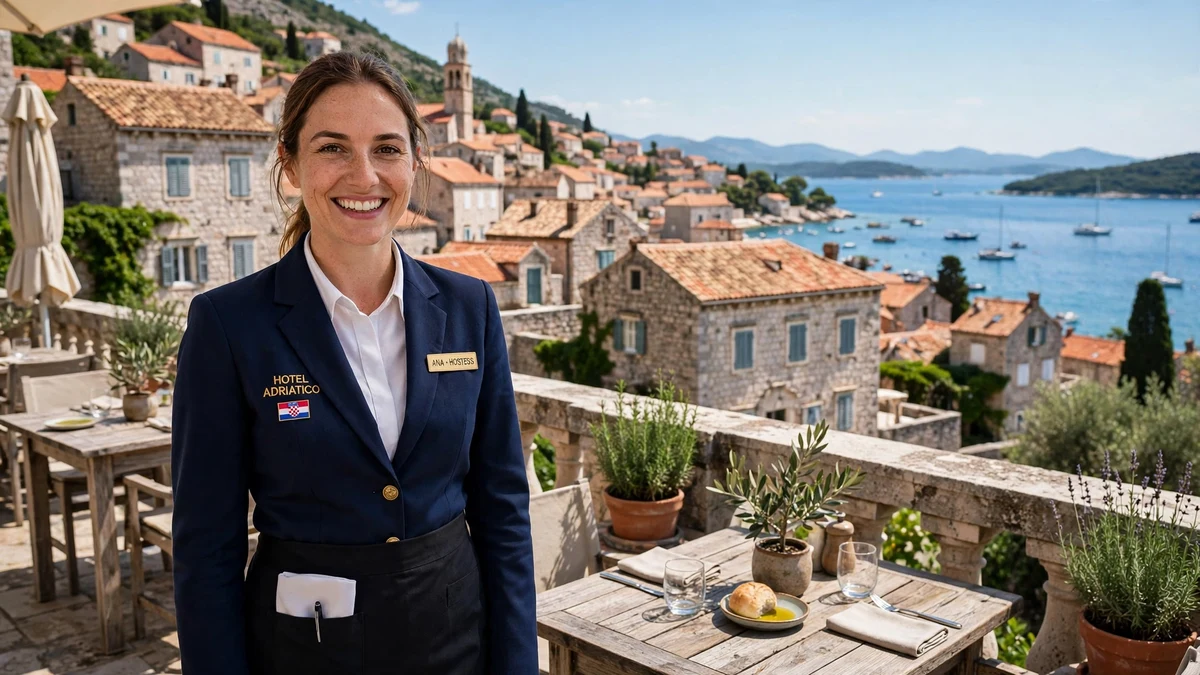
Most visa-sponsored jobs in Croatia for workers from Pakistan and India are guest-facing roles in hotels, resorts, restaurants and cafes. The most common openings are housekeeping, waiters and waitresses, kitchen helpers, dishwashers, receptionists, bartenders, cooks and cleaners. A typical shift in a hotel runs for eight hours, often from early morning until the afternoon, or from the afternoon until late evening. In the summer season, from May to September, the work is busy and overtime is common, and many hotels are full for weeks at a time.
A housekeeper cleans and prepares rooms between guests, changes linen, restocks supplies and reports anything broken to maintenance. A waiter takes orders, serves food and drink, clears tables and handles payments. A kitchen helper washes dishes, peels vegetables, cleans work surfaces and helps the cooks during the rush. A receptionist greets guests, checks them in and out, answers questions and handles bookings. The work is physical, and you will be on your feet for most of the shift, but it is also social. You will meet guests from all over the world, and good manners and a friendly attitude matter as much as speed.
Many hotels provide staff meals during the shift and a uniform, and some provide shared accommodation near the hotel, often with the cost taken from your salary. Seasonal workers in coastal resorts often live in staff housing a short walk from the hotel. The season is intense, but workers who do well are often invited back the next year, and some move from a seasonal contract to a year-round job in the same hotel.
Where the Jobs Are in Croatia
Tourism jobs are concentrated on the Adriatic coast and in the capital. Dubrovnik, Split, Zadar, Sibenik, Rijeka and Pula are the main coastal cities, and the islands of Hvar, Brac and Korcula also hire large numbers of seasonal workers. Zagreb, the capital, has year-round hotel and restaurant jobs, as well as office, warehouse and construction work. The Istrian peninsula in the north-west, around Rovinj and Pore, has many resorts and campsites that hire foreign workers for the summer.
Construction is the other big employer of foreign workers in Croatia. In 2025, construction took 52,776 work permits, more than any other sector. Builders, electricians, welders, plumbers and general labourers are in demand in Zagreb, Split and Rijeka, where new hotels, apartments and roads are being built. Agriculture, food processing and warehouse work also hire foreign workers, but tourism and construction together make up more than 60 percent of all permits, so these are the two sectors where a new applicant has the best chance.
The largest groups of foreign workers in Croatia in 2026 come from Bosnia and Herzegovina, Serbia, the Philippines and Nepal. Workers from Pakistan and India are a smaller group, but their numbers are growing as employers look further afield for staff. Hotels that have already hired Filipino and Nepali workers are often open to hiring from South Asia too, because they already know how to handle the paperwork. When you search for jobs, look for hotels and resorts that have hired foreign workers before, as they will understand the permit process and will not be surprised by it.
Pay, Tips and Benefits
Pay in Croatia is set in euros, and the figures below come from official statistics for 2026. The minimum wage in 2026 is 1,050 euros gross per month, which is around 317,000 Pakistani rupees. The average net salary in Croatia in the first half of 2026 was 1,542 euros per month, which is around 466,000 Pakistani rupees. These are averages across all jobs. Hotel and restaurant workers usually earn less than the average, while skilled trades workers earn more.
A housekeeper or kitchen helper in a coastal hotel typically earns between 1,000 and 1,300 euros gross per month, plus tips and free meals. A waiter in a busy restaurant in Dubrovnik or Split can earn more, because tips in tourist areas are generous, and a good waiter can add several hundred euros a month in tips. A cook with experience can earn 1,300 to 1,800 euros gross per month, and a receptionist with good English usually earns 1,200 to 1,500 euros gross. Construction workers earn around 1,200 to 1,600 euros gross per month, depending on the trade and the city.
Your salary is paid into a bank account, and tax and social insurance are taken from it before you are paid. Health insurance is included through the Croatian health system once your permit is approved, so you can see a doctor without paying the full cost. Many hotels also give staff a free meal on shift, a uniform, and help with finding a place to live. Rent is the biggest cost to plan for. A room in a shared flat in Split or Dubrovnik costs around 300 to 500 euros a month, while a room in a smaller town can cost 200 to 350 euros. In Zagreb, rents are higher, at 400 to 600 euros for a room. Workers who save carefully can send money home, but the realistic monthly saving for a single worker in Croatia is around 200 to 450 euros after rent, food and transport.
Requirements and Language
To work in Croatia as a citizen of Pakistan or India, you need a job offer from a Croatian employer, a passport valid for at least six months beyond your planned stay, a clean criminal record certificate from your home country, and a medical certificate showing you are fit to work. Your documents must be translated into Croatian by a certified translator, and your criminal record certificate usually needs an apostille, which is an official stamp that proves the document is genuine. Your employer will tell you exactly which documents they need.
You do not need to speak Croatian to get a hospitality job, because English is the working language in most hotels and resorts on the coast, and many hotels also value German or Italian. But learning some basic Croatian will help you in daily life, in shops, on buses and with landlords, and it will make your employer more likely to keep you. From June 2027, workers who have lived in Croatia for one year will need to pass a basic Croatian language exam at level A1.1 when they renew their permit, and the employer pays the cost of the exam. It is wise to start learning the basics as soon as you arrive.
For most hospitality jobs, no degree is needed, but experience helps. A cook needs proven kitchen experience, a waiter needs good English and a polite manner, and a housekeeper needs to be fast, careful and reliable. For higher paid roles, a degree matters. The EU Blue Card, for highly qualified workers, needs a university degree and a salary of at least 3,024 euros gross per month in 2026, or 2,419.20 euros if you graduated less than three years ago. Most hotel and restaurant jobs do not reach that salary level, so the Blue Card is mainly for IT workers, engineers and other professionals, not for hospitality staff.
The Visa Route for Hospitality Workers in Croatia
The main route for most workers is the single permit for stay and work. Your Croatian employer applies for this permit on your behalf, and it covers both your right to live in Croatia and your right to work. Before the permit is granted, the Croatian Employment Service, known as HZZ, carries out a labour market test. This means the employer must show that no suitable Croatian, EU or Swiss worker was available for the job. This test replaced the old quota system, which was abolished in 2021. There is no cap on how many permits can be issued, but the labour market test must still be passed.
The rules changed in June 2026, and the changes are mostly in your favour. A work permit now lasts for up to three years instead of one year. You can also change employer after six months with your first employer, without needing a new permit, as long as the new job passes the labour market test. Before the change, you had to wait twelve months. The fee for a single permit is around 95 euros, and processing usually takes around 30 days once the application is complete. Once the permit is approved, you apply for a long-stay visa, called a type D visa, at the Croatian embassy in your country, and then you travel to Croatia.
Seasonal work is a second route. If you are hired for a hotel or restaurant for the summer season, you can get a seasonal work visa, which costs around 47 euros and is processed in about 15 days. Seasonal permits last for a maximum of six months. This route is faster than the single permit and is a good way to get your first job in Croatia, but you will need to leave or switch to a longer permit when the season ends. The EU Blue Card is a third route, for degree holders in high paid jobs, and it runs for up to four years and lets you move to another EU country after twelve months. A fourth option, the digital nomad visa, is for people who work online for a foreign employer, not for people taking a job in Croatia, so it does not apply to hotel or restaurant work.
How to Apply Step by Step
Start by preparing your documents. Make sure your passport is valid, get your criminal record certificate and have it apostilled, and gather proof of your work experience, such as reference letters from past employers. Write a simple CV in English with your photo, your work history, your skills and your contact details. A short cover note saying why you want to work in Croatia and what experience you have will help your application stand out.
Next, find real job openings. Look for hotel and resort websites directly, especially large hotel groups on the coast, and check job boards that list Croatian employers. You can also check the Croatian Employment Service website, where employers post vacancies. Apply to the hotel or the employer directly, not through an unknown agent. A genuine employer will never ask you to pay for a job offer, and will never ask for your passport or your bank details by email or WhatsApp. If someone asks for money before you have a signed contract, stop and walk away.
When an employer offers you a job, they will send you a contract to sign. Read it carefully before you sign, and check the salary, the working hours, the job title, the start date and whether accommodation and meals are included. Keep a copy of the signed contract. The employer then applies for your work permit, and you will need to send them your documents. Once the permit is approved, apply for your type D visa at the Croatian embassy, with your passport, the permit approval, your contract, proof of accommodation and health insurance. Book your flight only after the visa is in your passport, and carry your contract and permit documents with you when you travel.
Mistakes That Cost Applicants the Job
The most common mistake is paying an agent for a job that does not exist. Many workers from Pakistan and India have lost money to agents who promise a Croatia work permit for a fee and then disappear, or who send a fake contract. A real job offer comes from the employer, not from an agent, and the employer pays the cost of the permit application. Never pay for a job offer, never send money by wire transfer to a stranger, and never give your passport to anyone except the embassy or a government office.
Another common mistake is applying with incomplete or untranslated documents. If your criminal record certificate has no apostille, or your documents are not translated into Croatian, your application will be delayed or refused. Get your documents ready before you apply, and ask the employer exactly what they need. A third mistake is signing a contract you have not read. Some workers arrive in Croatia to find a different salary, different hours or different accommodation from what they were promised. Always read the contract, and if the terms are different from what was agreed, ask the employer to correct it before you sign.
A fourth mistake is overstaying a seasonal permit. A seasonal visa lasts for six months at most, and you must leave Croatia or switch to a longer permit before it ends. Overstaying can lead to a fine, a ban from the Schengen area and a refused permit in future. Finally, do not buy a flight ticket before your visa is approved. Flights are expensive, and if your visa is delayed or refused, you will lose the money. Wait until the visa is in your passport.
Life and Working in Croatia
Croatia is a safe and beautiful country, with a long Adriatic coastline, historic old towns and a slower pace of life than in Western Europe. The cost of living is lower than in Germany or France, but higher than in Pakistan or India, and Dubrovnik is the most expensive city in the country. Food, transport and healthcare are affordable, and the public transport in cities is reliable. Many Croatians speak English, especially younger people and those working in tourism, so daily life is manageable even without Croatian.
Working hours in Croatia are usually 40 hours a week, with overtime paid extra. You are entitled to at least 20 days of paid holiday a year, plus public holidays, and to sick leave if you fall ill. Your employer must give you a written contract, pay your salary on time into a bank account, and register you for health and pension insurance. If an employer does not do these things, you can contact the labour inspectorate or ask the Croatian Employment Service for help. Keep copies of your contract, your payslips and your permit, and keep them safe.
Life on the coast is busiest in summer and quieter in winter. Many seasonal workers return home in winter or move to Zagreb for winter work in hotels and restaurants. The food is Mediterranean, with grilled fish, olive oil, bread and fresh vegetables, and halal food is available in larger cities and in some restaurants, though it is less common in small towns. There are mosques in Zagreb, Rijeka and Split, and a growing community of workers from South Asia, so you will not be alone.
Frequently Asked Questions
Can I get a Croatia work permit without a job offer?
No, you cannot get a work permit without a job offer. The employer applies for the permit on your behalf, and the labour market test is based on a specific job. You need a signed contract before the permit process can start. Be careful of anyone who offers to get you a permit without a job, as this is not how the system works.
How long does a Croatia work permit take?
A single permit usually takes around 30 days once the application is complete, and the type D visa takes a few more weeks after that. The whole process, from job offer to visa in your passport, usually takes two to three months. Seasonal visas are faster, at around 15 days, but they last for six months at most.
What is the minimum salary for a job in Croatia in 2026?
The minimum wage in Croatia in 2026 is 1,050 euros gross per month. Most hotel and restaurant jobs pay between 1,000 and 1,500 euros gross per month, plus tips and meals. The average net salary across all jobs in Croatia in the first half of 2026 was 1,542 euros per month.
Can I bring my family to Croatia on a work permit?
Yes, in most cases you can apply for family reunification after you have lived and worked in Croatia for a period of time, usually after one year. Your family members will need their own residence permits, and you will need to show that you have enough income and a place to live. The exact rules depend on your permit type, so check with the police administration in Croatia when you arrive.
Do I need to speak Croatian to work in a hotel?
No, you do not need Croatian to get a hotel job, because English is the working language in most coastal hotels and resorts. But learning basic Croatian will help you in daily life and will help you keep your job. From June 2027, workers renewing a permit after one year of residence will need to pass a basic Croatian exam at level A1.1, and the employer pays for the exam.
Is Croatia a good country for workers from Pakistan and India?
Croatia offers legal work, a European salary, health insurance and a path to long-term residence, which makes it attractive for many workers. The main challenges are the cost of rent in tourist cities, the seasonal nature of many hotel jobs, and the distance from home. Workers who plan carefully, avoid agents who charge fees, and learn some Croatian tend to do well and are often invited back for another season.
Final Word
Croatia Jobs with Visa Sponsorship 2026 offers a real and legal route into Europe for workers from Pakistan and India, but it rewards patience and careful planning. The country hires tens of thousands of foreign workers every year, most of them in tourism and construction, and the rules changed in June 2026 to make permits last longer and to let workers change employer sooner. A job offer, clean documents and a genuine employer are the three things that matter most. No agent can guarantee you a permit or a visa, and the safest path is always the direct one, from you to the employer.
If you want to work in Croatia, start today. Prepare your documents, write a clear CV, apply to hotels and resorts directly, and read every contract before you sign it. The Adriatic coast needs workers, and the hotels that hire foreign staff every year are used to the process. With the right preparation, a summer season in Split or Dubrovnik can be the first step towards a longer career in Europe.