Top 16 Animals That Glow in the Dark
Some animals can produce their own light, a natural ability called bioluminescence, and others can glow when they are disturbed or when light hits them in a certain way. This glow is not magic, but chemistry. Inside the animal, a light-making chemical called luciferin reacts with oxygen, often with the help of an enzyme called luciferase, and the reaction releases light with very little heat. Animals use this light for many reasons: to attract a mate, to lure prey, to scare away predators, to communicate, and to blend in with faint light from above. Most glowing animals live in the deep ocean, where sunlight cannot reach, but some live in forests, caves, and fields. In this list, we meet sixteen animals that glow in the dark, from tiny fireflies to giant deep-sea fish.
What Makes These Animals Special
What makes glowing animals special is that they make their own light, without heat, through a chemical reaction called bioluminescence. The firefly flashes its light in patterns that attract a mate, the glow worm hangs glowing threads to lure insects, and the railroad worm glows green along its body and red on its head, like a tiny train. In the deep sea, the lanternfish, the anglerfish and the viperfish use light to hunt, communicate and hide in a world where the sun never reaches.
Other animals on this list glow for protection or for hunting. The crystal jelly and the dinoflagellates light up when disturbed, startling predators with a sudden flash, while the bobtail squid and the vampire squid use light to hide: they glow from below to match the faint light from above, so predators looking up cannot see their silhouette. The flashlight fish carries glowing bacteria in pouches under its eyes, and the cookiecutter shark uses a glowing belly to lure fish close enough to bite.
1. Firefly
The firefly is the most famous glowing animal on land, and it is actually a beetle, not a fly. Fireflies live in fields, gardens, and forests around the world, especially in warm and humid places. At night, males fly around flashing patterns of yellow-green light from their abdomens, while females answer from the grass below. Each species has its own flashing pattern, like a secret code, which helps males and females of the same species find each other. The light is made by a chemical reaction in a special organ, and it produces almost no heat, which is why it is sometimes called cold light. Firefly larvae also glow, which warns predators that they taste bad. Sadly, firefly numbers are falling in many places because of habitat loss and light pollution.
2. Glow Worm
The glow worm is not a worm at all, but the larva or adult female of certain beetles, and it is known for the soft green light it produces at night. In Britain, the female common glow worm cannot fly, so she climbs onto a plant and glows to attract a flying male. In New Zealand, the glow worm is the larva of a fungus gnat, and thousands of them light up the ceilings of caves like a starry sky. These cave glow worms hang sticky silk threads to catch small insects, and their light attracts prey to the threads. Glow worms live in damp, dark places such as caves, woodland, and riverbanks, where their light can be seen clearly. They are a reminder that even tiny animals can create a beautiful display.
3. Railroad Worm
The railroad worm is a beetle larva from Central and South America that glows in two colours at once, which is very rare in nature. Its body produces a soft green light, while its head glows red, a little like the lights on a train, which is how it got its name. Railroad worms live on the forest floor, where they hunt snails, slugs, and other small animals. The green lights along their body may warn predators that they are toxic, while the red light on the head may help them see or attract prey. They are slow-moving animals that spend most of their time in leaf litter and damp soil. Seeing one at night in a tropical forest is a rare and memorable experience for any nature lover.
4. Lanternfish
Lanternfish are small deep-sea fish that are found in oceans all over the world, and they are one of the most common fish in the deep sea. They have rows of small light-producing organs, called photophores, along their bodies, which glow with a soft blue-green light. Lanternfish use this light to blend in with faint light from the surface, a trick called counter-illumination, which makes them harder to see from below. Every night, huge numbers of lanternfish swim up toward the surface to feed on tiny plankton, then swim back down during the day. This daily migration is one of the largest movements of animals on Earth, and it helps move nutrients between the deep sea and the surface.
5. Anglerfish
The anglerfish is a deep-sea predator famous for the glowing lure that dangles in front of its mouth like a fishing rod. The lure contains light-making bacteria, and the fish can move it to attract curious prey in the darkness. When a small fish or shrimp comes close to investigate the light, the anglerfish opens its huge mouth and swallows it whole. Female anglerfish are much larger than males, and in some species the tiny male attaches itself to the female for life. Anglerfish live at depths where no sunlight reaches, so their glowing lure is one of the few sources of light in their world. Their large teeth and expandable stomachs let them eat prey almost as big as themselves.
6. Viperfish
The viperfish is a fierce deep-sea fish with a long, thin body, huge fangs, and glowing organs along its belly. It lives in tropical and temperate oceans at depths of hundreds of metres, where sunlight is very faint or absent. Its photophores produce light that helps it blend in with the dim light from above, while a glowing lure on its back helps attract prey. Viperfish have a hinged jaw that can swing open wide, and their needle-like teeth fold back to let prey slide in but not escape. They are thought to migrate toward the surface at night to feed, then return to deeper water during the day. Despite their fearsome look, viperfish are usually only about thirty centimetres long.
7. Crystal Jelly
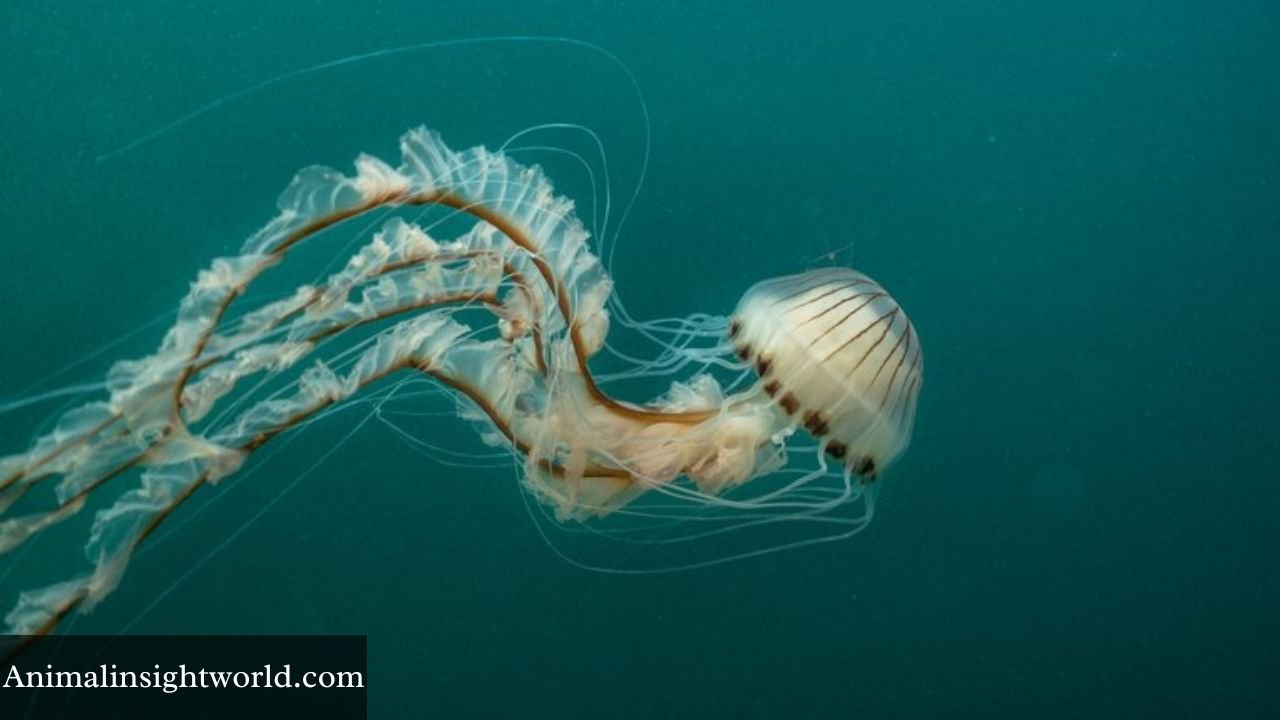
The crystal jelly is a nearly transparent jellyfish that lives in the Pacific Ocean and is famous for its soft green glow. Its light comes from a protein called green fluorescent protein, which scientists have used in medical research to track cells and study diseases. This discovery was so important that it won a Nobel Prize, and it shows how studying glowing animals can help human medicine. Crystal jellies drift through the water, eating small fish and plankton that they catch with their tentacles. They have no brain, heart, or bones, yet they can sense light and movement. Their glow may help them confuse predators or communicate with other jellies in the dark ocean.
8. Dinoflagellates
Dinoflagellates are tiny single-celled organisms that live in the ocean and can make the water glow blue when they are disturbed. On warm nights in tropical bays, waves, boats, and swimmers can trigger a sparkling blue light, a natural display known as bioluminescent plankton. The light is produced by a chemical reaction inside the cells, and scientists think it may startle predators or attract larger animals that eat the predators. Dinoflagellates are also important because many of them can photosynthesise, producing oxygen and food for other marine life. Some species can cause red tides, which can harm fish and other animals, but the glowing species are mostly harmless. Their glow is one of the most beautiful sights in the ocean.
9. Bobtail Squid
The bobtail squid is a small squid, usually only a few centimetres long, that lives in shallow coastal waters and has a remarkable way of using light. It carries glowing bacteria in a special organ under its body, and it uses this light to match the moonlight and starlight from above, making its shadow disappear. This helps it hide from predators looking up from below, a trick called counter-illumination. During the day, the squid buries itself in sand, and at night it comes out to hunt shrimp and small fish. The relationship between the bobtail squid and its bacteria is a classic example of symbiosis, where two species help each other survive. Scientists study this squid to learn more about how animals and bacteria work together.
10. Vampire Squid
The vampire squid is a deep-sea animal that looks like a mix of a squid and an octopus, with dark red skin, large blue eyes, and webbed arms. It lives in oxygen-poor waters at depths of hundreds of metres, where it feeds on marine snow, the tiny particles of dead plants and animals that drift down from above. When threatened, the vampire squid can release a glowing cloud of mucus that confuses predators, giving it time to escape. It can also produce flashes of light from the tips of its arms, which may startle an attacker. Despite its frightening name, the vampire squid does not suck blood and is a gentle animal. Its large eyes are among the largest in the animal kingdom relative to its body size.
11. Flashlight Fish
The flashlight fish is a small reef fish that carries glowing bacteria in pouches under its eyes, which shine like torches in the dark. It lives in coral reefs in the Pacific and Indian Oceans, and it is most active at night, when it comes out to feed on plankton. The fish can turn its lights on and off by opening and closing a dark flap over the pouch, and it uses this blinking to communicate with other flashlight fish and to confuse predators. Some scientists think the light also helps the fish see prey in the dark, like a headlamp. Flashlight fish often swim in schools, and their blinking lights can create a moving pattern that is hard for a predator to follow. They are a favourite sight for night divers.
12. Hatchetfish
The hatchetfish is a small, silvery deep-sea fish with a deep, flattened body shaped a little like a hatchet. It lives in the twilight zone of the ocean, where a small amount of sunlight still reaches, and it has light-producing organs along its belly. These organs help it blend in with the faint light from above, making it harder for predators below to spot its silhouette. Hatchetfish have large, upward-pointing eyes that help them see the silhouettes of prey above them, and they feed on small crustaceans and other tiny animals. They are usually only a few centimetres long, but they are an important part of the deep-sea food chain, eaten by larger fish and squid. Their silvery scales reflect light, adding to their camouflage.
13. Cookiecutter Shark
The cookiecutter shark is a small shark, usually less than fifty centimetres long, that gets its name from the round, cookie-shaped bites it takes out of larger animals. Its belly glows with a soft green light, except for a dark patch under its throat, which looks like a small fish from below. Larger predators and prey are attracted to this dark patch, thinking it is a small meal, and when they come close, the cookiecutter shark bites them and twists, removing a plug of flesh. It feeds on tuna, dolphins, whales, and even other sharks, and it rarely kills its victims. Cookiecutter sharks live in deep tropical waters and come closer to the surface at night to feed. Their glowing belly helps them hide in the open ocean.
14. Atolla Jellyfish
The Atolla jellyfish, also called the crown jelly, is a deep-sea jellyfish with a distinctive crown-shaped bell and a remarkable defence. When it is attacked, it produces a bright, swirling display of blue light, like a burglar alarm, which attracts larger predators that may eat its attacker. This clever trick turns the tables on the predator, using light to call for help. Atolla jellies live at depths of more than a thousand metres, where they drift through the water and catch small crustaceans with their tentacles. They have no brain or eyes, yet they can produce one of the most impressive light displays in the ocean. Their red colour is invisible in the deep sea, where red light does not reach.
15. Siphonophore
A siphonophore is not a single animal but a colony of tiny animals, called zooids, that work together as one organism. Some siphonophores can grow to more than forty metres long, making them among the longest animals in the world. Many species glow with blue or green light, and they use this light to attract prey, warn off predators, and communicate within the colony. The Portuguese man o’ war is a famous siphonophore, although it lives at the surface and does not glow as strongly as its deep-sea relatives. Deep-sea siphonophores drift through the water, trailing long tentacles armed with stinging cells that catch small fish and crustaceans. Their glow is a reminder that some of the strangest animals in the ocean are colonies, not individuals.
16. Motyxia Millipede
The Motyxia millipede is a glowing millipede that lives in the forests of California, in the United States. It is a small, blind millipede with a pale, yellowish body that glows green in the dark. The light comes from a chemical reaction in its body, and it is thought to warn predators that the millipede is toxic, because it produces cyanide as a defence. Motyxia millipedes live under logs and in leaf litter, where they eat decaying plant matter and help recycle nutrients in the forest. They are active at night, when their glow is most visible, and they are one of the few land animals outside the tropics that can produce their own light. Their glow shows that bioluminescence is not only a deep-sea trick, but a land trick too.
From fireflies flashing in a summer field to anglerfish luring prey in the deep ocean, glowing animals use light in many clever ways. Some glow to find a mate, some to catch food, some to hide, and some to warn predators away. The chemistry behind the glow is similar in many species, yet each animal has evolved its own pattern, colour, and purpose. Studying these animals has already helped science, from the green fluorescent protein of the crystal jelly to new ideas about communication and camouflage. The next time you see a firefly or hear about glowing waves on a beach, remember that you are seeing one of nature’s oldest and most beautiful inventions, a living light that needs no bulb, no battery, and almost no heat at all.
Surprising Facts
The atolla jellyfish is one of the most surprising glowing animals on this list, because when it is attacked it produces a bright, pulsing ring of blue light like a burglar alarm, which attracts larger predators that may eat its attacker. The hatchetfish uses light to erase its own shadow, glowing from its belly so it blends into the faint light from the surface above.
The motyxia millipede glows to warn predators that it is poisonous, and it produces cyanide as a defence, while the siphonophore, a colony of tiny animals working as one, can glow in long chains that drift through the deep sea. The dinoflagellates are the reason the sea sometimes glows blue at night when waves break on a beach. Light in the dark is never just decoration: it is a language, a weapon and a disguise all at once.
Frequently Asked Questions
How do fireflies make light without heat?
Fireflies make light through a chemical reaction called bioluminescence, in which a substance called luciferin reacts with oxygen in the presence of an enzyme. The reaction produces almost no heat, which is why it is called cold light.
Why do deep-sea animals glow?
Deep-sea animals such as lanternfish and anglerfish glow to attract prey, find mates and confuse predators in a world with no sunlight. Some use light as a lure, some use it to hide their silhouette, and some flash it to startle an attacker.
Do dinoflagellates make the sea glow blue?
Yes. Dinoflagellates are tiny plankton that light up blue when disturbed by waves or movement, which is why the sea can glow at night on some beaches. The flash may startle the small animals that try to eat them.
Are glow worms really worms?
Glow worms are not true worms: they are the larvae of fungus gnats, small flies that live in caves. They hang glowing threads of silk to catch insects, and their light attracts prey into the sticky threads.
Conclusion
From fireflies flashing in a summer field to anglerfish luring prey in the deep sea, glowing animals turn darkness into a stage. These sixteen creatures show that making your own light is one of nature’s cleverest tricks, used for hunting, hiding, warning and finding a mate. In the darkest places on Earth, light is life.