Top 15 Animals Like Raccoons
Raccoons are easy to recognise, with their black eye mask, ringed tail, grey-brown fur, and clever little hands that can open bins, jars, and doors. They are nocturnal omnivores that live in forests, wetlands, and towns across North America, eating almost anything they can find. What makes a raccoon special is not one single feature but a combination of traits: a curious and intelligent nature, dexterous paws, a masked face, a long tail, and an ability to adapt to many different habitats. Many other animals share one or more of these traits, even though they live on different continents and belong to different families. Some look strikingly similar, some behave in a similar way, and some are close relatives. In this list, we explore fifteen animals like raccoons, from ringtails and coatis to red pandas, civets, and raccoon dogs.
1. Ringtail
The ringtail is probably the closest lookalike to a raccoon in North America, with a long, black-and-white ringed tail, large eyes, and a masked face. It is a small, nocturnal mammal that lives in rocky deserts, canyons, and forests in the southwestern United States and Mexico. Ringtails are excellent climbers that can squeeze through narrow gaps and rotate their hind feet to climb down trees headfirst. They eat mice, birds, insects, fruit, and other small animals, and they are shy creatures that are rarely seen during the day. Early miners once kept ringtails as pets to catch mice, earning them the nickname miner’s cat, although they are not cats at all. They are related to raccoons through the same wider family group.
2. White-Nosed Coati
The white-nosed coati is a lively, long-tailed relative of the raccoon that lives in Central America and parts of the southwestern United States. It has a pointed snout, a long ringed tail that it often holds upright, and a light-coloured nose that gives it its name. Coatis live in groups called bands, usually made up of females and young, while adult males often live alone. They are excellent climbers that spend time in trees and on the ground, using their long claws to dig for insects and their flexible snouts to sniff out food. Their diet includes fruit, lizards, eggs, and small animals. Coatis are curious and social, and they use a wide range of calls and tail movements to communicate.
3. Kinkajou
The kinkajou is a nocturnal rainforest animal from Central and South America that is sometimes called the honey bear, although it is not a bear. It has soft golden-brown fur, large eyes, a round face, and a long prehensile tail that works like an extra hand for gripping branches. Kinkajous spend most of their lives in trees, rarely coming down to the ground, and they feed mainly on fruit, nectar, and honey. Their long, narrow tongue can reach deep into flowers to collect nectar, and they help pollinate plants as they move from tree to tree. Like raccoons, they are intelligent and use their front paws to hold food while they eat. They are shy animals that sleep in tree hollows during the day.
4. Red Panda
The red panda is a small, tree-dwelling mammal from the mountain forests of Nepal, India, China, and Myanmar. It has reddish-brown fur, a long bushy tail with pale rings, a white face, and dark markings around its eyes that look a little like a mask. Red pandas spend most of their time in trees, eating bamboo leaves, fruit, and small insects, and they are most active at dawn and dusk. Their wrist has an extra bone that works like a thumb, helping them grip bamboo stems. Although their name suggests a link to giant pandas, red pandas are in a family of their own. They are gentle and shy animals, and their numbers are falling because their forest habitat is being lost.
5. Virginia Opossum
The Virginia opossum is North America’s only native marsupial, and it shares the raccoon’s grey fur, pale face, long tail, and love of raiding bins at night. It lives in forests, farmland, and towns across the eastern and central United States, and it has adapted well to living near people. Opossums are nocturnal omnivores that eat fruit, insects, small animals, eggs, and carrion, and they have a prehensile tail that helps them climb. When threatened, an opossum may play dead, lying still with its mouth open and its tongue out until the danger passes. They are useful animals because they eat ticks and other pests, and their low body temperature makes them less likely to carry rabies than many other mammals.
6. Masked Palm Civet
The masked palm civet is a nocturnal mammal from Asia with a pale face, a dark mask across its eyes, and a long tail, giving it a raccoon-like appearance. It lives in forests and near villages in China, India, and Southeast Asia, and it is an excellent climber that spends much of its time in trees. Masked palm civets eat fruit, especially figs and other soft fruits, as well as insects, small animals, and eggs. They play an important role in their forest by spreading seeds through their droppings, helping new plants grow. Although they are sometimes kept as pets or farmed, they are wild animals that need space and trees to thrive. They are shy and mostly active at night.
7. Binturong
The binturong, also known as the bearcat, is a large, shaggy mammal from the rainforests of Southeast Asia. It has dark fur, tufted ears, a long prehensile tail, and a face that reminds many people of a raccoon or a small bear. Binturongs spend most of their time in trees, moving slowly from branch to branch, and they eat fruit, especially figs, as well as leaves, eggs, and small animals. One of their most famous traits is their smell, which many people say is like buttered popcorn, caused by a scent gland near their tail. Binturongs help spread seeds through the forest, and they are important for the health of their habitat. They are threatened by habitat loss and hunting.
8. Raccoon Dog
The raccoon dog, also called the tanuki in Japan, looks very much like a raccoon, with a black mask, grey-brown fur, and a bushy tail, but it is actually a member of the dog family. It is native to East Asia and has also spread across parts of Europe. Raccoon dogs live in forests, wetlands, and farmland, and they eat fruit, insects, frogs, birds, eggs, and small mammals. Unlike most dogs, they can climb trees, and they are one of the few dog relatives that hibernate in cold weather. In Japanese folklore, the tanuki is a playful and clever spirit, often shown with a large belly and a straw hat. In the wild, they are shy, nocturnal animals that prefer to avoid people.
9. Ring-Tailed Lemur
The ring-tailed lemur is a primate from Madagascar with a long, black-and-white ringed tail that looks remarkably like a raccoon’s tail. It has grey fur, a white face, and dark patches around its eyes, giving it a masked look. Ring-tailed lemurs live in social groups called troops, and they spend time both in trees and on the ground, unlike many other lemurs. They eat fruit, leaves, flowers, and insects, and they are most active during the day. Their tails are used for balance and for visual signals, and they often hold them upright when they walk. Lemurs are found only on Madagascar, and many species are threatened by habitat loss, making conservation work very important.
10. Crab-Eating Raccoon
The crab-eating raccoon is a close cousin of the common raccoon, living in the wetlands and forests of Central and South America. It looks very similar, with grey-brown fur, a black mask, and a ringed tail, but it is usually a little smaller and has shorter fur. As its name suggests, it eats crabs, crayfish, and other water animals, along with fruit, insects, and small vertebrates. It is a strong swimmer and a skilled climber, and it uses its sensitive front paws to feel for food in mud and shallow water. Crab-eating raccoons are nocturnal and solitary, and they are most active near rivers, marshes, and mangroves. Their adaptable diet helps them survive in a wide range of habitats, from rainforest to coastal scrub.
11. American Badger
The American badger is a stocky, powerful mammal from the grasslands and deserts of North America that shares the raccoon’s bold facial markings and nocturnal habits. It has grey fur, a white stripe running down its face, and short legs with long, strong claws for digging. Badgers are expert diggers that can disappear into the ground in a matter of minutes, and they hunt ground squirrels, mice, and other burrowing animals. They are solitary animals that live in burrows and are most active at night. Although they look slow and heavy, badgers can be fierce when threatened, and they use their claws and teeth to defend themselves. Their digging also helps aerate the soil and creates homes for other animals.
12. Wolverine
The wolverine is a large, powerful member of the weasel family that lives in the cold forests and tundra of North America, Europe, and Asia. It has dark brown fur, a pale face mask in some individuals, and a bushy tail, and it is known for its strength, intelligence, and determination. Wolverines are solitary animals that travel long distances in search of food, eating carrion, small mammals, birds, and berries. They have strong jaws and sharp teeth that let them crush frozen meat and bones, and their large paws work like snowshoes in deep snow. Despite their size, which is similar to a medium dog, wolverines can drive larger animals away from a carcass. They need large, wild territories to survive.
13. Fossa
The fossa is the largest predator on Madagascar, and it looks like a mix of a cat, a dog, and a raccoon, with a long body, a long tail, and a pointed face. It lives in the forests of Madagascar and hunts lemurs, birds, and other small animals, using its agility and sharp claws to chase prey through the trees. Fossas are excellent climbers that can leap between branches and climb down trees headfirst. They are solitary and mostly active at dawn and dusk, resting in tree hollows or on branches during the day. Although they look like cats, fossas are more closely related to mongooses and civets. Their numbers are falling as Madagascar’s forests shrink, and they are now listed as a vulnerable species.
14. Aye-Aye
The aye-aye is a strange and fascinating primate from Madagascar that shares the raccoon’s nocturnal lifestyle, large eyes, and clever hands. It has dark fur, big ears, a bushy tail, and a long, thin middle finger that it uses to tap on wood and fish out insects. Aye-ayes live in rainforests, where they spend the night searching for grubs, fruit, and nuts. They tap on tree bark to listen for hollow spaces, then gnaw a hole and use their special finger to pull out the grub inside. This method is similar to how a woodpecker finds food, and it is unique among primates. Aye-ayes are shy and solitary, and they are often misunderstood, but they play an important role in their forest ecosystem.
15. Pine Marten
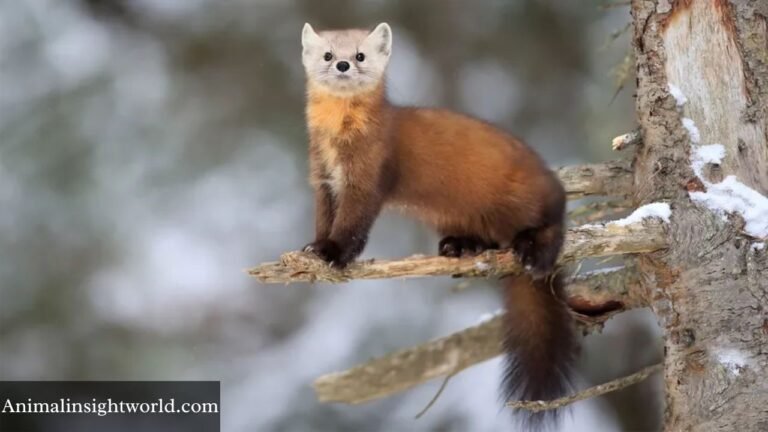
The pine marten is a slender, agile mammal from the forests of Europe and parts of Asia, with rich brown fur, a pale cream throat patch, and a bushy tail. It is about the size of a small cat and is an excellent climber that spends much of its time in trees. Pine martens eat birds, squirrels, mice, fruit, and insects, and they are most active at night and at dawn and dusk. Like raccoons, they are curious and intelligent, and they can squeeze through small gaps to reach food or shelter. They live in tree hollows and old bird nests, and they mark their territory with scent. Pine martens were once hunted heavily for their fur, but they are now protected in many countries and their numbers are recovering in some areas.
Raccoons may be the most famous masked mammal, but they are far from the only one. From the ringtail of the American desert to the red panda of the Himalayas and the tanuki of Japan, nature has produced many animals with similar masks, ringed tails, clever paws, and nocturnal habits. Some are close relatives, while others evolved the same traits independently because they help with climbing, hunting at night, and finding food in the dark. Learning about these lookalikes helps us see how different animals solve similar problems in different parts of the world. Whether it is a coati digging in the forest floor or a kinkajou hanging by its tail in a rainforest tree, each of these animals has its own story, and each one deserves the same curiosity we give to the raccoon itself.
How These Animals Compare
Comparing these raccoon-like animals shows how the masked face and ringed tail appear again and again in different families. The ringtail is the closest lookalike, a small, agile relative with a long ringed tail that lives in the deserts and canyons of North America. The white-nosed coati and the kinkajou are relatives of the raccoon that live in trees, the red panda wears a similar mask and eats bamboo, and the Virginia opossum, though a marsupial, shares the raccoon’s grey fur and nocturnal habits.
Other animals on this list only look like raccoons at first glance. The masked palm civet and the binturong are Asian animals that live in trees and eat fruit, the raccoon dog is a fox relative from East Asia that hibernates, and the ring-tailed lemur of Madagascar waves its striped tail as a signal. The crab-eating raccoon is a true raccoon that lives in wetlands and eats crabs and fish, while the wolverine, the fossa and the pine marten are all powerful predators that share the raccoon’s stocky build and clever paws.
Frequently Asked Questions
What animal looks most like a raccoon?
The ringtail looks most like a raccoon, with a grey body, a masked face and a very long ringed tail. It is a relative of the raccoon, but it is smaller, more agile and lives mainly in rocky deserts and canyons.
Are coatis related to raccoons?
Yes. White-nosed coatis are close relatives of raccoons and belong to the same family. They live in Central and South America, travel in groups called bands, and use their long snouts to dig for insects in the forest floor.
Is the red panda related to raccoons?
The red panda is not a close relative of the raccoon, though it was once thought to be. It belongs to its own family, and it is more closely related to weasels and raccoons than to giant pandas, despite its name.
Do raccoons really wash their food?
Raccoons often dip their food in water before eating it, but they are not really washing it. Their front paws are very sensitive, and wetting them makes the sense of touch even sharper, so the raccoon is feeling its food rather than cleaning it.
Final Thoughts
Raccoons may be the most famous masked mammal, but they are far from the only one. From the ringtail of the American desert to the red panda of the Himalayas, these fifteen animals show that a masked face, a ringed tail and clever paws are a winning combination in many parts of the world.