Top 18 Animals That Are Excellent Climbers
Some animals are born to climb. Whether they live high in the rainforest canopy, on steep mountain cliffs, or in the branches of a backyard tree, these animals have evolved remarkable adaptations that let them move through the vertical world with ease. Strong claws, gripping tails, flexible joints, sticky feet, and powerful muscles all play a part, and each species has its own way of getting around. For many climbers, height means safety from predators, access to food that ground-dwelling animals cannot reach, and a comfortable place to rest or raise young. In this list, we look at eighteen animals that are excellent climbers, from small tree frogs to powerful leopards, exploring how they climb, where they live, and what makes each one a master of the trees, rocks, and cliffs.
1. Red Panda
Red pandas are superb climbers that spend most of their lives in the trees of the Himalayas. They have strong, curved claws, flexible ankles, and a long bushy tail that helps them balance as they move through the branches. Red pandas can descend trees headfirst, a rare ability among mammals, and they use their false thumb to grip bamboo while they eat. They are mostly active at dawn and dusk, moving slowly and carefully through the canopy in search of bamboo leaves. Their reddish fur helps them blend into the moss-covered trees, and they often rest curled up on branches, wrapped in their tails for warmth.
2. Raccoon
Raccoons are excellent climbers that use their dexterous front paws and sharp claws to scale trees, fences, and buildings with ease. They live across North America in forests, wetlands, and cities, and they often make their dens in hollow trees. Raccoons can climb down trees headfirst, thanks to their flexible hind feet, and they are also strong swimmers. They are mostly active at night, using their climbing skills to find food, escape predators, and explore their surroundings. Their intelligence and adaptability have helped them thrive in urban areas, where they climb into attics, bins, and gardens in search of food.
3. Koala
Koalas are expert climbers that spend almost their entire lives in eucalyptus trees. They have sharp claws, two thumbs on each front paw, and strong muscles that help them grip branches securely. Koalas climb slowly and deliberately, using their powerful limbs to pull themselves up into the canopy, where they feed on eucalyptus leaves. They sleep for up to twenty hours a day, wedged into the fork of a tree, and they rarely come down to the ground except to move to another tree. Their climbing ability is essential for survival, because it keeps them safe from ground predators and gives them access to food.
4. Kinkajou
Kinkajous are small rainforest mammals from Central and South America that are among the best climbers in the animal kingdom. They have a long prehensile tail that works like a fifth limb, gripping branches as they move through the canopy at night. Kinkajous can also turn their feet backwards, which allows them to climb down trees headfirst, and they use their long tongues to reach nectar deep inside flowers. They feed mainly on fruit, and they play an important role as pollinators in their forest homes. Kinkajous are gentle, curious animals that live alone or in small family groups.
5. Binturong
Binturongs, also known as bearcats, are slow-moving climbers that live in the rainforests of Southeast Asia. They have shaggy black fur, strong claws, and a long prehensile tail that helps them balance and grip branches as they move through the canopy. Binturongs spend most of their lives in trees, where they eat fruit, leaves, and small animals, and they are mostly active at night. Their deliberate, careful movements remind many people of bears, and they are one of only a few mammals with a tail that can grasp branches. Binturongs are classed as vulnerable, with deforestation shrinking the forests they need.
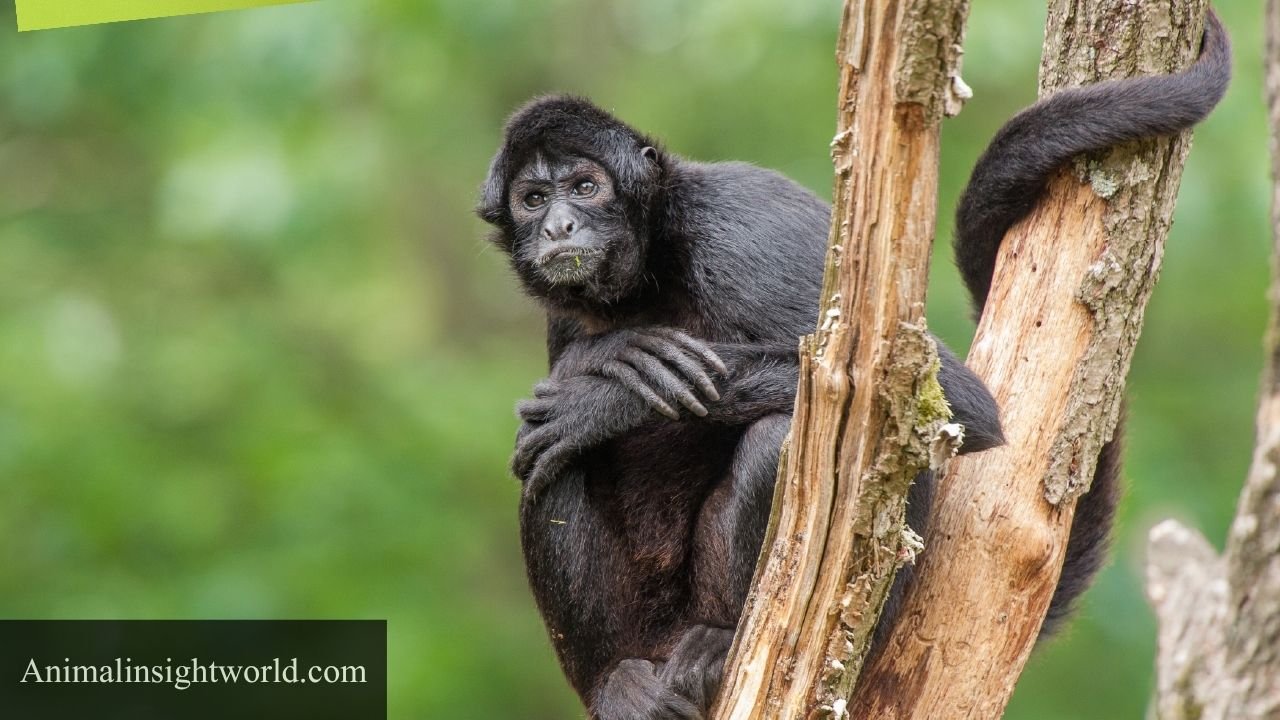
6. Spider Monkey
Spider monkeys are among the most agile primates in the world, with long limbs and a prehensile tail that acts like a fifth hand. They live in the rainforests of Central and South America, where they swing through the canopy using their arms and tails, rarely coming down to the ground. Spider monkeys have hook-like hands with no thumbs, which help them grip branches as they brachiate, or swing, from tree to tree. They feed mainly on fruit, and they are important seed dispersers in their forest homes. Spider monkeys live in social groups, and they communicate with each other through calls and facial expressions.
7. Gibbon
Gibbons are small apes from Southeast Asia that are famous for their spectacular brachiation, swinging through the trees with remarkable speed and grace. They have very long arms, hook-like hands, and a light body, which allows them to cover large distances in the canopy without ever touching the ground. Gibbons can swing at speeds of around 55 kilometres per hour, and they can leap across gaps of up to fifteen metres between trees. They live in family groups, and pairs sing duets together in the morning to mark their territory. Gibbons feed mainly on fruit, leaves, and insects, and they are among the most acrobatic of all primates.
8. Orangutan
Orangutans are the largest tree-dwelling animals in the world, and they are superb climbers despite their size. They live in the rainforests of Borneo and Sumatra, where they spend most of their lives in the canopy, moving slowly and carefully from branch to branch. Orangutans have long arms, curved fingers, and flexible hips that help them grip branches, and they use their feet like hands to hold on. They build nests of branches each night to sleep in, and they feed on fruit, leaves, and insects. Orangutans are intelligent animals that use tools, and they are critically endangered, threatened by deforestation and the palm oil trade.
9. Howler Monkey
Howler monkeys are large, loud primates from Central and South America that spend their lives in the rainforest canopy. They have strong prehensile tails that grip branches, allowing them to hang and feed while using their hands to pick leaves and fruit. Howler monkeys are named for their deep, roaring calls, which can be heard from miles away and are used to mark territory and communicate with other groups. They are among the largest New World monkeys, and they move slowly and deliberately through the trees, conserving energy while they digest their leafy diet. Howler monkeys live in social groups, and they are important seed dispersers in their forests.
10. Leopard
Leopards are powerful big cats that are excellent climbers, often dragging their prey up into trees to keep it safe from lions and hyenas. They have strong muscles, sharp claws, and a flexible body that allows them to climb steep trunks and leap between branches with ease. Leopards live across Africa and Asia in forests, savannas, and mountains, and they are solitary hunters that stalk their prey at night. They are known for their beautiful spotted coats, which provide camouflage in dappled light, and their climbing ability is essential for both hunting and resting. A leopard can haul prey heavier than itself up a tree, a feat of strength few other animals can match.
11. Jaguar
Jaguars are the largest cats in the Americas, and they are strong climbers that live in the rainforests and wetlands of Central and South America. They have powerful jaws, muscular bodies, and sharp claws that help them climb trees, although they spend more time on the ground and in water than leopards do. Jaguars are excellent swimmers, and they hunt a wide range of prey, including deer, peccaries, and caimans. They are solitary animals with large territories, and their rosette-patterned coats provide camouflage in the forest. Jaguars are classed as near threatened, with habitat loss and conflict with people putting pressure on their populations.
12. Margay
The margay is a small wild cat from Central and South America that is one of the most arboreal cats in the world. It has large eyes, a long tail, and flexible ankles that allow it to climb down trees headfirst and even hang from branches by its hind feet. Margays spend most of their lives in trees, where they hunt birds, small mammals, and lizards, and they rarely come down to the ground. They are nocturnal animals with excellent night vision, and they are known for their ability to mimic the calls of prey to lure them closer. Margays are solitary and secretive, and they are classed as near threatened, with deforestation threatening their forest homes.
13. Ocelot
Ocelots are medium-sized wild cats from the Americas that are skilled climbers, using trees to hunt, rest, and escape danger. They have beautiful spotted coats, large eyes, and strong claws, and they are mostly active at night, when they hunt rodents, birds, and small mammals. Ocelots live in forests, grasslands, and scrubland, and they are excellent swimmers as well as climbers. They are solitary animals with large territories, and mothers raise their kittens alone, teaching them to hunt before they leave to find their own ranges. Ocelots were once hunted for their fur, but they are now protected in most of their range, although habitat loss remains a threat.
14. Ringtail
The ringtail is a small, nocturnal mammal from North America, also known as the ringtail cat, although it is more closely related to raccoons. It has a long, banded tail, large eyes, and flexible joints that allow it to climb cliffs, trees, and even the walls of buildings. Ringtails are superb climbers that can rotate their hind feet, allowing them to descend steep surfaces headfirst, and they can squeeze through narrow gaps. They live in rocky deserts, canyons, and forests, where they hunt rodents, birds, and insects at night. Ringtails are solitary animals, and they are the state mammal of Arizona, where they are a familiar sight in desert canyons.
15. Gray Squirrel
Gray squirrels are familiar tree-dwelling rodents that are superb climbers, thanks to their sharp claws, strong hind legs, and long bushy tails. They live in forests and parks across North America, and they have been introduced to parts of Europe, where they have spread widely. Gray squirrels can leap between branches, run along thin twigs, and climb down trees headfirst, using their tails for balance. They feed on nuts, seeds, fruit, and fungi, and they bury food in the ground to eat later, which helps spread seeds and grow new trees. Gray squirrels are active during the day, and they build nests of leaves in trees, where they raise their young.
16. Green Tree Frog
Green tree frogs are small amphibians from Australia and New Guinea that are excellent climbers, thanks to the sticky discs on their toes. These discs allow them to grip smooth surfaces, including leaves, branches, and even glass, and they can climb vertical surfaces with ease. Green tree frogs live in forests and wetlands, where they feed on insects, and they are mostly active at night. They have bright green skin, large eyes, and a distinctive call that sounds like a low croak. Green tree frogs are popular pets in Australia, and they are known for their habit of turning up in unexpected places, including houses, toilets, and water tanks, where they seek out moisture and insects.
17. Chameleon
Chameleons are lizards famous for their ability to change colour, and they are also excellent climbers that live in trees and bushes. They have zygodactyl feet, with toes fused into two opposing groups that grip branches like pincers, and a prehensile tail that helps them balance as they move slowly through the canopy. Chameleons move deliberately, swaying gently to mimic leaves in the wind, and they use their long, sticky tongues to catch insects from a distance. They live mainly in Madagascar and Africa, although some species are found in Asia and Europe. Chameleons are solitary animals, and males are known for their bright colours and elaborate displays.
18. Tokay Gecko
Tokay geckos are large, colourful lizards from Southeast Asia that are superb climbers, thanks to the tiny hairs on their toes that allow them to grip almost any surface. These microscopic hairs, called setae, create a force that lets geckos walk on ceilings and vertical walls with ease. Tokay geckos are nocturnal animals that live in trees and on rocks, where they feed on insects and small vertebrates. They are known for their loud, distinctive call, which sounds like “to-kay”, and for their bold, territorial behaviour. Tokay geckos have bright blue-grey skin with orange spots, and they are popular in the pet trade, although wild populations are under pressure from collection.
From tiny tree frogs to powerful leopards, the animals in this list show that climbing is a skill that has evolved in many different ways. Whether it is a prehensile tail, sticky toes, sharp claws, or long arms built for swinging, each climber has its own solution to the challenge of moving through the vertical world. For these animals, height means food, safety, and a place to rest, and their climbing ability is essential to their survival. Many of them depend on forests, which are under threat around the world, so protecting trees and wild places is the best way to ensure that these remarkable climbers continue to thrive. The next time you look up into a tree, remember that it may be home to an animal that is far more at ease above the ground than on it.
How These Animals Compare
Comparing climbers across this list shows that climbing is not one skill but several. The red panda, the raccoon and the kinkajou climb with sharp claws and flexible ankles, the gibbon and the orangutan swing through the trees by their long arms, and the spider monkey uses its prehensile tail as a fifth limb. The leopard and the jaguar climb with power, dragging prey heavier than themselves up into trees, while the margay and the ocelot are among the few cats that can climb down a tree head-first.
Smaller climbers use different tricks. The gray squirrel leaps between branches with a long tail for balance, the green tree frog climbs with sticky toe pads, and the tokay gecko uses tiny hairs on its toes that grip smooth surfaces by molecular force. The chameleon climbs slowly with feet that grip like pincers and a tail that anchors it to the branch, and the ringtail, a relative of the raccoon, can climb cliffs and even scale walls by pressing its body between two surfaces.
Frequently Asked Questions
Which cat is the best climber on this list?
The margay is often rated the best climbing cat, because it can rotate its hind feet 180 degrees and climb down trees head-first, like a squirrel. Leopards and jaguars are stronger climbers, but they climb mainly to carry prey into trees.
How do geckos climb smooth walls?
Tokay geckos have millions of tiny hairs on their toes that grip surfaces through weak molecular forces called van der Waals forces. These hairs let them climb glass, walls and ceilings, and they can support the gecko’s whole weight on a single toe.
Do orangutans ever come down from the trees?
Bornean orangutans almost never come to the ground, spending their whole lives in the trees. They build sleeping nests in the canopy each night, and they move through the branches by swinging and walking carefully along them.
Can raccoons climb down trees head-first?
Yes. Raccoons can rotate their hind feet backwards, which lets them climb down trees head-first, a skill shared by very few mammals. Their sharp claws and flexible ankles make them excellent climbers in forests and in towns.
Final Thoughts
From tiny tree frogs to powerful leopards, the animals in this list climb in many different ways, but they all share the same rewards: food, safety and a home above the ground. Climbing is one of the most useful skills in nature, and these eighteen animals prove that whether you use claws, a tail, sticky toes or long arms, the trees are worth the effort.