Top 15 Animals That Live Underground
Life underground is a world of darkness, safety, and surprising comfort. Beneath our feet, a whole community of animals digs tunnels, builds burrows, and raises families in the soil, hidden from predators and protected from extreme weather. Underground homes stay cool in summer and warm in winter, and they offer a safe place to store food, sleep, and raise young. Some animals spend almost their entire lives below ground, rarely seeing daylight, while others use burrows as a base, emerging at night to hunt or forage. To live underground, animals need special adaptations, such as powerful claws for digging, sensitive noses for finding food in the dark, and bodies built for moving through narrow tunnels. In this list, we look at fifteen animals that live underground, exploring how they dig, what they eat, and why life beneath the surface suits them so well.
What Makes These Animals Special
What makes underground animals special is how they have rebuilt their bodies for a world without light. The naked mole-rat is almost blind, has almost no hair, and can live for more than 30 years, longer than any other rodent its size. The European mole and the star-nosed mole have shovel-like front paws and, in the star-nosed mole’s case, a nose with 22 fleshy tentacles that can touch and identify objects faster than the human eye can see.
Other animals on this list live underground for shelter rather than for food. The American badger digs burrows to hunt ground squirrels and to sleep, the wombat digs burrows several metres long that stay cool in the Australian heat, and the burrowing owl lives in burrows dug by prairie dogs and other animals. The earthworm and the leafcutter ant build whole worlds underground, turning soil and farming fungus, while the periodical cicada spends 13 or 17 years underground as a nymph before emerging for a few weeks of adult life.
1. Naked Mole-Rat
The naked mole-rat is one of the most extraordinary underground animals, spending almost its entire life in dark tunnels beneath the deserts of East Africa. These small, pink, nearly hairless rodents live in large colonies, much like ants or bees, with a single queen that produces all the young. Naked mole-rats have large front teeth that they use to dig through soil, and their lips close behind their teeth to keep dirt out of their mouths. They are almost blind, but they navigate using their sensitive whiskers and their sense of touch. Naked mole-rats are famous for their long lives and their resistance to cancer, and scientists study them to learn more about ageing and disease. They eat tubers and roots, which they find by digging through the soil.
2. European Mole
The European mole is a classic underground animal, with a velvety black coat, powerful front paws, and a pointed snout that help it move through soil with ease. Moles live in meadows, gardens, and woodlands across Europe, where they dig extensive tunnel systems in search of earthworms, their favourite food. Their front paws are broad and spade-like, and they can dig through soil at remarkable speed, pushing up molehills as they go. Moles are almost blind, but they have an excellent sense of touch and smell, which helps them find food in the dark. They are solitary animals, and they defend their tunnel systems aggressively, although they may share tunnels with other moles during the breeding season.
3. Star-Nosed Mole
The star-nosed mole is a small, dark-furred mammal from North America, named for the remarkable star-shaped organ on the tip of its nose. This star is made up of twenty-two pink, finger-like tentacles that are covered in sensitive touch receptors, allowing the mole to feel its way through dark tunnels and to identify food by touch alone. Star-nosed moles live in wet, marshy areas, where they dig shallow tunnels and hunt for worms, insects, and small aquatic animals. They are excellent swimmers, and they can smell underwater by blowing bubbles and then breathing them back in, a unique ability among mammals. Star-nosed moles are among the fastest eaters in the animal kingdom, able to identify and eat prey in a fraction of a second.
4. American Badger
The American badger is a powerful digger that lives in burrows across the grasslands and deserts of North America. Badgers have short, muscular bodies, long claws, and a distinctive black and white striped face, and they are built for digging, with strong shoulders and a low, flat body. They hunt rodents, ground squirrels, and other small animals, digging them out of their burrows with remarkable speed and persistence. American badgers are solitary animals, and they spend much of their time underground, emerging at night to hunt. Their burrows provide shelter from predators and extreme weather, and they may have several entrances and chambers. Badgers are known for their fierce defence of their burrows and their young.
5. Wombat
Wombats are stocky Australian marsupials that live in extensive burrow systems dug into grasslands and eucalyptus forests. They have powerful claws, short legs, and a sturdy body, and they can dig tunnels that are several metres long, with chambers for sleeping and raising young. Wombats are mostly nocturnal, emerging at night to graze on grasses, roots, and bark, and they return to their burrows before dawn. Their burrows stay cool in summer and warm in winter, and they provide protection from predators such as dingoes and eagles. Wombats are solitary animals, although they may share burrow systems with other wombats. They are famous for their cube-shaped droppings, which help mark their territory.
6. Eastern Chipmunk
The eastern chipmunk is a small, striped rodent from North America that lives in burrows dug into forest floors, gardens, and woodland edges. Chipmunks are powerful diggers, with strong claws and cheek pouches that they use to carry seeds, nuts, and berries back to their underground store chambers. Their burrows can be several metres long, with separate rooms for sleeping, storing food, and raising young, and they may have several entrances hidden under logs or rocks. Chipmunks are diurnal animals, emerging during the day to forage, and they spend the winter in their burrows, waking periodically to eat from their food stores. They are known for their striped coats, their cheek pouches, and their habit of sitting upright to eat, holding food in their front paws.
7. Groundhog
The groundhog, also known as the woodchuck, is a large North American rodent that lives in burrows dug into fields, meadows, and woodland edges. Groundhogs are powerful diggers, with strong claws and muscular bodies, and their burrows can be extensive, with several entrances, chambers, and tunnels. They are herbivores, feeding on grasses, clover, and other plants, and they spend much of their time underground, especially during the winter, when they hibernate for months. Groundhogs are famous in the United States for Groundhog Day, when their emergence from hibernation is said to predict the arrival of spring. They are solitary animals, although mothers raise their young in the burrow until they are old enough to leave.
8. Pocket Gopher
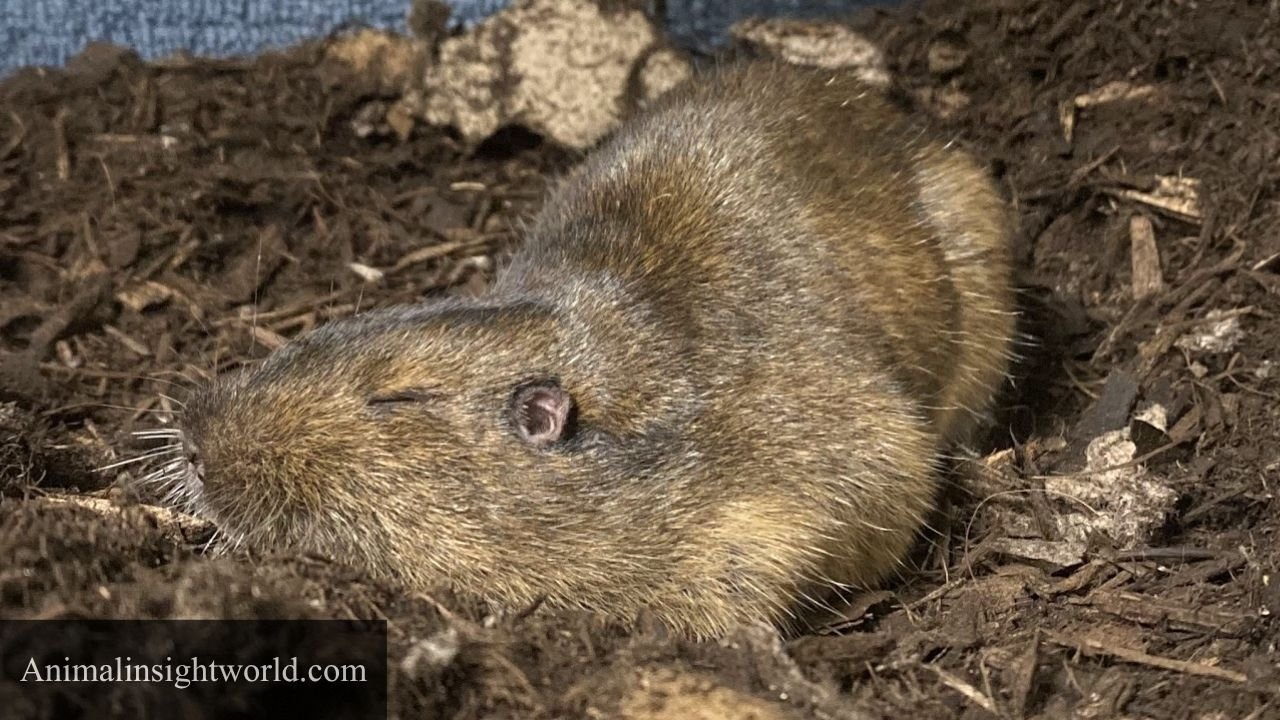
Pocket gophers are small, burrowing rodents from North America that spend almost their entire lives underground. They have powerful front claws, large front teeth, and fur-lined cheek pouches, which they use to carry food back to their burrows. Pocket gophers dig extensive tunnel systems, pushing up mounds of soil as they go, and they feed on roots, bulbs, and other plant material, which they find by digging through the soil. Their eyes are small, and their sense of touch is highly developed, helping them navigate in the dark. Pocket gophers are solitary animals, and they are known for their ability to dig quickly, creating tunnels that can be many metres long. Their digging helps aerate the soil, although it can be a nuisance for gardeners.
9. Greater Bilby
The greater bilby is an Australian marsupial that lives in burrows dug into the dry outback. Bilbies are nocturnal animals with long ears, a pointed snout, and silky grey fur, and they use their strong claws to dig burrows that can be several metres long. They emerge at night to search for seeds, bulbs, insects, and fungi, using their keen sense of smell to find food in the dark. Bilbies are solitary animals, and their burrows provide shelter from predators and from the extreme heat of the desert. They are sometimes called the Easter bilby in Australia, where they have become a symbol of native wildlife. Sadly, bilbies are vulnerable, with habitat loss and introduced predators threatening their survival.
10. Aardvark
The aardvark is a nocturnal mammal from Africa that lives in burrows dug into grasslands and savannas. Aardvarks have powerful claws, a long snout, and a pig-like face, and they use their digging ability to break into termite mounds and ant nests, eating thousands of insects in a single night. They spend the day in their burrows, emerging at night to forage, and their burrows provide shelter from predators and from the heat of the day. Aardvarks are solitary animals, and their burrows are often taken over by other animals, such as warthogs and porcupines, after the aardvark has moved on. They are also known as antbears, and they play an important role in their ecosystems by controlling termite populations.
11. Burrowing Owl
Burrowing owls are small, long-legged owls that live underground in burrows, unlike most other owls, which nest in trees. They live in grasslands and deserts across North and South America, where they often take over burrows dug by prairie dogs, ground squirrels, and other animals, although they can also dig their own. Burrowing owls are active during the day, hunting insects, small mammals, and reptiles, and they are known for their habit of decorating the entrance to their burrows with animal dung, which attracts insects for them to eat. They are social birds that live in loose colonies, and they are recognisable by their bright yellow eyes and their habit of bobbing up and down when alarmed.
12. Earthworm
Earthworms are among the most important underground animals, and they spend their entire lives in the soil, tunnelling through it as they feed on decaying plant material. Earthworms have no eyes or legs, but they are superbly adapted to life underground, with a segmented body that helps them move through soil and a moist skin that allows them to breathe. They play a vital role in ecosystems by aerating the soil, breaking down organic matter, and creating rich, fertile earth that helps plants grow. Earthworms are found in soils all over the world, and they are a key food source for many animals, including birds, moles, and badgers. Without earthworms, the soil would be far less healthy and productive.
13. Leafcutter Ant
Leafcutter ants are remarkable insects that live in vast underground colonies in the rainforests of Central and South America. These ants cut pieces of leaves and carry them back to their nests, where they use them to grow a fungus, which is their main food source. A single colony can contain millions of ants, and their underground nests can be enormous, with chambers for growing fungus, storing food, and raising young. Leafcutter ants are highly organised, with different castes of workers performing different tasks, from cutting leaves to defending the nest. Their underground colonies help aerate the soil and recycle nutrients, and they are one of the most complex societies in the insect world.
14. Periodical Cicada
Periodical cicadas are insects that spend most of their lives underground, emerging only once every thirteen or seventeen years to mate and lay eggs. Young cicadas, known as nymphs, live underground for years, feeding on sap from tree roots and slowly growing in the dark. When the time comes, they emerge in huge numbers, climbing out of the ground and shedding their skins to become adults. Adult cicadas live for only a few weeks, during which they sing loudly to attract mates, lay eggs in tree branches, and then die. Their mass emergence is one of the most spectacular events in the insect world, and it overwhelms predators, ensuring that many cicadas survive to reproduce.
15. Desert Tortoise
The desert tortoise is a reptile that lives in burrows dug into the deserts of the southwestern United States and Mexico. These tortoises dig burrows that can be several metres long, providing shelter from the extreme heat of the desert and from predators such as coyotes and ravens. Desert tortoises are herbivores, feeding on grasses, flowers, and cacti, and they spend much of their time in their burrows, especially during the hottest part of the day and during the winter, when they hibernate. They are long-lived animals, capable of living for more than fifty years, and they are classed as threatened, with habitat loss, disease, and predation putting pressure on their populations.
Life underground is far busier and more varied than it appears from the surface. From tiny earthworms to powerful badgers, the animals in this list show that the soil is home to a whole world of creatures, each with its own way of digging, feeding, and surviving in the dark. Underground homes offer safety, shelter, and a stable climate, and they are essential for many species, from the naked mole-rat’s colonies to the desert tortoise’s burrows. Many of these animals also play a vital role in keeping the soil healthy, aerating it, recycling nutrients, and creating homes for other creatures. The next time you see a molehill, a burrow entrance, or a mound of soil, remember that beneath your feet, a hidden world is hard at work.
Surprising Facts
The greater bilby is one of the most surprising underground animals on this list, because it digs burrows up to three metres deep with its strong claws, and its long ears help it hear insects moving underground. The aardvark digs so fast it can disappear into the ground in minutes, using its powerful claws and long tongue to reach ants and termites deep in their nests.
The pocket gopher lives almost entirely underground, pushing soil out of its burrow in mounds that farmers can see on the surface, and the groundhog, also called the woodchuck, digs burrows with separate rooms for sleeping, raising young and hibernating. The eastern chipmunk stores food in underground chambers and can carry seeds in cheek pouches that stretch to three times the size of its head. Life underground is dark and cramped, but it is also safe, cool and full of food for animals built to live there.
Frequently Asked Questions
Which animal lives the deepest underground on this list?
The naked mole-rat lives in burrow systems that can be several metres deep and stretch for kilometres underground. Its colonies can have hundreds of individuals living together in a network of tunnels that stays cool and safe from predators.
How do moles find food without eyesight?
Moles have very poor eyesight and rely on touch and smell. The star-nosed mole has 22 fleshy tentacles on its nose that touch and identify prey in a fraction of a second, making it the fastest eater of any mammal.
Do burrowing owls dig their own burrows?
No, burrowing owls usually live in burrows dug by other animals, such as prairie dogs, ground squirrels or tortoises. They are one of the few owls active during the day, and they often decorate the entrance to their burrow with animal dung to attract insects.
Why do cicadas spend so many years underground?
Periodical cicadas spend 13 or 17 years underground as nymphs, feeding on sap from tree roots. They emerge all at once in huge numbers, which overwhelms predators and lets most of them survive long enough to mate and lay eggs.
Conclusion
Life underground is far busier and more varied than it appears from the surface. From the naked mole-rat’s huge colonies to the cicada’s seventeen-year wait, these fifteen animals show that the world beneath our feet is as rich as the world above it. The ground is not empty; it is full of diggers, builders and hunters.