Top 16 Animals That Live in Savannas
Savannas are wide open grasslands with scattered trees, warm temperatures, and long dry seasons broken by short periods of rain. They cover large parts of Africa, as well as areas in South America, Asia, and Australia, and they are home to some of the most famous animals in the world. Life on the savanna is shaped by the search for food and water, and by the constant balance between predators and prey. Animals that live here have adapted in remarkable ways, from the long legs of giraffes that reach high leaves to the speed of cheetahs that chase antelope across open ground. This list brings together sixteen animals that live in savannas, explaining where each one is found, what it eats, and how it survives in this challenging and beautiful habitat.
What Makes These Animals Special
What makes savanna animals special is how they share one open landscape without getting in each other’s way. The lion and the leopard hunt at different times and in different places, the cheetah hunts by day in open grass while the spotted hyena hunts at night, and the African wild dog hunts in packs at dawn and dusk. Grazers divide the grassland too: the giraffe eats leaves high in the trees, the plains zebra and the blue wildebeest graze the grass at different heights, and the impala and the greater kudu browse shrubs and leaves.
Other savanna animals on this list are built for the open ground. The African elephant, the largest land animal, shapes the savanna itself by knocking down trees and digging water holes, the white rhinoceros grazes short grass with its wide mouth, and the ostrich and the secretary bird use their height to spot danger from far away. The meerkat stands guard on its hind legs while its group digs for insects, and the common warthog kneels on its front legs to graze, using its snout to dig for roots.
1. Lion
The lion is the most famous animal of the African savanna, and it is the only big cat that lives in social groups called prides. A pride usually includes several related females, their cubs, and one or more adult males, and they work together to hunt and to defend their territory. Lions are most active at night and in the early morning, when they hunt antelope, zebra, and wildebeest. Female lions do most of the hunting, while males protect the pride from rivals. Lions rest for much of the day in the shade of trees, and they can sleep for up to twenty hours. Their powerful roars can be heard from several kilometres away, and they help keep rival lions away. Lions are found mainly in sub-Saharan Africa, with a small population in India.
2. African Elephant
The African elephant is the largest land animal in the world, and it is a key part of savanna life. Elephants live in family groups led by an older female, and they travel long distances across the savanna in search of food and water. They feed on grasses, leaves, bark, and fruit, and an adult elephant can eat more than 100 kilograms of food in a single day. Elephants use their trunks to pick up food, drink water, and communicate with each other through touch and sound. They also dig water holes in dry riverbeds, which other animals use to drink. Elephants are intelligent animals that can recognise each other and remember places where water is found. Their size and strength help protect them from most predators, although calves can be at risk from lions.
3. Giraffe
The giraffe is the tallest land animal in the world, and it is perfectly suited to life on the savanna. Its long neck allows it to reach leaves from tall acacia trees that other animals cannot reach, and its long legs help it run at speeds of around 50 kilometres per hour when it needs to escape from predators. Giraffes live in loose groups on the savannas of Africa, and they feed mainly on leaves, buds, and fruit. Their spotted coats help them blend into the dappled light beneath trees, and each giraffe has a unique pattern of patches. Giraffes have long tongues that help them pull leaves from thorny branches, and they can go for long periods without drinking water. Mothers protect their calves carefully, and young giraffes stay close to adults for safety.
4. Plains Zebra
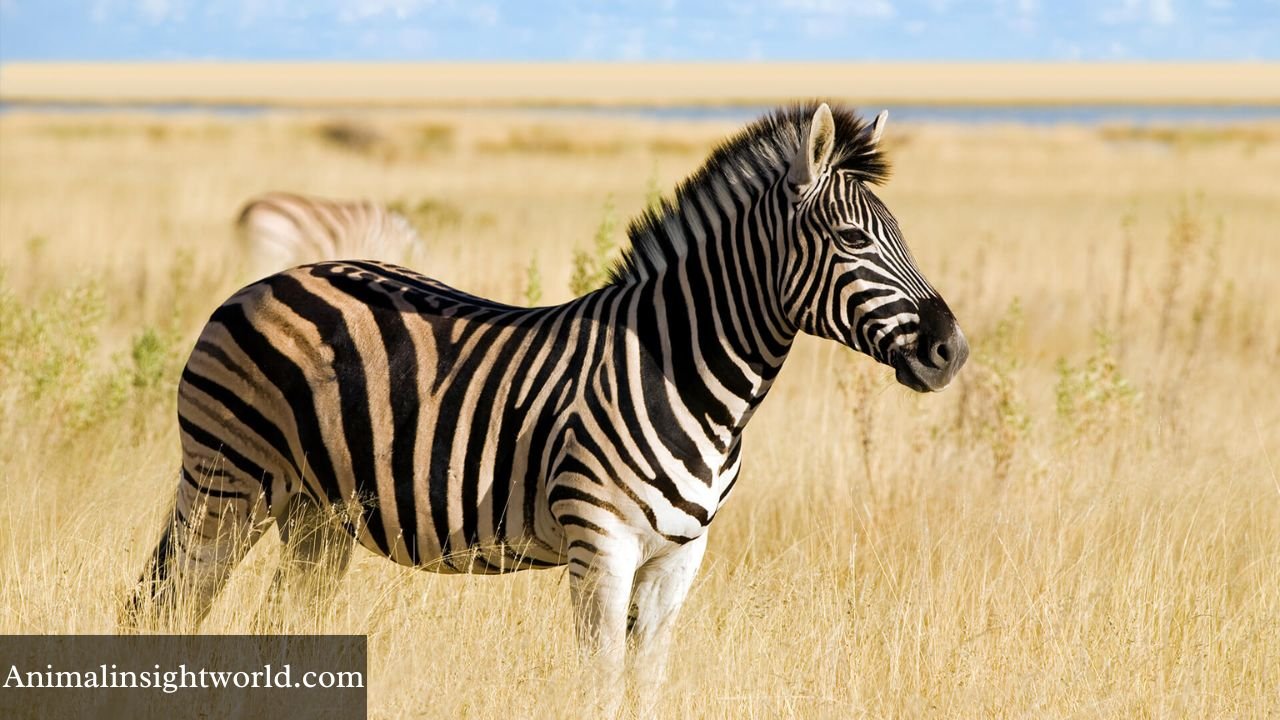
The plains zebra is a striped horse-like animal that lives on the savannas of eastern and southern Africa, and it is one of the most recognisable animals in the world. Each zebra has a unique pattern of black and white stripes, which may help confuse predators and keep biting flies away. Zebras live in herds that can include hundreds of animals, and they graze on grasses during the day and night. They are an important prey animal for lions, hyenas, and wild dogs, and they rely on their speed and their strong kicks to escape. Zebras often graze alongside wildebeest and antelope, which helps all of them spot predators sooner. They travel long distances during the great migration in search of fresh grass and water, and they are known for their loud braying calls.
5. Blue Wildebeest
The blue wildebeest is a large antelope that lives on the savannas of eastern and southern Africa, and it is famous for its great migration across the Serengeti and Masai Mara. Every year, more than a million wildebeest travel in huge herds in search of fresh grass and water, crossing rivers where crocodiles wait. Wildebeest have shaggy manes, curved horns, and a distinctive grunting call that can be heard from a long distance. They feed mainly on short grasses, and they are an important prey animal for lions, hyenas, and crocodiles. Wildebeest live in herds that help protect them from predators, and they are known to be strong and fast runners. Their migration is one of the greatest wildlife spectacles in the world, and it shapes the life of the savanna.
6. Cheetah
The cheetah is the fastest land animal, and it is built for speed on the open savanna. It has a slender body, long legs, and a spotted coat that helps it blend into tall grass while it stalks prey. Cheetahs hunt mainly during the day, using their excellent eyesight to spot gazelles and other small antelope from a long distance. When they chase, they can reach speeds of around 60 to 70 kilometres per hour in short bursts, but they can only sustain that speed for a short time. After a chase, a cheetah needs to rest and cool down before it can eat. Cheetahs live mostly in Africa, with a small population in Iran, and they prefer wide open grasslands where they have room to run. Unlike other big cats, cheetahs are not strong climbers, and they often lose their kills to lions and hyenas.
7. Leopard
The leopard is a powerful and secretive big cat that lives on savannas, in forests, and in rocky hills across Africa and Asia. Its golden coat is covered in dark rosettes that help it disappear into dappled light and shade, and it is an excellent climber that often rests in trees. Leopards are solitary hunters that hunt mainly at night, using patience and a sudden burst of speed to catch antelope, monkeys, and other prey. After a hunt, a leopard often drags its kill into a tree to keep it safe from lions and hyenas. Leopards are strong swimmers and can adapt to many different habitats, from rainforests to deserts. Each leopard has a unique rosette pattern, which helps researchers identify individual animals. Leopards are known for their ability to live close to people without being seen.
8. Spotted Hyena
The spotted hyena is a powerful social animal that lives on the savannas of sub-Saharan Africa, and it is known for its sandy coat with dark spots and its laughing call. Spotted hyenas live in large groups called clans, which can contain dozens of animals and are led by a dominant female. They are both skilled hunters and scavengers, and they can bring down large prey such as wildebeest and zebra by working together as a team. Spotted hyenas have extremely strong jaws that can crush bones to reach the marrow inside. They are intelligent animals with complex social lives, and they can recognise the voices of their clan mates. Despite their reputation as scavengers, spotted hyenas are successful hunters that play an important role in keeping the savanna healthy by cleaning up carcasses.
9. African Wild Dog
The African wild dog is a colourful and social predator that lives on the savannas of sub-Saharan Africa, and it is also known as the painted dog because of its patchy coat of black, white, and tan. African wild dogs live in packs that hunt together, and they are among the most successful hunters in Africa, with a high rate of success when they chase antelope. They communicate with high-pitched calls and use teamwork to wear down their prey over long chases. African wild dogs are highly social animals that care for sick and injured pack members and share food with each other. They need large areas of savanna to live in, and they are threatened by habitat loss and disease. Conservation efforts are helping to protect them in national parks and reserves across Africa.
10. Common Warthog
The common warthog is a wild pig that lives on the savannas of sub-Saharan Africa, and it is known for its grey skin, curved tusks, and the warts on its face that give it its name. Warthogs feed mainly on grasses, roots, and bulbs, which they dig up with their snouts and tusks. They are fast runners and can reach speeds of around 50 kilometres per hour when they are escaping from predators such as lions and leopards. Warthogs live in burrows that they often take over from other animals, and they back into their burrows so that their tusks face outward for defence. They are social animals that live in groups called sounders, and mothers are known to protect their young piglets carefully. Warthogs are an important prey animal on the savanna, and they are also known for kneeling down to graze on short grass.
11. Ostrich
The ostrich is the largest bird in the world, and it lives on the savannas and deserts of Africa. It is flightless, but it is a strong runner that can reach speeds of around 70 kilometres per hour, which makes it the fastest running bird on Earth. Ostriches have long legs, long necks, and black and white feathers in males, while females have grey-brown feathers. They feed mainly on seeds, leaves, and small animals, and they live in groups that help them spot predators such as lions and hyenas. Ostriches lay the largest eggs of any bird, and both parents take turns keeping the eggs warm in a nest scraped into the ground. They use their wings for balance when they run and for display during courtship. Ostriches are an important part of savanna life.
12. Secretary Bird
The secretary bird is a tall bird of prey that lives on the savannas of sub-Saharan Africa, and it is known for its long legs, grey and black feathers, and the crest of feathers on the back of its head that looks like pens tucked behind an ear. Unlike most birds of prey, secretary birds hunt mainly on foot, walking through tall grass in search of snakes, lizards, rodents, and insects. They are famous for their ability to kill snakes, which they stamp on with their powerful feet and sharp claws. Secretary birds can fly, but they spend much of their time walking across the savanna, covering long distances each day. They build large nests in acacia trees, where they raise one or two chicks. Secretary birds are a symbol of Africa, and they are protected in many countries.
13. Meerkat
The meerkat is a small mongoose-like animal that lives in the dry savannas and deserts of southern Africa, including the Kalahari Desert. Meerkats live in large family groups called mobs, and they are famous for standing upright on their hind legs to look out for predators such as eagles and jackals. One meerkat usually acts as a lookout while the others dig for food, and it gives a sharp alarm call if it sees danger. Meerkats feed mainly on insects, small lizards, and scorpions, which they find by digging in the sand. They live in complex burrow systems with many entrances, which provide shelter from heat and predators. Meerkats are social animals that groom each other and take turns caring for young pups. Their upright stance and watchful behaviour make them one of the most loved animals of the savanna.
14. Impala
The impala is a graceful antelope that lives on the savannas of eastern and southern Africa, and it is known for its reddish-brown coat, white belly, and remarkable jumping ability. Impalas can leap up to three metres high and ten metres long in a single bound, which helps them escape from predators such as cheetahs and leopards. They live in herds that can include hundreds of animals, and they graze on grasses and browse on leaves and shoots. Male impalas have long curved horns that they use to fight each other during the breeding season. Impalas are an important prey animal on the savanna, and they are known for their alertness and speed. They are most active in the early morning and late afternoon, when they feed and move between grazing areas and water holes.
15. Greater Kudu
The greater kudu is a large antelope that lives in the woodlands and savannas of eastern and southern Africa, and it is known for its impressive spiral horns and its striped coat. Male kudus have long horns that can grow to more than a metre in length, and they use them to fight other males during the breeding season. Greater kudus have a grey-brown coat with white stripes along their sides, which help them blend into the shadows of trees and bushes. They feed mainly on leaves, shoots, and fruit, and they are able to reach high branches with their long necks. Greater kudus are shy animals that are most active at night and in the early morning, and they are known for their ability to jump over high fences and obstacles. They live in small groups, and mothers hide their calves in thick vegetation for safety.
16. White Rhinoceros
The white rhinoceros is a huge mammal that lives on the savannas of southern and eastern Africa, and it is the second largest land animal after the elephant. Despite its name, the white rhinoceros is actually grey, and its name is thought to come from a misunderstanding of the Afrikaans word for wide, which describes its wide square mouth. White rhinos are grazers that feed mainly on short grasses, and they use their wide lips to crop grass close to the ground. They live in small groups, and mothers stay close to their calves for protection. White rhinos have two horns on their noses, which they use for defence, and they are known for their poor eyesight but excellent sense of smell and hearing. They are threatened by poaching for their horns, and conservation efforts are working to protect them.
Life on the savanna is a story of balance, and each of the animals on this list plays a part in keeping that balance. Predators like lions and cheetahs control the numbers of grazing animals, while grazers like wildebeest and zebra keep the grass short and healthy. Elephants shape the landscape by knocking down trees and digging water holes, and small animals like meerkats and impalas help keep the food web alive. The savanna is a place of wide open spaces, long dry seasons, and sudden rains, and the animals that live there have learned to survive in ways that are both clever and beautiful. Protecting these grasslands means protecting all of the remarkable animals that call them home.
Surprising Facts
The secretary bird is one of the most surprising savanna animals on this list, because it hunts snakes on foot, stomping them with its long legs and kicking with enough force to kill a cobra. The cheetah is the fastest land animal, but it is also one of the most vulnerable: it loses many of its kills to lions and hyenas, and it must eat quickly before a stronger predator arrives.
The African wild dog has one of the highest hunting success rates of any predator, catching prey on most of its hunts by working as a team and running its target to exhaustion. The spotted hyena is not just a scavenger: it is a powerful hunter in its own right, with jaws strong enough to crush bones. The savanna looks empty and simple, but it is one of the most competitive places on Earth, where every animal has a role and a rival.
Frequently Asked Questions
Which animal is the top predator of the savanna?
The lion is the top predator of the African savanna, hunting in prides and taking down large prey such as wildebeest and zebra. Leopards, cheetahs, spotted hyenas and African wild dogs are also major predators, but the lion dominates by size and social power.
Why do wildebeest and zebra migrate together?
Wildebeest and zebra migrate together across the Serengeti because they eat different parts of the grass: zebra eat the tall, tough grass first, and wildebeest follow to eat the shorter, softer grass underneath. Travelling together also gives both species more eyes to watch for predators.
How do elephants shape the savanna?
African elephants knock down trees, dig water holes and spread seeds in their droppings, which keeps the savanna open and creates water and food for other animals. Without elephants, much of the savanna would turn into woodland.
Are hyenas only scavengers?
No. Spotted hyenas are skilled hunters and catch most of their own food, often hunting in groups at night. They do scavenge as well, and their jaws are strong enough to crush bones and eat parts of a carcass that other predators leave behind.
Conclusion
Life on the savanna is a story of balance, and each of the animals on this list plays a part in it. From the lion on the hunt to the elephant shaping the land and the tiny meerkat standing guard, the savanna works because every species has its own niche. It is one of the last great wild landscapes on Earth, and it is worth protecting.