Top 15 Animals With the Longest Lifespans
Some animals live for only a few weeks, while others can survive for centuries, outliving the people who study them. Long life in the animal kingdom usually comes with a slow pace of living: slow growth, late maturity, and a cold or stable environment where food is scarce and predators are few. In the deep ocean, in cold northern waters, and on remote islands, these conditions have produced creatures whose lifespans seem almost unbelievable. Scientists estimate their ages by counting growth rings, studying eye lenses, or tracking individuals over decades, and the results often surprise even experts. In this list we look at fifteen animals with the longest lifespans known, from a clam that can live for more than five hundred years to a shark that may not reach adulthood until it is well over a century old. Each one offers a glimpse into how life can stretch out when nature slows down.
1. Ocean Quahog
The ocean quahog is a clam found in the cold waters of the North Atlantic, and it is the longest-lived animal ever recorded. One individual, nicknamed Ming, was estimated to be around 507 years old when it was found off the coast of Iceland, meaning it was born long before the modern world existed. Ocean quahogs grow extremely slowly, adding only a thin layer to their shells each year, and scientists can estimate their age by counting these growth rings, much like counting the rings of a tree. They live buried in sandy seabeds, where the water is cold and food arrives slowly, and their low metabolism helps them survive for centuries. Because they live so long, their shells also record changes in ocean temperature and climate over hundreds of years. Ocean quahogs are a reminder that some of the oldest animals on Earth are quiet, unassuming creatures hidden beneath the sea.
2. Greenland Shark
The Greenland shark is one of the most extraordinary animals in the ocean, and it may be the longest-lived vertebrate on the planet. These large, slow-moving sharks live in the cold, deep waters of the North Atlantic and Arctic, where temperatures are near freezing and food is hard to find. Scientists believe they can live for several centuries, with estimates suggesting some individuals may be more than 400 years old. They grow very slowly, at less than a centimetre a year, and females may not reach breeding age until they are well over a hundred years old. Greenland sharks feed on fish, seals, and carrion, and they swim slowly through the dark water, conserving energy at every moment. Their long lives are linked to their cold environment and slow metabolism, which reduce the wear and tear on their bodies over time.
3. Bowhead Whale
The bowhead whale is a massive Arctic whale that is known to live for more than two hundred years, making it one of the longest-lived mammals on Earth. Bowheads have thick blubber, a huge skull, and a body built for life among sea ice, where they feed on tiny krill and other small creatures. Scientists have found old harpoon tips embedded in living bowheads, showing that some individuals were alive more than a century before they were studied. Their long lives are thought to be linked to their slow metabolism, their ability to repair damaged DNA, and the cold waters they inhabit. Bowhead whales migrate through the Arctic, following the edge of the sea ice, and they communicate with complex songs that can carry for long distances underwater. Their longevity makes them especially vulnerable to hunting and disturbance, because a population takes a very long time to recover.
4. Galapagos Giant Tortoise
The Galapagos giant tortoise is one of the most famous long-lived animals in the world, and individuals can live for well over a century in the wild. These enormous tortoises live on the Galapagos Islands, where they graze on grasses, leaves, and cactus, and spend much of their time basking in the sun or resting in muddy pools. They grow slowly and do not reach full size for many decades, and females may continue laying eggs late into life. Some Galapagos tortoises in captivity have lived for more than 170 years, and wild individuals are regularly recorded at over a hundred. Their slow metabolism, tough shells, and island habitat with few predators all help them live long lives. Conservation work on the islands has helped protect them from introduced predators and habitat loss, and their recovery is one of the great success stories of wildlife conservation.
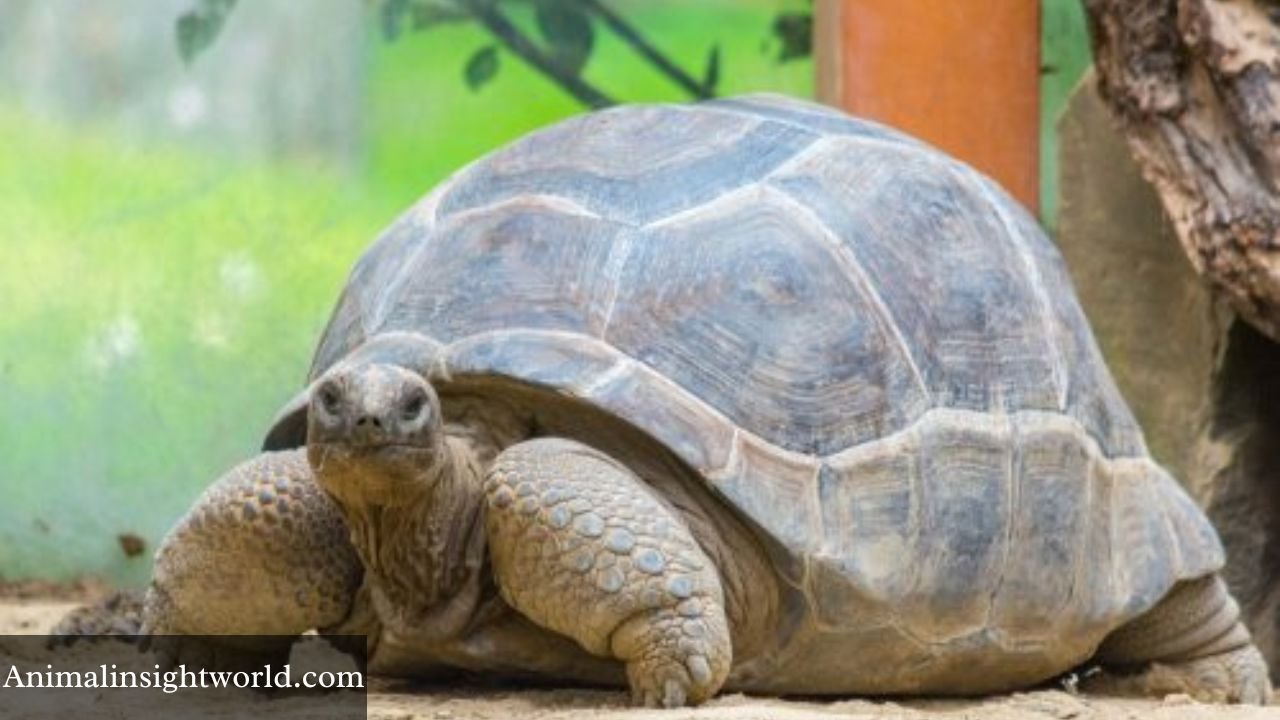
5. Aldabra Giant Tortoise
The Aldabra giant tortoise lives on the Aldabra Atoll in the Indian Ocean, and it is one of the largest tortoises in the world. Like its Galapagos relatives, it can live for well over a century, with some individuals believed to be more than 150 years old. Aldabra tortoises spend their days grazing on grasses and leaves, resting in the shade, and soaking in shallow pools to keep cool. They are slow-moving and calm, and their huge domed shells protect them from most predators. Because they live on a remote atoll with few threats, they have been able to survive for a very long time as a species. Scientists study Aldabra tortoises to learn more about ageing, as their slow growth and long lives may hold clues about how bodies repair themselves over time. Their gentle nature has made them popular in zoos, where some have lived for many decades.
6. Tuatara
The tuatara is a reptile from New Zealand that looks like a lizard but belongs to a lineage that split from other reptiles more than two hundred million years ago. It is sometimes called a living fossil, and it can live for more than a hundred years. Tuataras grow very slowly, and they do not reach breeding age until they are around twenty years old. They live in burrows on offshore islands, where they are active mainly at night, feeding on insects, spiders, worms, and small lizards. Tuataras have a third eye on the top of their heads, visible in young animals, which may help them sense light and dark. Their slow metabolism and cool climate help them live long lives, and some individuals have been known to scientists for many decades. Conservation work has protected tuataras from introduced predators, and they are now found on a growing number of predator-free islands.
7. Koi Carp
Koi carp are ornamental carp that are kept in ponds around the world, and they are famous for their long lives. While most koi live for around 25 to 35 years, some have lived for far longer, and one famous koi in Japan, named Hanako, was reported to have lived for 226 years. Scientists have questioned the exact age of Hanako, but there is no doubt that koi can live for many decades when they are well cared for. Koi grow slowly, and their age can be estimated by counting growth rings on their scales. They live in cool, clean water, and they are fed a careful diet by their owners, which may help them live longer. Koi are prized for their bright colours and patterns, and in Japan they are seen as symbols of good luck and perseverance. A well-kept koi pond can be home to fish that outlive several generations of their owners.
8. Red Sea Urchin
The red sea urchin is a spiny creature found along the Pacific coast of North America, and it can live for more than two hundred years. Red sea urchins live in shallow, rocky waters, where they graze on kelp and other algae using a complex set of teeth known as Aristotle’s lantern. Scientists estimate their age by measuring the size of their test, or shell, and by studying growth rings, and some individuals are believed to be over two centuries old. What makes red sea urchins especially interesting is that they show very few signs of ageing, even at great age, and they continue to reproduce throughout their lives. They are an important part of the kelp forest ecosystem, and their grazing helps shape the underwater landscape. Red sea urchins are also harvested as food in some areas, and their long lives mean that overfishing can have lasting effects on their populations.
9. Rougheye Rockfish
The rougheye rockfish is a deep-water fish found in the North Pacific, and it is one of the longest-lived fish in the ocean. Some individuals are believed to live for more than two hundred years, growing slowly in cold, deep water where food is scarce. Rougheye rockfish have a distinctive rough texture around their eyes, which gives them their name, and they are usually a pinkish-red colour. They live on rocky reefs at depths of several hundred metres, where they feed on shrimp, crabs, and small fish. Because they grow so slowly and mature so late, they are very vulnerable to overfishing, and a population that is heavily fished can take many decades to recover. Scientists study rockfish to learn about ageing in fish, and their long lives are a reminder of how little we still know about life in the deep ocean.
10. Orange Roughy
The orange roughy is a deep-sea fish that lives in the cold waters of the Atlantic, Pacific, and Indian Oceans, and it can live for well over a hundred years. Orange roughy are bright orange when they are young, fading to a paler colour as they age, and they gather in large schools around underwater mountains called seamounts. They grow extremely slowly, and females may not breed until they are around thirty years old. Some orange roughy are believed to be more than 150 years old, and their long lives have made them a cautionary tale in fisheries management. When orange roughy were first fished in large numbers, stocks declined rapidly because the fish could not replace themselves quickly enough. Today, fishing for orange roughy is more carefully managed in many areas, and scientists continue to study how these long-lived fish survive in the deep sea.
11. Lake Sturgeon
The lake sturgeon is a large, ancient fish found in the Great Lakes and rivers of North America, and it can live for more than a hundred years. Lake sturgeon have a distinctive shark-like tail, a pointed snout, and rows of bony plates along their bodies, and they have changed very little over millions of years. They feed on the bottom of lakes and rivers, eating insects, crustaceans, and small fish, and they migrate upstream to spawn in fast-flowing water. Females do not breed until they are around twenty years old, and they may only spawn once every few years, which makes their populations slow to recover from decline. Lake sturgeon were once heavily fished for their eggs, which are used to make caviar, and their numbers fell sharply. Conservation work, including habitat restoration and hatchery programmes, has helped them recover in some areas, and they are now a symbol of the Great Lakes.
12. Black Coral
Black coral is not a single animal but a colony of tiny polyps that build a dark, tree-like skeleton, and some colonies are believed to be thousands of years old. Black corals live in deep water, where they grow extremely slowly, adding only a tiny amount to their skeletons each year. Scientists have dated some black coral colonies in Hawaii to more than four thousand years old, making them among the oldest living organisms on Earth. Their dark skeletons were once harvested for jewellery, which put pressure on their populations, and they are now protected in many areas. Black corals provide habitat for many other deep-sea creatures, including fish, shrimp, and crabs, and they are an important part of deep-water ecosystems. Their extraordinary age shows how life can persist for millennia when growth is slow and the environment is stable. If you enjoyed our list of animals with the longest lifespans, our list of animals with the longest tongues is a natural next read.
13. Antarctic Glass Sponge
The Antarctic glass sponge is a deep-sea sponge that lives in the cold waters around Antarctica, and it may be one of the oldest animals on Earth. Scientists have estimated that some glass sponges could be more than ten thousand years old, although their exact age is difficult to determine. Glass sponges build skeletons of silica, which give them a delicate, glass-like appearance, and they grow extremely slowly in water that is near freezing. They feed by filtering tiny particles from the water, and they provide shelter for many other Antarctic creatures. Because they grow so slowly, they are very vulnerable to damage from fishing gear and other disturbances, and a damaged sponge bed can take centuries to recover. Antarctic glass sponges are a reminder that some of the longest-lived animals are not large or dramatic, but quiet filter-feeders in the coldest waters on the planet.
14. Immortal Jellyfish
The immortal jellyfish is a tiny jellyfish that has fascinated scientists because of its unusual life cycle. When it is injured, starving, or stressed, it can revert from its adult form back to its polyp stage, essentially starting its life over again. This process can be repeated many times, which has led to the jellyfish being described as biologically immortal, although in practice it can still be eaten by predators or killed by disease. Immortal jellyfish are small, usually only a few millimetres across, and they are found in warm ocean waters around the world. They feed on plankton and small fish eggs, and they drift with the currents. Scientists study the immortal jellyfish to learn more about ageing and cell regeneration, and its ability to reverse its life cycle may hold clues for medical research. It is a reminder that long life can take many different forms in nature.
15. Sulphur-crested Cockatoo
The sulphur-crested cockatoo is a large white parrot from Australia and New Guinea, and it is one of the longest-lived birds in the world. In the wild, cockatoos can live for more than seventy years, and in captivity some have lived for over a hundred. They are intelligent, social birds that live in flocks and feed on seeds, nuts, fruit, and insects, and they are known for their loud, screeching calls and their bright yellow crest, which they raise when excited or alarmed. Sulphur-crested cockatoos are excellent mimics and can learn to copy human speech and other sounds. Their long lives mean they form strong bonds with their flock mates and, in captivity, with their owners. Like many parrots, they need plenty of mental stimulation and social contact, and their longevity makes them a long-term commitment for anyone who keeps them as a pet.
From clams that outlive empires to sharks that may be centuries old, these fifteen animals show how varied long life can be. Some live long because they grow slowly in cold, deep water, others because they are protected by tough shells or live on remote islands with few predators, and a few, like the immortal jellyfish, seem to cheat ageing altogether. What they share is a slow pace of living, where energy is conserved, growth is gradual, and reproduction comes late. Their long lives also make them vulnerable, because a species that takes a century to mature cannot recover quickly from harm. Protecting these ancient animals means protecting the slow, stable environments they depend on, so that they can continue to live out their extraordinary lifespans.
Where They Live and How They Survive
The longest-lived animals on this list are almost all creatures of cold, deep water, and the reason is simple: a slow, cold life is a long life. The ocean quahog, a clam, can live more than 500 years, the Greenland shark may live around 400 years, and the bowhead whale can pass 200 years. The red sea urchin, the rougheye rockfish and the orange roughy all live for a century or more in cold seas, and the Antarctic glass sponge may live for thousands of years on the ocean floor.
On land, the pattern is different. The Galapagos giant tortoise and the Aldabra giant tortoise can live well over 100 years, the tuatara of New Zealand can live for a century, and the koi carp can live for decades in a pond. The immortal jellyfish is the strangest of all: when it is injured or old, it can revert to its young polyp stage and start its life again. The sulphur-crested cockatoo can live for 70 years or more, making it one of the longest-lived birds on the list.
Questions People Ask
What is the longest-living animal on this list?
The ocean quahog is the longest-living, with one individual, nicknamed Ming, found to be more than 500 years old. The Antarctic glass sponge may live even longer, possibly for thousands of years, though its exact age is hard to measure.
How old can Greenland sharks get?
Greenland sharks can live for around 400 years, making them the longest-lived vertebrates known. They grow very slowly, about a centimetre a year, and females do not start breeding until they are around 150 years old.
Do giant tortoises really live for more than 100 years?
Yes. Galapagos giant tortoises and Aldabra giant tortoises regularly live for more than 100 years, and some individuals have lived to 150 or more. Their slow metabolism and protected island life help them live so long.
Can the immortal jellyfish really live forever?
The immortal jellyfish can reverse its life cycle, turning back into a young polyp when it is injured, starving or old, and then growing into an adult again. In theory it can do this again and again, though in practice it can still be eaten or killed by disease.
Final Thoughts
From clams that outlive empires to sharks that may be centuries old, long life in the animal kingdom usually comes from living slowly in cold, safe places. These fifteen animals show that a long life is not about size or strength: it is about a slow metabolism, a safe home and a pace of life that lets the body last. They are living reminders that time moves differently in nature.