Top 17 Animals With the Longest Necks
A long neck is a remarkable adaptation, allowing an animal to reach food that others cannot, to see over tall grass, or to strike at prey from a distance. Some necks are longer than the animal’s body, while others are strong enough to support a massive head or to swing like a weapon. In this list, we look at seventeen animals with the longest necks in the animal kingdom, from the giraffe, whose neck can be two metres long, to the swan, whose elegant neck is a symbol of grace. Each one shows how a long neck can be shaped by the demands of feeding, seeing, and surviving.
What Makes These Animals Special
What makes long-necked animals special is that their necks solve different problems in different worlds. The giraffe uses its two-metre neck to reach leaves high in acacia trees that no other animal can reach, and its heart is powerful enough to pump blood all the way up to its brain. The ostrich and the emu use their long necks to spot predators from far away across open ground, while the mute swan and the flamingo use their necks to reach food underwater, the swan grazing on plants below the surface and the flamingo filtering tiny food from the water with its head upside down.
Other long necks on this list belong to animals that no longer exist or that live in water. The sauropod, the brontosaurus and the diplodocus were giant dinosaurs with necks many metres long, used to reach high trees and to sweep across wide areas of ground vegetation. The plesiosaur swam in ancient seas with a long neck for catching fish, and the snake-necked turtle strikes at fish with its neck in a sudden lunge. The llama and the alpaca use their long necks to watch for danger in the Andes, and the cassowary uses its neck to reach fruit on the forest floor.
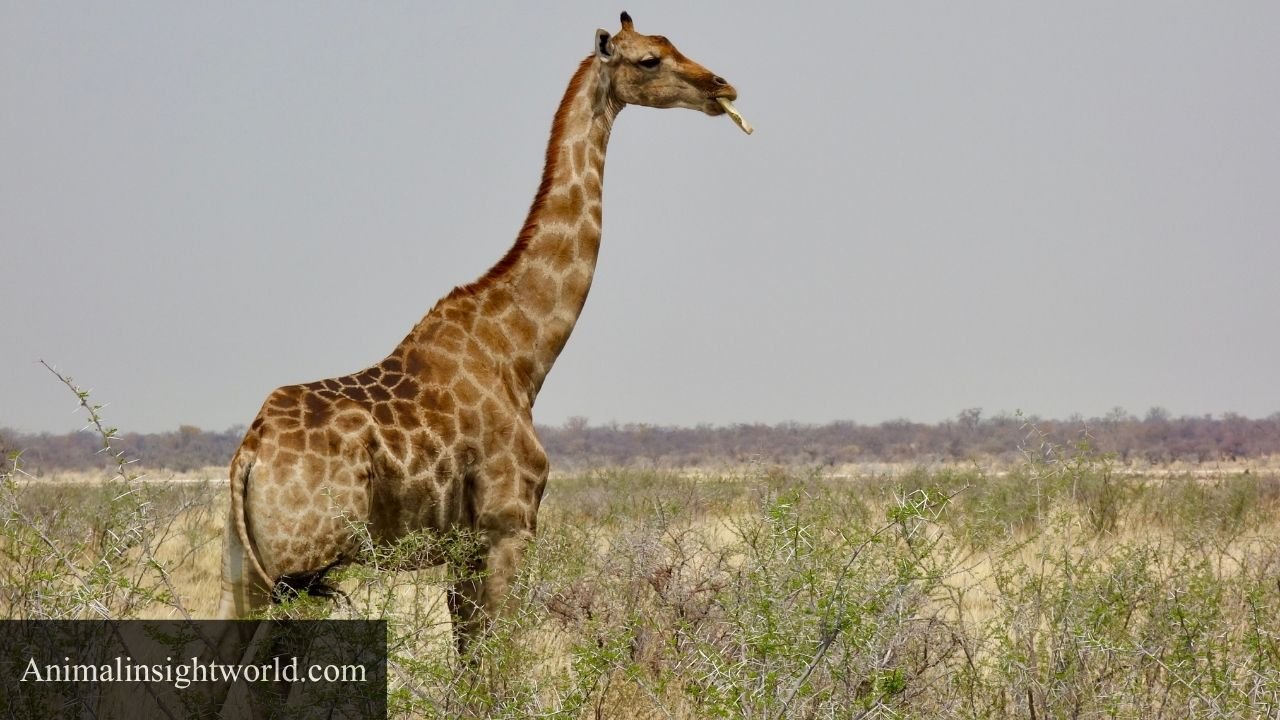
1. Giraffe
The giraffe has the longest neck of any living land animal, reaching up to two metres long, which allows it to feed on leaves high in the trees that other animals cannot reach. Despite its length, the giraffe’s neck has only seven vertebrae, the same number as a human neck, but each vertebra is much larger. Giraffes use their long necks to browse acacia trees, eating around thirty kilograms of leaves a day, and they also use them in fights, swinging their heads like clubs at rivals. Their necks are supported by strong muscles and ligaments, and they contain a complex system of valves that prevents blood from rushing to the head when the giraffe lowers its neck to drink. Giraffes are the tallest land animals in the world, standing up to six metres tall, and their necks are the key to their success in the savanna.
2. Sauropod
Sauropods were a group of giant dinosaurs with the longest necks of any animal that has ever lived, with some species having necks more than fifteen metres long. These enormous necks allowed them to feed on leaves high in the trees, as well as on low vegetation, without moving their massive bodies. Sauropods included some of the largest animals ever to walk the Earth, such as Brachiosaurus and Diplodocus, which could weigh more than fifty tonnes. Their necks were supported by air sacs that made them lighter, and they had small heads relative to their body size. Sauropods lived during the Jurassic and Cretaceous periods, and their fossils are found all over the world. Their long necks are a marvel of evolution, showing how far an animal can go to reach food that others cannot.
3. Ostrich
The ostrich has a long, bare neck that can reach up to a metre in length, which it uses to spot predators from a great distance and to reach food on the ground and in low bushes. Ostriches are the largest birds in the world, standing up to two and a half metres tall, and their long necks give them a height advantage on the open savanna. They have small heads with large eyes, which give them excellent vision, and they can spot a predator from several kilometres away. Ostriches use their necks to peck at grasses, seeds, and insects, and they also use them to groom their feathers. Their necks are mostly bare, with only a few sparse feathers, which helps them stay cool in the hot African sun. The ostrich’s long neck is essential for survival in open country, where seeing danger early can mean the difference between life and death.
4. Mute Swan
The mute swan has a long, graceful neck that it holds in a distinctive S-shape, which it uses to reach underwater plants and to communicate with other swans. Swans feed by upending, tipping forward in the water to reach plants below the surface, and their long necks allow them to reach deeper than other waterbirds. Mute swans are large birds, with a wingspan of more than two metres, and they are found on lakes, rivers, and ponds across Europe and Asia. They are monogamous and mate for life, and both parents care for their cygnets, carrying them on their backs when they are young. The mute swan’s long neck is a symbol of grace and beauty, and it is often featured in stories and ballets. Their necks are also used in displays, with swans arching them and spreading their wings to warn off intruders.
5. Llama
The llama has a long neck that it holds upright, giving it a distinctive, alert appearance. Llamas are domesticated animals of the Andes mountains, descended from wild guanacos, and they are used as pack animals and for their wool and meat. Their long necks help them reach leaves and grasses on hillsides, and they give them a good view of their surroundings, which helps them spot predators. Llamas are social animals that live in herds, and they communicate with a range of hums, clicks, and body language. They are known for spitting when annoyed, which is a defence mechanism. Llamas have thick wool that keeps them warm in the cold mountains, and their long necks are an essential part of their adaptation to life at high altitude, where they must be able to see over rocks and vegetation.
6. Flamingo
The flamingo has a long, curved neck that it uses to feed in shallow water, dipping its head upside down to filter algae and small animals from the water. Flamingos have a distinctive feeding method, with their bills held upside down and their necks bent in a deep curve. Their necks are long and flexible, allowing them to reach the bottom of shallow lagoons and salt pans. Flamingos are pink because of the pigments in the algae and crustaceans they eat, and their colour fades if they do not get enough of these foods. They live in large flocks in lagoons, salt lakes, and estuaries around the world, from Africa to the Americas. Flamingos are social birds that breed in colonies, building mud nests where they lay a single egg. Their long necks are essential for their unique feeding style.
7. Snake-Necked Turtle
The snake-necked turtle is a freshwater turtle of Australia and New Guinea with a neck that can be as long as its shell, which it uses to strike at prey like a snake. When it spots a fish or an invertebrate, it lunges forward with its long neck, catching the prey in its mouth. Snake-necked turtles live in rivers, lakes, and swamps, where they hunt for fish, frogs, and insects. They have flat, streamlined shells and long necks that they cannot pull into their shells, so they rely on speed and camouflage for protection. Snake-necked turtles are excellent swimmers, and they can stay underwater for long periods. Their long necks are a remarkable adaptation, allowing them to catch prey without moving their bodies, which would disturb the water and alert the prey.
8. Plesiosaur
Plesiosaurs were marine reptiles of the Jurassic and Cretaceous periods with extraordinarily long necks, some reaching up to seven metres long. They used their necks to catch fish and other marine animals, striking out to snatch prey from the water. Plesiosaurs had four large flippers that they used to swim, and their long necks gave them a distinctive appearance, like a snake attached to a turtle’s body. They lived in the oceans of the Mesozoic era, and their fossils have been found all over the world. The Loch Ness Monster is often imagined as a plesiosaur, although there is no evidence that plesiosaurs survived to the present day. Their long necks are a marvel of evolution, showing how an animal can adapt to hunting in the open ocean by extending its reach.
9. Heron
Herons have long necks that they use to strike at fish and other prey in shallow water, folding them into an S-shape and then unfolding them in a lightning-fast strike. The great blue heron, for example, has a neck that can be more than a metre long, and it uses it to spear fish with its sharp beak. Herons stand motionless in shallow water, waiting for prey to come within reach, and when it does, they strike with remarkable speed and accuracy. Their necks are supported by specially adapted vertebrae that allow them to fold and unfold quickly. Herons are found in wetlands all over the world, from marshes to rivers to coasts, and they are a familiar sight, standing statue-like in the shallows. Their long necks are essential for their hunting style, allowing them to reach prey without moving their bodies.
10. Brontosaurus
Brontosaurus, also known as Apatosaurus, was a giant sauropod dinosaur with a neck that could reach up to nine metres long. It lived during the Jurassic period, around a hundred and fifty million years ago, in what is now North America. Brontosaurus was one of the largest land animals ever, weighing up to twenty tonnes and measuring more than twenty metres long. Its long neck allowed it to feed on leaves high in the trees, as well as on low vegetation, without moving its massive body. Brontosaurus had a small head relative to its body, and its neck was supported by air sacs that made it lighter. Its fossils were first discovered in the nineteenth century, and it has been a favourite of dinosaur enthusiasts ever since. Its long neck is a symbol of the giants that once walked the Earth.
11. Alpaca
The alpaca has a long neck that it holds upright, giving it a distinctive, elegant appearance. Alpacas are domesticated animals of the Andes mountains, bred for their soft, warm wool, which is one of the finest in the world. Their long necks help them reach grasses and leaves on hillsides, and they give them a good view of their surroundings. Alpacas are social animals that live in herds, and they communicate with a range of hums and body language. They are gentle animals, and they are popular as pets and as livestock. Alpacas have thick wool that keeps them warm in the cold mountains, and their long necks are an essential part of their adaptation to life at high altitude. Their necks are also used in displays, with alpacas holding them high to show dominance or to look out for predators.
12. Emu
The emu has a long neck that it uses to spot predators and to reach food on the ground and in low bushes. Emus are the second largest birds in the world, after ostriches, standing up to two metres tall. They live in Australia, where they roam the outback in search of grasses, seeds, and insects. Emus have long legs for running, and they can reach speeds of up to fifty kilometres per hour. Their necks are mostly bare, with only a few sparse feathers, which helps them stay cool in the hot Australian sun. Emus are flightless birds, and they rely on their speed and their long necks to survive in the open outback. Their necks give them a height advantage, allowing them to see over the grass and scrub and to spot danger from a distance.
13. Anhinga
The anhinga, also known as the snakebird, has a long, slender neck that it uses to spear fish underwater. It swims with only its head and neck above the water, looking like a snake, which is how it got its name. Anhingas live in swamps, lakes, and rivers in the Americas, where they hunt for fish by diving underwater and stabbing them with their sharp beaks. Their necks are long and flexible, allowing them to strike quickly and accurately. Unlike other waterbirds, anhingas do not have waterproof feathers, so they must spread their wings to dry after swimming. They perch on branches with their wings spread, a distinctive posture that is a familiar sight in wetlands. Their long necks are essential for their hunting style, allowing them to catch fish in murky water. If you enjoyed our list of animals with the longest necks, our list of animals with the longest lifespans is a natural next read.
14. Tortoise
Some tortoises, such as the Galapagos tortoise, have relatively long necks that they use to reach leaves and cacti. The saddleback Galapagos tortoise has a particularly long neck, which it extends upwards to browse on cacti and shrubs, while the dome-shelled tortoise has a shorter neck for grazing on grasses. Tortoises use their necks to reach food that is above ground level, and their necks are supported by strong muscles. Galapagos tortoises can live for more than a hundred years, and they are the largest tortoises in the world. Their long necks are an adaptation to the different vegetation on different islands, with saddleback tortoises living on dry islands where food is higher up, and dome-shelled tortoises living on wet islands where food is on the ground. Their necks are a key part of their survival on the Galapagos.
15. Diplodocus
Diplodocus was a giant sauropod dinosaur with a neck that could reach up to eight metres long, and a tail that was even longer. It lived during the Jurassic period, around a hundred and fifty million years ago, in what is now North America. Diplodocus was one of the longest dinosaurs, measuring up to twenty-seven metres from head to tail, and weighing up to fifteen tonnes. Its long neck allowed it to feed on leaves from trees and on low vegetation, sweeping its head from side to side to strip leaves from branches. Diplodocus had peg-like teeth that were used for stripping leaves, not for chewing. Its fossils are among the most famous in the world, and casts of its skeleton are displayed in museums around the globe. Its long neck is a symbol of the age of giants.
16. Great Egret
The great egret has a long, S-shaped neck that it uses to strike at fish, frogs, and insects in shallow water. It is a large, white heron with a sharp yellow beak and long black legs, and it is found in wetlands around the world. Great egrets hunt by standing still and waiting for prey to come within reach, then striking with their necks in a sudden, lightning-fast movement. Their necks are supported by specially adapted vertebrae that allow them to fold and unfold quickly. Great egrets were once hunted almost to extinction for their plumes, which were used to decorate hats, but they are now protected and their numbers have recovered. Their long necks are essential for their hunting style, and they are a symbol of the elegance and patience of wetland birds.
17. Cassowary
The cassowary has a relatively long neck for a flightless bird, which it uses to reach fruit that has fallen to the forest floor and to spot predators in the rainforest. Cassowaries are large birds of Australia and New Guinea, standing up to two metres tall, with a distinctive casque, or helmet, on their heads. They feed on fruit, insects, and small animals, and they play an important role in the rainforest by spreading seeds in their droppings. Cassowaries have powerful legs and dagger-like claws, which they use to defend themselves when threatened. Their necks are mostly bare, with bright blue and red skin, which is thought to be used for display. The cassowary’s neck, while not as long as a giraffe’s, is long for a flightless bird, and it helps it reach food and see over the dense rainforest vegetation.
Long necks come in many forms, from the giraffe’s two-metre neck to the sauropod’s fifteen-metre neck, and each one is adapted to a particular way of life. Some necks are for reaching high leaves, some for striking at fish, and some for seeing over tall grass. What they all share is a reminder that evolution can stretch a body part to remarkable lengths when an animal needs to reach something just out of grasp. A long neck may seem like a simple feature, but for these animals, it is the key to finding food, avoiding predators, and thriving in their own particular worlds.
Surprising Facts
The anhinga is one of the most surprising long-necked animals on this list, because it is a bird that swims underwater with only its long neck and head above the surface, looking like a snake. It spears fish with its sharp bill and then tosses them into the air to swallow them. The heron and the great egret use their long necks to strike at fish in shallow water with lightning speed, folding the neck back like a spring and then shooting it forward.
The tortoise uses its long neck to reach food and to look around without moving its shell, and the giraffe’s neck, despite being two metres long, has the same seven bones as a human neck, each one greatly enlarged. Long necks are not just for reaching high: they are for seeing far, striking fast and feeding where others cannot.
Frequently Asked Questions
How long is a giraffe’s neck?
A giraffe’s neck is around two metres long, and despite its length it has only seven bones, the same number as a human neck. Each bone is greatly enlarged, and the giraffe’s heart is very powerful to pump blood up to its brain.
Did sauropods really have necks that long?
Yes. Sauropods such as the brontosaurus and the diplodocus had necks that could be more than ten metres long, the longest necks of any animal that ever lived. They used them to reach high trees and to feed over a wide area without moving their huge bodies.
Why do flamingos hold their heads upside down?
Flamingos feed with their heads upside down in shallow water, using their bills to filter tiny algae, crustaceans and other small food from the water. Their long, flexible necks let them sweep their heads from side to side while they filter feed.
How do herons catch fish with their long necks?
Herons fold their long necks back into an S-shape and then shoot them forward in a split second to spear or grab fish. The strike is so fast that the fish has no time to escape, and the heron swallows it whole, head-first.
Conclusion
Long necks come in many forms, from the giraffe’s two-metre reach to the flamingo’s upside-down filter and the sauropod’s enormous span. Whether the job is reaching high leaves, spotting danger or striking at fish, a long neck is a tool that opens up food and safety other animals cannot reach. It is one of nature’s simplest and most successful designs.