Top 15 Animals With Spots
Spots are one of nature’s most useful and beautiful patterns, and they appear on animals in almost every habitat on Earth, from dense rainforests and open savannas to deep oceans and quiet woodland ponds. A spotted coat can break up an animal’s outline so predators and prey struggle to see it clearly, it can warn other creatures to stay away, and it can help members of the same species recognise one another. In some animals the spots are present from birth and stay the same for life, while in others they fade, change, or grow darker as the animal gets older. Scientists have found that no two spotted patterns are exactly alike in many species, which makes each animal as individual as a fingerprint. This list brings together fifteen of the most striking spotted animals in the world, explaining where each one lives, how it behaves, and what its spots actually do for it in the wild.
What Makes These Animals Special
What makes spotted animals special is that spots can hide an animal or advertise it, depending on the species. The leopard, the cheetah and the jaguar use their spots as camouflage in dappled forest light, breaking up their outlines so prey cannot see them coming. The giraffe’s spots are like fingerprints, unique to each animal, and they may help giraffes recognise each other and regulate body temperature, since the skin under dark spots is warmer than under light ones.
Other spots are warnings or signals. The ladybug’s bright red shell with black spots warns birds that it tastes bad, the spotted salamander’s yellow spots warn predators that its skin is toxic, and the leopard gecko’s spots help it blend into rocky ground. The whale shark’s spots are unique to each individual, like a fingerprint, and researchers use them to identify and track individual sharks across whole oceans.
1. Leopard
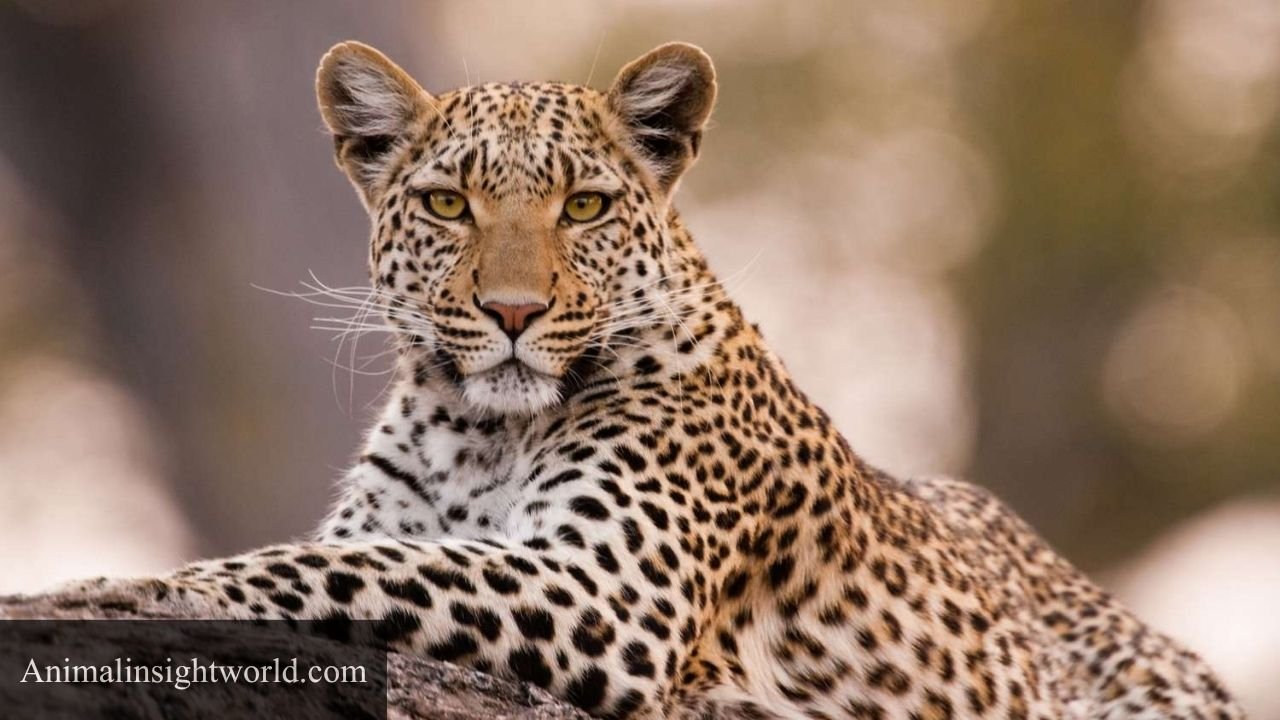
The leopard is one of the most recognisable spotted big cats in the world, and its golden coat is covered in dark rosettes that look like small broken rings. These rosettes help the leopard disappear into dappled sunlight and shade in forests, grasslands, and rocky hills across Africa and parts of Asia. Leopards are powerful and secretive hunters that usually hunt alone at night, using patience and a sudden burst of speed to catch antelope, monkeys, and other prey. After a successful hunt, a leopard often drags its kill high into a tree to keep it safe from lions and hyenas. Leopards are also strong swimmers and excellent climbers, and they can adapt to many different habitats, from rainforests to deserts. Each leopard’s rosette pattern is unique, which helps researchers identify individual animals in photographs taken by camera traps in the wild.
2. Cheetah
The cheetah is the fastest land animal, and it is known to reach speeds of around 60 to 70 kilometres per hour in short bursts when it is chasing prey across open grassland. Its slender body is covered in solid black spots on a pale golden coat, and it has distinctive black tear lines running from the corners of its eyes down to its mouth. These tear lines are thought to help reduce glare from the sun, much like the black marks worn by athletes. Unlike most other big cats, cheetahs hunt mainly during the day, relying on their remarkable eyesight to spot gazelles and other small antelope from a long distance away. They live mostly in Africa, with a small population in Iran, and they prefer wide open savannas where they have room to run. Cheetah cubs have a fluffy grey mane on their backs that helps them blend into tall grass.
3. Jaguar
The jaguar is the largest big cat in the Americas, and it is a powerful swimmer that lives in rainforests, wetlands, and grasslands from Mexico through Central America and into South America. Its coat is covered in large rosettes, and many of those rosettes contain one or more small black spots in the centre, which helps tell a jaguar apart from a leopard. Jaguars have an exceptionally strong bite, and they are known to hunt caimans, capybaras, deer, and fish, often catching prey in or near water. Unlike many other big cats, jaguars are comfortable in rivers and are often seen swimming or resting beside water. They are solitary animals that mark large territories with scent and sound, and they usually hunt at dawn and dusk. The jaguar is an important symbol in the cultures of many peoples across Central and South America.
4. Giraffe
The giraffe is the tallest land animal in the world, and its long neck and spotted coat make it impossible to mistake for any other creature. Each giraffe has a unique pattern of brown patches separated by pale lines, and researchers can identify individual giraffes by their patch shapes, much like people are identified by fingerprints. Giraffes live on the savannas of Africa, where they feed mainly on leaves from acacia trees that other animals cannot reach. Their long tongues, which can be around 45 centimetres long, help them pull leaves from thorny branches without hurting themselves. A giraffe’s spots may also help with temperature control, as the skin beneath each dark patch contains a network of blood vessels that can release heat. Giraffes usually live in loose groups, and mothers are known to protect their calves fiercely from lions and hyenas.
5. Snow Leopard
The snow leopard is a shy and elusive big cat that lives in the high mountains of Central Asia, including the Himalayas and the mountains of Mongolia and China. Its thick pale grey coat is covered in dark rosettes and spots that help it blend perfectly into rocky slopes and snow, which is why it is often called the ghost of the mountains. Snow leopards have very long tails that they use for balance on steep cliffs and wrap around their bodies like a scarf when they rest in the cold. They mainly hunt wild sheep and goats, and they can leap across gaps of several metres between rocks in a single bound. Because they live in remote and rugged places, snow leopards are rarely seen by people, and much of what scientists know about them comes from camera traps. Their spotted coats are thicker in winter to protect them from freezing temperatures.
6. Ocelot
The ocelot is a small wild cat that lives in the forests and scrublands of South America, Central America, and occasionally southern Texas in the United States. Its beautiful golden coat is marked with black spots, stripes, and chain-like patterns that help it stay hidden in dappled forest light while it hunts at night. Ocelots are about twice the size of a domestic cat, and they are excellent climbers and swimmers. They feed mainly on small mammals, birds, reptiles, and fish, and they use their sharp hearing and keen eyesight to find prey in the dark. Ocelots are solitary animals that mark their territories carefully, and a male’s territory often overlaps with those of several females. Their striking coats once made them a target for the fur trade, but they are now protected in most of the countries where they live.
7. Serval
The serval is a medium-sized wild cat from Africa that is known for its long legs, large ears, and clearly spotted coat. It lives mainly in grasslands and wetlands south of the Sahara, where it hunts rodents, birds, frogs, and insects. Servals have the longest legs relative to body size of any cat, which helps them see over tall grass and leap high into the air to catch birds in flight. They are also known for their exceptional hearing, and they can hear small animals moving underground before pouncing on them with great accuracy. A serval’s golden coat is covered in black spots and stripes that provide excellent camouflage among grasses and reeds. Servals are mostly active at dawn and dusk, and they usually hunt alone. They are not closely related to domestic cats, although they are sometimes kept in captivity by experienced owners.
8. Spotted Hyena
The spotted hyena is a powerful social mammal that lives in sub-Saharan Africa, and it is known for its sandy coat covered in dark spots that fade slightly as the animal gets older. Spotted hyenas live in large groups called clans, which can contain dozens of animals and are led by a dominant female. They are famous for their whooping calls and for a sound that resembles human laughter, which they make when they are excited or nervous. Spotted hyenas are both skilled hunters and scavengers, and they can bring down large prey such as wildebeest and zebra by working together as a team. They have extremely strong jaws that can crush bones to reach the nutritious marrow inside. Despite their reputation as scavengers, spotted hyenas are intelligent animals with complex social lives, and they can recognise the voices of their clan mates.
9. Chital
The chital, also known as the spotted deer or axis deer, is a graceful deer that lives in the forests and grasslands of India, Sri Lanka, Nepal, and Bangladesh. Its rich chestnut coat is covered in white spots all year round, which helps it blend into the shifting light and shade of the forest floor. Chital are social animals that live in herds, and they often graze together with langur monkeys, which warn them of approaching predators such as tigers and leopards from the treetops. Male chital grow antlers that can have three points, and they shed and regrow them each year. Chital feed mainly on grasses, leaves, and fallen fruit, and they are most active in the early morning and late afternoon. They are also known for their sharp alarm calls, which alert other animals in the forest when danger is near. Chital have been introduced to several other countries, including Australia and the United States.
10. Ladybug
The ladybug, also called a ladybird in many parts of the world, is a small beetle that is instantly recognisable by its bright red or orange wing cases covered in black spots. These spots are a warning to predators that the ladybug tastes unpleasant and may be poisonous, so birds and other animals usually leave them alone. The number of spots on a ladybug does not tell you its age, although it can help identify the species, as different species have different numbers and arrangements of spots. Ladybugs are helpful to gardeners and farmers because they eat aphids and other small insects that damage crops and plants. A single ladybug can eat thousands of aphids during its lifetime. Ladybugs live in gardens, fields, and woodlands around the world, and in autumn many of them gather together in large groups to shelter through the winter in a safe place.
11. Spotted Salamander
The spotted salamander is a striking amphibian that lives in the damp woodlands of eastern North America, from Canada down to the Gulf Coast of the United States. It has a dark black or bluish-black body covered in bright yellow spots that run in two neat rows along its back, and these spots warn predators that its skin produces toxins. Spotted salamanders spend most of their lives hidden under logs, leaves, and stones, coming out mainly at night and after rain to hunt for worms, insects, and other small creatures. Every spring, they travel to the same woodland pools where they were born to breed, often crossing roads and gardens on rainy nights. Their eggs are laid in jelly-like masses in the water, and the young develop there before moving onto land. Spotted salamanders can live for many years, and some individuals are known to live for more than twenty years in the wild.
12. Leopard Gecko
The leopard gecko is a small lizard that lives in the rocky deserts and dry grasslands of Afghanistan, Pakistan, and parts of India and Iran. It gets its name from its yellow skin covered in black spots, which helps it blend into sandy and rocky ground and avoid predators such as snakes and birds. Unlike most geckos, leopard geckos have movable eyelids and cannot climb smooth walls, so they spend their time on the ground among rocks and burrows. They are nocturnal hunters that feed on insects, spiders, and other small creatures, and they store fat in their thick tails to survive when food is scarce. If a leopard gecko loses its tail to a predator, it can grow a new one, although the replacement is usually shorter and less colourful. Leopard geckos are popular pets because they are gentle and relatively easy to care for.
13. Whale Shark
The whale shark is the largest fish in the world, and it can grow to lengths of around 12 metres or more, yet it is a gentle filter feeder that poses no danger to people. Its dark grey-blue body is covered in a unique pattern of white spots and stripes that scientists use to identify individual sharks, just as people are identified by fingerprints. Whale sharks live in warm tropical oceans around the world, and they swim slowly near the surface with their enormous mouths open, filtering tiny plankton, small fish, and squid from the water. Despite their great size, they feed on some of the smallest creatures in the sea. Whale sharks are known to migrate long distances between feeding areas, and divers travel from around the world to swim beside them. They are a protected species in many countries because their numbers have fallen.
14. Spotted Eagle Ray
The spotted eagle ray is a beautiful ocean animal that is easy to recognise by its dark body covered in white spots and by its long pointed snout that looks a little like a duck’s bill. It lives in warm tropical and subtropical seas around the world, and it is often seen swimming gracefully in shallow coastal waters, coral reefs, and lagoons. Spotted eagle rays feed mainly on molluscs, crustaceans, and small fish that they find buried in the sand, using their snouts to dig and their flat teeth to crush hard shells. They can leap clear out of the water, which is a spectacular sight for anyone lucky enough to see it. These rays usually swim alone or in small groups, although they sometimes gather in larger schools. Their spotted pattern helps break up their shape in sunlight filtering through the water, making them harder for sharks to spot from above.
15. Spotted Owl
The spotted owl is a medium-sized owl that lives in the old forests of western North America, from British Columbia in Canada down through the United States to Mexico. Its dark brown feathers are covered in white spots, which help it blend into the shadows and patches of light beneath tall trees. Spotted owls are nocturnal hunters that feed mainly on small mammals such as flying squirrels, woodrats, and mice, which they catch silently in the dark. They have large dark eyes and excellent hearing, and their soft feathers allow them to fly almost silently. Spotted owls usually stay in the same forest territory for many years, and they need large areas of old forest with tall trees and plenty of places to nest. Their spotted plumage makes them one of the most distinctive owls in North America, and they are a symbol of efforts to protect old-growth forests.
Spots are far more than decoration, and the animals on this list show how a single pattern can serve many different purposes in nature. For hunters like leopards and jaguars, spots provide camouflage that helps them get close to prey, while for animals like giraffes and whale sharks, spots make each individual easy to recognise. For smaller animals like ladybugs and spotted salamanders, bright spots act as a warning that they are not good to eat. From the forests of North America to the oceans of the tropics, spotted animals remind us how cleverly nature uses colour and pattern to help living things survive, and how much variety can exist within one simple idea.
Surprising Facts
The snow leopard is one of the most surprising spotted animals on this list, because its pale grey coat with dark rosettes makes it almost invisible against rocky, snowy mountains, and it is so well camouflaged that researchers call it the ghost of the mountains. The ocelot and the serval use their spots to disappear into tall grass and forest shadows, while the spotted hyena’s spots help its cubs hide in the den.
The chital, also called the axis deer, keeps its white spots throughout its life, unlike most deer that lose theirs as adults, and the spotted eagle ray glides through the sea with white spots on a dark back that break up its shape from above. The spotted owl is named for the white spots on its brown feathers, which help it blend into the old-growth forests where it lives. Spots are never just decoration: they are camouflage, identity and warning all at once.
Frequently Asked Questions
What is the difference between a leopard’s and a jaguar’s spots?
Leopards have solid spots and smaller rosettes, while jaguars have larger rosettes with one or two small spots inside each ring. Jaguars are also stockier and have a stronger bite, and they live mainly in the Americas while leopards live in Africa and Asia.
Are giraffe spots unique to each animal?
Yes. Every giraffe has a unique spot pattern, like a human fingerprint, and researchers use the patterns to identify individuals. The spots may also help giraffes recognise each other and may play a role in temperature control.
Why do ladybugs have spots?
Ladybug spots are a warning: their bright red shells with black spots tell birds that they taste bad and may be toxic. The number of spots varies by species and does not tell you the ladybug’s age, despite the popular belief.
How do scientists identify individual whale sharks?
Scientists identify whale sharks by the unique pattern of white spots on their dark skin, which is different for every shark. Photographs of the spot patterns are matched by computer, just like a fingerprint database.
Conclusion
Spots are far more than decoration, and the animals on this list prove it. For the leopard they are camouflage, for the ladybug they are a warning, and for the whale shark they are a name tag. These fifteen animals show that a pattern of spots can hide, protect and identify all at once.