Ghana Cleaner Jobs with Visa Sponsorship 2026
Cleaners keep Ghana working. Hotels in Accra and Kumasi, hospitals in Takoradi and Tamale, offices in Airport City, schools across the country, restaurants, shopping centres, airports and homes all depend on people who clean, tidy and maintain spaces every day. In 2026, some Ghanaian employers in hospitality, healthcare, facilities management and private households are looking for foreign workers to fill cleaner roles, particularly in tourist areas and large cities where demand is high.
This guide explains Ghana cleaner jobs with visa sponsorship in 2026 in clear, practical terms. It describes what cleaning work involves, where the jobs are, what employers expect, how pay and hours usually work, and what visa sponsorship really means. It does not promise a job or a visa. It gives you an honest picture so you can prepare, apply to genuine employers, and understand the process before you make any commitment.
Cleaning work suits people who are reliable, thorough, physically active and comfortable working independently or as part of a small team. It is honest, essential work, and for many foreign workers it is a practical way to live and work in Ghana while gaining experience in hospitality or facilities services.
Why Ghana Needs Cleaners in 2026
Ghana’s tourism and hospitality industry is a major source of cleaning jobs. Accra has hotels, guesthouses, restaurants and conference centres that need daily cleaning. Kumasi has hotels and guesthouses for business and cultural visitors. Cape Coast and Elmina have hotels and lodges for tourists visiting historic castles and beaches. Busy periods, festivals, conferences and holiday seasons increase demand for housekeepers, laundry staff and general cleaners.
Hospitals and clinics in Ghana are another major source of cleaning work. Wards in Accra, clinics in Kumasi and health centres elsewhere need cleaners who understand hygiene, infection control and the safe handling of cleaning products. These posts are more specialised than general cleaning, and employers look for people who can follow strict step-by-step procedures and pay close attention to detail.
Offices, schools, universities and commercial buildings in Accra, Kumasi and other cities employ cleaners through facilities management companies. These companies often hold contracts to clean several buildings, and they hire teams of cleaners to work early mornings, evenings or nights when buildings are less busy. Shopping centres, airports and public buildings also need regular cleaning teams.
Private households in Accra and other cities sometimes employ domestic cleaners, either directly or through agencies. These roles can involve cleaning homes, doing laundry, ironing and helping with general household tasks. They are often more personal and require trust, discretion and reliability.
Not every cleaning employer in Ghana can sponsor a visa. Sponsorship is more likely with larger hotels, hospital groups, facilities companies and cleaning agencies that are formally registered, have human resources staff, and have experience with formal employment contracts. Small guesthouses or private households that hire informally are unlikely to be able to support a visa application. Your search should focus on formal employers with a clear business presence.
Where Cleaners Work in
Cleaner roles in Ghana cover offices, hotels, hospitals, schools and private homes, and each setting has its own pace and rules. Hospital cleaning, for example, follows strict hygiene routines, while office cleaning is usually done early in the morning or after working hours. Say which settings you have worked in when you apply, because employers match people to the setting they know.
What Cleaners Do in Ghana
A cleaner’s day looks different in every workplace, but the main tasks repeat themselves. In a Ghanaian hotel, housekeeping means preparing guest rooms, swapping bed linen and towels, cleaning bathrooms, vacuuming and mopping floors, dusting, emptying bins, restocking toiletries, and reporting damage or anything missing. Rooms must reach a high standard within a fixed time, most pressingly when check-outs and check-ins fall on the same day.
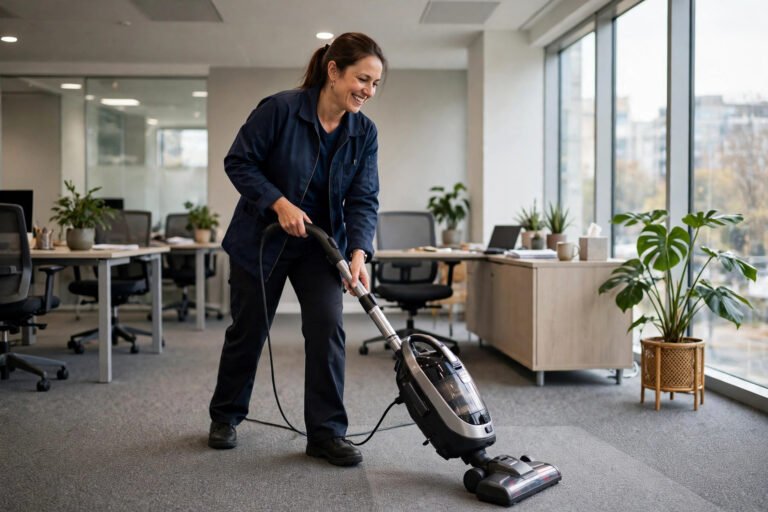
Office and commercial cleaning in Ghana follows a familiar pattern: sweeping, mopping and vacuuming floors, wiping desks and shared areas, cleaning toilets and kitchens, emptying bins and keeping entrances tidy. Much of it happens before staff arrive or after they leave, so early morning or evening shifts are common, and weekend work may be needed when a building hosts events.
Inside Ghanaian hospitals and clinics, cleaners follow stricter hygiene routines than in offices. They clean wards, treatment rooms, corridors and toilets, disinfect surfaces, dispose of waste safely and use different products for different areas. Training in infection control and the safe handling of chemicals matters a great deal here, and a good employer should provide that training before you start on the wards.
Schools and public buildings in Ghana need cleaners for classrooms, halls, toilets and outdoor areas, and for getting rooms ready for assemblies and events. In restaurants and cafes, cleaning often means clearing dining areas, kitchens, toilets and storage rooms after closing time, when the premises can be cleaned properly without customers present.
A cleaner in a private Ghanaian home may tidy every room, do the laundry and ironing, wash dishes, keep living areas in order and help with general household organisation. The exact list of tasks depends on the household and what was agreed with the employer, so it is worth writing the duties down before you start.
Whatever the setting, cleaners in Ghana need to use products safely: follow the dilution and storage instructions on the label, wear protective gloves where needed, and report hazards such as wet floors, broken equipment or faulty wiring to a supervisor. Care, speed and reliability all matter, because a clean space affects health, comfort and the reputation of the hotel, hospital or business you work for.
Where the Jobs Are in Ghana
Most cleaner jobs are in cities and tourist areas. Accra has the largest number of offices, hotels, hospitals and commercial buildings, and therefore the largest number of cleaning jobs. Areas such as Osu, Airport City, Cantonments, East Legon and the city centre have many hotels and offices, while Tema has port and industrial facilities.
Kumasi is a major centre for hotel and office cleaning work, with jobs in hotels, hospitals, schools and commercial buildings in the city. Takoradi has hotels, hospitals and offices linked to oil, gas and port activity. Cape Coast and Elmina have hotels and lodges for tourists. Tamale in the north has hospitals, schools and hotels that need cleaners.
Smaller towns may have cleaning work in schools, health centres and municipal buildings, but the number of formal employers able to sponsor a visa is likely to be higher in the larger cities and tourist hubs. If you are flexible about location, you may have more options, particularly if you are willing to work in Accra or Kumasi where tourism and business create steady demand.
What It Takes to Get Hired as a Cleaner in Ghana
Most cleaner jobs in Ghana do not require a formal qualification, but employers do look for certain qualities. Reliability is often the most important. A cleaner who arrives on time for every shift, completes tasks thoroughly, and can be trusted in private spaces such as hotel rooms, offices and homes is highly valued. Employers need to know that work will be done to a consistent standard, even when no one is watching.
A sharp eye for detail matters a great deal in cleaning work in Ghana. A good cleaner spots dust on a shelf, a stain on a floor or a mark on a mirror and deals with it instead of hurrying past. In an Accra hotel, the state of a room shapes guest reviews and repeat bookings. In a hospital, careful cleaning protects patients. Employers notice the workers who take pride in the result and check their work before they call a room finished.
Cleaning in Ghana is physical work. You will spend long hours on your feet, bending, lifting, pushing and carrying, moving between rooms and floors. You may need to lift a vacuum cleaner, shift furniture, carry laundry and climb stairs, all while keeping a steady pace through the shift. Stamina matters, and so does the ability to keep the same care on the last room as on the first.
Hands-on cleaning experience gives a Ghanaian application a real lift, above all in hotels, hospitals or offices. If you have worked as a housekeeper, an office cleaner, a hospital cleaner or a domestic cleaner, describe the duties and the places you worked in. Mention any equipment you know, such as floor polishers, carpet cleaners or industrial vacuums. Training in hygiene, food safety, infection control or the safe handling of chemicals is worth adding too, with copies of your certificates.
English is the official language of Ghana and is widely used in cleaning work, in instructions, and in communication with supervisors, guests and colleagues. You should be able to understand simple instructions in English, ask questions, and communicate about your work. Learning a few polite phrases in Twi, Ga or another local language can help you build good relationships, but it is not usually required.
Beyond cleaning skill, Ghanaian employers notice honesty, discretion, politeness and teamwork. You often work in private rooms and around guests’ belongings, so trust sits at the heart of the job. A polite, respectful manner with guests, patients, colleagues and household members helps you succeed and be recommended for future work.
A cleaning application in Ghana usually starts with a valid passport, a short CV listing your work history, and references from previous employers where you can get them. Keep a digital set and a paper set of all your documents, so you can send them to an employer or show them to the immigration office without delay.
What Sponsorship Really Means for Cleaner Applicants
Visa sponsorship in Ghana does not guarantee a visa. It means an employer is willing to support your application by providing the employment documents that Ghanaian immigration authorities need, such as a job offer and a contract. The final decision is made by the authorities, not by the employer and not by any agent.
Ghana has different visa and work permit categories, and the right one depends on the type of work, the length of stay, and your circumstances. The employer, or a migration adviser they work with, should explain which category applies and what documents are needed. You may be asked for your passport, the employment contract, employer registration details, and in some cases proof of experience, police clearance or medical information. Requirements can change, so check the most recent guidance from the Ghana Immigration Service or the Ghanaian embassy or consulate in your country.
Be careful with anyone who promises a Ghanaian cleaning visa for a fee, guarantees approval, or asks you to pay a large sum before you have a genuine written offer from a real employer. Honest employers in Ghana do not charge workers for the job itself. If the offer seems too easy, if the employer cannot give clear company details, or if you are pressed to pay quickly, treat it as a warning sign and seek advice before you proceed.
Processing times for visas vary and cannot be fixed in advance. They depend on the visa type, the completeness of your application, and the workload of the authorities. Allow enough time, provide complete documents, and do not travel to Ghana for work or leave a current job until your visa status is clear.
Applying the Right Way: A Step-by-Step Guide
Start by preparing your documents. Write a short, honest curriculum vitae that lists your cleaning experience, the settings you have worked in, the tasks you performed, and any training you have completed. Include references if you have them, and copies of any relevant certificates.
Next, research genuine employers. Look for hotels, hospital groups, facilities management companies and cleaning agencies in Ghana that are formally registered and have a clear online presence. Check their websites, their services, and any careers or contact pages. Focus on employers in Accra, Kumasi, Takoradi and other major cities that have a history of formal employment.
Then search for vacancies. Use job portals that list work in Ghana, hotel career pages, and facilities company websites. Search using terms for cleaning, housekeeping, and facilities services. Save the details of each vacancy, including the company name, the role, the location and the date you applied.
Submit a clear application following the instructions in the advert. Include your curriculum vitae and a short message introducing yourself, describing your cleaning experience, explaining why you want to work in Ghana, and stating that you would need visa sponsorship to work lawfully. Be honest about your experience and availability.
Prepare for an interview, which may be by phone or video call. The employer may ask about your previous cleaning work, how you organise your tasks, how you handle difficult stains or busy days, and how you work with guests or colleagues. Prepare examples from your own experience.
If a Ghanaian employer offers you cleaning work, review the written offer carefully before you accept. It should state the job title and duties, the location, the pay, the working hours, the length of the contract and any benefits such as meals, transport or a uniform. It should also say whether the employer will support your visa application. Ask for clarification in writing if anything is unclear, and do not accept an offer that exists only in informal messages without a proper document.
Go through the visa steps together with your Ghanaian employer, sending each document they ask for quickly and exactly as requested. Keep a copy of everything you submit, stay in touch with the hotel or hospital while the application is being handled, and let them know at once if the immigration office asks for anything more. Do not book travel or leave a job you already hold until you have the right visa or work permission in hand for cleaning work in Ghana.
Before you travel, confirm your start date, working hours, and transport arrangements with the employer. Bring your original documents, your contract and your visa paperwork. Read about the city where you will live, including housing, transport, shops and healthcare.
How to Improve Your Chances
Tailor your curriculum vitae to each role, highlighting the experience that matches the job. Collect references from previous cleaning employers, hotel managers or household employers who can confirm your reliability and quality of work.
A short course before you apply can lift a Ghanaian cleaning application. Hygiene, the safe handling of cleaning chemicals, housekeeping or first aid all show an employer that you understand the work, and hotels and hospitals in Accra value workers who already know infection control basics. Check that any certificate you hold is still in date and keep a copy ready to send.
Cleaning jobs in Ghana often need cover outside normal hours, so a worker who can take early mornings, evenings, nights or weekends has more openings. Hotels in Accra need rooms turned around before new guests arrive, and hospitals need cleaners around the clock. If you can work those hours, say so, be honest about when you can start, and keep a note of every application you send and every reply you receive.
Pitfalls That Trip Up Cleaner Applicants
One mistake Ghanaian cleaning applicants make is sending the same application to every cleaner vacancy without reading what the employer actually needs. Read the description, apply only where your experience fits, and adjust each application to the setting and the role. Another mistake is paying an agent who promises a guaranteed job or visa. No one can guarantee a visa, and a fee for the job itself is a warning sign, so verify the employer or agent before you pay anything.
Another mistake is ignoring safety and hygiene training. Cleaning chemicals and equipment must be used correctly, and in Ghanaian hospitals and hotels the hygiene rules protect everyone’s health. Take every induction seriously, use the protective equipment provided, and ask questions if any procedure is unclear.
Accepting an offer without a written contract is also a serious mistake. Always get pay, hours, duties and visa support in writing and keep a copy. Do not rely on verbal promises alone. Do not travel to Ghana on a tourist visa intending to work. Working without the correct permission can lead to fines, removal, and future visa problems. Wait for the correct visa before you start work.
Pay and Conditions: The Honest Picture
Pay for cleaners in Ghana varies by employer, city, workplace and experience. Hotel housekeepers in Accra or Kumasi may be paid differently from office cleaners or hospital cleaners. Workers in larger cities may be paid differently from those in smaller towns. Pay may be by the hour, by the day, or by the month, depending on the employer and the contract. Some employers pay extra for night work, weekend work or overtime, depending on the arrangement.
It is not possible to give one fixed salary figure that applies to all cleaner jobs in Ghana, and any source that quotes a single number should be treated with caution. The honest position is that pay varies, and the exact amount will be set out in your job offer and employment contract. Before you accept an offer, make sure you understand how much you will be paid, how often, what hours you will work, and what benefits are included.
Working hours for cleaners in Ghana depend on the setting. Hotel cleaners in Accra and Kumasi often start early in the morning to prepare rooms for new guests. Office cleaners usually work early mornings or evenings. Hospital cleaners may work day or night shifts, including weekends. Domestic cleaners often work daytime hours on weekdays. Your contract should state your hours, rest days and leave, so read it carefully and keep a copy.
Some Ghanaian employers provide a meal during the shift, transport, a uniform, or the cleaning equipment and gloves you need. Others pay an allowance, and some expect you to arrange your own transport and meals. Housing is not always included with city cleaning jobs, so ask about living costs in the city where you will work. If accommodation is provided, ask what it covers and get the details in writing.
Health and safety matter in Ghanaian cleaning work. You may use strong chemicals, work with electrical equipment, lift heavy items or clean floors that are still wet. Your employer should train you in the safe use of products and equipment and explain what to do if you have an accident. Follow that training, wear gloves and any other protective equipment required, and report any hazard promptly.
Living in Ghana as a Foreign Worker
Cleaners in Ghana usually live in cities or tourist towns, where daily life offers many opportunities to explore. Accra has markets, beaches, museums, restaurants and festivals. Kumasi has historic sites, markets and cultural life. Cape Coast has castles, beaches and history. In your free time, you can try Ghanaian food, learn about local festivals, and meet people from many backgrounds.
Living costs vary by city. Accra is generally more expensive than smaller cities, especially for rent and transport. Before you accept a job, find out about typical rents near your workplace, the cost of transport, and daily expenses. Sharing housing with colleagues is common and can help with costs and settling in.
English is widely spoken, which helps in daily life as much as at work, from shopping and using transport to visiting a doctor and making friends. Ghanaians are often warm and welcoming, and workers who show respect, work reliably and make an effort to learn about local culture are more likely to settle in well and be invited to stay longer.
Before You Apply: Questions Answered
Do I need cleaning experience to work in Ghana? Experience helps, especially for hotel and hospital roles. Some employers consider beginners for general cleaning roles if they are reliable, thorough and willing to learn. If you have no experience, basic training in hygiene and safe cleaning can help.
Can a Ghanaian employer sponsor my visa for a cleaner job? Some larger, formal employers in hotels, hospitals and facilities management can support a visa application with employment documents. Sponsorship is not guaranteed, and the final decision rests with Ghanaian immigration authorities. Small or informal employers are unlikely to be able to offer this support.
Do I need to speak a Ghanaian language? English is the official language and is widely used in cleaning work, so it is usually sufficient. Learning a few phrases in Twi or another local language can help you build relationships, but it is not usually required.
What documents do I need? A cleaning application in Ghana usually starts with a valid passport, a CV showing your cleaning experience, and copies of any hygiene or chemical-handling certificates. The visa stage may ask for more: the signed contract, the employer’s registration details, and in some cases a police clearance or medical certificate. Because the exact list changes with the visa category, confirm it against the latest guidance from the Ghana Immigration Service.
How long does the visa process take? No fixed period can be promised for a Ghanaian work visa. The visa type, how complete your application is and how busy the authorities are all affect the wait. Send full and correct documents, allow a generous margin, and do not travel to Ghana for cleaning work until your visa has been confirmed.
Will accommodation be provided? It depends on the employer. Some hotels in Accra provide staff housing or a meal allowance, but many city cleaning jobs do not include accommodation. Ask about housing and living costs before you accept an offer and get the details in writing.
What hours will I work? Hours depend on the workplace. Hotel cleaners in Ghana often work mornings, office cleaners often work early mornings or evenings, and hospital cleaners may work shifts including nights and weekends. Your contract should state your hours and rest days, so check it before you sign.
Can I bring my family? Whether dependants can join you on a Ghanaian cleaning visa depends on the visa type and the rules in force when you apply. Longer contracts sometimes allow family to join, while shorter permits usually do not. Raise it with your employer early and check the current Ghanaian immigration rules before making plans for family to travel with you.
What to Do Next
Ghana cleaner jobs with visa sponsorship in 2026 offer a practical opportunity for foreign workers who are reliable, thorough and willing to work in hotels, hospitals, offices or homes. Ghana’s tourism, healthcare and business sectors need cleaners, and larger formal employers are sometimes able to support visa applications for the right candidates. At the same time, sponsorship is never guaranteed, pay varies by employer, city and role, and the final visa decision rests with the Ghanaian authorities.
If you want to work as a cleaner in Ghana, prepare your documents, research genuine employers, and apply carefully to roles that match your experience. Read every offer in full, ask about pay, hours, duties and visa support in writing, and avoid anyone who promises a guaranteed job or visa for a fee. With honest preparation and a professional approach, you can give yourself the best chance of finding lawful cleaning work in Ghana and building useful experience in a country known for its hospitality, culture and warmth.