Top 20 Animals That Start With M
Introduction
The Top 20 Animals That Start With M gather some of the most loved and most surprising animals in the world into a single list. There is the monkey, the meerkat and the moose, animals almost everyone can picture, and there is the mudskipper, a fish that climbs trees, and the manta ray, a giant that flies through the sea. Between them you will meet a snake that can kill with a single bite, a bird that copies human speech, and a tiny mouse that shares its genes with science itself. Every animal here begins with the letter M, and every entry below tells you where it lives, what it eats, how big it grows and what makes it special.
The letter M is one of the richest letters in the animal kingdom. It holds the largest land animal in North America, the moose, and one of the smallest mammals people keep as pets, the mouse. It holds animals that live in the sea, in rivers, in deserts, in forests and on the African savanna. Some of them work together in large families, like meerkats and monkeys. Others live alone, like the black mamba and the mink. Some of them are famous for their voices, like the mockingbird and the macaw. Others are famous for their silence, like the mole, which lives its whole life underground in the dark.
This guide keeps every fact plain and honest. Sizes and weights are typical adult averages, and where an animal is in trouble in the wild, the entry says so. The sources at the end point to National Geographic, Britannica, the San Diego Zoo and the IUCN Red List, so any fact can be checked. Near the end of the article you will find a habitat grouping that sorts all twenty animals by where they live, a count of how many are threatened, and a set of surprising facts that even animal lovers may not know.
What Makes These Animals Special
Before the list begins, it helps to see what ties these twenty animals together beyond a first letter. The first thing is variety. The M list holds ten mammals, four birds, two reptiles and fishes, one amphibian-like fish and one insect group in the moth, though the moth is the only insect here. That spread across the animal kingdom is wider than most letters can offer, and it means the list can teach a reader about almost every kind of animal life.
The second thing is teamwork. More than half of the mammals on this list live in groups. Meerkats live in mobs of up to fifty animals and take turns standing guard. Monkeys groom each other and raise their young together. Moose are the exception among the big mammals here, because they live alone, and that contrast is part of what makes the list interesting. The birds are social too. Macaws fly in pairs and flocks, magpies live in noisy groups, and mallards gather in large numbers on lakes and ponds.
The third thing is survival skill. The mole digs with hands shaped like shovels. The manta ray filters its food from the water while flying through the sea. The mudskipper breathes through its skin and climbs mangrove roots. The black mamba is one of the fastest snakes on land. The mockingbird can copy the songs of dozens of other birds. Each animal solved the problem of staying alive in a different way, and that is why a list built on a single letter can still feel like a tour of the whole animal kingdom.
1. Monkey
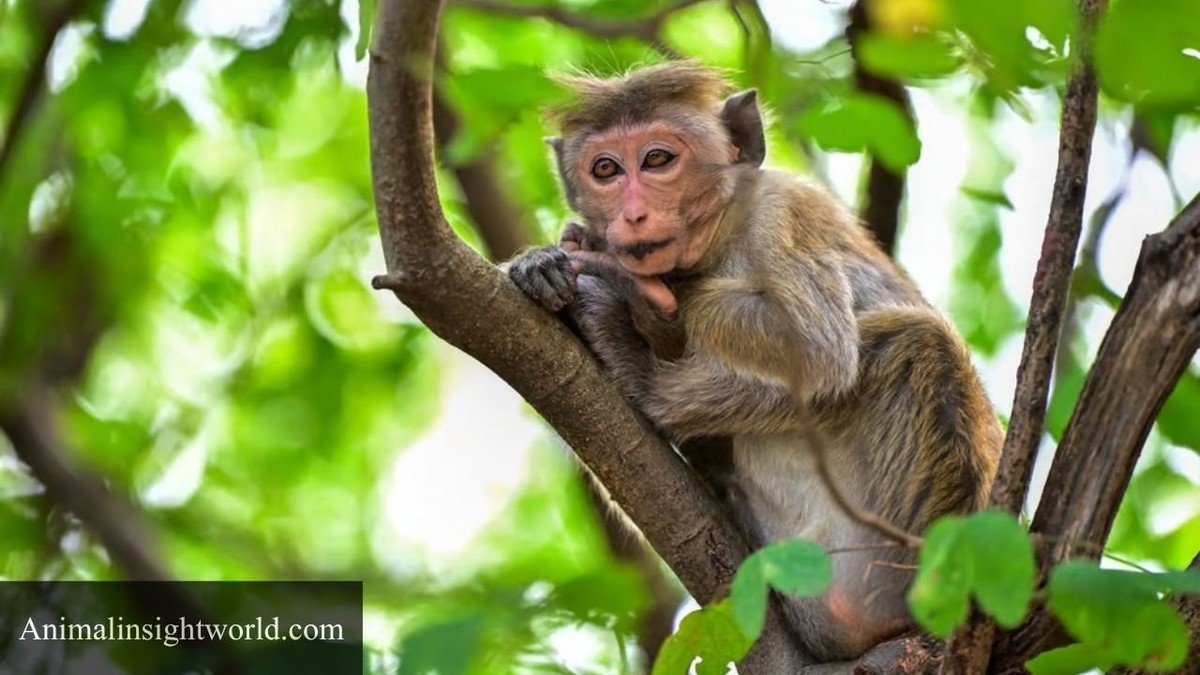
The monkey is one of the most familiar animals in the world, and it is also one of the most varied. There are more than 260 species of monkey, from the tiny pygmy marmoset, which weighs about 100 grams, to the mandrill, which can weigh more than 30 kilograms. Monkeys live in the tropical forests of Africa, Asia and Central and South America. Most monkeys live in trees, though some, like baboons, spend much of their time on the ground.
Monkeys are intelligent and social. They live in troops, groom each other to build friendships, and learn by watching older monkeys. Capuchin monkeys use stones to crack nuts, and some monkeys wash their food in water before eating it. Monkeys communicate with calls, facial expressions and body language, and mothers carry their babies everywhere for the first months of life. A monkey troop has a clear order, and young monkeys learn their place by playing and watching.
Monkeys eat fruit, leaves, insects, eggs and small animals, and they play an important part in forests by spreading seeds. When a monkey eats fruit and drops the seeds far from the parent tree, new trees grow. Many monkey species are threatened by the loss of tropical forest and by hunting, and the IUCN Red List lists dozens of them as Vulnerable or Endangered. Protecting rainforest is the single most important thing we can do for monkeys.
2. Meerkat
The meerkat is a small mongoose that lives in the dry deserts of southern Africa, in Botswana, Namibia, Angola and South Africa. Meerkats weigh about 700 grams to 1 kilogram, and they stand upright on their back legs to scan the desert for danger. Their dark patches around the eyes work like sunglasses, cutting the glare of the sun, and their slim bodies help them slip quickly into burrows.
Meerkats live in groups called mobs or gangs, usually of twenty to fifty animals, and they are famous for teamwork. While most of the group digs for insects, scorpions and small animals, one or two meerkats stand guard on a high spot, watching for eagles and jackals. If the guard spots danger, it gives a sharp call and the whole group dives into the burrow. Meerkats take turns babysitting the young, and older sisters help raise the pups of the dominant female.
Meerkats are not endangered, and their numbers are stable, because they breed fast and live in harsh country that people do not farm much. They are a favourite of wildlife films and zoos, and their upright posture and busy family life make them one of the most watched animals in Africa. A meerkat mob is a reminder that small animals can survive in a hard place by working together.
3. Moose
The moose is the largest member of the deer family and the largest animal on this list that lives on land in North America. A male moose, called a bull, can weigh up to 700 kilograms and stand more than 2 metres tall at the shoulder. Its antlers can spread nearly 2 metres wide, and they are the largest antlers of any deer. Moose live in the forests and wetlands of Canada, Alaska, northern Europe and Siberia, where they feed on leaves, twigs and water plants.
Despite their size, moose are strong swimmers. They wade into lakes to eat water plants, and they can swim for kilometres and dive several metres deep to reach food. Moose are mostly solitary, and they are most active at dawn and dusk. Bulls grow new antlers every year and shed them in winter, and during the autumn mating season they call loudly and compete with other bulls.
Moose are not endangered, but their numbers are falling in some southern parts of their range because of warming winters, ticks and disease. Warmer winters let winter ticks survive in larger numbers, and a heavy tick load can weaken a moose badly. In the far north, moose remain common, and they are an important food animal for people and for wolves and bears. The moose shows that even a giant can be sensitive to a changing climate.
4. Mouse
The mouse is a small rodent that lives almost everywhere people live. The house mouse weighs about 20 grams, with a pointed nose, round ears and a long thin tail. It is one of the most successful mammals on Earth, because it eats almost anything, breeds fast and hides well. A female mouse can have many litters a year, and a pair of mice can produce hundreds of descendants in a single year.
Mice have also changed science. The laboratory mouse shares most of its genes with people, and it has been used in medical research for more than a hundred years, helping scientists understand disease, genetics and the brain. Wild mice eat seeds, grain and insects, and they are food for owls, foxes, snakes and cats. A mouse can squeeze through a hole as small as a pencil, and it can climb walls and swim if it has to.
There are hundreds of species of mouse, from the harvest mouse, which builds a ball shaped nest in tall grass, to the deer mouse of North America and the spiny mouse of Africa. Most mice are not threatened, because they adapt so well to human homes and farms. The mouse is proof that being small, quick and flexible can be a better survival plan than being big and strong.
5. Mole
The mole is a small mammal that lives almost entirely underground, in tunnels it digs with powerful front feet shaped like shovels. The European mole weighs about 100 grams, with velvety dark fur, tiny eyes and no visible ears. Its fur can lie in any direction, which lets it move backwards through a tunnel as easily as forwards. Moles live in Europe, North America and Asia, in soil that is soft enough to dig.
A mole can dig more than 20 metres of tunnel in a single day, pushing the loose soil up into little hills called molehills. It eats earthworms, insects and grubs, and it can eat half its own body weight in a day. The star-nosed mole of North America has a strange pink nose with twenty two fleshy tentacles, and it is the fastest eater of any mammal, able to find and eat a worm in less than a quarter of a second.
Moles are often disliked by gardeners for their molehills, but they are good for the soil, because their digging mixes and aerates it. They are not blind, though their eyes are very small, and they find their way in the dark by touch and smell. The mole is a reminder that a whole world of animals lives beneath our feet, out of sight and mostly unnoticed.
6. Moth
The moth is the night flying cousin of the butterfly, and there are far more moths than butterflies in the world. Scientists have named more than 160,000 species of moth, and there may be many more still unknown. Moths range from tiny species smaller than a grain of rice to the atlas moth of Asia, which has a wingspan of up to 30 centimetres and is one of the largest insects in the world.
Moths are important pollinators. Many flowers that open at night depend on moths to carry their pollen, and moth caterpillars are a vital food for birds, bats and other animals. A single pair of blue tits can feed thousands of caterpillars to their chicks in one summer. Some moths, like the death’s head hawkmoth, can squeak, and some, like the luna moth, live only for about a week as adults and never eat at all.
Moth numbers are falling in many countries because of light pollution, habitat loss and pesticides. Bright lights confuse moths and stop them from feeding and breeding, and the loss of wildflowers and hedgerows removes their food plants. Moths are easy to help, because leaving a wild corner in a garden and turning off outside lights at night gives them a better chance. The moth shows that the animals we barely notice can be some of the most important.
7. Manatee
The manatee is a large, gentle sea mammal that lives in warm shallow waters. There are three species, in the Caribbean, the Amazon and West Africa, and the Florida manatee is the best known. Manatees weigh between 400 and 600 kilograms and grow to about 3 metres long. They are slow swimmers, moving at a few kilometres an hour, and they spend their days grazing on sea grass and other water plants.
Manatees must come to the surface to breathe every few minutes, and they can hold their breath for up to twenty minutes when resting. They have no natural predators as adults, because their size protects them, but they are in danger from boats, fishing nets and the loss of sea grass. A manatee hit by a boat propeller often carries the scars for life, and many manatees can be recognised by their scar patterns.
The IUCN Red List lists the West Indian manatee as Vulnerable and the African manatee as Vulnerable too, while the Amazonian manatee is also Vulnerable. Their numbers are falling in some places because of boat strikes and the loss of warm water shelters and sea grass beds. In Florida, manatees gather at warm water springs and power plant outflows in winter, and wildlife officers protect those gathering places. The manatee is often called a sea cow, and its calm nature has made it a symbol of gentle wildlife.
8. Mandrill
The mandrill is the most colourful mammal in the world. The male mandrill has a bright red nose with blue ridges on either side, a yellow beard and a blue and red face that looks almost painted. Males weigh up to 35 kilograms, which makes the mandrill the largest monkey in the world. Mandrills live in the rainforests of central Africa, in Cameroon, Gabon, Congo and Equatorial Guinea.
Mandrills live in large groups called hordes, which can hold hundreds of animals, the largest groups of any monkey. They spend their days on the forest floor, searching for fruit, seeds, insects and small animals, and they sleep in trees at night. Their bright colours are a sign of health and rank, and the dominant male has the brightest face of all. Mandrills have cheek pouches that they stuff with food, and they can carry enough food in their cheeks to eat later in safety.
The IUCN Red List lists the mandrill as Vulnerable, because its rainforest home is being cut down and because it is hunted for meat. Mandrills are shy and hard to study, and much of what we know about them comes from a few long term research sites. The mandrill shows that a monkey can be both the largest and the most colourful of its kind, and still be quietly disappearing.
9. Macaw
The macaw is a large, long tailed parrot from the rainforests of Central and South America. The scarlet macaw is the most famous, with bright red, yellow and blue feathers, and it weighs about 1 kilogram. Macaws are among the most intelligent birds in the world, and they can learn words, solve puzzles and use tools. In the wild, they fly in pairs or small flocks, calling loudly as they cross the forest canopy.
Macaws eat fruit, nuts and seeds, and they visit riverbanks to eat clay, which helps them digest toxins from unripe fruit. Their beaks are strong enough to crack the hardest nuts, and their feet can hold food like hands. Macaws mate for life, and both parents care for the chicks. A macaw can live for fifty years or more, which makes it one of the longest lived birds.
Many macaw species are threatened by the pet trade and by the loss of rainforest. The Spix’s macaw became extinct in the wild, though breeding programs have started to return it to Brazil. The scarlet macaw is listed as Least Concern, but its numbers are falling in many places. Macaws need large old trees with holes for nesting, and protecting those trees is the key to their future.
10. Mongoose
The mongoose is a small, quick mammal famous for its fight with snakes. The Indian grey mongoose weighs about 1.5 kilograms and lives in Asia, while other mongoose species live across Africa. Mongooses have long bodies, short legs and sharp teeth, and they are active during the day, hunting insects, rodents, eggs and small animals. They are famous for killing cobras, and they can do it because they are fast, agile and partly resistant to snake venom.
Mongooses live alone or in small family groups, and some species, like the banded mongoose of Africa, live in large groups of up to forty animals. Banded mongooses work together to find food, groom each other and guard their young, and they are one of the most social mongoose species. Mongooses are clever and curious, and they have learned to live near people, raiding bins and gardens for food.
The mongoose was made famous by the story of Rikki-Tikki-Tavi, in Rudyard Kipling’s The Jungle Book, where a mongoose saves a family from cobras. In real life, mongooses were brought to islands like Hawaii and the Caribbean to control rats, but they also killed native birds and became a pest themselves. The mongoose is a reminder that moving an animal to a new place can cause as many problems as it solves.
11. Black Mamba
The black mamba is one of the most feared snakes in the world, and one of the fastest. It lives in the savannas and rocky hills of eastern and southern Africa, and it can grow to more than 3 metres long, making it the longest venomous snake in Africa. Its name comes from the black colour inside its mouth, which it shows when threatened, not from its skin, which is usually olive brown or grey.
Black mambas can move at speeds of up to 20 kilometres an hour over short distances, which makes them the fastest land snakes. They hunt during the day, feeding on birds, bats and small mammals, and they can strike more than once in a single attack. Their venom is powerful, and a bite is deadly without treatment, but black mambas are shy animals that avoid people when they can. They prefer to escape, and they bite only when cornered or surprised.
Black mambas are not endangered, and their numbers are stable across much of their range. They are important hunters of rodents, and they help keep rodent numbers down in farming areas. People who live near black mambas are taught to leave them alone and to call a snake catcher if one enters a house. The black mamba shows that a dangerous animal can also be a shy one, and that respect is a better response than fear.
12. Magpie
The magpie is a bold black and white bird with a long tail and a reputation for cleverness. The Eurasian magpie lives across Europe and Asia, and its cousins live in North America and Australia. Magpies weigh about 200 grams and are about 45 centimetres long including the tail. They are noisy, curious birds, and they are one of the few animals that can recognise themselves in a mirror, a sign of self awareness that only a few species share.
Magpies eat almost anything, from insects and eggs to fruit, carrion and food scraps, and they hide food for later in holes in the ground. They are famous for collecting shiny objects, though scientists now think they are more interested in useful objects than in treasure. Magpies live in pairs and defend their territory loudly, and they build large domed nests with a roof of sticks, which protects their eggs from crows and other raiders.
Magpies are common and their numbers are stable, and they have adapted well to towns and cities. In Australia, the magpie is a different bird, a black and white songbird famous for its warbling song and for swooping cyclists in spring. The Eurasian magpie shows that intelligence is not limited to large brained mammals, because a bird can be clever too.
13. Mallard
The mallard is the most common duck in the world, and the ancestor of almost all domestic ducks. The male mallard is easy to recognise, with a glossy green head, a white neck ring, a brown chest and a grey body, while the female is mottled brown. Mallards weigh about 1 kilogram and live on lakes, ponds, rivers and marshes across North America, Europe and Asia, and they have been introduced to many other countries.
Mallards eat seeds, insects, water plants and small animals, dabbling at the surface or tipping up to reach food below. They fly strongly and can reach speeds of more than 80 kilometres an hour, and they migrate long distances in winter. Mallards nest on the ground, hidden in grass near water, and the female leads her ducklings to water within a day of hatching. Ducklings can swim and feed themselves from their first day, though their mother guards them closely.
Mallards are not threatened, and their numbers are large and stable, because they adapt well to parks, gardens and city ponds. They are the duck most people meet first, and their familiar quack is the sound of almost every pond in the northern world. The mallard shows that a common animal can still be worth watching, because its life is full of detail once you look closely.
14. Marmoset
The marmoset is a tiny monkey from the forests of South America, and the common marmoset weighs only about 300 grams. Marmosets have long tails, soft fur and white tufts of hair around their ears that look like earmuffs. They live in small family groups in Brazil and neighbouring countries, and they spend their lives in the trees, leaping from branch to branch with long jumps.
Marmosets eat tree gum, fruit, insects and small animals, and they have sharp lower teeth that they use to gnaw holes in tree bark to reach the gum inside. They are one of the few monkeys that usually give birth to twins, and the whole family helps to carry and care for the babies. Fathers carry the twins for most of the day, handing them to the mother only for feeding. This teamwork is rare among monkeys.
Common marmosets are not threatened, but several other marmoset species are endangered, including the golden lion tamarin, which is a close relative. Marmosets are popular in the pet trade, which is a problem, because they are wild animals that need a family group and a forest to be healthy. The marmoset shows that a monkey can be as small as a squirrel and still live a rich social life.
15. Mink
The mink is a small, sleek mammal of rivers and wetlands, with dark brown fur, a long body and short legs. The American mink weighs about 1 kilogram, and it lives across North America and has been introduced to Europe and South America. Minks are strong swimmers, and they hunt fish, frogs, crayfish, mice and birds along riverbanks. They are active at night and at dawn, and they are mostly solitary.
Minks are famous for their fur, which is soft, dense and waterproof, and they have been farmed for fur for more than a hundred years. Escaped farm minks have become a serious problem in Europe, where they hunt water voles and ground nesting birds that have no defence against them. The European mink, a separate species, is now one of the most endangered mammals in Europe, partly because of competition from the introduced American mink.
The American mink is not threatened in its home range, but the European mink is listed as Critically Endangered by the IUCN Red List, and its numbers have fallen sharply. Conservation work in Europe now focuses on removing American minks from key areas and protecting the last European mink populations. The mink is a story of two species with the same name and very different fates.
16. Manta Ray
The manta ray is a giant fish that flies through the sea. The giant manta ray can grow to more than 7 metres across, from wingtip to wingtip, and weigh up to 2,000 kilograms, which makes it one of the largest rays in the world. It lives in tropical and subtropical oceans, swimming slowly with graceful wing beats, and it feeds by filtering tiny plankton from the water as it swims.
Manta rays are gentle and intelligent. They have the largest brain of any fish relative to their body size, and they recognise themselves in mirrors in tests, which suggests a level of self awareness. They visit cleaning stations on reefs, where small fish pick parasites from their skin, and they gather in large groups at feeding sites. Manta rays give birth to a single pup at a time, and they breed slowly, which makes them slow to recover from losses.
The IUCN Red List lists the giant manta ray as Endangered, because it is hunted for its gill plates, which are sold in some traditional medicine markets, and because it is caught by accident in fishing nets. Manta rays are now protected in many countries, and diving tourism has shown that a living manta ray is worth far more than a dead one. The manta ray is a reminder that the biggest animals in the sea can also be the most gentle.
17. Mountain Goat
The mountain goat is a sure footed climber of the high mountains of North America. Despite its name, it is not a true goat, but a relative of the chamois and the serow. Mountain goats weigh between 45 and 140 kilograms, with thick white fur, black horns and cloven hooves with rough pads that grip rock like climbing shoes. They live on steep cliffs and alpine meadows in Alaska, Canada and the north western United States.
Mountain goats are among the best climbers in the animal kingdom. They can climb slopes of 60 degrees, leap several metres across gaps, and stand on ledges only a few centimetres wide. They eat grasses, leaves and alpine plants, and they climb to salt licks to get the minerals they need. Kids are born on steep cliffs, where predators cannot reach them, and they can stand and walk within hours of birth.
Mountain goats are not endangered, and their numbers are stable, though they are sensitive to disturbance from hikers and to the loss of alpine habitat as the climate warms. They are a symbol of wild mountain country, and seeing a white goat on a cliff high above a valley is one of the great sights of the northern mountains. The mountain goat shows that some animals are built for places where almost nothing else can live.
18. Musk Ox
The musk ox is a shaggy, powerful animal of the Arctic tundra, and it has survived since the Ice Age. Musk oxen weigh between 200 and 400 kilograms, with long dark brown hair that hangs almost to the ground and curved horns that both males and females carry. They live in Greenland, Canada, Alaska, Norway and Siberia, in some of the coldest places on Earth, where winter temperatures fall below minus 40 degrees.
Musk oxen live in herds and defend themselves by forming a circle, with the adults facing out and the calves in the middle, horns ready. This defence worked against wolves for thousands of years, but it failed against hunters with guns, and musk oxen were hunted almost to extinction in the early twentieth century. Protection and reintroduction have brought them back, and they now live in several Arctic countries where they had vanished.
The musk ox is listed as Least Concern by the IUCN, but it is sensitive to a warming Arctic, because rain and ice can lock away the plants it eats in winter. Its wool, called qiviut, is one of the warmest natural fibres in the world, and it is collected from shed wool by Arctic communities. The musk ox is a living link to the Ice Age, and a reminder that an animal can survive a frozen world for thousands of years.
19. Mudskipper
The mudskipper is a fish that lives out of water. It is a small fish, usually less than 20 centimetres long, that lives in mangrove swamps and mudflats in Africa, Asia and Australia. Mudskippers can breathe through their skin and through the lining of their mouth when they are out of water, and they carry a bubble of water in their gills to keep breathing on land. They hop, skip and climb over mud and mangrove roots, and some species can climb trees.
Mudskippers eat insects, small crabs and worms, and they hunt on land, using their strong fins to push themselves forward and their big eyes to spot prey. Males defend their burrows and display to females by raising their dorsal fins and opening their mouths wide. They build burrows in the mud where they lay their eggs, and the male guards the burrow and brings in fresh water for the eggs.
Mudskippers are not threatened, but they depend on mangrove forests, which are being cut down in many countries for shrimp farms and building. Protecting mangroves helps mudskippers, and it also helps the fish, crabs and birds that share their home. The mudskipper shows that a fish does not have to stay in the water, and that the line between water and land is thinner than we think.
20. Mockingbird
The mockingbird is a grey and white songbird from North America, and it is famous for copying the songs of other birds. The northern mockingbird can imitate more than fifty species, and it also copies car alarms, sirens and other sounds. It sings day and night, especially on moonlit nights, and a male mockingbird can sing for hours without repeating itself. Mockingbirds weigh about 50 grams and live in gardens, parks and open country across the United States and Mexico.
Mockingbirds are fierce defenders of their nests. They will attack cats, dogs and even people who come too close, diving at them with loud calls. They eat insects and fruit, and they are a common sight in southern gardens, perched on a wire or a fence post, singing. The mockingbird is the state bird of five American states, including Texas and Florida, which shows how much people love its song.
Mockingbirds are not threatened, and their numbers have grown as they spread north with the growth of towns and gardens. They are a favourite of writers, and the novel To Kill a Mockingbird took its title from the idea that the mockingbird is an innocent bird that does nothing but sing. The mockingbird shows that a plain looking bird can have one of the most remarkable voices in the world.
Surprising Facts
Even readers who know animals well can find something new in this list. The first surprise is the manta ray. It has the largest brain of any fish for its body size, and it can recognise itself in a mirror, a test that only a few animals pass. The second surprise is the mole. The star-nosed mole is the fastest eater of any mammal, able to find and eat a worm in less than a quarter of a second. The third surprise is the magpie. It is one of the only birds that can recognise itself in a mirror, which means it has a sense of self that most animals do not share.
The fourth surprise is the moth. The atlas moth has a wingspan of up to 30 centimetres, and the luna moth lives only about a week as an adult and never eats. The fifth surprise is the mudskipper, a fish that climbs trees and breathes through its skin. The sixth surprise is the black mamba, which is the fastest land snake in the world and can move at 20 kilometres an hour. The seventh surprise is the musk ox, an animal that survived the Ice Age and still lives in the Arctic today, wearing a coat of wool that is one of the warmest fibres in the world.
The final surprise is the mockingbird. A single male can copy more than fifty other bird species, and it can keep singing for hours without repeating itself. Put together, these facts show that the M list is not just a set of names. It is a set of animals that break the rules, from a fish that climbs trees to a bird that knows its own reflection. The letter M holds more surprises than most letters, and that is what makes it worth a full list.
Where They Live: A Habitat Grouping
Sorting the twenty M animals by habitat shows how widely they are spread. The forest group is the largest, with the monkey, the mandrill, the marmoset, the macaw, the magpie and the moth all living in trees or forest edges. The grassland and savanna group holds the meerkat, the black mamba and the mongoose, all animals of dry open country in Africa and Asia. The northern group holds the moose, the musk ox, the mountain goat and the mallard, animals of cold forests, lakes and high mountains.
The water group holds the manatee, the manta ray and the mudskipper, three animals that live in the sea, in rivers or in mangrove swamps. The underground and garden group holds the mole and the mouse, animals that live beneath our feet or beside our homes. The mockingbird and the mink cross groups, because the mockingbird lives in gardens and open country, and the mink lives along rivers and wetlands. Three of the twenty are listed as Vulnerable or Endangered by the IUCN Red List: the West Indian manatee is Vulnerable, the mandrill is Vulnerable, and the giant manta ray is Endangered. The European mink is Critically Endangered, though the American mink is not threatened. That count is a reminder that even a list of familiar animals holds species that need help, and that protecting forests, oceans and wetlands protects them all at once.
Frequently Asked Questions
What is the biggest animal that starts with M?
The manta ray is the biggest animal on this list, with a wingspan of more than 7 metres and a weight of up to 2,000 kilograms. The moose is the biggest land animal here, weighing up to 700 kilograms, followed by the manatee at up to 600 kilograms.
What is the smallest animal that starts with M?
The mouse is the smallest mammal here, weighing about 20 grams, though some moth species are even smaller. The marmoset is the smallest monkey on the list, weighing only about 300 grams, and the mole weighs about 100 grams.
How many animals that start with M are endangered?
Three of the twenty in this list are listed as Vulnerable or Endangered by the IUCN Red List: the West Indian manatee is Vulnerable, the mandrill is Vulnerable, and the giant manta ray is Endangered. The European mink is Critically Endangered, and several monkey and macaw species are also threatened.
Can a mockingbird really copy other birds?
Yes, the northern mockingbird can imitate more than fifty other bird species, and it also copies car alarms and sirens. It learns songs by listening, and males sing for hours, often through the night, to defend their territory and attract a mate.
Is the black mamba the fastest snake in the world?
The black mamba is the fastest land snake, able to move at up to 20 kilometres an hour over short distances. It is shy and prefers to escape rather than bite, but its venom is powerful and a bite needs urgent medical treatment.
Conclusion
The Top 20 Animals That Start With M show how much life one letter can hold. There are giants like the manta ray and the moose, tiny animals like the mouse and the marmoset, singers like the mockingbird and the macaw, and rule breakers like the mudskipper and the manta ray. Some of them live beside us in gardens and parks, and some live in places most people will never visit, from Arctic tundra to coral reefs. Three of them are threatened, and they need the same protection as the forests, oceans and wetlands they live in. If this list made you curious, start with the sources below, and then pick your favourite animal here and learn what is being done to keep it alive. The next letter in this series will bring twenty more animals, and a whole new set of surprises.
Sources: National Geographic: Meerkat Facts, Britannica: Manatee, San Diego Zoo Animals, IUCN Red List.