Top 15 Animals With Long Tails
A tail can be far more than a decoration. For some animals it is a balancing pole, for others a fifth limb, a blanket, a fly swatter, or a signal to other members of the group. The length of a tail often tells us something about how an animal lives, whether it climbs through trees, leaps across rocky slopes, swims, or simply needs to keep its balance while it runs. In some species the tail is almost as long as the body itself, and in a few it is even longer. This list brings together fifteen animals whose tails stand out for their length and for the clever ways they are used. Each one shows that a tail is not a leftover part, but a tool that has been shaped by the animal’s habitat and daily life.
1. Snow Leopard
The snow leopard has one of the longest tails of any big cat, and it can measure close to a metre long, almost as long as the animal’s body. It lives in the high mountains of Central Asia, where steep cliffs, loose rock, and deep snow make balance a matter of survival. The tail works like a counterweight when the cat leaps between rocks, sometimes jumping as far as fifteen metres in a single bound. It also helps the leopard steer in mid-air. When the cat rests in the cold, it wraps its thick, bushy tail around its body like a scarf, covering its nose and paws. Snow leopards are shy, solitary hunters that feed on wild sheep, goats, and smaller mammals, and their tails are as useful for staying warm as they are for hunting.
2. Ring-Tailed Lemur
The ring-tailed lemur is easy to recognise by its long tail, which is marked with thirteen or fourteen black and white rings. The tail can grow to more than sixty centimetres long, which is longer than the lemur’s body. Ring-tailed lemurs live in the dry forests and rocky areas of southern Madagascar, and they spend much of their time on the ground as well as in trees. Their tails help them balance as they leap between branches, and they hold them upright like flags when the group moves across open ground, so that members can keep track of each other. The tail is not used for gripping branches. Instead, it is a visual signal and a balancing aid, and males also use scent from glands near the tail in contests with rivals.
3. Red Kangaroo
The red kangaroo is the largest marsupial in the world, and its tail can grow to more than a metre long. Red kangaroos live in the dry grasslands and deserts of central Australia, where they travel long distances in search of grass and shrubs. The tail works as a counterbalance when the animal hops, helping it stay upright and change direction at speed. When a kangaroo moves slowly, it uses its tail as a third leg, leaning on it while it walks on all fours in a movement that researchers call pentapedal walking. The tail is thick and muscular at the base, and it also helps the kangaroo sit upright while it rests. Males are reddish in colour, while females are often blue-grey.
4. Spider Monkey
The spider monkey has a long, strong tail that works like a fifth hand, and it can measure more than eighty centimetres in length. Spider monkeys live in the rainforests of Central and South America, where they spend almost their whole lives in the trees. Their tails are prehensile, which means they can grip branches, and the tip is bare underneath, giving it a better hold. A spider monkey can hang from its tail alone while it reaches for fruit with both hands. The tail also helps the animal balance as it swings from branch to branch. Spider monkeys feed mainly on fruit, leaves, and flowers, and they travel in small groups through the forest canopy, rarely coming down to the ground.
5. Ocelot
The ocelot is a small wild cat with a beautifully spotted coat, and its tail can grow to around forty-five centimetres long. Ocelots live in forests, grasslands, and scrubland from the southern United States through Central America to South America. They are mainly active at night, hunting rodents, birds, lizards, and small mammals. The tail helps the ocelot balance as it climbs trees and moves along narrow branches, and it also helps the cat change direction quickly when it chases prey through dense vegetation. Ocelots are excellent swimmers and climbers, and they often rest in trees during the day. Their spotted pattern provides camouflage in dappled light, making them hard to spot even when they are close by.
6. Margay
The margay is a small wild cat that looks a little like an ocelot, but it is even more at home in trees, and its tail can make up nearly half of its total length. Margays live in the rainforests of Central and South America, where they spend most of their lives high in the canopy. Their long tail helps them balance on thin branches, and their large eyes help them hunt at night. Margays are remarkable climbers, and they can turn their hind feet around so that they can climb down trees head first, a skill that few other cats share. They feed on birds, small mammals, lizards, and fruit. Margays are solitary and shy, and they are rarely seen, even though they are widespread across their range.
7. Binturong
The binturong, also known as the bearcat, is a tree-dwelling mammal from the rainforests of South and Southeast Asia, and it has a long, muscular tail that can grow to nearly ninety centimetres. The tail is prehensile, which means the binturong can use it to grip branches as it climbs slowly through the canopy. It moves carefully rather than leaping, using its tail for extra support. Binturongs feed mainly on fruit, especially figs, and they also eat leaves, eggs, and small animals. They are known for a smell that many people compare to buttered popcorn. Binturongs are mostly active at night, and they rest in tree hollows during the day. Their shaggy black fur and long whiskers give them a distinctive, almost bear-like appearance.
8. Asian Palm Civet
The Asian palm civet is a small, cat-like mammal that lives in the forests of South and Southeast Asia, and its tail can grow to more than sixty centimetres long. It is mainly active at night, and it spends much of its time in trees, where its long tail helps it balance on branches. Asian palm civets feed on fruit, insects, small mammals, and birds, and they are known for eating coffee cherries, which has made them famous in the coffee trade. Their bodies are greyish with dark spots and stripes, and they have a masked face with white markings. Palm civets are solitary animals that mark their territory with scent. They are good climbers, and they often rest in tree hollows or dense foliage during the day.
9. Giraffe
The giraffe is the tallest land animal in the world, and its tail can grow to more than a metre long, ending in a dark tuft of hair. Giraffes live on the savannas of Africa, where they feed on leaves from tall acacia trees. Their tails are mainly used to swat away flies and other biting insects, which are a constant problem in the African heat. The long tail can swing from side to side with surprising force, and the tuft at the end works like a brush. Giraffes also use their tails as part of their body language, holding them in different positions when they are alert or relaxed. A giraffe’s heart is large and powerful, because it must pump blood all the way up its long neck to its brain.
10. White-Nosed Coati
The white-nosed coati is a member of the raccoon family that lives in forests from the southwestern United States through Mexico and Central America, and its tail can grow to more than sixty centimetres long. The tail is marked with dark rings, and the coati usually holds it upright as it walks, which helps the group stay together in dense vegetation. Coatis are active during the day, and they feed on fruit, insects, lizards, and small animals, using their long snouts to dig in leaf litter. They are excellent climbers and often sleep in trees at night. Female coatis live in groups called bands, while adult males are usually solitary. Their long tails help them balance as they climb and move along branches in search of food.
11. Fossa
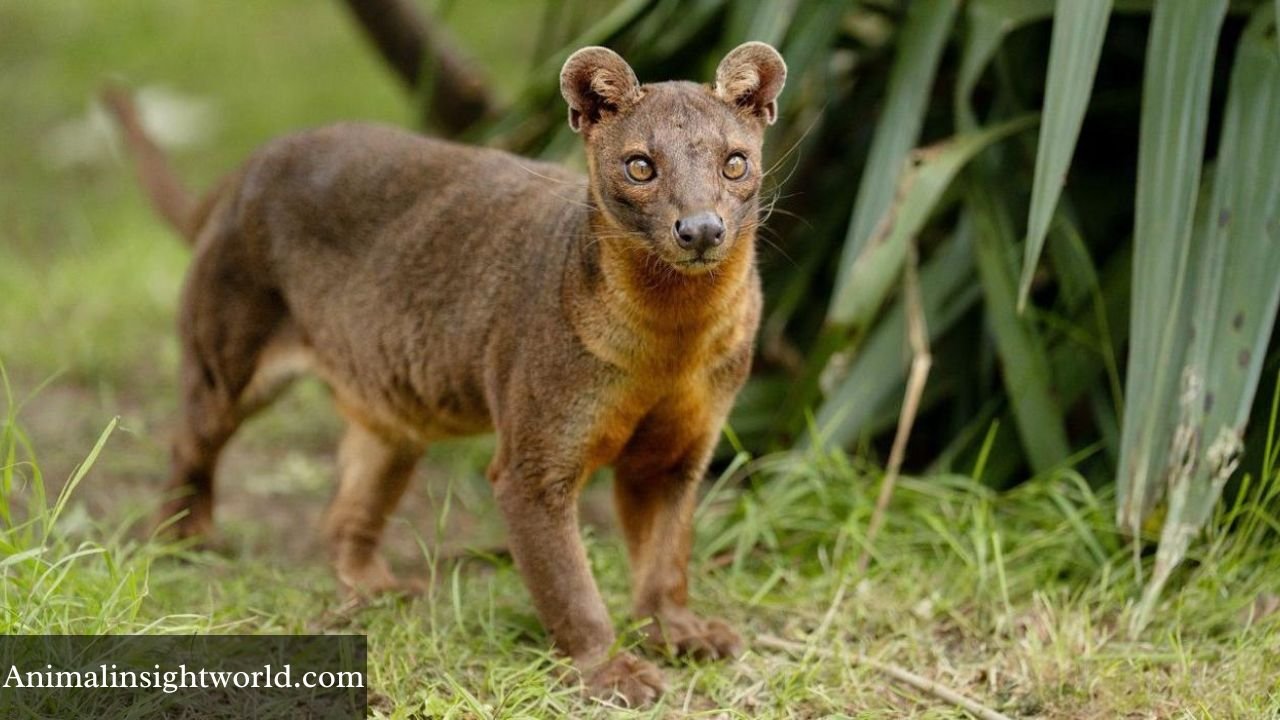
The fossa is the largest predator in Madagascar, and its tail can grow to more than sixty centimetres long, almost as long as its body. Fossas live in the forests of Madagascar, where they hunt lemurs, birds, and small mammals. They are superb climbers, and their long tails help them balance as they move through the trees, where they spend much of their time. Fossas have short legs, a cat-like body, and sharp claws that help them grip bark. They are mainly active during the day, although they sometimes hunt at night. A fossa can leap from tree to tree with great agility, and its tail acts as a rudder in the air. Fossas are solitary animals, and they are rarely seen in the wild.
12. Serval
The serval is a slender wild cat from Africa, and its tail is shorter than those of many animals on this list, yet it is still long in proportion to its body, measuring around forty centimetres. Servals live in grasslands and wetlands across sub-Saharan Africa, where they hunt rodents, birds, frogs, and insects. They have very long legs and large ears, which help them hear prey moving in tall grass. When a serval hunts, it leaps high into the air and lands on its prey with its front paws. The tail helps the cat balance during these sudden leaps and sharp turns. Servals are excellent jumpers, and they can catch birds in flight. Their spotted coats provide camouflage in the grass, and they are mainly active at dawn and dusk.
13. Clouded Leopard
The clouded leopard is a beautiful wild cat from the forests of Southeast Asia, and its tail can grow to more than ninety centimetres long, which is nearly as long as its body. Clouded leopards live in dense rainforests, where they hunt birds, monkeys, deer, and other small mammals. Their long tails help them balance as they move through the trees, and they are known for hanging upside down from branches by their hind feet. Clouded leopards have large, cloud-shaped markings on their coats, which give them their name, and they have the longest canine teeth of any living cat in proportion to their size. They are shy, solitary animals that are mainly active at night, and they are rarely seen in the wild, even by researchers who study them.
14. Veiled Chameleon
The veiled chameleon is a lizard from Yemen and Saudi Arabia, and its tail can be as long as its body, sometimes reaching more than thirty centimetres. Chameleons use their tails for balance and for gripping branches, because the tail is prehensile and can curl tightly around a twig. Veiled chameleons live in trees and shrubs, where they hunt insects with their long, sticky tongues. They can change colour to match their surroundings, to show mood, or to attract a mate. Males have a tall crest on their heads that looks like a helmet. When a chameleon moves, it sways gently from side to side, which may help it blend in with leaves moving in the wind. Its eyes can move independently, so it can look in two directions at once.
15. Lion
The lion is one of the most famous big cats in the world, and its tail can grow to more than a metre long, ending in a dark tuft. Lions live on the savannas and grasslands of Africa, with a small population also living in India. Their tails help them balance when they run, turn, and wrestle with prey, and the tuft may help other lions spot them in tall grass. Lions also use their tails to communicate, flicking them when they are irritated or holding them in different positions during social interactions. Female lions do most of the hunting, working together to catch zebras, antelopes, and other large animals. Male lions are known for their manes, and they defend the pride’s territory from rivals.
A long tail is rarely there by chance. Whether it is the snow leopard wrapping its tail around itself for warmth, the spider monkey hanging by its tail while it feeds, or the giraffe swatting flies on a hot afternoon, each tail has a job to do. Length alone is not the whole story, because how the tail is used matters just as much. The next time you see an animal with a tail that seems too long for its body, it is worth asking what that tail helps it do, because the answer often reveals something interesting about the way the animal lives.
How These Animals Compare
Comparing long tails across this list shows that a tail can do many different jobs. The snow leopard and the clouded leopard use their very long tails as balancing poles when they leap between rocks and branches, while the ring-tailed lemur waves its striped tail like a flag to keep its group together in the forest. The spider monkey and the binturong have prehensile tails that work like a fifth hand, gripping branches and even picking up food.
Other tails are tools for other purposes. The giraffe uses its long tail with a dark tuft at the end as a fly swatter, flicking away biting insects, and the lion’s tail ends in a tuft that may help cubs follow their mother through tall grass. The red kangaroo uses its thick tail as a counterbalance when it hops and as a third leg when it stands still, while the veiled chameleon curls its tail tightly around a branch for a secure grip while it sleeps.
Frequently Asked Questions
Which animal has the longest tail relative to its body?
The snow leopard has one of the longest tails relative to its body, with a tail nearly as long as its body, which helps it balance on steep rocks. The ring-tailed lemur also has a tail longer than its body, marked with bold black and white rings.
Do spider monkeys use their tails as a fifth limb?
Yes. Spider monkeys have prehensile tails with a bare, sensitive patch at the tip that grips branches like a hand. They can hang from their tails alone and even pick up small objects with them.
Why do giraffes have such long tails?
Giraffes use their long tails, which end in a dark tuft of hair, as a fly swatter to keep biting insects away. The tail is about a metre long, and the tuft works like a brush that sweeps flies off their legs and belly.
Can a lion’s tail tell you anything about its mood?
Yes. Lions, like other cats, use their tails to signal mood: a relaxed tail means calm, a tail held low can mean submission, and a tail lashing from side to side can mean irritation or excitement, especially in cubs at play.
Final Thoughts
A long tail is rarely there by chance. Whether it is the snow leopard’s balancing pole, the spider monkey’s fifth hand or the giraffe’s fly swatter, each tail on this list is a tool shaped by the life its owner leads. Tails prove that in nature, even the parts we notice least are doing important work.