Top 17 Animals That Swim the Fastest
Speed in water is a matter of survival. For some animals it means catching prey that is just as quick, for others it means escaping a predator that is only a few seconds behind. Over millions of years, evolution has shaped certain bodies into living torpedoes, with streamlined shapes, powerful tails, and muscles built for short bursts or long chases. The fastest swimmers are not all fish. Some are mammals that returned to the sea, and some are birds that fly underwater almost as well as they move through the air. In this list we look at seventeen of the quickest animals in the oceans, rivers, and seas, and explain what helps each one move so fast. Their speeds are often measured in short bursts rather than steady cruising, and different studies sometimes give slightly different figures, so the numbers here should be read as careful estimates rather than exact records.
1. Sailfish
The sailfish is widely regarded as the fastest fish in the ocean, and it can reach speeds of around 110 kilometres per hour in short bursts. Its long, pointed bill cuts through the water, while its tall dorsal fin, which looks like a sail, can be lowered into a groove on its back to reduce drag. Sailfish live in warm ocean waters around the world and hunt in groups, using their bills to slash at schools of sardines and anchovies. They often work together to herd small fish into tight balls near the surface before striking. Their slender bodies and powerful tails give them sudden acceleration, and their colour can change rapidly during a hunt. Despite their speed, sailfish are also known for spectacular leaps out of the water when hooked or chasing prey.
2. Black Marlin
The black marlin is another giant of the open ocean, and it can reach speeds of around 129 kilometres per hour according to some estimates, although most scientists treat the highest figures with caution. It is one of the largest bony fish in the world, with some individuals weighing more than 700 kilograms. Black marlins live in the tropical waters of the Pacific and Indian Oceans and feed on tuna, mackerel, and squid. Their stiff, sickle-shaped pectoral fins cannot be folded flat against the body, which is one way to tell them apart from other marlins. They use their long bills to stun prey before eating it. Like sailfish, they are powerful hunters that travel huge distances across open water.
3. Swordfish
The swordfish is famous for its long, flat bill, which looks like a sword and gives the fish its name. It can reach speeds of around 97 kilometres per hour in short bursts, making it one of the fastest fish in the sea. Swordfish live in tropical and temperate oceans and are often found in deep water during the day, rising nearer the surface at night to feed. They eat squid, cuttlefish, and smaller fish, and they use their bills to slash at prey in a school. Their bodies are smooth and torpedo-shaped, with a large crescent-shaped tail that provides strong thrust. Swordfish are solitary hunters for much of their lives and can grow to more than four metres in length.
4. Yellowfin Tuna
The yellowfin tuna is a fast, warm-blooded fish that can reach speeds of around 75 kilometres per hour. It is named for the bright yellow colour of its second dorsal fin, anal fin, and finlets. Yellowfin tuna live in tropical and subtropical oceans and often travel in large schools, sometimes mixed with other tuna species or with dolphins. They feed on fish, squid, and crustaceans, and they need to keep moving to breathe, because water must flow constantly over their gills. Their streamlined bodies and deeply forked tails are built for sustained speed over long distances. Yellowfin tuna are also important to commercial fisheries around the world, which has put pressure on some populations.
5. Bluefin Tuna
The bluefin tuna is one of the largest and most powerful tuna species, and it can reach speeds of around 70 kilometres per hour. Some individuals grow to more than three metres long and weigh over 600 kilograms. Bluefin tuna live in the Atlantic and Pacific Oceans and migrate across entire ocean basins, travelling thousands of kilometres between feeding and spawning grounds. They are warm-blooded, which helps their muscles work efficiently even in cold water. Their diet includes mackerel, herring, squid, and eels. Because of their size and speed, adult bluefin tuna have few natural predators apart from large sharks and orcas. They are also among the most valuable fish in the world, which has led to strict fishing limits in many regions.
6. Shortfin Mako Shark
The shortfin mako shark is often called the fastest shark in the ocean, and it can reach speeds of around 74 kilometres per hour in short bursts. It has a pointed snout, large black eyes, and a sleek, torpedo-shaped body that is built for speed. Mako sharks live in tropical and temperate waters worldwide and feed on fast-moving prey such as tuna, swordfish, and other sharks. They are known for leaping high out of the water, sometimes more than six metres into the air. Their warm-blooded nature helps their muscles stay active during a chase. Mako sharks are solitary hunters that patrol the open ocean, and they can cover long distances in search of food, sometimes travelling hundreds of kilometres in a few days.
7. Great White Shark
The great white shark is a powerful predator that can reach speeds of around 56 kilometres per hour in short bursts, usually when it is charging at prey from below. It has a heavy, torpedo-shaped body, a pointed snout, and rows of large, serrated teeth. Great white sharks live in coastal waters around the world, especially near seal colonies, although they also travel across open oceans. They feed on fish, dolphins, and other marine mammals, and they often hunt by surprising prey from underneath. Despite their size, which can reach more than six metres, they are surprisingly agile. Great whites can also breach, launching their whole bodies out of the water when attacking prey near the surface, a behaviour that is often seen off the coast of South Africa.
8. Orca
The orca, also known as the killer whale, is the largest member of the dolphin family, and it can reach speeds of around 56 kilometres per hour. Orcas live in oceans all over the world, from icy polar waters to warm tropical seas, and they are found in both coastal areas and the open ocean. They are highly social animals that live in family groups called pods, and different pods have their own hunting methods and calls. Orcas feed on fish, squid, penguins, and marine mammals, depending on where they live. Their black and white colouring helps them blend into the water when seen from above or below. Orcas are intelligent hunters that sometimes work together to create waves that wash prey off ice floes.
9. Common Dolphin
The common dolphin is a small, fast marine mammal that can reach speeds of around 60 kilometres per hour. It has a distinctive hourglass pattern on its sides, with shades of yellow, grey, and white. Common dolphins live in tropical and temperate waters around the world and are often seen in large groups, sometimes numbering hundreds of animals. They feed on small fish and squid, and they often hunt together, herding fish into tight groups. Common dolphins are famous for riding the bow waves of boats and leaping out of the water as they travel. Their slim bodies and powerful tails make them excellent swimmers, and they can dive to depths of several hundred metres in search of food.
10. Bottlenose Dolphin
The bottlenose dolphin is one of the best-known dolphins in the world, and it can reach speeds of around 35 kilometres per hour in short bursts. It has a short, stubby beak, a curved mouth that looks like a smile, and a grey body that is lighter underneath. Bottlenose dolphins live in warm and temperate seas around the world, usually in coastal waters, bays, and estuaries. They feed on fish, squid, and shrimp, and they use echolocation to find prey in murky water. Bottlenose dolphins are highly social and live in groups called pods, and they are known for their intelligence and playful behaviour. They often surf in waves, leap from the water, and work together to trap fish in shallow water.
11. Dall’s Porpoise
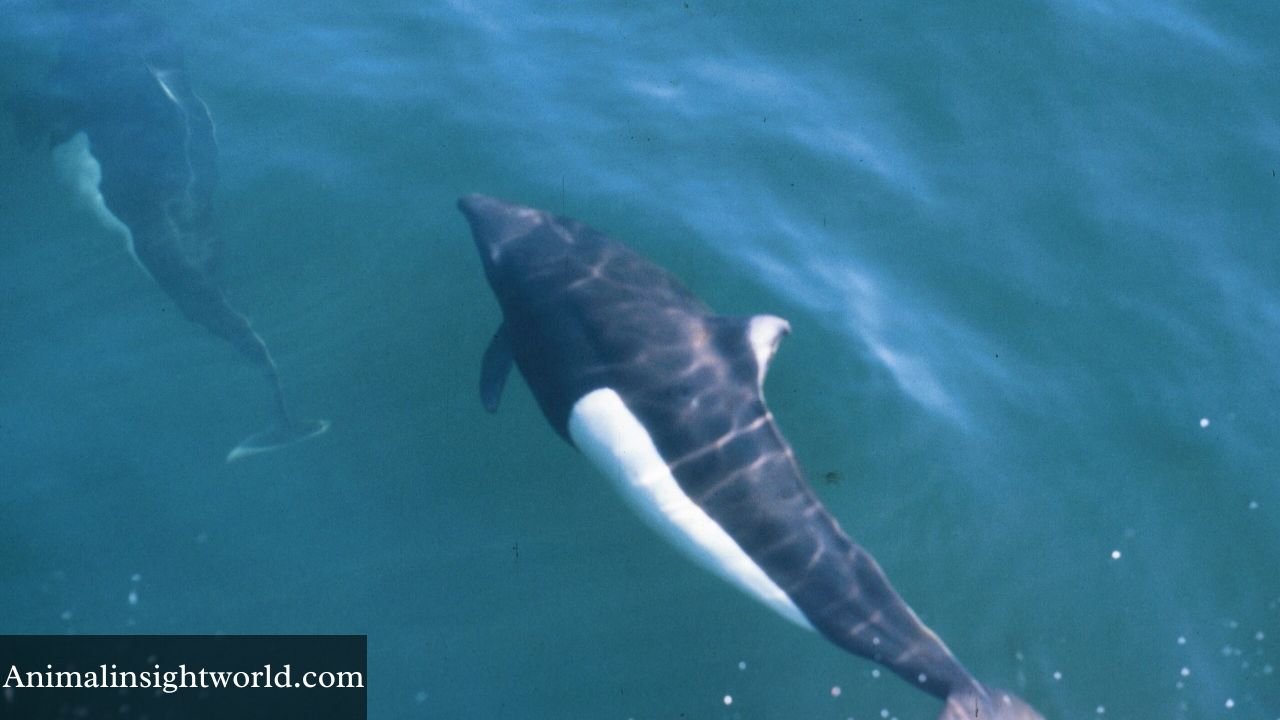
Dall’s porpoise is a small, stocky marine mammal that can reach speeds of around 55 kilometres per hour, making it one of the fastest porpoises in the world. It has a striking black and white pattern, with a white patch on its belly and sides, and a small, triangular dorsal fin. Dall’s porpoises live in the cold waters of the North Pacific Ocean, from Japan and Russia to Alaska and California. They feed on squid, fish, and crustaceans, and they often hunt in deep water. When they swim fast, they create a spray of water known as a rooster tail behind them. Dall’s porpoises are shy animals that usually avoid boats, although they sometimes ride bow waves for a short time before moving away.
12. Gentoo Penguin
The gentoo penguin is the fastest swimming penguin, and it can reach speeds of around 36 kilometres per hour underwater. It has a white patch above each eye, a bright orange-red beak, and a long tail that sweeps along the ground when it walks. Gentoo penguins live on islands in the Southern Ocean, including the Antarctic Peninsula and the Falkland Islands. They cannot fly in the air, but they are excellent swimmers, using their stiff wings as flippers to steer and propel themselves through the water. They feed on krill, fish, and squid, and they can dive to depths of more than 200 metres. On land they build nests from stones, and both parents take turns keeping the eggs warm.
13. Leatherback Sea Turtle
The leatherback sea turtle is the largest turtle in the world, and it can reach speeds of around 35 kilometres per hour in short bursts. Unlike other sea turtles, it does not have a hard shell. Instead, its back is covered with tough, leathery skin over thousands of small bones. Leatherbacks live in oceans around the world and travel enormous distances, sometimes crossing entire oceans between feeding and nesting beaches. They feed mainly on jellyfish, and they can dive to depths of more than 1,000 metres. Their large front flippers, which can span more than two metres, give them powerful strokes. Leatherbacks are strong swimmers, but they are threatened by plastic bags in the ocean, which they sometimes mistake for jellyfish.
14. Flying Fish
The flying fish is a small ocean fish that can reach speeds of around 60 kilometres per hour in the water before it launches itself into the air. It has large, wing-like fins that allow it to glide above the waves for distances of up to 200 metres, and sometimes much further in a series of glides. Flying fish live in warm ocean waters around the world and feed on plankton and small crustaceans. They take to the air mainly to escape predators such as tuna, dolphins, and seabirds. Before leaving the water, they beat their tails rapidly to build up speed. Once airborne, they spread their fins and use the wind to stay aloft, sometimes reaching heights of more than a metre above the surface.
15. Barracuda
The barracuda is a long, slender fish with a fearsome set of sharp teeth, and it can reach speeds of around 58 kilometres per hour in short bursts. It has a pointed snout, a silvery body, and dark bars or spots along its sides. Barracudas live in tropical and subtropical oceans, usually near coral reefs, mangroves, and seagrass beds. They are ambush predators that wait quietly in the water before lunging suddenly at passing fish. Their diet includes small fish such as anchovies, sardines, and mullet. Barracudas often hunt alone, although younger fish sometimes gather in schools. They rely on surprise and a burst of speed rather than a long chase, and their jaws can snap shut with great force.
16. Wahoo
The wahoo is a fast, slender fish that can reach speeds of around 77 kilometres per hour. It has a long, pointed snout, a dark blue-green back with pale vertical bars, and a deeply forked tail. Wahoo live in tropical and subtropical waters around the world, usually in the open ocean near the surface. They feed on fish and squid, and they are known for making sudden, high-speed runs when hunting or when hooked by anglers. Wahoo often travel alone or in small groups, and they are sometimes found near floating debris or weed lines where small fish gather. They grow quickly and can reach lengths of more than two metres. Their firm, white flesh makes them popular with sport and commercial fishermen in many countries.
17. Blue Shark
The blue shark is a slim, graceful shark that can reach speeds of around 43 kilometres per hour. It is named for the bright blue colour of its back, which fades to white underneath. Blue sharks live in deep temperate and tropical waters around the world and are among the most widespread sharks in the ocean. They feed on squid, small fish, and crustaceans, and they often follow schools of prey over long distances. Blue sharks are known for their long, pointed snouts and large eyes, which help them hunt in deep water. They are usually shy around people, although they can be curious. Blue sharks migrate across whole oceans, and some individuals have been tracked travelling thousands of kilometres in a single year.
Speed in the water is never about one feature alone. It comes from a combination of shape, muscle, and behaviour, whether that is the sailfish folding away its fin, the mako shark keeping its muscles warm, or the gentoo penguin turning its wings into underwater paddles. Each animal on this list has found a different way to move quickly through a medium that is far denser than air, and each one uses that speed for the same basic reasons: to find food, to avoid becoming food, and to travel across vast oceans. Watching them reminds us how much variety there is in the way life has adapted to the sea.
Where They Live and How They Survive
The fastest swimmers on this list live in different parts of the sea, and where they swim shapes how fast they can go. The sailfish, the black marlin and the swordfish hunt in the open ocean, where speed is everything, and they all have long bills and streamlined bodies that cut through the water. The yellowfin tuna and the bluefin tuna are warm-blooded for fish, which keeps their muscles working at full power even in cold water, and they can cross whole oceans at high speed.
Mammals swim differently from fish, and the orca, the common dolphin and the bottlenose dolphin use powerful tails and smooth skin to reach speeds that rival the fastest fish. The Dall’s porpoise is one of the fastest small whales, and the flying fish escapes predators by leaping out of the water and gliding through the air. The leatherback sea turtle, the largest turtle in the world, swims thousands of kilometres across oceans, while the barracuda and the wahoo hunt with short, explosive bursts of speed near reefs.
Questions People Ask
What is the fastest fish in the world?
The sailfish is generally considered the fastest fish, reaching around 110 kilometres per hour in short bursts. The black marlin is a close rival, and both use their long bills and streamlined bodies to cut through the water.
How fast can a bluefin tuna swim?
A bluefin tuna can swim at around 70 kilometres per hour in bursts, and it can cruise at high speed for long distances. Tuna are warm-blooded, which keeps their swimming muscles powerful even in cold ocean water.
Are orcas faster than dolphins?
Orcas are faster than most dolphins in a sprint, reaching around 56 kilometres per hour, while common dolphins reach about 60 kilometres per hour in short bursts. Orcas are much larger and more powerful, and they use their speed to hunt seals, fish and even other whales.
Why do flying fish leap out of the water?
Flying fish leap out of the water to escape predators such as tuna and dolphins. Once in the air, they spread their large fins and glide for up to 200 metres, which often carries them far enough to escape.
Final Thoughts
Speed in the water is never about one feature alone. It comes from streamlined bodies, powerful tails, warm muscles and, for the fastest fish, a bill that cuts the water like a knife. From the sailfish to the orca, these seventeen swimmers show that the ocean rewards speed just as much as the land does.