Top 15 Animals That Eat Leaves
Leaves are one of the most abundant foods on Earth, but they are not easy to eat. They are tough, low in nutrients, and often full of toxins that plants produce to defend themselves. Yet many animals have evolved to eat leaves, developing specialised teeth, stomachs, and gut bacteria that can break down tough plant material and detoxify harmful chemicals. In this list, we look at fifteen animals that eat leaves, from the koala that eats only eucalyptus to the giraffe that browses the treetops. Each one shows a different way of making a living from one of the most challenging foods in nature.
What Makes These Animals Special
What makes leaf eaters special is that they survive on one of the poorest foods in nature. Leaves are tough, low in energy and often full of toxins, so leaf eaters need special tools to cope. The koala has a very long gut and a liver that can break down the toxins in eucalyptus leaves, the three-toed sloth has a multi-chambered stomach where bacteria ferment leaves slowly, and the giant panda, despite being a bear, eats bamboo for up to 14 hours a day because bamboo gives it so little energy.
Other leaf eaters on this list have different solutions. The giraffe uses its long neck and dark, prehensile tongue to reach leaves high in acacia trees, the howler monkey has a large gut for fermenting leaves, and the caterpillar eats leaves constantly to fuel its growth into a butterfly or moth. The iguana and the capybara eat leaves and grasses, the leafcutter ant carries leaves back to its nest to feed a fungus it farms, and the colobus monkey has a stomach like a cow’s, with bacteria that break down tough leaves.
1. Koala
The koala is one of the most specialised leaf-eaters in the world, feeding almost entirely on eucalyptus leaves. It eats around half a kilogram of leaves a day, choosing the youngest, most tender leaves from a few favourite species of eucalyptus. Eucalyptus leaves are low in nutrients and contain toxins, so the koala has a large liver that detoxifies the chemicals and a long gut that ferments the leaves to extract nutrients. Koalas sleep for up to twenty hours a day, conserving energy because their diet provides so little. They live in the eucalyptus forests of eastern Australia, where they spend most of their lives in trees, rarely coming down to the ground. Koalas are threatened by habitat loss, disease, and bushfires, and their numbers are declining. Their specialised diet makes them vulnerable, but it also makes them unique.
2. Three-Toed Sloth
The three-toed sloth feeds almost entirely on leaves, which provide very little energy, so it has evolved a slow lifestyle to match its diet. It spends most of its life hanging upside down from branches in the rainforests of Central and South America, moving so slowly that algae grows in its fur. Sloths have a large, multi-chambered stomach that ferments leaves, with bacteria that break down the tough plant material and extract nutrients. They eat leaves from a variety of trees, especially Cecropia, and they supplement their diet with occasional fruit and flowers. Sloths sleep for fifteen hours or more each day, conserving energy, and they come down to the ground only about once a week. Their slow metabolism and low-energy diet are perfectly matched, making them one of the most energy-efficient mammals in the world.
3. Giraffe
The giraffe is the tallest land animal in the world, and it feeds on leaves high in the trees that other animals cannot reach. It uses its long neck, which can be up to two metres long, and its fifty-centimetre tongue to strip leaves from acacia trees. Giraffes eat around thirty kilograms of leaves a day, spending most of their time browsing. They prefer acacia leaves, which are rich in protein, but they also eat leaves from other trees and shrubs. Giraffes have a four-chambered stomach that ferments leaves, and they regurgitate their food and chew it again, like cows. They live in the savannas of Africa, where they are a familiar sight, browsing the treetops with their heads held high. Their long necks and tongues give them access to food that is unavailable to other herbivores.
4. Giant Panda
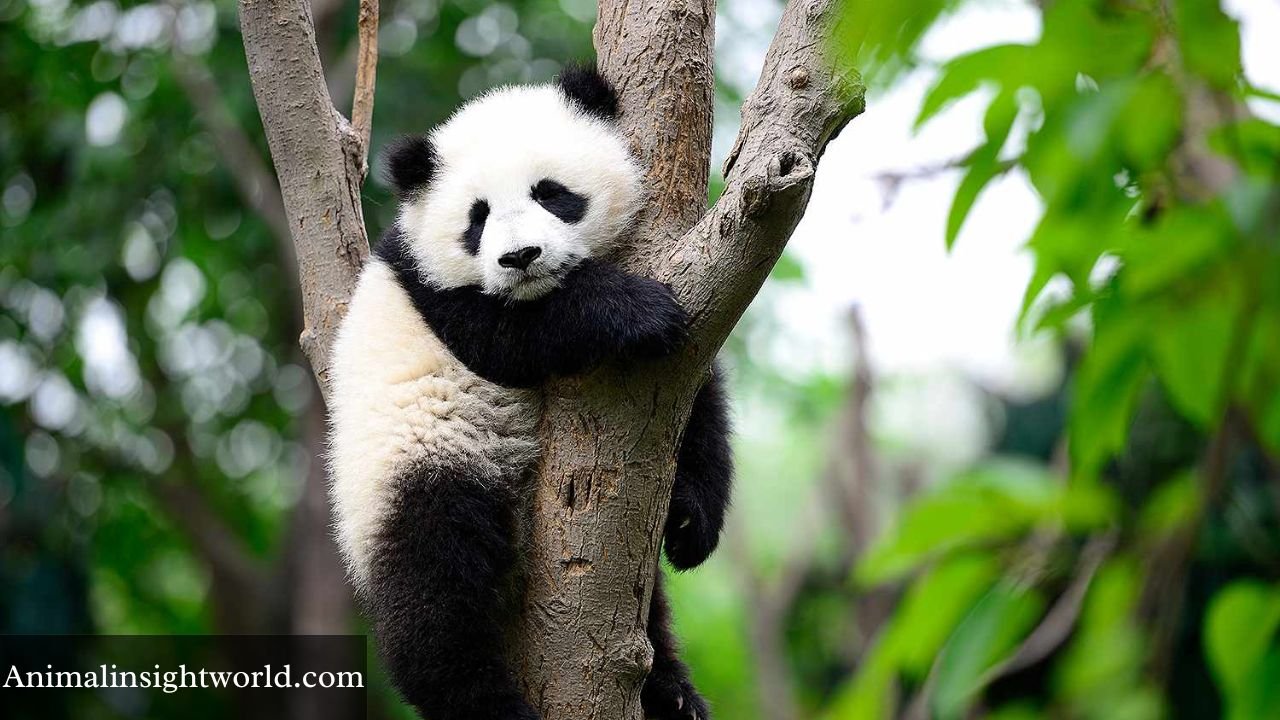
The giant panda feeds almost entirely on bamboo leaves and stems, eating up to forty kilograms of bamboo a day. Bamboo is low in nutrients, so pandas must eat constantly to get enough energy, spending up to fourteen hours a day feeding. Pandas have a special wrist bone that acts like a thumb, helping them grip bamboo stems, and they have strong jaws and teeth for crushing the tough plant. Their gut is short, like that of a carnivore, because pandas evolved from meat-eaters, so they extract only a small amount of nutrition from bamboo. Giant pandas live in the mountain forests of central China, where bamboo is abundant. They are solitary animals, and they are threatened by habitat loss, although conservation efforts have helped their numbers recover. Their leaf-eating diet is one of the most specialised in the animal kingdom.
5. Howler Monkey
The howler monkey is one of the loudest land animals in the world, and it feeds mainly on leaves, fruit, and flowers in the rainforests of Central and South America. Leaves make up more than half of its diet, and it has a large, multi-chambered stomach that ferments leaves to extract nutrients. Howler monkeys spend most of their time resting and digesting, because leaves provide so little energy, and they are inactive for up to fifteen hours a day. They live in groups in the canopy, and they communicate with loud roars that can be heard for several kilometres. Howler monkeys have prehensile tails that they use to grip branches while they feed. They are important seed dispersers, spreading the seeds of the fruits they eat throughout the forest. Their leaf-based diet is a key part of their slow, energy-efficient lifestyle.
6. Caterpillar
Caterpillars are the larval stage of butterflies and moths, and they are among the most dedicated leaf-eaters in the animal kingdom, consuming huge quantities of leaves as they grow. A single caterpillar can eat many times its own body weight in leaves every day, storing energy for its transformation into a butterfly or moth. Caterpillars have strong jaws for chewing leaves, and they feed on a wide range of plants, with some species specialising on a single plant species. They are an important food source for birds, and they play a vital role in ecosystems by converting plant material into animal biomass. Some caterpillars are brightly coloured to warn predators that they are toxic, while others are camouflaged to blend in with leaves. Their leaf-eating is essential for their growth, and without it, there would be no butterflies.
7. Iguana
The green iguana is a large lizard that feeds mainly on leaves, flowers, and fruit in the rainforests of Central and South America. It is one of the few lizards that is entirely herbivorous as an adult, and it has a specialised gut with bacteria that ferment leaves to extract nutrients. Green iguanas live in trees near rivers, where they bask in the sun and feed on leaves in the canopy. They are excellent climbers and swimmers, and they can drop from a tree into the water to escape predators. Male iguanas are bright orange during the breeding season, while females are green. Green iguanas are popular as pets, but they grow large and need specialised care. Their leaf-eating diet is unusual among lizards, most of which eat insects or other animals.
8. Leafcutter Ant
Leafcutter ants do not eat leaves directly, but they cut pieces of leaves and carry them back to their nests, where the leaves are used to grow a fungus that the ants eat. The ants chew the leaves into a pulp and use them as compost for their fungus gardens, which provide all the food the colony needs. A single colony can contain millions of ants, and the trails of leaf-carrying workers can stretch for many metres through the forest. Leafcutter ants can carry pieces of leaf many times their own body weight, and they are among the strongest animals relative to their size. Their fungus farming is one of the most remarkable examples of agriculture in the animal kingdom, and it has been going on for millions of years, long before humans invented farming. Leafcutter ants are found in the rainforests of Central and South America.
9. Okapi
The okapi is a shy, forest-dwelling animal of the Congo rainforest, related to the giraffe, that feeds on leaves, buds, fruit, and fungi in the understory. It uses its long, flexible tongue, which can reach up to forty-five centimetres, to strip leaves from branches and to clean its own ears and eyes. Okapis live alone or in pairs, and they are so elusive that they were unknown to science until the early twentieth century. They have a dark chestnut coat, white-striped legs like a zebra, and large ears that help them detect predators. Okapis are threatened by hunting and by the loss of their forest home, and they are now protected in the Okapi Wildlife Reserve. Their leaf-eating diet is a key part of their life in the dense rainforest, where leaves are abundant but hard to reach.
10. Proboscis Monkey
The proboscis monkey is a large monkey of Borneo, famous for the male’s large, pendulous nose, that feeds mainly on leaves, seeds, and unripe fruit. It has a large, multi-chambered stomach that ferments leaves, with bacteria that break down the tough plant material and neutralise toxins. Proboscis monkeys live in mangrove forests and riverine forests, where they feed in the trees and swim across rivers. They are excellent swimmers, with webbed hands and feet, and they often leap into the water to escape predators. Proboscis monkeys live in groups led by a dominant male, with several females and their young. They are threatened by habitat loss, as the mangrove forests they depend on are cleared for palm oil plantations. Their leaf-eating diet is highly specialised, and they cannot survive without the leaves of their forest home.
11. Red Panda
The red panda is a small, reddish-brown mammal of the Himalayas that feeds mainly on bamboo leaves, eating up to a third of its body weight in bamboo every day. Like the giant panda, it has a special wrist bone that acts like a thumb, helping it grip bamboo stems. Red pandas live in the temperate forests of the Himalayas, from Nepal to China, where they spend most of their time in trees. They are solitary and nocturnal, emerging at night to feed on bamboo leaves, berries, and acorns. Red pandas have a low metabolic rate, like other leaf-eaters, and they conserve energy by resting during the day. They are threatened by habitat loss and by the pet trade, and their numbers are declining. The red panda is a symbol of the Himalayas, and its bamboo diet is a key part of its life in the mountains.
12. Moose
The moose is the largest deer in the world, and it feeds on leaves, twigs, and aquatic plants in the northern forests of North America, Europe, and Asia. It eats up to thirty kilograms of vegetation a day in summer, stripping leaves from trees and shrubs with its large, flexible lips. Moose are excellent swimmers, and they often wade into lakes to feed on water lilies and other aquatic plants. They live alone or in small groups, and they are most active at dawn and dusk. Moose have long legs that help them wade through deep snow and swamps, and they are well adapted to the cold north. Their leaf-eating diet is essential for building up fat reserves for winter, when food is scarce. Moose are a symbol of the northern wilderness, and their browsing shapes the forests where they live.
13. Capybara
The capybara is the largest rodent in the world, and it feeds on grasses, leaves, and water plants in the wetlands and grasslands of South America. It eats up to three kilograms of vegetation a day, grazing on grasses and browsing on leaves from bushes and trees. Capybaras are excellent swimmers, with webbed feet, and they spend much of their time in the water, where they can hide from predators. They live in groups of ten to twenty animals, and they are social animals that groom each other and communicate with barks and whistles. Capybaras are an important prey species for jaguars, caimans, and anacondas, and their grazing helps to maintain the grasslands. Their leaf and grass diet is a key part of their life in the wetlands, where vegetation is abundant.
14. Silkworm
The silkworm is the larva of the silk moth, and it feeds exclusively on mulberry leaves, eating huge quantities as it grows. A single silkworm can eat many times its own body weight in leaves, storing energy to produce silk for its cocoon. Silkworms have been domesticated for thousands of years in China, where they are raised for their silk, which is one of the most prized fabrics in the world. They are pale, plump caterpillars with small heads, and they feed constantly, day and night. When they are ready to pupate, they spin a cocoon of silk around themselves, which is then harvested and unravelled to make silk thread. Silkworms are a classic example of how a leaf-eating insect can be of great economic importance to humans, and their diet of mulberry leaves is essential for producing high-quality silk.
15. Colobus Monkey
The colobus monkey is a leaf-eating primate of Africa, with a specialised stomach that ferments leaves, much like a cow’s stomach. It feeds mainly on young leaves, which are easier to digest and richer in protein than mature leaves. Colobus monkeys live in the rainforests and woodlands of Africa, where they leap through the trees with remarkable agility, using their long tails for balance. They have a distinctive appearance, with black and white fur and a long, flowing mantle. Colobus monkeys live in groups, and they are known for their loud calls and their acrobatic leaps. They are threatened by hunting for their fur and by habitat loss, and several species are endangered. Their leaf-eating diet is highly specialised, and they depend on the forests where they live for the leaves they need to survive.
Leaves may seem like a poor food, tough and low in energy, but the fifteen animals in this list show how many different ways there are to make a living from them. From the koala sleeping twenty hours a day to the giraffe browsing the treetops, each species has evolved teeth, stomachs, and behaviours that let it turn leaves into energy. Their success is a reminder that in nature, even the most unpromising food can support a remarkable diversity of life, as long as an animal is willing to work hard to digest it.
Surprising Facts
The silkworm is one of the most surprising leaf eaters on this list, because it eats only mulberry leaves, and it eats them constantly, growing thousands of times heavier in a few weeks before spinning its cocoon from silk. The okapi eats leaves in the dark Congo rainforest, using its long tongue to strip leaves from branches, and the proboscis monkey has a large, pot-bellied stomach for digesting leaves, along with a large nose that may amplify its calls.
The red panda eats bamboo leaves for most of the day, just like the giant panda, and the moose eats leaves, twigs and bark in northern forests, using its flexible upper lip to strip leaves from branches. The leafcutter ant does not eat the leaves it carries: it feeds them to a fungus, and then eats the fungus. Leaves may seem like a poor food, but for these fifteen animals they are enough to build a whole life on.
Frequently Asked Questions
Why do koalas eat only eucalyptus leaves?
Koalas eat mainly eucalyptus leaves because few other animals compete for them, but the leaves are low in nutrients and contain toxins. Koalas cope with a very long gut, a powerful liver and by sleeping up to 22 hours a day to save energy.
How can pandas survive on bamboo alone?
Giant pandas survive on bamboo by eating huge amounts of it, up to 38 kilograms a day, for 10 to 14 hours a day. Bamboo is low in nutrients, so pandas must eat almost constantly, and they have a false thumb that helps them grip the stems.
Do leafcutter ants eat the leaves they carry?
No. Leafcutter ants carry leaves back to their nest to feed a fungus they farm underground, and then they eat the fungus. The ants and the fungus depend on each other completely, and the colony cannot survive without both.
Why do sloths eat leaves?
Three-toed sloths eat leaves because they are plentiful in the rainforest canopy and few animals compete for them. Leaves give sloths very little energy, so they move slowly, sleep for long hours and have a multi-chambered stomach where bacteria ferment the leaves.
Conclusion
Leaves may seem like a poor food, tough and low in energy, but these fifteen animals have built their whole lives around them. From the koala sleeping off its eucalyptus meal to the leafcutter ant farming fungus, leaf eaters show that even the simplest food can support a remarkable animal, as long as the animal is patient enough to digest it.