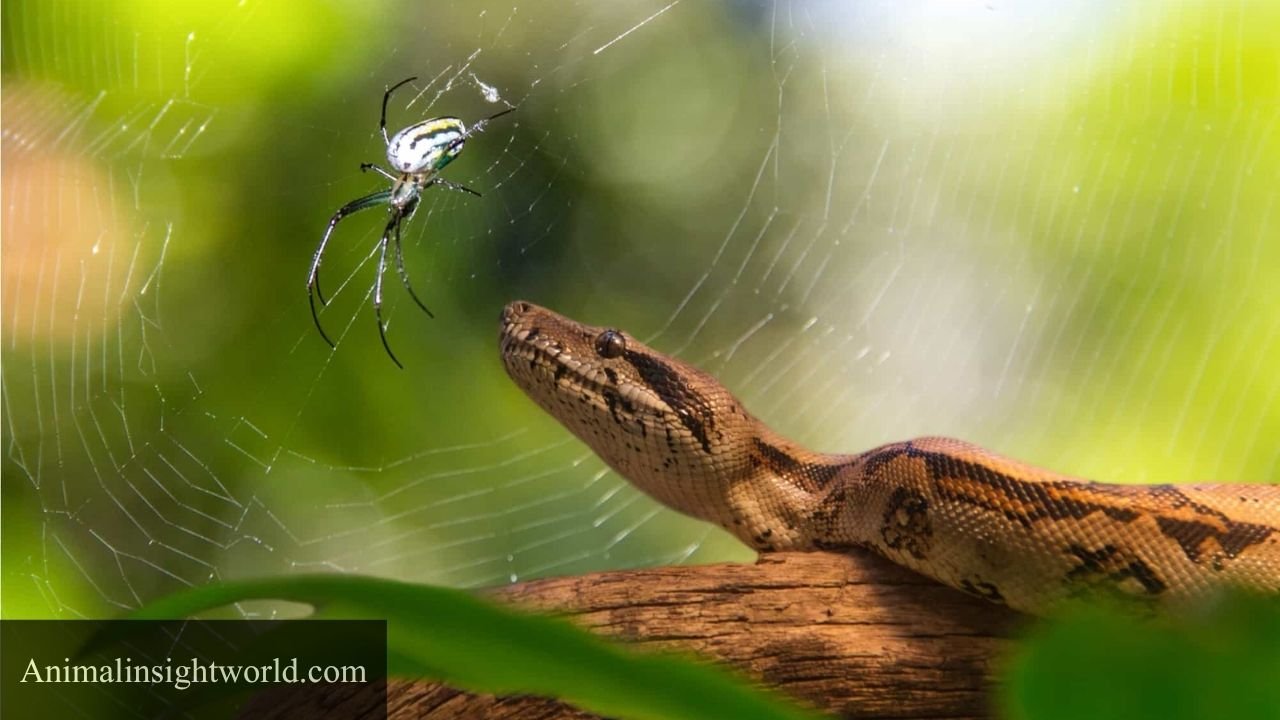
Top 15 Fastest Animals Without Legs
Introduction
Top 15 Fastest Animals Without Legs sounds like a trick question at first, because most of us picture speed as legs pounding the ground. Yet some of the quickest movers on the planet have no legs at all, and they cover ground, water and even sand with a grace that legged animals cannot copy. Snakes ripple, eels undulate, and worms inch along with a slow and steady rhythm, and each of them has solved the problem of movement in a completely different way. This list ranks fifteen legless animals by the top speeds they can reach, from the famous black mamba down to the humble garden snail, and explains how each one moves, where it lives, and what its speed is actually for. The numbers below are the best recorded or widely reported estimates for each animal, and they vary with temperature, terrain and the individual animal, so treat them as honest guides rather than laboratory certainties.
Before the countdown, it helps to understand how a legless animal moves at all. Snakes use four main styles of motion: serpentine waves that push against the ground, concertina movement that grips and releases, rectilinear crawling that slides the belly scales forward, and sidewinding, a sideways rolling motion used on loose sand. Eels and sea snakes swim with whole-body waves, while worms anchor with tiny bristles and stretch and pull themselves forward. None of these animals has a leg to push off with, so every bit of speed comes from muscle waves travelling down the body. That is why the fastest legless animals are usually snakes: a long, muscular body can generate a powerful wave, and smooth scales keep friction low.
1. Black Mamba
The black mamba is the fastest land snake in the world, and it regularly reaches speeds of around 12 miles per hour, or about 19 kilometres per hour, in short bursts over open ground. That is fast enough to outrun a jogging human for a few seconds, although the snake cannot keep it up for long and prefers to escape rather than chase. Black mambas live in the savannas and rocky hills of eastern and southern Africa, where they hunt birds and small mammals and spend much of their time in trees and shrubs. Their long, slender bodies, which can grow beyond 14 feet, give them the muscle length they need for powerful serpentine waves. Despite their fearsome reputation, black mambas are shy animals that use their speed mainly to flee from danger, and most bites happen when a person corners one or steps on it by accident.
2. Sidewinder Rattlesnake
The sidewinder rattlesnake moves at around 18 miles per hour in short bursts, which makes it one of the quickest snakes on sand anywhere in the world. It lives in the deserts of the southwestern United States and northern Mexico, where loose sand would trap an ordinary snake, so it lifts most of its body off the ground and rolls sideways in a series of J-shaped curves. Only two points of its body touch the hot sand at any moment, which keeps it cool and stops it from sinking. Sidewinders hunt at night, eating kangaroo rats, lizards and small birds, and they bury themselves in the sand during the heat of the day. Their speed is a tool for crossing open dunes quickly and for striking prey before it can react, and the distinctive S-shaped tracks they leave behind are a classic sign for desert hikers.
3. Coachwhip Snake
The coachwhip snake is a long, thin and famously nervous snake of the southern United States and Mexico that can reach about 10 miles per hour when it flees across open ground. Its body looks like a braided whip, which is how it got its name, and it relies on sharp eyesight and pure speed rather than venom or camouflage to stay alive. Coachwhips hunt lizards, small snakes, rodents and insects during the day, and they often hold their heads high to scan the ground ahead, almost like a periscope. When threatened, a coachwhip will often race for the nearest bush or rock pile, and it can be surprisingly hard to catch even for an experienced handler. Because it is non-venomous and mostly harmless to people, its speed is its main defence, and it is a good reminder that not every fast snake is a dangerous one.
4. Eastern Brown Snake
The eastern brown snake of Australia is one of the quickest snakes in the country, capable of bursts close to 10 miles per hour, and it is also one of the most venomous land snakes in the world. It lives in grasslands, farmland and the edges of towns across eastern Australia, where it hunts mice, rats and small birds, and it is most active on warm days. Its speed comes from a lean, muscular body that can reach about seven feet long, and it uses that speed both to chase down rodents and to escape from predators such as birds of prey. Eastern brown snakes are nervous and quick to defend themselves when cornered, which is why they cause more snakebite incidents in Australia than any other species. Anyone who sees one should give it plenty of space and let it move on, because it would much rather flee than fight.
5. Yellow-Bellied Sea Snake
The yellow-bellied sea snake spends its whole life in the ocean and can swim at around 6 to 8 miles per hour in short bursts, which is fast for a snake that never comes ashore. It is easy to recognise by its bright yellow belly and dark blue or black back, and it drifts across the warm waters of the Pacific and Indian Oceans, sometimes travelling hundreds of miles on ocean currents. Its flattened, paddle-like tail works like a fin, and its whole body ripples in smooth waves that push it through the water with very little effort. Yellow-bellied sea snakes hunt small fish near the surface, and they are highly venomous, although they are gentle animals that almost never bite people. Their speed helps them catch fish and escape from sharks and seabirds, and they are a reminder that legless speed is not limited to land.
6. Moray Eel
The moray eel can surge forward at around 6 miles per hour when it lunges from its hiding place, which is remarkable for an animal that spends most of its life wedged inside a coral reef. Moray eels live in tropical and subtropical seas around the world, and their long, muscular bodies are perfectly built for sudden bursts of speed through narrow reef passages. They hunt at night, eating fish, octopus and crabs, and they have a second set of jaws in their throat that reaches forward to grab prey and pull it down. A moray eel usually waits with just its head poking out of a hole, and when a fish swims too close, the eel strikes in a fraction of a second. Their speed is all about the ambush, and a slow, patient eel that strikes fast is far more dangerous than a fast eel that chases.
7. European Eel
The European eel is a long-distance swimmer rather than a sprinter, but it can still reach bursts of around 5 miles per hour, and it sustains steady swimming for thousands of miles during its migration. Born in the Sargasso Sea near Bermuda, young eels drift across the Atlantic on ocean currents before entering the rivers of Europe, where they live for many years and grow into yellow eels. When the time comes to breed, adult silver eels swim all the way back to the Sargasso Sea, a journey of more than 3,000 miles that takes months and uses up all their stored energy. European eels move by passing waves down their long bodies, and their smooth, slimy skin cuts through the water with very little drag. Their story is one of the great animal migrations, and their speed is built for endurance rather than show.
8. Slow Worm
The slow worm is not a worm at all but a legless lizard, and it can move at around 3 to 4 miles per hour in a short burst when it needs to escape, which is surprisingly quick for such a small and gentle animal. Slow worms live in gardens, meadows and woodland edges across Europe, where they eat slugs, snails and earthworms, and they are often found under stones, logs and compost heaps. Their smooth, shiny bodies are usually brown or grey, and males often have a blue tint, while females have a dark stripe down their back. Like other lizards, slow worms can drop their tails to escape a predator, and the tail keeps wriggling while the animal slips away. They are completely harmless to people and are a gardener’s friend, because they eat the slugs that damage plants.
9. Glass Lizard
The glass lizard, also called the glass snake, is another legless lizard that can reach speeds of around 3 miles per hour over short distances, using strong side-to-side waves of its stiff, shiny body. Glass lizards live in the southeastern United States, Europe and parts of Asia, where they hunt insects, small lizards, rodents and birds’ eggs in grassland and open woodland. Their name comes from their tail, which breaks easily into pieces like glass when a predator grabs it, and the tail can grow back over time. Unlike snakes, glass lizards have eyelids they can blink and external ear openings, and their bodies are much stiffer than a snake’s because of bony plates under the skin. That stiffness costs them some speed, but it also protects them, and their steady, purposeful movement is enough to catch the slow prey they specialise in.
10. Amphisbaena
The amphisbaena, often called the worm lizard, moves at around 1 to 2 miles per hour through loose soil, which is fast for an animal that spends almost its entire life underground. Amphisbaenas live in South America, Africa and parts of southern Europe, and they look like large pink earthworms with ringed bodies and blunt heads and tails that are hard to tell apart. They dig with their heads, pushing through soft earth in search of ants, termites, earthworms and small insects, and they almost never come to the surface. Their speed underground comes from a unique trick: they anchor their skin to the tunnel wall and then pull their body forward inside the skin, almost like turning a sock inside out. Because they live in darkness, they have tiny eyes covered by skin and rely on touch and smell to find food.
11. Caecilian
The caecilian is a legless amphibian that moves through wet soil and leaf litter at around 1 mile per hour, using strong muscle waves and a slimy coating to slide between soil particles. Caecilians live in the tropical regions of South America, Africa and Asia, and they look so much like worms that many people mistake them for giant earthworms, although they are actually close relatives of frogs and salamanders. Some species are fully aquatic, while others burrow, and they hunt earthworms, termites and other small soil animals with the help of two small tentacles on their heads that sense chemicals in the ground. Female caecilians of some species feed their babies with a special skin layer, which is one of the strangest parenting behaviours in the animal kingdom. Their slow, steady speed is perfectly matched to a life spent hunting in the dark, damp world under our feet.
12. Hagfish
The hagfish is a jawless, eel-shaped fish that can swim at around 2 to 3 miles per hour in short bursts, and it is famous for a very different kind of defence: when threatened, it releases huge amounts of slime that can clog a predator’s gills. Hagfish live on the cold, dark floors of the world’s oceans, where they scavenge dead fish and whales, and they can tie their long bodies into knots to gain leverage when tearing food apart. They have no true backbone, no paired fins and no real eyes, yet they have survived for more than 300 million years, which makes them one of the oldest living vertebrate groups. Their speed is modest, but it is enough for a scavenger that mostly needs to reach a dead whale before other scavengers do. Hagfish slime is now studied by scientists because it is stronger than nylon by weight and could inspire new materials.
13. Lamprey
The lamprey is another ancient jawless fish that swims at around 2 to 3 miles per hour, using the same wave-like body motion as an eel, and it is best known for the round, sucker-like mouth ringed with teeth that it uses to attach to other fish. Lampreys live in coastal waters and rivers across the Northern Hemisphere, and many species migrate upstream to spawn, swimming against strong currents for miles at a time. Some lampreys are parasites that feed on the blood and fluids of larger fish, while others do not feed at all as adults and die soon after spawning. Sea lampreys became famous in the Great Lakes of North America, where they damaged native fish populations after arriving through shipping canals, and millions of dollars have been spent controlling them. Despite their alarming mouths, lampreys are a natural part of many river systems, and their swimming speed is just enough to keep up with the fish they follow.
14. Earthworm
The earthworm moves at around 0.03 miles per hour, which sounds impossibly slow until you remember that it has no legs, no fins and no skeleton, and it still manages to travel through solid earth every single day. Earthworms live in soil all over the world, and they move by stretching their long bodies forward, anchoring themselves with tiny bristles called setae, and then pulling the rest of the body along. As they burrow, they eat soil and digest the dead plant material in it, leaving behind rich castings that fertilise the ground, and their tunnels let air and water reach plant roots. A single earthworm can eat its own weight in soil every day, and a healthy garden can hold hundreds of thousands of them. Their speed may be the slowest on this list, but their impact on the planet is enormous, because without earthworms, soil would be far less fertile and far less alive.
15. Garden Snail
The garden snail is the slowest animal on this list, moving at around 0.03 miles per hour, or about 13 millimetres per second, which means it would take more than an hour to cross a small garden path. Garden snails live in gardens, parks and damp woodland across Europe and in many other parts of the world, and they move on a single muscular foot that ripples in waves while glands produce a layer of slime that lets them glide smoothly over rough surfaces. That slime is so effective that a snail can crawl across the sharp edge of a razor blade without being cut, and it can even climb vertical walls and hang upside down from a ceiling. Garden snails eat leaves, fruit and vegetables, which is why gardeners often see them as pests, but they are also food for birds, frogs and hedgehogs. Their slow speed is not a weakness but a trade-off: carrying a shell everywhere means safety comes first, and speed comes second.
How These Animals Compare
Top 15 Fastest Animals Without Legs covers a huge range of speeds, from the black mamba at about 12 miles per hour down to the garden snail at about 0.03 miles per hour, a difference of roughly four hundred times. The pattern is clear: snakes dominate the top of the list because a long, muscular body with smooth scales is the best legless design for speed on land. Sea snakes and eels come next, because water supports the body and lets the whole animal push against the water at once. Burrowing animals such as amphisbaenas and caecilians are slower because they must push through solid soil, and the slowest of all are the animals that carry their homes with them or eat their way through the ground.
Speed also means different things for different animals. A black mamba uses speed to escape, a sidewinder uses it to cross hot sand, a moray eel uses it to ambush, and a European eel uses it to migrate thousands of miles. The earthworm and the garden snail barely move at all by our standards, yet their slow movement shapes entire ecosystems by turning over soil and recycling dead plants. Judging these animals only by top speed misses the point: each one is as fast as it needs to be for the life it leads. A garden snail that moved at 12 miles per hour would be a very different animal, and it would probably not survive long without its shell.
There is also a lesson here about how scientists measure animal speed. A snake measured on smooth ground in a laboratory will look faster than the same snake moving through grass, and a fish measured in a tank will swim differently from one in the open sea. Temperature matters too: snakes and lizards are cold-blooded, so they move fastest when they are warm and slow down sharply when they are cold. That is why the numbers in this article are given as approximate ranges, and why different sources sometimes disagree. What matters is the ranking and the reasons behind it, not the exact decimal point.
Frequently Asked Questions
What is the fastest animal without legs?
The black mamba is generally considered the fastest legless animal on land, reaching around 12 miles per hour in short bursts, while the sidewinder rattlesnake can be even quicker on sand at around 18 miles per hour. In water, sea snakes and fast eels are the quickest legless swimmers, although most fish with fins are faster than any snake.
How do snakes move so fast without legs?
Snakes move by sending waves of muscle contraction down their bodies, pushing against the ground, rocks or water. Their belly scales grip the surface, and their long, muscular bodies generate a lot of power, while smooth scales keep friction low. Different species use different styles, including serpentine waves, concertina movement and sidewinding on sand.
Can a human outrun a black mamba?
A fit human can outrun a black mamba over a long distance, because the snake can only sustain its top speed for a few seconds, but nobody should try. Black mambas are shy and would rather flee, so the safest response is to walk away slowly and give the snake plenty of space.
Are legless lizards the same as snakes?
No, legless lizards such as slow worms and glass lizards are lizards that lost their legs through evolution, and they are different from snakes. They usually have eyelids they can blink, external ear openings and stiffer bodies, and they are harmless animals that eat insects, slugs and small rodents.
Why are snails and worms so slow?
Snails carry a heavy shell that protects them from predators and drying out, which costs them speed, while earthworms move by stretching and anchoring their soft bodies through solid soil. Both animals trade speed for safety and for a lifestyle that does not need fast movement, because their food is all around them and they have other defences.
Final Thoughts
The fastest animals without legs prove that legs are only one way to move, and not always the best one. A snake can cross ground, climb trees and swim with the same body, an eel can migrate thousands of miles without ever touching land, and a worm can turn dead soil into living earth without ever hurrying. Speed is impressive, but it is only part of the story: the real wonder is how many different ways evolution has found to move a body that has nothing to stand on. The next time you see a snake ripple through grass or a snail glide across a path, take a moment to appreciate the engineering. Legs are useful, but as these fifteen animals show, they are far from essential.