Do Octopuses Have 8 Hearts? 15 Amazing Octopus Facts
Introduction
Do Octopuses Have 8 Hearts? 15 Amazing Octopus Facts starts with the question everyone asks, and the answer is no. Octopuses do not have eight hearts. They have three hearts, and that is already one of the most remarkable facts in the animal kingdom. Two of those hearts pump blood to the gills, where it picks up oxygen, and the third pumps blood to the rest of the body. When an octopus swims, the heart that serves the body actually stops beating, which is one reason octopuses prefer to crawl along the sea floor rather than swim. Their blood is blue, because it uses a copper based molecule called hemocyanin to carry oxygen, instead of the iron based hemoglobin in our blood. And yes, they really do have eight arms, which is where the confusion about eight hearts probably comes from.
The octopus is one of the most intelligent animals in the sea, and one of the strangest. It has no bones, it can change colour and texture in a fraction of a second, it can squeeze through a gap the size of a coin, and it can taste with the suckers on its arms. There are around three hundred species of octopus, living in oceans from the tropics to the poles, from shallow rock pools to the deep sea. Some are as small as a grape, while the giant Pacific octopus can grow to more than nine metres across and weigh over seventy kilograms. In this article we answer the eight hearts question properly, then share fifteen amazing facts that show why the octopus is one of the most extraordinary creatures on Earth.
1. Octopuses Have Three Hearts, Not Eight
The idea that octopuses have eight hearts is one of the most common myths about the sea, and it is easy to see where it comes from. An octopus has eight arms, so people assume it has eight hearts to match. The real number is three, and each heart has a different job. Two branchial hearts pump blood through the gills, where oxygen is absorbed from the water, and one systemic heart pumps the oxygen rich blood around the rest of the body. This three heart system is needed because the octopus has a high demand for oxygen, and its blood, which is based on copper rather than iron, is less efficient at carrying oxygen than ours.
There is a catch to this system. When an octopus swims, the systemic heart stops beating, which means the animal quickly gets tired. That is why octopuses usually crawl along the bottom using their arms, and only swim in short bursts when they need to escape. It is also why a resting octopus often looks calm and slow, while a swimming octopus looks like it is in a hurry. So the answer to the question in the title is clear. Octopuses do not have eight hearts. They have three, and those three hearts are a clever solution to the problem of living in water with blue, copper based blood.
2. Their Blood Is Blue
Octopus blood is blue, and the reason is the molecule that carries oxygen in it. Our blood uses hemoglobin, which contains iron and turns red when it carries oxygen. Octopus blood uses hemocyanin, which contains copper and turns blue when it carries oxygen. When the blood is deoxygenated, it is almost colourless, and when it is oxygenated it is a clear blue. This is not just a curiosity. Hemocyanin works better than hemoglobin in cold water with low oxygen, which is exactly the kind of water where many octopuses live.
Blue blood also helps octopuses survive in the deep sea, where oxygen is scarce and the water is cold and under high pressure. Some octopuses live more than two kilometres below the surface, where our blood would struggle to deliver enough oxygen. The copper based system is one of the reasons octopuses have been able to colonise almost every ocean habitat, from warm coral reefs to freezing Antarctic waters. It is also the reason that a cut on an octopus looks very different from a cut on a fish, because the blood that flows out is blue.
3. They Have Eight Arms, Not Tentacles
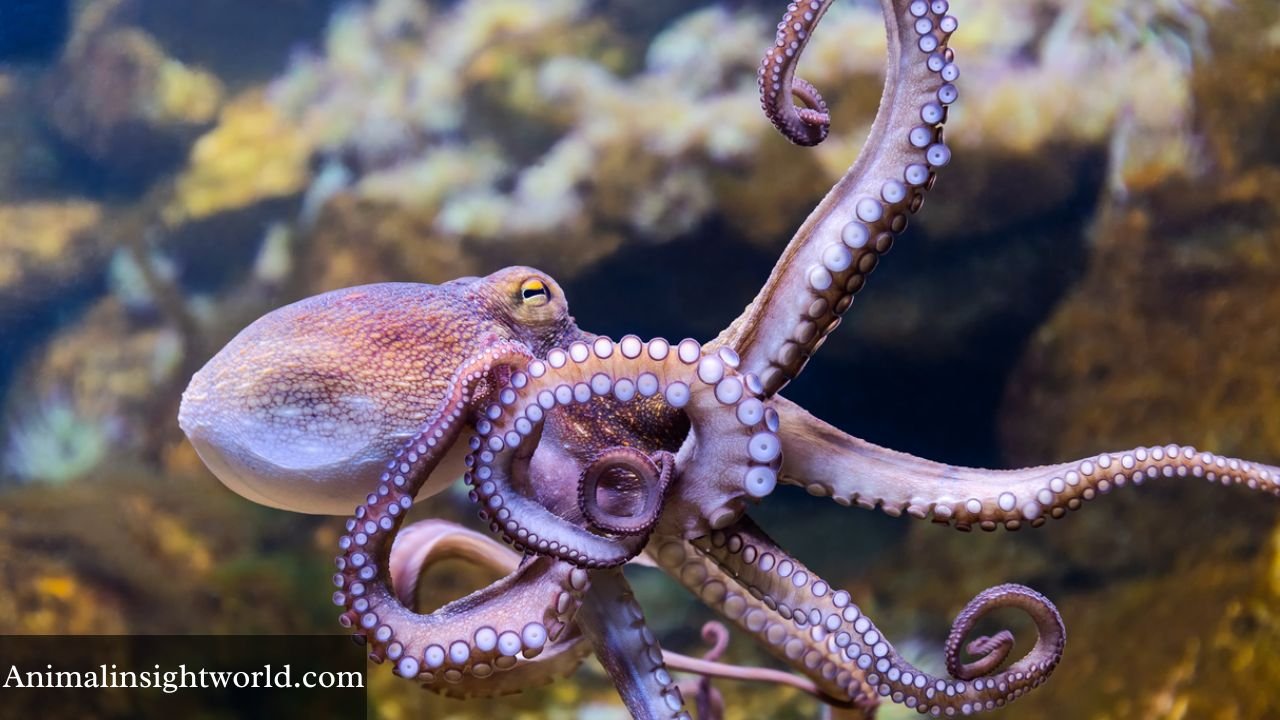
Octopuses have eight arms, and scientists are careful to call them arms rather than tentacles. The difference is that arms have suckers along their whole length, while tentacles have suckers only at the tip. Each arm is lined with suckers that can grip, taste, and feel, and each sucker can be controlled on its own. An octopus can use its arms to walk across the sea floor, to open a shell, to build a wall of stones around its den, and to catch a crab in a fraction of a second.
Remarkably, the arms have a mind of their own. Around two thirds of an octopus nervous system is in its arms, not in its brain, and each arm can make simple decisions without waiting for instructions from the brain. An arm can reach out, explore a crack, taste what it finds, and pull back if it senses danger, all on its own. This is why an octopus can do several things at once, like holding onto a rock with one arm while opening a shell with another. If an octopus loses an arm, it can grow a new one, complete with suckers and nerves.
4. They Have No Bones At All
An octopus has no bones, no shell, and no hard skeleton of any kind. The only hard part of its body is its beak, a sharp, parrot like mouthpart that it uses to bite and tear food. Because the rest of the body is soft, an octopus can squeeze through any gap that its beak can fit through, which is often a hole the size of a coin. This ability has made octopuses famous for escaping from tanks in aquariums, where they have been found in other tanks, in filters, and even on the floor.
The soft body also lets an octopus change shape to hide. It can flatten itself against a rock, puff itself up to look bigger, or curl into a ball to look like a stone. When it needs to move fast, it can jet through the water by forcing water out of a tube called a siphon, which works like a jet engine. The lack of bones is a trade off. It makes the octopus vulnerable to predators, but it also gives it freedom of movement that no bony fish can match, and it is one of the keys to its success as a hunter.
5. They Can Change Colour and Texture in a Second
An octopus can change its colour, pattern, and skin texture in less than a second, and it does this with special cells in its skin called chromatophores. Each chromatophore is a tiny sac of pigment that can be stretched open to show colour or squeezed shut to hide it, and the octopus controls thousands of them at once. Below the chromatophores are other cells that reflect light, which create shimmering blues, greens, and silvers. Muscles in the skin can also raise bumps and ridges, so the octopus can match not just the colour of a rock or a coral, but its texture too.
This camouflage is used for hiding from predators and for sneaking up on prey, but it is also used for communication. Octopuses flash patterns at each other, and they change colour when they are excited, angry, or afraid. A common octopus that is relaxed on the reef may be a mottled brown, but the same animal can turn bright white, deep red, or striped in moments. Some species, like the blue ringed octopus, use bright colour as a warning, flashing electric blue rings when it feels threatened. The speed and range of these changes make the octopus the finest camouflage artist in the sea.
6. They Are Escape Artists
Octopuses are famous escape artists, and the stories from aquariums are almost unbelievable. There are well documented cases of octopuses climbing out of their tanks at night, crossing the floor, climbing into another tank, eating the fish there, and then climbing back to their own tank before morning. One famous octopus, called Inky, escaped from the National Aquarium of New Zealand by squeezing through a small gap at the top of its tank, sliding across the floor, and dropping down a drainpipe that led to the sea.
These escapes are possible because of the soft body, the strong suckers, and the intelligence of the animal. An octopus can remember the layout of its tank, learn how to open lids and jars, and solve simple puzzles to get food. In laboratory tests, octopuses have learned to unscrew jar lids, to find their way through mazes, and to use tools, such as carrying coconut shells to use as shelter. This level of problem solving is rare in invertebrates, and it is one reason scientists study octopuses to learn about intelligence itself.
7. They Taste With Their Suckers
Each sucker on an octopus arm is lined with taste receptors, which means the octopus can taste whatever it touches. When an octopus reaches into a crack in the reef, it is not just feeling for food, it is tasting it, and it can tell a crab from a stone without ever seeing it. A common octopus has around two hundred suckers on each arm, which means more than fifteen hundred taste buds spread across its body. This is a completely different way of sensing the world from ours, because for an octopus, touch and taste are the same sense.
The suckers are also powerful grippers. Each one works like a small suction cup, and together they can hold onto a rock in a strong current or grip a struggling crab. The octopus can control each sucker on its own, so it can hold something gently with one sucker while pulling hard with another. This fine control lets it handle delicate prey, open shells without crushing them, and build its den by moving stones one by one. For an octopus, the arms are hands, tongues, and noses all in one.
8. They Have Blue Blood and Three Hearts Working Together
The three hearts and the blue blood of the octopus work as one system, and understanding them together explains a lot about how the animal lives. The two branchial hearts push blood through the gills, where the copper based hemocyanin picks up oxygen, and the systemic heart then sends that blood to the brain, the arms, and the rest of the body. Because hemocyanin is less efficient than hemoglobin, the octopus needs more pumping power, and the extra hearts provide it. The system is well suited to cold water, where oxygen dissolves easily but the animal still needs to move it around a large body.
This system also explains why octopuses are usually slow and deliberate. Swimming is expensive for them, because the main heart stops while they swim, so they tire quickly. Crawling, on the other hand, lets all three hearts keep working, so the octopus can move for a long time without tiring. This is why you usually see an octopus walking on its arms across the sea floor, rather than swimming in open water. It is a trade off that works, because the octopus is a master of the sea floor, and it does not need to be a fast swimmer to be a successful hunter.
9. They Squirt Ink to Escape
When an octopus is threatened, it can release a cloud of dark ink into the water, and this is one of the best known defences in the sea. The ink comes from a special sac, and it is made of melanin, the same pigment that colours our skin and hair. The ink cloud hangs in the water in the shape of the octopus, which confuses the predator while the real octopus jets away and changes colour to hide. Some species also mix chemicals into the ink that dull the sense of smell of the predator, making it harder for a shark or a moray eel to follow.
The ink is not the only defence. Octopuses can also change colour, squeeze into a crack, jet away, or use their arms to fend off an attacker. The ink is a last resort, because it takes time and energy to make more, and an octopus that has used its ink is more vulnerable until it can make a new supply. Young octopuses use ink from an early age, and they learn quickly when to use it and when to stay still and rely on camouflage instead.
10. They Are Short Lived But Brilliant
Most octopuses live only one to two years, which is very short for such an intelligent animal. The giant Pacific octopus can live for three to five years, but even that is short compared with other animals of similar intelligence, like dolphins or crows. The short life is linked to reproduction. After a female lays her eggs, she stops eating and spends all her time guarding them, cleaning them and blowing water over them to keep them oxygenated. By the time the eggs hatch, she is exhausted and dies soon after. Males also die soon after mating.
This short life makes the intelligence of the octopus even more remarkable, because each octopus has to learn everything from scratch in a year or two, with no parents to teach it. There is no octopus school, and no young octopus ever meets its mother, because she dies before the eggs hatch. Yet in that short life, an octopus learns to hunt, to hide, to solve puzzles, and to recognise individual people. Scientists believe this is because the octopus brain, which has around five hundred million neurons, is wired for fast learning, and its arms, which hold most of its nervous system, let it explore the world in a way no other animal can.
11. They Can Regrow a Lost Arm
If an octopus loses an arm to a predator, it can grow a new one, and the new arm is a full replacement, complete with suckers, muscles, and nerves. The regrowth takes weeks or months, depending on the size of the octopus and the water temperature, and during that time the octopus can still hunt and defend itself with its remaining arms. This ability is a huge advantage, because arms are the most important tool an octopus has, and losing one would be a disaster for an animal that could not replace it.
The regrown arm is not just a copy. It is fully functional, and the octopus can use it to grip, taste, and explore just like the original. Scientists study this regrowth to learn about healing, because the octopus can rebuild complex tissue, including nerves, without scarring in the way we do. Some researchers hope that understanding how an octopus regrows an arm could one day help medicine, though that is a long way off. For now, it is simply one more remarkable fact about an animal that seems to break the rules of what a soft bodied creature should be able to do.
12. They Use Tools and Build Shelters
Octopuses are one of the few invertebrates known to use tools. The veined octopus, for example, collects coconut shells and carries them along the sea floor, then hides inside them when danger appears. It stacks the shells like bowls, carries them awkwardly under its body, and assembles them into a shelter when it needs one. This is true tool use, because the octopus is carrying an object for future use, not just using something it happened to find. Other octopuses build walls of stones and shells around their dens, which they arrange like a front garden, and they keep their dens clean by blowing away sand and debris.
They also use tools to hunt. Some octopuses carry stones to drop on prey, and others use shells as shields. In aquariums, octopuses have been seen using jets of water to knock objects over, to turn off lights, and even to squirt water at people they do not like. This behaviour shows planning and memory, because the octopus has to remember where its shelter is, what it is for, and when to use it. Tool use was once thought to be limited to a few birds and mammals, but the octopus proves that a soft bodied animal with no hands can be a tool user too.
13. They Can See in Colour With Skin
Octopuses have excellent eyes, which are in some ways similar to ours, with a lens, a retina, and a pupil. They can see detail, movement, and light, and they use their eyes to judge distance when they hunt. But recent research has found something even stranger. The skin of an octopus contains light sensitive proteins, the same kind found in the eye, which means the skin itself can sense light. This may help the octopus match its colour to the background even when it cannot see it, because the skin can detect the light falling on it directly.
This is still an active area of research, and scientists do not yet know exactly how much the skin can see. What is clear is that the octopus has a visual system that is far more complex than it first appears, and that its colour changes are controlled by a combination of the eyes, the brain, and the skin itself. Some octopuses are colour blind in the usual sense, because they have only one type of light receptor in the eye, yet they can still match colours in their surroundings with astonishing accuracy. The secret seems to be that they judge brightness and pattern rather than colour, and that their skin helps them fine tune the match.
14. They Are Masters of Disguise
The mimic octopus is the greatest master of disguise in the sea, because it can imitate other animals, not just rocks and coral. It can flatten itself and ripple along the sea floor like a flatfish, curl its arms to look like a sea snake, or spread out like a lionfish, complete with spiky arms. It chooses its disguise based on the predator nearby, so it looks like a flatfish when a damselfish is near, and like a sea snake when a predatory fish approaches. This is not just camouflage, it is impersonation, and it is one of the most sophisticated behaviours in the animal kingdom.
Other octopuses are also fine mimics. The common octopus can look like a rock, a coral, a clump of algae, or a patch of sand, and it can switch between them in seconds. The day octopus, found on coral reefs, can change its pattern to match the reef as it moves, so it seems to disappear while it is still swimming. This ability depends on the chromatophores in the skin, the muscles that control texture, and the brain that decides what to look like. For an animal with no shell and no bones, disguise is the best defence, and the octopus has taken it further than any other animal.
15. They Are Found in Every Ocean
Octopuses live in every ocean on Earth, from the warm waters of the tropics to the freezing waters of the Arctic and Antarctic. They live in shallow rock pools, on coral reefs, in kelp forests, on sandy plains, and in the deep sea, where some species live more than two kilometres down. The giant Pacific octopus lives in the cold waters of the North Pacific, while the common octopus lives in the Mediterranean and the eastern Atlantic. The blue ringed octopus lives in the tide pools of Australia and Southeast Asia, and the dumbo octopus, named for its ear like fins, lives in the deep sea all over the world.
This wide range is possible because octopuses are adaptable. They can live in water of different temperatures, they can eat many kinds of prey, and they can hide in many kinds of shelter. Some species are specialists, like the coconut octopus that lives in shells, while others are generalists that can live almost anywhere. The total number of species is around three hundred, but new species are still being found, especially in the deep sea. Wherever there is salt water, there is probably an octopus nearby, quietly watching, tasting, and learning.
Where They Live and How They Survive
Octopuses live on the sea floor, in dens made from rocks, shells, and crevices, and they are homebodies that often stay in one den for weeks. They choose a den with a narrow entrance that they can block with stones, and they keep it clean by blowing water through it. From this base they go out to hunt, usually at dawn and dusk, and they return with their catch to eat in safety. Their prey includes crabs, shrimp, clams, snails, and small fish, which they catch with their arms, bite with their beak, and sometimes soften with venom from their salivary glands.
Survival as an octopus means balancing three things, which are food, safety, and reproduction. Food comes from hunting with arms that can taste and grip, and from a beak that can crack shells. Safety comes from camouflage, ink, jet propulsion, and the ability to squeeze into a crack. Reproduction comes at a high cost, because the female dies after her eggs hatch, and the male dies soon after mating, so each generation starts from scratch. The three hearts and blue blood fit into this balance too, because they let the octopus live in cold, low oxygen water where other hunters cannot follow. The result is an animal that is short lived but superbly adapted, and that has survived for millions of years in every ocean on Earth.
The main threats to octopuses today are fishing, habitat loss, and warming seas. Octopuses are caught for food in many countries, and their numbers can fall quickly because they live such short lives and depend on a single breeding season. Coral reefs, kelp forests, and rocky shores are also under pressure, and when those habitats are damaged, octopuses lose their dens and their hunting grounds. Protecting the sea floor, reducing plastic pollution, and fishing sustainably are the best ways to keep octopuses in the ocean. They are not endangered as a group, but individual species and local populations can be vulnerable, and they deserve the same care as any other marine animal.
Questions People Ask
Do octopuses really have 8 hearts?
No, octopuses do not have eight hearts. They have three hearts. Two pump blood to the gills and one pumps blood to the body. The confusion comes from the fact that they have eight arms, and people assume the number of hearts matches the number of arms. It does not. Three hearts, eight arms, and blue blood is the correct answer.
Why is octopus blood blue?
Octopus blood is blue because it uses hemocyanin, a copper based molecule, to carry oxygen. Our blood uses hemoglobin, which contains iron and turns red. Hemocyanin turns blue when it carries oxygen, and it works better in cold water with low oxygen, which is where many octopuses live. When the blood has no oxygen, it is almost colourless.
How many hearts does an octopus have in total?
An octopus has three hearts in total. Two are called branchial hearts and serve the gills, and one is called the systemic heart and serves the rest of the body. When the octopus swims, the systemic heart stops beating, which is why octopuses prefer to crawl along the sea floor and only swim in short bursts.
Are octopuses intelligent?
Yes, octopuses are among the most intelligent invertebrates in the world. They can solve puzzles, open jars, use tools, recognise people, and remember what they have learned. Their nervous system is unusual, because around two thirds of it is in their arms, so each arm can make simple decisions on its own. They learn fast, even though they live only one to two years and never meet their parents.
Can an octopus hurt a person?
Most octopuses are not dangerous to people, and they prefer to hide or flee rather than bite. The main exception is the blue ringed octopus, which is small but has venom that can be very dangerous. Its bite is often painless, so people may not realise they have been bitten. The rule is simple. Admire octopuses from a distance, never pick up a blue ringed octopus, and treat all wild animals with respect.
How long do octopuses live?
Most octopuses live for one to two years. The giant Pacific octopus can live for three to five years, which is the longest of any octopus. The short life is linked to reproduction, because females die soon after their eggs hatch and males die soon after mating. In that short time, an octopus learns to hunt, hide, and solve problems, which makes its intelligence all the more impressive.
Final Thoughts
Do Octopuses Have 8 Hearts? 15 Amazing Octopus Facts began with a simple question, and the answer is one of the most interesting facts in the sea. Octopuses have three hearts, not eight, and their blood is blue. Those two facts alone would make them special, but they are only the start. The octopus has eight arms that can taste, no bones, skin that can change colour and texture in a second, the ability to regrow a lost arm, and a brain that can solve puzzles and use tools, all in a life that lasts only a year or two.
The next time you see an octopus in an aquarium or in a video, look closely. Watch how it moves, how it changes colour, and how it uses its arms to explore. You are watching one of the most intelligent and most unusual animals on Earth, an animal that has found a completely different way to be clever. Share these facts with a friend, a student, or a child, and remember the answer to the question that started it all. Three hearts, eight arms, blue blood, and a mind that never stops learning.