Do Alligators Eat People?
Do Alligators Eat People? The honest answer is that alligators can kill and eat people, but it is extremely rare. Alligators are powerful predators that eat fish, turtles, birds and mammals, and a large alligator is strong enough to kill a person. Yet fatal attacks are uncommon, and most alligators avoid people whenever they can. This guide looks at the real numbers, the reasons attacks happen, and how to stay safe in alligator country.
Fear of alligators is understandable. They are large reptiles with armoured bodies, huge jaws and sharp teeth, and they have lived almost unchanged for millions of years. News stories about attacks travel fast and make alligators seem like monsters that hunt people. The statistics tell a calmer story. Millions of people live, swim, fish and walk near alligators every year in Florida and Louisiana, and almost all of them never have a problem. Understanding the real risk helps you respect alligators without fearing them unfairly.
What Makes These Animals Special
The American alligator is one of the great survivors of the natural world. It has lived in the wetlands of the southeastern United States for millions of years, and it was once hunted almost to extinction before laws protected it. Today there are more than one million alligators in Florida alone, and more than one million in Louisiana. Their recovery is one of the great conservation success stories.
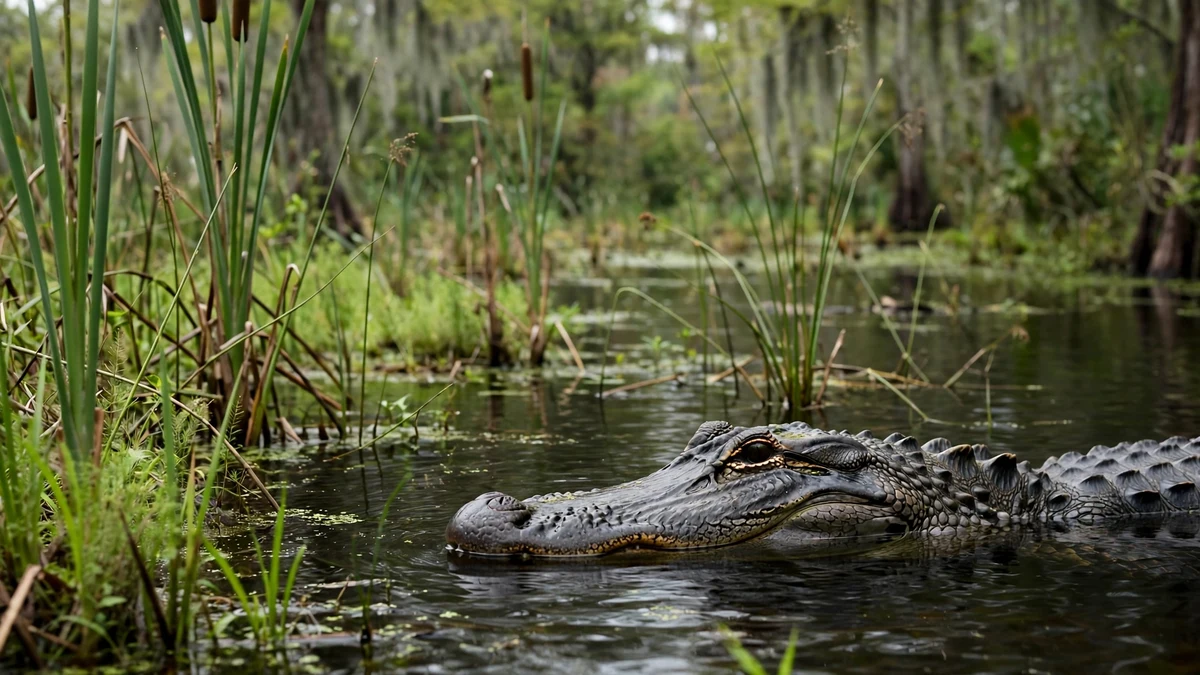
Alligators are perfectly built for life in the water. Their eyes and nostrils sit on top of their heads, so they can float almost completely hidden while watching and listening. Their tails are powerful paddles that can push them through the water at surprising speed in short bursts. Their jaws can crush a turtle shell, and their teeth are replaced throughout life, so a lost tooth is soon replaced by a new one.
Alligators are also caring parents. The female builds a nest of vegetation, lays her eggs, and guards the nest for more than two months. When the eggs hatch, she carries the babies to the water in her mouth and protects them for a year or more. The temperature of the nest decides whether the babies are male or female, with warmer nests producing males. These are not mindless monsters. They are complex animals with strong instincts and a long history on Earth.
The Real Numbers on Alligator Attacks
The Florida Fish and Wildlife Conservation Commission has kept records of alligator attacks since 1948. Between 1948 and November 2021, Florida recorded 442 unprovoked bite incidents. Of those, 26 resulted in human deaths. A further 303 people received major injuries and 139 received minor injuries. Over the last ten years, Florida has averaged about eight unprovoked bites per year that were serious enough to need medical treatment.
Across the whole United States, the average is about six fatal alligator attacks per year, though some years have none at all. The risk to any one person is tiny. The Florida commission puts the likelihood of a Florida resident being seriously injured in an unprovoked alligator incident at roughly one in 3.1 million. You are far more likely to be hurt in a car accident, struck by lightning or bitten by a dog than to be attacked by an alligator.
Most attacks happen in Florida, because Florida has the largest alligator population and the most people living near the water. Louisiana has a similar number of alligators but fewer attacks, partly because fewer people swim in alligator habitat there. Attacks are most common in the warmer months, from spring to early autumn, when alligators are most active and people spend more time in the water.
Why Alligators Sometimes Attack People
Alligators do not hunt people as prey. When an attack happens, it usually has a clear cause. The most common cause is mistaken identity. A person swimming or wading in murky water can look like a small animal from below, especially if they are splashing. Children and pets are at greater risk because they are smaller and closer to the size of the prey an alligator normally eats.
The second common cause is feeding. When people feed alligators, the animals lose their fear of humans and start to connect people with food. A fed alligator will approach docks, boats and swimmers expecting a meal, and that is when bites happen. Feeding alligators is illegal in Florida and other states for exactly this reason, and it puts both people and alligators in danger.
The third cause is defending a nest or territory. Female alligators guard their nests fiercely, and males defend their territory during the breeding season. A person who walks too close to a nest or a basking alligator can be attacked. Most attacks are defensive, not hunting, and the alligator usually lets go and leaves once the person escapes.
What Alligators Really Eat
Alligators eat a wide range of prey, and their diet changes as they grow. Young alligators eat insects, small fish, frogs and snails. As they grow, they add larger fish, turtles, snakes, birds and small mammals such as raccoons and opossums. Large adults can take deer and wild pigs, and they sometimes eat other alligators.
Alligators are ambush hunters. They wait quietly in the water with only their eyes and nostrils showing, and they strike with a sudden rush when prey comes close. Their jaws snap shut with enormous force, and they drag prey underwater to drown it. They cannot chew, so they tear prey into pieces by spinning in the water, a move called the death roll.
People are not a normal part of an alligator’s diet. An alligator that attacks a person usually does so by mistake or in defence, not because it sees a person as food. When a fatal attack does happen, the alligator may drag the body underwater, which is why some victims are found with bite wounds. Even so, most attacks end with a single bite and the alligator leaving.
Alligators also eat dead animals, and this scavenging helps keep wetlands clean. They will eat fish that have died in a drought, and they will take carrion left by other predators. Their stomachs are very acidic and can digest bone, shell and even small amounts of metal. This powerful digestion lets them eat almost anything they catch, and it means they rarely need to hunt every day. A large meal can keep an alligator fed for weeks.
How Alligators Compare With Crocodiles
Many people confuse alligators and crocodiles, but they are different animals. Alligators have broad rounded snouts and their teeth are hidden when the mouth is closed. Crocodiles have narrower pointed snouts, and the fourth tooth on each side of the lower jaw shows when the mouth is closed. Alligators prefer fresh water, while crocodiles can live in salt water as well.
Crocodiles are far more dangerous to people than alligators. Saltwater crocodiles in Australia and Asia and Nile crocodiles in Africa kill hundreds of people every year. Alligators kill only a handful. The difference is partly temperament and partly size, because saltwater crocodiles grow larger and are more aggressive. The American alligator is the least aggressive of the large crocodilians.
Florida is the only place in the world where alligators and crocodiles live side by side. The American crocodile lives in the southern tip of Florida, while alligators live throughout the state. Both animals deserve respect, but the alligator is the one people are most likely to meet.
Where Alligators Live
American alligators live in the southeastern United States, from North Carolina to Texas. Florida and Louisiana have the largest populations, with more than one million wild alligators each. They live in swamps, marshes, rivers, lakes, ponds and canals, and they sometimes turn up in golf course ponds and drainage ditches in towns.
Alligators prefer fresh water, but they can tolerate brackish water for short periods. They are most active when the water is warm, and they become sluggish in cold weather. In winter they may bask in the sun or rest in burrows called gator holes, which they dig in the mud. These holes hold water during dry spells and provide shelter for fish and other animals.
Alligators are excellent swimmers and can move fast in the water, but they are slower on land. They can run in short bursts of up to about 30 kilometres per hour, though they tire quickly. They are most dangerous in the water, where they have the advantage, and they are least dangerous on dry land.
Alligator Behaviour Through the Seasons
Alligator behaviour changes with the seasons, and understanding the calendar helps people stay safe. In spring, alligators become active again after the cool winter months. Males begin to bellow and patrol their territory, looking for mates. Females build nests of mud and plants near the water, and they lay between 20 and 50 eggs in early summer. During this time, alligators are more alert and more likely to defend their space.
Summer is the busiest season for alligators and for people. The eggs hatch in late summer, and the mother stays close to her babies, carrying them to the water and guarding them from herons, raccoons and even other alligators. Young alligators have yellow stripes that help them hide in marsh grass, and they stay with their mother for a year or more. Most attacks on people happen in summer, because both alligators and people are spending more time in and near the water.
In autumn, alligators feed heavily to build up fat for the winter. They hunt more often and may travel further from their home range in search of food. In winter, they become sluggish as the water cools. They may bask in the sun on warm days, but they spend much of the time resting in burrows or in deep water. An alligator in cold water is slow and unlikely to attack, but it should still never be approached.
Surprising Facts
Alligators have one of the strongest bites of any animal, with a force of more than 2,000 pounds per square inch. Yet the muscles that open their jaws are weak, and a person can hold an alligator’s mouth shut with their hands. This is why handlers tape an alligator’s mouth closed when they move it.
Alligators can live for more than fifty years in the wild, and some have lived for seventy years in captivity. The largest alligator ever recorded measured 5.8 metres long and weighed 473 kilograms. Most wild alligators are much smaller, with males reaching three to four metres and females reaching about three metres.
Alligators have a remarkable sense of smell and excellent night vision. They can hear well both in and out of the water, and they can feel vibrations through the water with sensory pits on their jaws. Baby alligators make a high pitched chirping sound that calls their mother for help. Alligators also bellow during the breeding season, and the sound can be heard over long distances.
Alligators also help shape the wetlands they live in. The holes they dig hold water during droughts and give fish, frogs and turtles a place to survive the dry season. Their nests provide warm shelter for other animals after the eggs hatch. Scientists call alligators ecosystem engineers, because their digging and nesting change the landscape for many other species. Without alligators, the wetlands of Florida and Louisiana would be poorer places for wildlife.
Another surprise is how well alligators can hear. They have no visible ears, but they have small openings behind their eyes that pick up sound in the air and in the water. They can hear a baby alligator calling from inside its egg, and the mother will dig the nest open when she hears the chirping. Alligators also sense vibrations through the water, which helps them find prey in murky swamps where they cannot see.
How to Stay Safe Around Alligators
Staying safe around alligators is mostly common sense. Never swim in water where alligators are known to live, especially at dawn, dusk or night, when alligators are most active. Swim only in designated swimming areas during daylight, and keep children and pets close to you and away from the water’s edge.
Never feed alligators, and never approach one, even if it looks calm or asleep. Keep a safe distance from the water’s edge when fishing or walking, and do not let dogs swim in alligator habitat. If you see an alligator, leave it alone and report it to wildlife officials if it is in a place where people gather.
If an alligator does attack, fight back. Hit its eyes and nose, which are sensitive, and make as much noise as you can. Do not play dead. Most alligators will let go if the victim fights back. After an attack, get medical help at once, because alligator bites can cause serious infection.
Frequently Asked Questions
Do alligators eat people?
Alligators can kill and eat people, but it is extremely rare. Fatal attacks in the United States average about six per year, and most alligators avoid people. Attacks usually happen because of mistaken identity, feeding or defending a nest, not because the alligator is hunting people.
How many people are killed by alligators each year?
In the United States, alligators kill an average of about six people per year. In Florida, records from 1948 to 2021 show 442 unprovoked bites, of which 26 were fatal. The chance of a Florida resident being seriously injured by an alligator is about one in 3.1 million.
Are alligators more dangerous than crocodiles?
No, crocodiles are more dangerous to people than alligators. Saltwater and Nile crocodiles kill hundreds of people every year, while American alligators kill only a handful. Alligators are generally shy and avoid people, while some crocodile species are more aggressive.
Can you outrun an alligator?
Alligators can run fast in short bursts, up to about 30 kilometres per hour, but they tire quickly. Running in a straight line away from the water is the best advice, and the old idea that you must run in zigzags is a myth. The best safety rule is to stay well away from alligators in the first place.
What should you do if you see an alligator?
Leave it alone and keep your distance. Do not feed it, approach it or try to take a photograph close up. If the alligator is in a swimming area, a garden or a place where people gather, contact your local wildlife agency so trained staff can move it safely.
Conclusion
Do Alligators Eat People? They can, but they almost never do. The numbers are clear. With more than a million alligators in Florida and millions of people living beside them, fatal attacks average only a few per year across the whole country. Alligators are powerful predators that deserve respect, but they are not the people hunting monsters of films and stories. They are shy, careful animals that usually avoid us. If you stay out of their water, never feed them and keep children and pets close, you can live and visit in alligator country safely. Respect the alligator, give it space, and it will almost always give you space in return.