Top 20 Animals That Start With W
Introduction
Top 20 Animals That Start With W is a list that takes you from icy Arctic shores to deep rainforests, from tiny insects to the largest animal that has ever lived on Earth. The letter W may not be the first letter you think of when you picture the animal kingdom, but it hides some of the most interesting creatures alive today. Some of them are famous, like the wolf and the whale. Others are rarely talked about, like the whippoorwill and the wrinkle-faced bat. Together they show just how varied life on our planet can be, and how one letter of the alphabet can hold hunters, builders, singers, swimmers and survivors.
This guide brings together twenty real animals that start with W, each with its own story. You will meet a mammal that can sleep underwater, a bird that drums on trees to talk, a fish hunter that weighs more than a bus, and an insect whose sting most people will never feel. Every animal on this list is real, and every one of them has something worth knowing. Whether you are a student working on a school project, a parent helping with homework, or simply someone who loves animals, this list will give you facts you can remember and share.
What Makes These Animals Special
The animals in this list are special because they cover almost every kind of life on Earth. There are mammals that live in the sea and mammals that fly through the night. There are birds that sing at dusk and birds that hammer wood with their beaks. There are insects, spiders, frogs and fish, alongside animals that went extinct thousands of years ago but still shape how we think about the natural world. No two animals on this list live the same way, eat the same food or raise their young in the same style.
What ties them together is how well each one fits its home. The walrus is built for freezing water. The wombat is built for digging hard ground. The whale is built for crossing whole oceans. The wolf is built for teamwork. Each animal is a working answer to a hard problem in nature, and that is what makes this group so fun to explore. As you read through the twenty entries below, notice how different their solutions are, and how every single one of them works.
1. Walrus
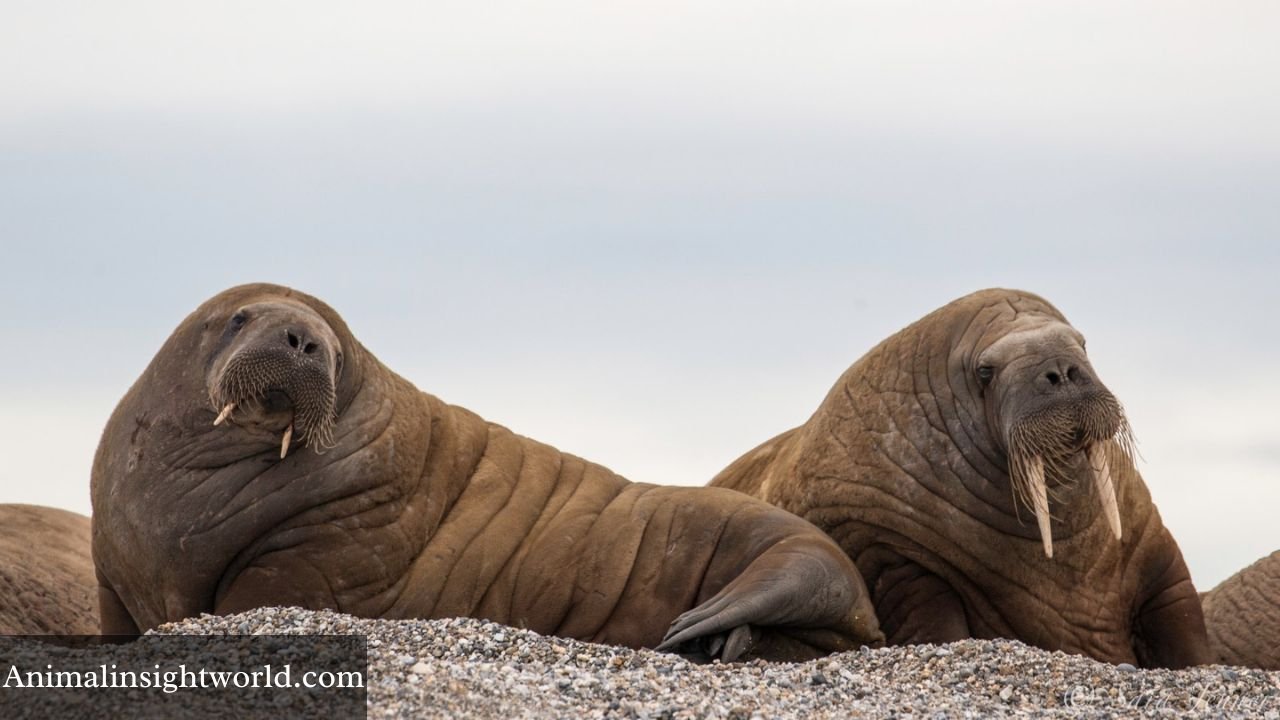
The walrus is one of the most recognisable animals of the Arctic, and it is easy to see why. A full grown male can weigh more than 1,500 kilograms, and its two long tusks can reach nearly a metre in length. Walruses use those tusks to haul their heavy bodies out of the water and onto the ice, and males also use them when they compete with each other. They spend much of their lives in cold northern seas around Alaska, Canada, Greenland and Russia, resting on ice floes in large noisy groups.
Walruses feed mainly on shellfish, crabs and other small animals that live on the sea floor. They dive down, sometimes more than 100 metres deep, and use their sensitive whiskers to feel for food in the mud. Their whiskers are so good at sensing movement that a walrus can find a clam buried in dark water without seeing it. A walrus can hold its breath for around ten minutes, and some dives last even longer when food is scarce.
2. Wolf
The wolf is a hunter that lives and works as part of a family group called a pack. A typical pack has between five and ten wolves, led by a breeding pair, and every member has a role in hunting, raising pups and defending territory. Wolves communicate with howls that can carry for many kilometres, and each wolf has a voice that other pack members can recognise. Their howling is not just noise. It keeps the pack together, warns rivals away and helps lost wolves find their family.
Grey wolves are the largest wild members of the dog family, and they can run at speeds of more than 60 kilometres per hour in short bursts. They mainly hunt deer, elk and moose, and they often travel more than 30 kilometres in a single day while searching for food. Wolf pups are born blind and helpless in a den, and the whole pack helps to feed and protect them. Without the pack, a young wolf would have almost no chance of surviving its first year.
3. Wombat
The wombat is a short legged marsupial from Australia that looks like a small bear but lives most of its life underground. Wombats dig burrows that can be more than 20 metres long, with several entrances and sleeping chambers. They are strong diggers, and their powerful claws and wide paws can move large amounts of soil in a short time. A wombat usually comes out at night to graze on grasses, roots and bark, then returns to its burrow before sunrise.
One of the strangest facts about the wombat is that its droppings are cube shaped. It is the only known animal that produces cube shaped droppings, and the shape stops them from rolling away, which helps wombats mark their territory. Wombats also have a pouch that faces backwards, so dirt does not fall into it while they dig. A wombat can live for more than 20 years in the wild, and it can run surprisingly fast for such a stocky animal when it needs to escape danger.
4. Weasel
The weasel is a small, quick and fearless hunter that can squeeze through gaps barely wider than its own head. Weasels are among the smallest carnivores in the world, and the least weasel can weigh less than 50 grams. Despite their tiny size, they hunt mice, voles and even rabbits, and they are known for taking on prey much larger than themselves. Their long thin bodies let them follow rodents right into their burrows, where larger predators cannot go.
Weasels are active both day and night, and they need to eat often because their fast metabolism burns energy quickly. In cold northern regions, the weasel’s coat turns white in winter, which helps it hide in the snow. This white winter form is sometimes called an ermine. A weasel can kill and eat several small animals in a single day, and it often stores extra food in hidden caches for later. Farmers have mixed feelings about weasels, because they control rodent numbers but can also threaten poultry.
5. Woodpecker
The woodpecker is a bird that has turned tree trunks into both a home and a dinner table. It uses its strong pointed beak to hammer into bark and wood, searching for insects and grubs hidden inside. A woodpecker can strike a tree up to twenty times per second, and its skull has special shock absorbing structures that protect its brain from the constant impact. Its tongue is also remarkable, reaching far beyond its beak to pull insects out of deep holes.
There are more than 200 species of woodpecker around the world, and they live on every continent except Australia and Antarctica. Many woodpeckers nest in holes they carve themselves, and those empty holes later become homes for owls, ducks and other birds. The drumming sound a woodpecker makes is not only about food. It is also a way of claiming territory and attracting a mate. In spring, the sound of drumming can be heard echoing through forests for long distances.
6. Wallaby
The wallaby is a close relative of the kangaroo, but it is smaller and lives in a wider range of places, from rocky hills to thick forest. Wallabies are strong jumpers, and their large hind feet and long tail help them balance as they bound across uneven ground. Some wallabies live on steep cliffs where few other animals can follow, and their rough foot pads give them grip on bare rock. Like kangaroos, wallabies carry their young in a pouch, where the joey stays safe for months.
Wallabies are herbivores that eat grasses, leaves and shrubs, and most species feed at dawn and dusk when the air is cooler. There are more than thirty species of wallaby, and they vary greatly in size and colour. The red necked wallaby is common in eastern Australia, while the rock wallaby lives among boulders in the north. Sadly, several wallaby species are now rare because of habitat loss and introduced predators such as foxes and cats, and conservation groups work hard to protect the ones that remain.
7. Warthog
The warthog is a wild pig of the African savanna, and it is easy to recognise by the wart like bumps on its face and the pair of curved tusks that stick out of its mouth. Warthogs spend much of their time on their knees, digging for roots, bulbs and grasses with their snouts. When they run, they hold their thin tails straight up in the air, which helps piglets follow their mother through tall grass. A warthog can run at more than 45 kilometres per hour when it needs to escape a lion or a leopard.
Despite their fierce appearance, warthogs are mostly plant eaters, although they will also eat insects and carrion when they find them. They sleep in burrows at night, often in old aardvark holes, and they back into the burrow so that their tusks face the entrance. This means any predator that tries to enter meets a pair of sharp tusks first. Warthog piglets are born in the burrow and stay close to their mother for several months, learning where to find food and how to stay safe.
8. Whale
The whale is the largest animal on Earth, and the blue whale holds the record for the biggest animal that has ever lived. A blue whale can grow to more than 30 metres long and weigh over 170 tonnes, which is heavier than thirty elephants put together. Yet this giant feeds on krill, tiny shrimp like animals that are only a few centimetres long. A blue whale can eat up to four tonnes of krill in a single day during the feeding season, filtering them from the water with baleen plates in its mouth.
Whales are mammals, not fish, which means they breathe air, give birth to live young and feed their calves with milk. Some whales, like the humpback, are famous for their songs, which can travel for hundreds of kilometres underwater. Others, like the sperm whale, can dive deeper than 2,000 metres in search of giant squid. Whales migrate thousands of kilometres every year between cold feeding waters and warm breeding waters, and they have done so for millions of years.
9. Wolverine
The wolverine is a stocky member of the weasel family, and it is famous for being far tougher than its size suggests. An adult wolverine weighs between 10 and 25 kilograms, yet it has been known to drive bears and wolves away from a carcass, and it can take down prey much larger than itself. Wolverines have powerful jaws and sharp claws, and they can crush bones to get at the marrow inside. Their thick fur does not freeze, even in the coldest Arctic winters.
Wolverines live in remote northern forests and tundra across North America, Europe and Asia, and they need very large territories. A single male may roam over more than 500 square kilometres in search of food. They are mostly scavengers in winter, feeding on animals that have died in the snow, but they also hunt hares, rodents and birds. Wolverines are solitary and shy, and most people will never see one in the wild, which is part of why they have such a legendary reputation.
10. Water Buffalo
The water buffalo is a large, strong animal that has worked alongside people in Asia for thousands of years. It is well suited to wet places, and it loves to wallow in mud and shallow water, which keeps it cool and protects its skin from biting insects. Water buffalo are used to plough rice fields, pull carts and carry heavy loads, and their milk is rich and creamy. It is the main ingredient in real mozzarella cheese, and it is also made into butter, yoghurt and sweets across South Asia.
Wild water buffalo are different from the domestic ones most people know. They are larger, with huge curved horns that can span more than two metres, and they live in the wetlands of India, Nepal, Thailand and other parts of Asia. Wild water buffalo are now endangered, with only a few thousand left in the wild, because their habitat is shrinking and they breed with domestic buffalo. Farmers still depend on domestic water buffalo every day, and the animal remains one of the most important working animals in the world.
11. Wildebeest
The wildebeest, also known as the gnu, is an antelope of the African plains, and it is famous for one of the greatest animal journeys on Earth. Every year, more than a million wildebeest migrate across the Serengeti in Tanzania and the Masai Mara in Kenya, following the rains and the fresh grass. They travel in huge herds, and they must cross rivers full of crocodiles and pass through lands where lions and hyenas wait. It is a dangerous journey, and many wildebeest do not survive it.
Wildebeest are grazers that eat short grasses, and their wide muzzles are made for cropping grass close to the ground. A wildebeest calf can stand and run within minutes of being born, which is vital when predators are always nearby. The sound of a wildebeest is a loud snorting grunt, and a whole herd can be heard from far away. The great migration is one of the most spectacular wildlife events on the planet, and thousands of visitors travel to Africa each year just to watch it.
12. Worm
The worm may seem simple, but it is one of the most important animals in the soil. Earthworms dig tunnels that let air and water reach plant roots, and they eat dead leaves and organic matter, turning it into rich soil that helps plants grow. Without earthworms, much of the world’s farmland would be far less productive. A single hectare of healthy soil can hold more than a million earthworms, all working quietly underground.
Earthworms have no lungs and no eyes. They breathe through their moist skin, which is why they come to the surface after rain, and they sense light and vibration with cells along their bodies. If an earthworm is cut in half, the front half can sometimes survive and regrow its tail, but the back half usually does not. Worms are food for many birds, fish and small mammals, and they are also used as bait by fishermen around the world. Charles Darwin studied earthworms for decades and called them some of the most important animals in history.
13. Wasp
The wasp is an insect that many people fear, but it plays a vital role in nature. Wasps are hunters and scavengers that control pest insects, and many species also help pollinate flowers as they search for nectar. A wasp can sting more than once, unlike a honeybee, which is why people are careful around them. In fact, only female wasps have stingers, and they use them mainly to defend the nest or to paralyse prey for their young.
There are more than 100,000 known species of wasp, and they come in many shapes and sizes. Social wasps live in colonies with a queen, workers and a paper nest made from chewed wood fibre. Solitary wasps live alone and build small nests in the ground or in hollow stems. Some wasps are so small they are barely visible, and they lay their eggs inside other insects. Gardeners value wasps because they hunt caterpillars and aphids that damage crops, and a garden with wasps is often a healthier garden.
14. Whippoorwill
The whippoorwill is a night bird of North America, named after its own call, which sounds like it is saying its name over and over again. On a summer night, a male whippoorwill can repeat its three note song hundreds of times without stopping. These birds are most active at dawn and dusk, when they catch moths and other flying insects in mid air. Their wide mouths and silent flight make them expert night hunters.
Whippoorwills are masters of camouflage. Their mottled brown and grey feathers look exactly like dead leaves, and they sleep on the forest floor during the day, almost invisible to predators. They do not build a nest. Instead, the female lays her eggs directly on leaf litter on the ground. Sadly, whippoorwill numbers have fallen in many places because forests have been cleared and insect numbers have dropped. Hearing a whippoorwill on a warm night is now a rarer pleasure than it once was.
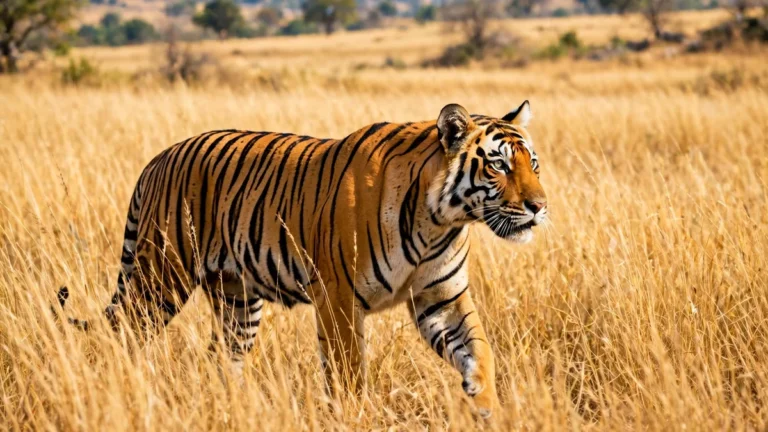
15. White Tiger
The white tiger is not a separate species. It is a Bengal tiger with a rare genetic change that gives it white fur with black stripes and pale blue eyes. White tigers are born only when both parents carry the same rare gene, which is why they are so uncommon in the wild. In the wild, a white tiger would be at a disadvantage because its pale coat makes it harder to hide in the jungle, but in captivity they have become famous animals that many people travel to see.
Like all tigers, white tigers are powerful solitary hunters. They can weigh more than 220 kilograms, and they hunt deer and wild pigs, usually at night. A tiger’s stripes are as unique as a human fingerprint, and no two tigers have the same pattern, even among white tigers. Tigers are excellent swimmers, and they often cool off in rivers and pools. Conservationists point out that breeding white tigers in captivity does not help wild tiger conservation, because the gene that makes them white is not useful for survival in the wild.
16. Wild Boar
The wild boar is the wild ancestor of the domestic pig, and it lives in forests across Europe, Asia and North Africa. It has also been introduced to the Americas and Australia, where it has become a serious pest. Wild boars are strong animals with a thick coat of bristly hair, and males have sharp tusks that curve upwards from their lower jaw. They use their snouts to dig for roots, bulbs, acorns and insects, and they can turn over large areas of soil in a single night.
Wild boars live in family groups called sounders, usually made up of females and their young, while older males live alone. A sow can have up to twelve piglets at a time, and the striped piglets stay close to their mother for the first few months. Wild boars are intelligent and adaptable, and they can live in many different habitats, from mountain forests to marshland. They are mostly active at night, which helps them avoid people, and they can run fast and swim well when they need to escape.
17. Wolf Spider
The wolf spider does not build a web to catch its food. Instead, like a wolf, it hunts on foot, chasing down insects and other small creatures with speed and sharp eyesight. Wolf spiders have excellent vision, and their eight eyes are arranged so they can see in almost every direction. At night, their eyes shine green when a light is held near them, which is how many people first notice them in their garden.
Female wolf spiders are famous for the care they give their young. They carry their egg sac attached to their spinnerets, and when the spiderlings hatch, they climb onto their mother’s back and ride there for days or weeks. A single mother can carry more than a hundred babies at once. Wolf spiders are not dangerous to people. Their bite is no worse than a bee sting for most people, and they would much rather run away than bite. They are helpful hunters that keep insect numbers down in gardens and fields.
18. Woolly Mammoth
The woolly mammoth is an extinct animal, but it is one of the most famous animals that start with W. Mammoths lived during the last Ice Age, roaming the cold grasslands of Europe, Asia and North America. They were covered in thick shaggy hair, with a hump of fat on their shoulders and long curved tusks that could reach more than four metres. A full grown mammoth stood about three metres tall at the shoulder and weighed around six tonnes.
Mammoths ate grasses and other plants, and they used their tusks to clear snow away from the food underneath. They lived alongside early humans, who hunted them and painted them on cave walls. The last mammoths died out around 4,000 years ago, although a small population survived on Wrangel Island in the Arctic until then. Scientists have found many mammoths preserved in frozen ground, with hair, skin and even stomach contents intact, which is why we know so much about them. Some researchers are even studying whether mammoth genes could one day help elephants survive in colder places.
19. Wood Frog
The wood frog is a small brown frog of North America that can do something that sounds impossible. It can freeze solid in winter and then thaw out in spring, alive and well. When temperatures drop, the wood frog produces a kind of natural antifreeze in its body, and ice forms in the spaces between its cells while its heart stops beating. It can stay frozen like this for weeks, and when the weather warms, it thaws and hops away as if nothing had happened.
Wood frogs live in forests and breed in temporary pools that form in spring. Their call sounds like a duck quacking, and on a spring evening a whole chorus of wood frogs can be surprisingly loud. They eat insects, slugs and worms, and they are eaten in turn by birds, snakes and mammals. The wood frog’s freezing trick is one of the most remarkable survival skills in the animal world, and scientists study it to learn how living tissue can survive being frozen.
20. Wrinkle-Faced Bat
The wrinkle-faced bat is a strange looking bat from the rainforests of Central and South America. It gets its name from the folds of skin on its face, which give it a wrinkled, almost mask like appearance. Scientists are still not sure exactly what the wrinkles are for, but they may help the bat sense its food or make sounds. This bat is a fruit eater, and it feeds mainly on figs and other soft fruits, which it carries to a feeding roost and eats piece by piece.
Like other fruit bats, the wrinkle-faced bat helps the forest by spreading seeds. The seeds pass through the bat or are dropped under its roost, and new trees grow from them. Wrinkle-faced bats roost in small groups in hollow trees or among leaves, and they are active at night. They are rarely seen by people, partly because they live high in the rainforest canopy. Their strange face and quiet life make them one of the least known bats in the world, and a fitting final entry for a list of animals that start with W.
Surprising Facts
The animals in this list hide some wonderful surprises. A blue whale’s heart is the size of a small car, and its tongue alone can weigh as much as an elephant. A wolf spider mother can carry more than a hundred babies on her back at once. A wood frog can freeze solid and come back to life in spring. A wombat produces cube shaped droppings, the only animal known to do so. A walrus can dive more than 100 metres deep and find food in total darkness using only its whiskers.
Other surprises are just as striking. A whippoorwill can repeat its own name hundreds of times in a single night. A wildebeest calf can stand and run within minutes of being born. A wasp colony builds its nest from paper it makes by chewing wood. A white tiger’s stripes are unique, like a human fingerprint. A woolly mammoth’s tusks could grow longer than four metres. Together, these facts show that the letter W covers animals that are fast, strong, clever and strange, often all at once.
Frequently Asked Questions
What is the largest animal that starts with W?
The largest animal that starts with W is the blue whale, which can grow to more than 30 metres long and weigh over 170 tonnes. It is the largest animal that has ever lived on Earth, bigger than any dinosaur we know of. The whale shark is sometimes confused with whales, but it is a fish, and it also starts with W.
What is the smallest animal that starts with W?
The smallest animal on this list is probably the least weasel, which can weigh less than 50 grams, or some tiny wasp species that are barely visible to the eye. Among the animals here, the weasel is the smallest mammal, and it is small enough to fit in the palm of your hand.
Are white tigers a separate species?
No, white tigers are not a separate species. They are Bengal tigers with a rare genetic change that gives them white fur and blue eyes. Both parents must carry the same gene for a white cub to be born, which is why white tigers are so rare in the wild.
Which W animal can freeze and survive?
The wood frog can freeze solid in winter and thaw out alive in spring. It makes a natural antifreeze in its body that protects its cells while ice forms around them. Its heart stops beating while it is frozen, and it starts again when the frog thaws.
Do wolves really howl at the moon?
Wolves do not howl at the moon. They howl to communicate with their pack, to mark territory and to find each other over long distances. They often howl at night because that is when they are most active, and the moon is simply visible at the same time.
Conclusion
Top 20 Animals That Start With W shows that a single letter can hold an entire world of wildlife. From the walrus on Arctic ice to the wrinkle-faced bat in the rainforest canopy, from the tiny weasel to the giant blue whale, each animal has found its own way to survive. Some of them are famous and some are almost unknown, but every one of them has a role in the web of life. The next time you hear the letter W, you will have twenty real animals to think of, and twenty stories worth remembering. If this list sparked your interest, keep exploring, because the animal kingdom always has one more surprise waiting.