Top 15 Animals With More Than One Heart
Introduction
Top 15 Animals With More Than One Heart sounds like a riddle, because most of us grow up believing that one heart is the rule for every animal. In fact, a surprising number of animals run on two, three, four or even five hearts, and some of them do not have a proper heart at all, only a set of pumping vessels that do the same job. The most famous is the octopus, which has three hearts and blue blood, and the question people search for most often is whether an octopus really has eight hearts. It does not. It has three, and the story of why it needs three is one of the most interesting in the animal kingdom. This list counts down fifteen animals with more than one heart, explains how each heart system works, and finishes with a few facts that are hard to believe.
Before the countdown, it helps to understand what a heart actually does. A heart is a muscular pump that pushes blood around the body, carrying oxygen and food to the tissues and carrying waste away. Most animals manage with one heart, but some animals have blood that is hard to pump, or gills that need their own supply, or bodies so long that one pump cannot reach the far end. Evolution solved each of those problems in a different way, and the answers are the animals on this list. Two of them, the octopus and the squid, have been studied for more than a century, and scientists are still learning from their hearts today.
What Makes These Animals Special
These animals are special for three reasons: their blood, their bodies and their history. The octopus, the squid and the cuttlefish all have blue blood, because it is powered by a copper containing protein called hemocyanin instead of the iron based hemoglobin in our blood. That blue blood carries oxygen less efficiently than ours, which is one reason these animals need extra hearts to push it around. The earthworm has a body so long and thin that a single heart could never push blood from one end to the other, so it uses five pumping vessels spread along its body. The hagfish is one of the oldest vertebrates alive, and its four hearts are a window into how circulation worked hundreds of millions of years ago.
Their history matters too. Octopuses, squid and cuttlefish belong to a group called the cephalopods, and the three heart design is the standard blueprint for the whole group, not a quirk of one species. That is why this list can include so many different cephalopods, from the giant Pacific octopus to the tiny bobtail squid, and each one runs on the same three pump system. The earthworm and the hagfish show the other side of the story: animals that arrived at multiple hearts by a completely different route, for completely different reasons. No other list in the animal kingdom packs this much variety into a single question.
1. Giant Pacific Octopus
The giant Pacific octopus is the largest octopus in the world, and it is the best known animal with three hearts. According to Smithsonian Magazine, octopuses have three hearts: two of them work only to move blood past the gills, where it releases carbon dioxide and gains oxygen, and the third heart circulates that oxygen rich blood to the organs and muscles. The giant Pacific octopus lives in the cold waters of the northern Pacific, from Japan and Alaska down to California, and it can grow to more than 30 feet across with its arms spread. It hunts crabs, shrimp and fish, and it is famous for its intelligence, its ability to change colour and texture in an instant, and its skill at escaping from tanks. Its blood is blue, because it uses a copper based protein to carry oxygen, and that is one reason it needs three hearts to push the blood around its large body.
2. Common Octopus
The common octopus is the octopus most people meet first, in rock pools, in aquariums and in stories, and it runs on the same three heart system as its giant cousin. National Geographic explains that the octopus cardiovascular system includes three hearts, with two pumping blood to the gills and a third moving blood through the rest of the body. The common octopus lives in the warm waters of the Mediterranean, the eastern Atlantic and the seas around Japan, where it hides in rocky dens during the day and hunts crabs and molluscs at night. It can change colour to match its surroundings in less than a second, squeeze through a gap no wider than its beak, and regrow a lost arm. One of the strangest facts about it is that the main heart, the one that supplies the body, actually stops beating when the octopus swims, which is why octopuses prefer to crawl along the sea floor rather than swim.
3. Blue-Ringed Octopus
The blue-ringed octopus is one of the smallest octopuses in the world, and one of the most dangerous, and it still runs on three hearts. It lives in the shallow tidal pools and coral reefs of the Pacific, from Japan to Australia, and it is only a few inches across, small enough to fit in the palm of a hand. When it feels threatened, bright blue rings flash across its yellowish skin, a warning that it carries a powerful venom that can be deadly to people. Like other octopuses, it has two branchial hearts that push blood through its gills and one systemic heart that sends the oxygen rich blood to the rest of the body. Its small size does not change the design: the three heart system is the standard blueprint for all octopuses, and the blue-ringed octopus is proof that the system works at every size, from the giant Pacific octopus down to this tiny, jewel like animal.
4. Dumbo Octopus
The dumbo octopus is named after the flying elephant in the old cartoon, because it has a pair of ear like fins on the sides of its head that flap as it swims. It lives in the deep ocean, at depths of 10,000 feet or more, where the water is cold, dark and under enormous pressure, and it is the deepest living of all octopuses. Dumbo octopuses are small, usually less than a foot across, and they drift and flap gently above the sea floor, hunting worms, snails and small crustaceans. Like every octopus, a dumbo octopus has three hearts, two for the gills and one for the body, and its blue blood is well suited to the cold, oxygen poor water of the deep sea. The extra hearts matter even more down there, because cold water holds less oxygen and the blood must be pushed hard to deliver what little oxygen there is to the tissues.
5. Mimic Octopus
The mimic octopus is one of the cleverest animals in the sea, and it runs on the same three hearts as every other octopus. It lives in the shallow, muddy waters of South East Asia, where it can change its shape, colour and behaviour to copy other animals. It has been seen flattening itself to look like a flatfish, trailing its arms to look like a sea snake, and puffing itself up to look like a lionfish, and each disguise scares away a different predator. The mimic octopus is small, only about two feet long, and it hunts small fish and crustaceans on the sea floor. Its three hearts work exactly as Smithsonian Magazine describes for octopuses in general: two hearts push blood through the gills, and the third sends the oxygenated blood around the body. The mimic shows that the three heart design supports not just size and strength, but some of the most remarkable behaviour in the ocean.
6. Humboldt Squid
The Humboldt squid, also called the jumbo squid, is a large, fast and famously aggressive squid of the eastern Pacific, and it has three hearts like the octopus. Squid and octopuses are close cousins, both cephalopods, and the three heart design is shared across the whole group. The Humboldt squid can grow to more than six feet long, and it hunts in large schools at night, feeding on fish, crustaceans and other squid. It can change colour rapidly, flashing red and white, which is why fishermen call it the red devil. Its two branchial hearts push blood through its gills, and its systemic heart drives the oxygen rich blood to its powerful muscles, which it needs for fast swimming and for jet propulsion. The Humboldt squid is a reminder that the three heart system is not just for slow crawlers: it powers some of the fastest animals in the sea.
7. Giant Squid
The giant squid is one of the largest invertebrates on Earth, and it is one of the least seen, because it lives in the deep ocean, hundreds of feet below the surface. For centuries, it was known only from dead animals washed ashore and from sucker scars on sperm whales, and the first photographs of a live giant squid in its natural habitat were taken only in the twenty first century. A giant squid can grow to more than 40 feet long, with eyes the size of dinner plates, the largest eyes of any animal, and arms lined with suckers ringed with teeth. Like other squid, it has three hearts, two branchial hearts for the gills and one systemic heart for the body, and the system must work under the crushing pressure of the deep sea. Its blue blood, powered by hemocyanin, is part of the same design, and the three hearts are what make it possible for such a huge animal to live so far from the surface.
8. Colossal Squid
The colossal squid is even heavier than the giant squid, and it is the largest invertebrate known to science by weight. It lives in the freezing waters around Antarctica, at depths of more than 3,000 feet, and it can weigh more than 1,000 pounds. The colossal squid has a huge beak, the largest of any squid, and hooks on its arms that it uses to catch fish and other squid. Like the giant squid, it has three hearts, and the three heart system is essential in its home, because the water is cold, dark and low in oxygen, and the blood must be pumped hard to keep the muscles working. Very few colossal squid have ever been seen alive, and most of what we know comes from animals caught by fishing boats or found in the stomachs of sperm whales. It is a fitting member of this list: an animal so large and so rarely seen that its three hearts are one of the few things we know about it for certain.
9. Vampire Squid
The vampire squid is not a true squid and not a vampire, but it is one of the strangest animals in the deep sea, and it has three hearts like its cephalopod cousins. It lives in the oxygen poor depths of the tropical and subtropical oceans, at depths of 2,000 to 3,000 feet, where it drifts with its arms held up like a cloak, which is how it got its name. The vampire squid is small, about a foot long, and it eats tiny particles of dead animals and waste that drift down from above, which scientists call marine snow. It has the largest eyes of any animal relative to its body size, and it can turn itself inside out to confuse predators. Its three hearts work the same way as in other cephalopods, and in water with so little oxygen, the extra pumping power is not a luxury but a necessity for survival.
10. Caribbean Reef Squid
The Caribbean reef squid is a small, colourful squid that lives on the coral reefs of the Caribbean Sea and the western Atlantic, and it is one of the most social squid in the world. Unlike most squid, which hunt alone, Caribbean reef squid gather in schools of four to eight animals, and they communicate with each other by changing the colour and pattern of their skin, flashing messages across the reef. They are only about eight inches long, and they eat small fish, shrimp and other invertebrates. Like every squid, the Caribbean reef squid has three hearts, two branchial hearts that push blood through the gills and one systemic heart that circulates the oxygen rich blood to the body. Their small size and shallow home make them easy to study, and divers often see them hovering over the reef in the daytime, changing colour as they talk to each other in flashes of light.
11. Common Cuttlefish
The common cuttlefish is a close cousin of the octopus and the squid, and like them, it has three hearts. It lives in the shallow waters of the Mediterranean, the eastern Atlantic and the North Sea, where it hunts crabs, shrimp and small fish. Cuttlefish are famous for their ability to change colour and texture in an instant, and they can produce moving patterns across their skin that hypnotise their prey. They also have a remarkable memory and can learn quickly, which has made them popular animals for research into animal intelligence. Inside the body, the common cuttlefish runs on the same three heart design as the octopus: two branchial hearts for the gills and one systemic heart for the body. It also has a cuttlebone, a chalky internal shell that helps it control its buoyancy, and it squirts ink to escape from predators, just like its cousins.
12. Broadclub Cuttlefish
The broadclub cuttlefish is a large cuttlefish of the Indo Pacific, and it is one of the most spectacular colour changers in the sea. It can grow to more than three feet long, and it lives on coral reefs from the Red Sea to Australia, where it hunts fish and crustaceans during the day. Male broadclub cuttlefish put on extraordinary displays to win a female, flashing bands of colour across their bodies and waving their arms in complex patterns. Like the common cuttlefish, the broadclub cuttlefish has three hearts, two that serve the gills and one that serves the body, and its blood is blue, because it uses hemocyanin to carry oxygen. The three heart system supports a very active life: hunting in daylight, displaying to mates, and escaping from sharks and other predators all demand a lot of oxygen, and the extra hearts make sure the muscles get it.
13. Earthworm
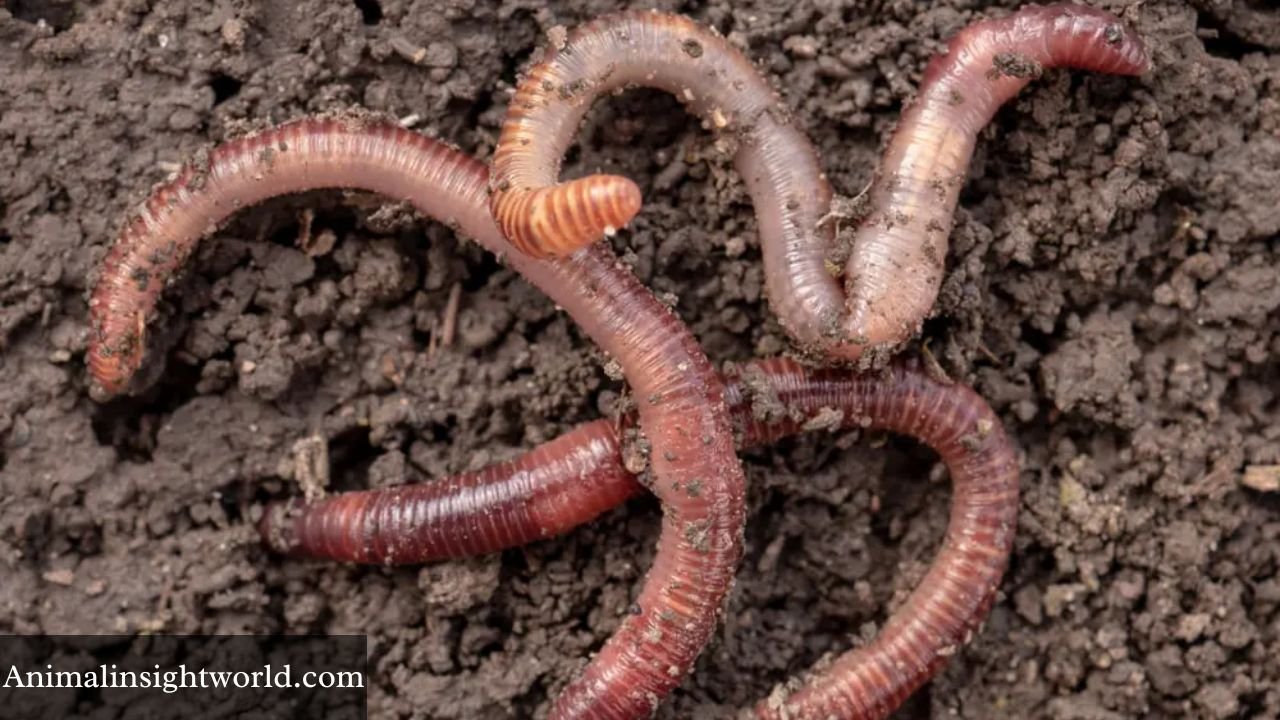
The earthworm is the most surprising animal on this list, because the famous claim that it has five hearts is not quite true, and the real story is more interesting. According to WorldAtlas, earthworms are usually credited with five hearts, but what they actually have is five pairs of aortic arches, ten structures rather than five, that wrap around the gut and squeeze blood around the body. Discover Wildlife puts it the same way: technically earthworms do not have hearts, but they do have five aortic arches, sometimes called pseudohearts, that work like hearts by squeezing rather than pumping. Earthworms have no lungs and breathe through their moist skin, and they move by stretching and anchoring their long bodies through the soil. A single earthworm can eat its own weight in soil every day, and its burrows let air and water reach plant roots. The earthworm earns its place on this list not because it has five true hearts, but because it has five pumping structures that do the job of a heart, spread along its body.
14. Hagfish
The hagfish is one of the strangest vertebrates alive, and it holds the record for the most hearts of any animal with a backbone. According to WorldAtlas, hagfish possess four hearts: a systemic heart plus three accessory pumps, called the portal, the cardinal and a paired caudal system, that boost blood flow from different parts of the body. Discover Wildlife gives a count of five, describing a three chambered systemic heart alongside two accessory hearts, and the disagreement itself is part of the story: heart counts depend on what you agree to call a heart, and hagfish anatomy is so primitive that experts count differently. Hagfish live on the cold, dark floors of the oceans, where they scavenge dead fish and whales, and they are famous for producing huge amounts of slime when attacked, more than a litre in under a tenth of a second. They have no jaws, no stomach and no true backbone, yet they have survived for more than 300 million years, and their four hearts are one reason they can live in water with so little oxygen.
15. Pacific Oyster
The Pacific oyster is the quietest animal on this list, and it is easy to forget that it has a heart at all, let alone more than one. According to WorldAtlas, the Pacific oyster runs one systemic heart plus two accessory hearts, three pumping structures in total. Oysters live attached to rocks and shells in shallow coastal waters, where they filter tiny food particles from the water with their gills, and they can live for many years in one place. The accessory hearts help to push blood through the gills and the mantle, the fleshy part of the body that makes the shell, and they work alongside the main heart to keep the blood moving through an animal that never moves at all. Pacific oysters are farmed all over the world for food, and wild oyster reefs are some of the most productive habitats in the sea, filtering the water and providing shelter for fish, crabs and other animals. Three hearts for an animal that never moves may seem like too many, but filtering water all day, every day, takes more energy than it looks.
Surprising Facts
Top 15 Animals With More Than One Heart hides some genuinely astonishing facts. The octopus main heart stops beating when the octopus swims, which is why octopuses prefer to crawl along the sea floor: swimming exhausts them, because the pump that feeds their organs and muscles pauses while they do it. Octopus blood is blue, because it is powered by hemocyanin, a copper containing protein, instead of the iron based hemoglobin in our blood, and that blue blood is one reason the extra hearts are needed. The hagfish can produce more than a litre of slime in under a tenth of a second, and it can tie its long body into knots to gain leverage when tearing food apart. The earthworm, the animal every schoolchild is told has five hearts, technically has no heart at all, only five pairs of pumping vessels. And the giant Pacific octopus, the largest octopus in the world, has more than 500 million neurons, roughly as many as a dog, with two thirds of them in its arms rather than its head.
Another surprise is how much scientists still disagree about the numbers. Hagfish are counted as having four hearts by some experts and five by others, and earthworms are counted as having five hearts, ten hearts or no hearts at all, depending on how you count the aortic arches. The octopus, the squid and the cuttlefish are the clean case: three discrete, chambered, muscular pumps, and every careful source agrees on three. That is why this article gives the sources for each claim, and why it says plainly where the experts disagree instead of pretending the numbers are settled. The sources for the heart counts in this article are Smithsonian Magazine, National Geographic, WorldAtlas and Discover Wildlife, and the links are listed at the end.
Frequently Asked Questions
Do octopuses have 8 hearts?
No, octopuses do not have eight hearts. They have three hearts: two branchial hearts that pump blood through the gills, and one systemic heart that circulates the oxygen rich blood to the rest of the body. The confusion probably comes from their eight arms, but the number of arms and the number of hearts are not related. Smithsonian Magazine and National Geographic both confirm the count of three.
How many hearts does a squid have?
A squid has three hearts, the same as an octopus and a cuttlefish. Two branchial hearts push blood through the gills, and one systemic heart sends the oxygenated blood to the body. This three heart design is the standard blueprint for the whole group of advanced cephalopods, which includes octopuses, squid and cuttlefish.
Do earthworms really have 5 hearts?
Not exactly. Earthworms are usually said to have five hearts, but what they actually have is five pairs of aortic arches, ten structures in total, that wrap around the gut and squeeze blood around the body. They are not true chambered hearts, which is why some sources say earthworms have no hearts at all. The five heart claim is a simplification of a more interesting truth.
Which animal has the most hearts?
The hagfish holds the record among vertebrates, with four hearts by the most careful count, or five by other counts, depending on how the accessory pumps are counted. Among all animals on this list, the earthworm has the most pumping structures, with five pairs of aortic arches, although they are not true hearts.
Why do octopuses need three hearts?
Octopuses need three hearts because their blood is less efficient at carrying oxygen than ours. Their blood uses hemocyanin, a copper based protein, instead of hemoglobin, and it is less efficient at low temperatures. Two hearts push the blood through the gills to load it with oxygen, and the third heart repressurises the blood and sends it to the body. Without the extra hearts, the oxygen would not reach the muscles fast enough.
Conclusion
Top 15 Animals With More Than One Heart shows that one heart is only the most common design, not the only one. From the three hearts of the octopus, the squid and the cuttlefish, to the four hearts of the hagfish and the five pairs of pumping vessels in the earthworm, evolution has found many ways to move blood around a body. Some of these animals need extra hearts because their blood is hard to pump, some because their bodies are long, and some because they live in water with very little oxygen. The next time someone asks whether an octopus has eight hearts, you will know the real answer is three, and you will know why three is exactly the right number.
Sources: Smithsonian Magazine, Ten Wild Facts About Octopuses, https://www.smithsonianmag.com/science-nature/ten-wild-facts-about-octopuses-they-have-three-hearts-big-brains-and-blue-blood-7625828/ ; National Geographic Education, Animals 101 Octopuses, https://education.nationalgeographic.org/resource/animals-101-octopuses/ ; WorldAtlas, Animals With More Than One Heart, https://www.Worldatlas.com/animals/animals-with-more-than-one-heart.html ; Discover Wildlife, Weirdest hearts in the animal kingdom, https://www.discoverwildlife.com/animal-facts/animals-with-multiple-hearts .