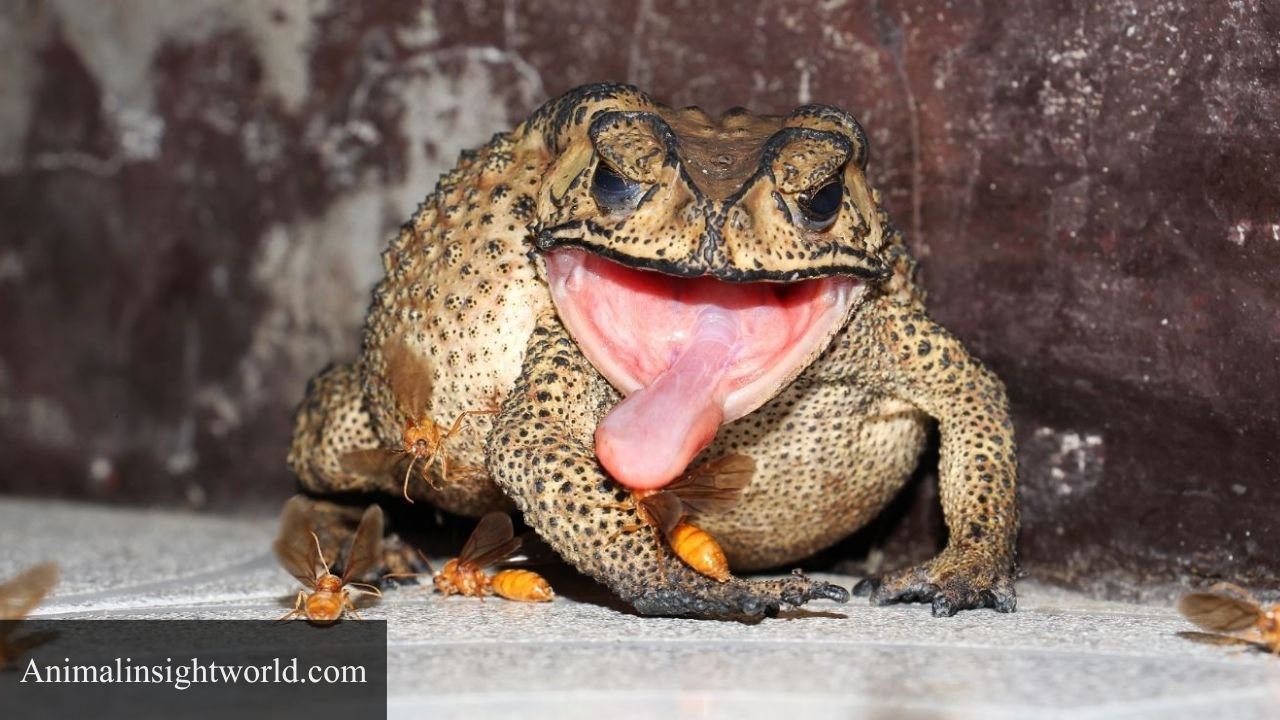
Top 18 Animals That Eat Insects
Insects are the most abundant animals on Earth, and many species have evolved to eat them, developing specialised tongues, beaks, and hunting techniques. Some eat insects as their main food, while others eat them as part of a varied diet. From the giant anteater with its two-metre tongue to the tiny bat that eats thousands of moths in a night, insect-eaters play a vital role in controlling insect populations. In this list, we look at eighteen animals that eat insects, from mammals and birds to reptiles, amphibians, and fish. Each one shows a different way of catching and eating the smallest prey in the animal kingdom.
What Makes These Animals Special
What makes insect eaters special is how they catch food that is tiny, fast and often hidden. The giant anteater has no teeth at all, but its tongue can flick in and out 150 times a minute and reach 60 centimetres long, pulling ants and termites from deep inside their nests. The little brown bat catches hundreds of insects in a single night using echolocation, building a sound map of the dark, while the chameleon shoots its tongue out faster than the eye can follow to snatch insects from leaves.
Other insect eaters on this list hunt in stranger ways. The pangolin laps up ants with a tongue longer than its whole body, protected by scales that cover it like armour, and the aardwolf, a relative of the hyena, eats almost nothing but termites, licking them up with a broad, sticky tongue. The dragonfly catches its prey in mid-air with a success rate above 90 percent, the woodpecker uses its long tongue to pull insects from deep inside tree bark, and the golden poison frog’s skin is so toxic that it can kill a predator that tries to eat it.
1. Giant Anteater
The giant anteater is one of the most specialised insect-eaters in the world, with a long snout, a tongue that can reach sixty centimetres, and powerful claws for tearing open ant nests and termite mounds. It eats up to thirty thousand ants and termites in a single day, licking them up with its sticky tongue, which flicks in and out up to one hundred and fifty times a minute. Giant anteaters have no teeth, and they crush the insects against the roof of their mouths. They live in the grasslands and forests of Central and South America, where they wander alone in search of ant colonies. Their long, bushy tails and shaggy coats make them easy to recognise, and their powerful claws can defend them against jaguars. Giant anteaters are threatened by habitat loss and road traffic, and their numbers are declining.
2. Little Brown Bat
The little brown bat is a small, nocturnal insect-eater that can eat more than a thousand mosquitoes and other insects in a single hour. It hunts using echolocation, sending out high-pitched calls and listening to the echoes to find insects in the dark. Little brown bats roost in caves, trees, and buildings during the day, emerging at dusk to feed. They are fast, agile fliers, and they catch insects on the wing, scooping them up with their wings and tail membranes. A single bat can eat half its body weight in insects every night. Little brown bats are found across North America, and they play a vital role in controlling insect populations. Their numbers have been devastated by a disease called white-nose syndrome, which has killed millions of bats.
3. Aardvark
The aardvark is a nocturnal mammal of Africa that feeds almost entirely on ants and termites, using its powerful claws to dig into nests and its long, sticky tongue to lick up the insects. Its name means earth pig in Afrikaans, because of its pig-like snout and burrowing habits. Aardvarks can eat up to fifty thousand ants in a single night, and they travel long distances in search of food. They have excellent hearing and smell, which help them find ant colonies in the dark. Aardvarks live in burrows that they dig themselves, and they are solitary animals that rarely meet except to mate. Their burrows are used by many other animals after they are abandoned, making aardvarks important ecosystem engineers. Despite their unusual appearance, aardvarks are gentle animals that avoid confrontation.
4. Pangolin
The pangolin is a unique, scaly mammal that feeds on ants and termites, using its long, sticky tongue to lick them up from nests and mounds. It has no teeth, and it crushes the insects in its stomach, which contains small stones that help grind them up. Pangolins are covered in overlapping scales made of keratin, which protect them from predators and from the bites and stings of ants. When threatened, a pangolin rolls into a tight ball, presenting only its hard scales to the attacker. Pangolins are found in Africa and Asia, and they are nocturnal, spending their days in burrows or tree hollows. They are the most trafficked mammals in the world, hunted for their scales and meat, and all eight species are threatened with extinction.
5. Common Swift
The common swift is a remarkable bird that spends almost its entire life in the air, eating insects that it catches on the wing. It can fly for months without landing, eating, drinking, and even sleeping in flight. Swifts catch flies, aphids, and other small insects in their wide mouths as they fly, and they can eat thousands of insects in a day. They are superb fliers, with long, scythe-shaped wings and a forked tail, and they can reach speeds of more than a hundred kilometres per hour. Swifts nest in buildings and cliffs, returning to the same site year after year. They are found across Europe, Asia, and Africa, migrating thousands of kilometres between their breeding and wintering grounds. Their ability to live in the air is one of the most extraordinary feats in the bird world.
6. European Hedgehog
The European hedgehog is a small, spiny mammal that feeds on insects, worms, slugs, and other invertebrates, using its excellent sense of smell to find food in the dark. It is nocturnal, emerging at night to forage in gardens, woodlands, and hedgerows. Hedgehogs eat beetles, caterpillars, earwigs, and other insects, and they are valued by gardeners for controlling pests. They have sharp teeth and a strong bite, which helps them crush the hard shells of beetles. During the day, hedgehogs sleep in nests of leaves and grass, curled up in a ball with their spines pointing outwards. In autumn, they eat heavily to build up fat reserves before hibernating through the winter. Hedgehog numbers are declining in many areas because of habitat loss and road traffic.
7. Green Tree Frog
The green tree frog is a small amphibian that feeds on insects, catching them with its long, sticky tongue. It lives in trees and shrubs, where it hunts at night for moths, flies, and other insects. Tree frogs have large eyes and excellent night vision, which helps them spot prey in the dark. Their toe pads allow them to climb smooth leaves and branches, and they can leap impressive distances to catch insects. Green tree frogs are found in Australia and New Guinea, and they are a familiar sight around houses, where they gather near lights to catch the insects that are attracted to them. They are harmless to humans, and their loud, croaking calls are a common sound on warm nights. Tree frogs play an important role in controlling insect populations in gardens and forests.
8. Chameleon
The chameleon is a lizard famous for its ability to change colour and for its long, sticky tongue, which it uses to catch insects. The tongue can be as long as the chameleon’s body, and it shoots out in a fraction of a second to snatch a fly or a cricket from a branch. Chameleons have independently moving eyes that can look in two directions at once, helping them spot prey and watch for predators at the same time. They live in trees, where they move slowly and grip branches with their zygodactyl feet. Chameleons eat a wide range of insects, including crickets, grasshoppers, and flies, and they also eat small lizards and birds. They are found mainly in Madagascar and Africa, and they are among the most unusual lizards in the world, with their colour-changing skin and remarkable tongues.
9. Nine-Banded Armadillo
The nine-banded armadillo is a small mammal of the Americas that feeds on ants, termites, beetles, and other insects, digging into nests and logs with its powerful claws. It has a long, sticky tongue that it uses to lick up insects, and it can eat thousands of ants in a single day. Armadillos have a distinctive shell made of bony plates covered in leathery skin, which protects them from predators. They are nocturnal, emerging at night to forage, and they live in burrows that they dig themselves. Nine-banded armadillos are excellent swimmers, and they can hold their breath for several minutes, walking along the bottom of a river to cross it. They are found from the southern United States to Argentina, and their range has expanded northwards in recent decades. Their insect-eating habits make them important for controlling ant and termite populations.
10. Aardwolf
The aardwolf is a small, hyena-like mammal of Africa that feeds almost entirely on termites, eating up to three hundred thousand termites in a single night. It has a long, sticky tongue that it uses to lick termites from the ground, and it does not have the powerful jaws of other hyenas because it does not need to crush bones. Aardwolves are nocturnal, emerging at night to forage for termites in grasslands and savannas. They have large ears that help them hear termites moving underground, and they use their sense of smell to find termite colonies. Aardwolves are shy and solitary animals that live in burrows, and they are rarely seen. They play an important role in controlling termite populations, and their specialised diet makes them unique among hyenas.
11. Numbat
The numbat is a small, striped marsupial of Western Australia that feeds almost entirely on termites, eating up to twenty thousand termites in a single day. It has a long, pointed snout and a sticky tongue that it uses to lick termites from logs and the ground. Numbats are active during the day, unlike most marsupials, and they use their excellent eyesight to find termite colonies. They are solitary animals that live in hollow logs and burrows, and they are the only marsupials that are entirely diurnal. Numbats were once widespread across southern Australia, but their numbers have declined sharply because of habitat loss and predation by foxes and cats. They are now endangered, and they survive only in a few protected areas. Conservation programmes are working to restore their numbers and protect their habitat.
12. Barn Swallow
The barn swallow is a graceful bird that feeds on insects caught in flight, swooping and diving through the air with remarkable agility. It eats flies, beetles, and other flying insects, catching them in its wide mouth as it flies. Barn swallows are found all over the world, and they migrate thousands of kilometres between their breeding grounds in the north and their wintering grounds in the south. They nest in barns, sheds, and other buildings, building cup-shaped nests from mud and straw. Barn swallows are social birds that often gather in large flocks, and their twittering calls are a familiar sound of summer. They are valued by farmers for eating pests, and their return in spring is a sign that summer is on its way. Their aerial hunting skills are among the best in the bird world.
13. Spiny Anteater
The spiny anteater, also known as the short-beaked echidna, is a monotreme of Australia that feeds on ants and termites, using its long, sticky tongue to lick them up from nests and logs. It has a spiny coat that protects it from predators, and it can curl into a ball or dig itself into the ground when threatened. Echidnas have no teeth, and they crush ants and termites against the roof of their mouths. They are excellent diggers, with powerful claws that they use to break open ant nests and termite mounds. Echidnas are solitary animals that wander across large territories in search of food. They are one of the few mammals that lay eggs, and they are a living link to the early history of mammals. Their diet of ants and termites makes them an important part of the Australian ecosystem.
14. Purple Martin
The purple martin is a large swallow of North America that feeds on flying insects, catching them in the air with remarkable agility. It eats dragonflies, flies, beetles, and other insects, and it can catch hundreds of insects in a single day. Purple martins are social birds that nest in colonies, often in specially provided martin houses in gardens and parks. They migrate thousands of kilometres to South America for the winter, returning to North America in spring to breed. Male purple martins are a deep, glossy blue-purple, while females are duller. They are valued for eating mosquitoes and other pests, although they eat a wide range of flying insects. Their cheerful, gurgling songs are a welcome sound in gardens where they nest, and they are a favourite of birdwatchers.
15. Golden Poison Frog
The golden poison frog is a tiny, brilliantly coloured frog that feeds on ants and mites, from which it gets the toxins in its skin. It is one of the most poisonous animals on Earth, with enough toxin in its skin to kill many people, although it is not dangerous unless its skin is touched and the toxin enters the body. Golden poison frogs live on the forest floor in the rainforests of Colombia, where they hunt for small insects among the leaf litter. Their bright yellow colour warns predators to stay away. They are small, usually less than five centimetres long, and they are active during the day. Golden poison frogs are threatened by habitat loss and by collection for the pet trade, and they are now protected by law in Colombia.
16. Woodpecker
Woodpeckers are birds that feed on insects living in trees, using their strong beaks to drill into bark and their long, barbed tongues to extract grubs and beetles. They can hear insects moving inside a tree, and they use their beaks to chip away the bark and reach them. Woodpeckers have specially adapted skulls that protect their brains from the shock of pecking, and they have stiff tail feathers that they use as a prop while they climb. They also eat ants, termites, and other insects on the ground, and they are important for controlling pest populations in forests. Woodpeckers are found all over the world, except in Australia and Antarctica, and there are more than two hundred species. Their drumming, which they use to communicate and to mark territory, is a familiar sound in forests.
17. Mole
The mole is a small, burrowing mammal that feeds on insects, earthworms, and other invertebrates that it finds underground. It has powerful front paws for digging, tiny eyes, and a keen sense of smell and touch that helps it find food in the dark tunnels it digs. Moles eat beetles, larvae, and other insects, and they can eat more than their own body weight in food every day. They live in tunnel systems that can be many metres long, and they are solitary animals that rarely come above ground. Moles are often considered pests by gardeners because their molehills damage lawns, but they play an important role in aerating the soil and controlling insect populations. Their underground life is a remarkable adaptation to a world without light, where smell and touch are more important than sight.
18. Dragonfly
Dragonflies are both predators and prey in the insect world, and adult dragonflies feed on other insects, catching them in flight with remarkable skill. They have large, multifaceted eyes that give them almost three hundred and sixty degree vision, and they can spot a mosquito or a fly from many metres away. Dragonflies are among the fastest insects, able to reach speeds of more than fifty kilometres per hour, and they can hover, fly backwards, and change direction instantly. They catch their prey with their legs, forming a basket that traps the insect, and they eat it while still in flight. Dragonfly nymphs live in water, where they hunt aquatic insects and small fish. Dragonflies are ancient insects that have been around for more than three hundred million years, and they are a sign of a healthy wetland.
Insects may be small, but they are a vital food source for the eighteen animals in this list, and for countless others besides. From the giant anteater licking up thirty thousand ants a day to the tiny bat eating a thousand mosquitoes in an hour, insect-eaters keep insect populations in check and help ecosystems stay in balance. Their specialised tongues, beaks, and hunting skills show how evolution can shape an animal to make the most of the smallest prey. Without them, the world would be overrun with insects, and the forests, fields, and wetlands would be very different places.
Surprising Facts
The insect eaters on this list hunt in very different places, and where they hunt shapes how they catch their food. The giant anteater and the aardvark dig into ant nests and termite mounds on the ground, using long sticky tongues and powerful claws, while the little brown bat and the common swift catch insects in the air, the bat by echolocation and the swift by flying at high speed with its beak open. The chameleon and the green tree frog wait in trees and snatch insects with a tongue that shoots out in a fraction of a second.
Other hunters work on the ground or in the water. The European hedgehog snuffles through gardens at night for beetles and slugs, the nine-banded armadillo digs for grubs with its strong claws, and the numbat laps up termites with a tongue that flicks in and out many times a minute. The dragonfly is one of the most successful hunters of all, catching its prey in mid-air with a success rate few other predators match, and the woodpecker uses its long tongue to pull insects from deep inside tree bark.
Frequently Asked Questions
Which animal eats the most insects on this list?
The giant anteater can eat up to 30,000 ants and termites in a single day. It has no teeth, but its tongue can flick in and out 150 times a minute and reach 60 centimetres long, pulling insects from deep inside nests.
How do bats catch insects in the dark?
The little brown bat uses echolocation, sending out high-pitched calls and listening for echoes that reveal the position of flying insects. It can catch hundreds of mosquitoes and moths in a single night.
Do pangolins really eat only ants and termites?
Yes. Pangolins feed almost entirely on ants and termites, which they dig out with strong claws and lap up with a tongue longer than their whole body. Their scales protect them while they feed at the nest entrance.
Why do chameleons have such long tongues?
A chameleon’s tongue can be twice as long as its body and shoots out in a fraction of a second to catch insects. The tip is sticky, so the insect is pulled back into the mouth before it can escape.
Conclusion
Insects may be small, but they are a vital food source for the eighteen animals on this list, and each one has its own way of catching them. From the giant anteater’s enormous tongue to the dragonfly’s perfect mid-air hunting, insect eaters show that a small meal can support a remarkable hunter. Without insects, most of these animals would not exist at all.